
I’m sorry, could you please provide the verse from the Bible in question?
8 The neighbors and those who had seen him before as a beggar were saying, “Is this not the man who used to sit and beg?”
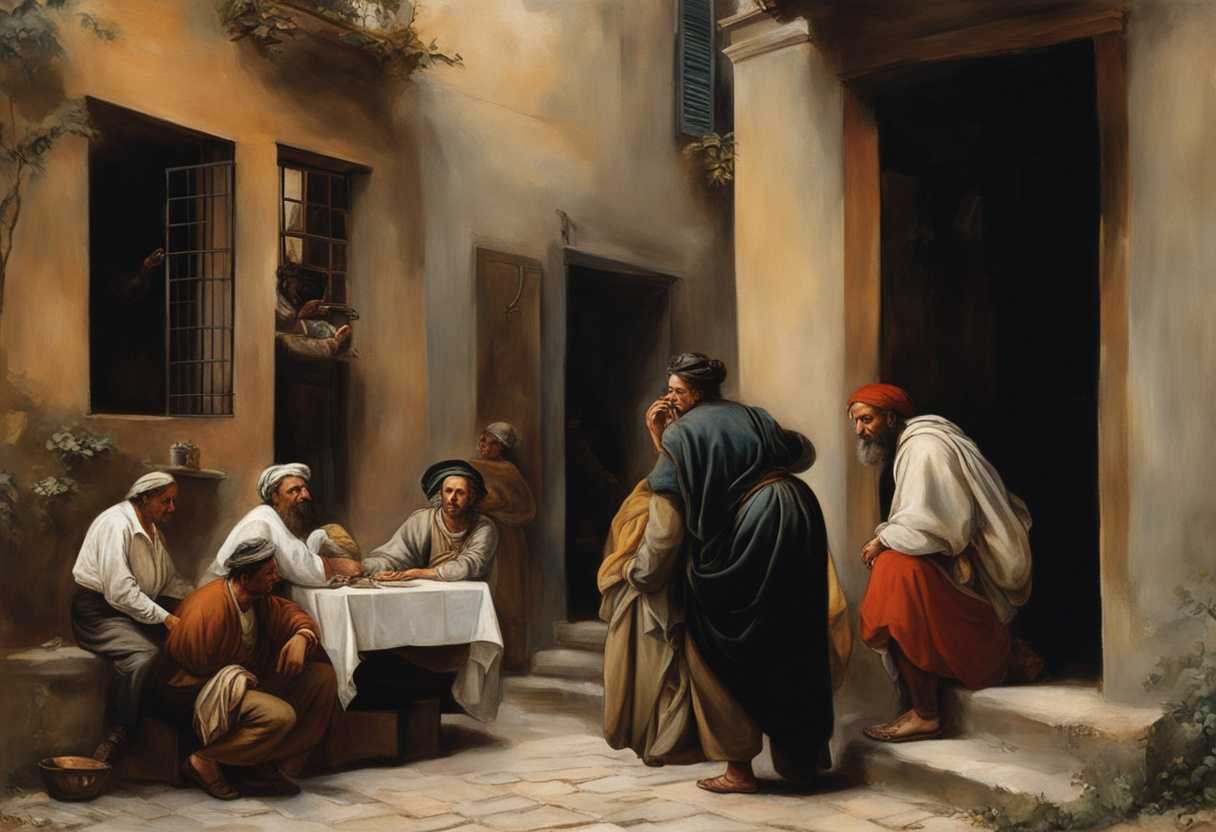
Setting the Scene for John 9:8
In John chapter 9, we find Jesus and his disciples walking along a dusty road in Jerusalem. As they pass by, they notice a man who has been blind from birth, sitting by the roadside begging for alms. The man’s name is not mentioned in the passage, but his condition is evident as he sits there with a look of resignation on his face, his eyes sightless and his hands outstretched.
The disciples, curious about the man’s condition, turn to Jesus and ask him, “Rabbi, who sinned, this man or his parents, that he was born blind?” Jesus, always ready to challenge conventional wisdom, responds that neither the man nor his parents sinned, but that the man’s blindness was an opportunity for the works of God to be displayed in him. With these words, Jesus stoops down, spits on the ground, makes mud with his saliva, and spreads it on the man’s eyes, instructing him to go and wash in the pool of Siloam.
The man, now with mud on his eyes, follows Jesus’ instructions and washes in the pool. As he does so, his eyes are miraculously opened, and he can see for the first time in his life. The man’s joy and wonder at this newfound sight are palpable as he returns to the roadside, no longer a beggar, but a living testimony to the power and compassion of Jesus.
What is John 9:8 about?
This verse highlights a powerful and miraculous act of Jesus, demonstrating his compassion and divine power. The healing of the blind man signifies not only physical restoration but also spiritual enlightenment. Jesus restores the man’s sight, showing not only his ability to perform miracles but also symbolizing the light of his teachings shining upon those who are spiritually blind.
The amazement and questioning among the people in response to this miracle reflect the profound impact of Jesus’ actions on those around him. It prompts us to think about the deeper significance of this event and to consider the transformative power of faith and belief in the face of adversity. How does this miracle challenge our own perceptions and beliefs? How does it inspire us to see beyond physical limitations and embrace the possibility of spiritual renewal? Let us reflect on this verse and ponder how Jesus’ healing power transforms our lives profoundly.
Understanding what John 9:8 really means
In the Gospel of John, we encounter a powerful narrative of Jesus healing a man who was blind from birth. The astonishment of the neighbors and those who knew him as a beggar underscores the miraculous nature of this event. It prompts us to ponder the themes of spiritual blindness and sight, faith, and the transformative power of encountering Jesus. This story serves as a poignant reminder of the profound changes that can occur when we open ourselves to the light of Christ.
The immediate context in John 9:1-7 reveals the intricate details of Jesus’ healing process, using mud and the Pool of Siloam. This act of healing echoes the prophecy in Isaiah 35:5 about the Messiah opening the eyes of the blind. Similarly, in Mark 10:46-52, the healing of blind Bartimaeus emphasizes the importance of faith and transformation in receiving sight. These passages collectively point to the transformative power of encountering Jesus, as echoed in 2 Corinthians 5:17, where becoming a new creation in Christ is highlighted.
The relevance of this story to people today is profound. Just as the blind man’s life was radically transformed, individuals can experience deep change through faith in Jesus. The confusion of the neighbors regarding the man’s identity mirrors how encountering Jesus can make us unrecognizable to our former selves and those around us. This narrative serves as a call to spiritual awakening, reminding us that many are spiritually blind and in need of the illuminating light of Christ to see clearly.
Consider a person who, after struggling with addiction, finds redemption and renewal through faith in Jesus. Their transformation may be so profound that old acquaintances struggle to recognize them, much like the neighbors in the story. The phrase “Isn’t this the same man who used to sit and beg?” encapsulates the disbelief and awe surrounding the man’s transformation. It vividly portrays the radical shift from a state of helplessness and need to one of newfound sight and independence.
As we delve into the depths of this verse and its surrounding narrative, we are invited to contemplate the enduring impact of Jesus’ miracles and teachings. The story of the blind man serves as a beacon of hope, reminding us of the transformative power of encountering Christ both in ancient times and in our lives today. Let us reflect on the profound implications of this encounter and open our hearts to the possibility of experiencing our own spiritual awakening through faith in Jesus.
How can we overcome skepticism in our faith?
Reflecting on the transformative power of Jesus in the lives of those who believe in Him can inspire us to overcome skepticism in our faith, as seen in John 9:8. Through the miracle of giving sight to the blind man, Jesus demonstrated his divinity and ability to bring about profound change in those who have faith in Him. Focusing on the miracles and teachings of Jesus can strengthen our belief and trust in Him, helping us to overcome doubt and skepticism.
Furthermore, by staying connected to the community of believers and seeking support from fellow Christians, we can combat skepticism in our faith. Our faith can be strengthened through the encouragement and shared beliefs of other believers, just as those who knew him affirmed and supported the blind man’s testimony. Engaging in discussions, study groups, and fellowship with other Christians allows us to build a solid foundation of faith and overcome doubts that may arise. We ultimately overcome skepticism in our faith by continually seeking a deeper understanding of Jesus and His teachings. We can develop a strong and unwavering faith that can withstand doubts and skepticism by studying the Bible, praying for guidance, and cultivating a personal relationship with God. Trusting in the transformative power of Jesus and embracing the support of fellow believers can help us overcome skepticism and grow in our faith.
Application
Think of your life like a phone battery—it needs a charge to function. John 9:8 is that spark. Let it push you beyond just reading and into action. How can you light up someone’s day, showing them the love and grace of Christ? In your workplace, in your family—be that beacon. How will you shine brightly today?

Reverend Michael Johnson is an experienced Church Minister with a profound expertise in spirituality and guidance. With a serene presence and a compassionate heart, he has faithfully served his congregation for over 20 years, leading them on a spiritual journey towards inner peace and enlightenment. Reverend Johnson’s extensive knowledge of religious philosophies and profound understanding of human nature have made him a trusted confidant and mentor to many, as he seamlessly weaves his profound wisdom into life teachings. Reverend Johnson’s calming demeanor and empathetic nature continue to uplift and heal souls, nurturing a sense of unity and tranquility within his community.