
Luke 9:18-25 is about Jesus asking his disciples who they believe Him to be and explaining the cost of discipleship, emphasizing the need to deny oneself, take up their cross daily, and follow Him.
18 Now it happened that as he was praying alone, the disciples were with him. And he asked them, “Who do the crowds say that I am?”
19 They answered, “John the Baptist. But others say, Elijah, and others, that one of the prophets of old has risen.”
20 Then he said to them, “But who do you say that I am?” And Peter answered, “The Christ of God.”
21 And he strictly charged and commanded them to tell this to no one,
22 saying, “The Son of Man must suffer many things and be rejected by the elders and chief priests and scribes, and be killed, and on the third day be raised.”
23 And he said to all, “If anyone would come after me, let him deny himself and take up his cross daily and follow me.
24 For whoever would save his life will lose it, but whoever loses his life for my sake will save it.
25 For what does it profit a man if he gains the whole world and loses or forfeits himself?
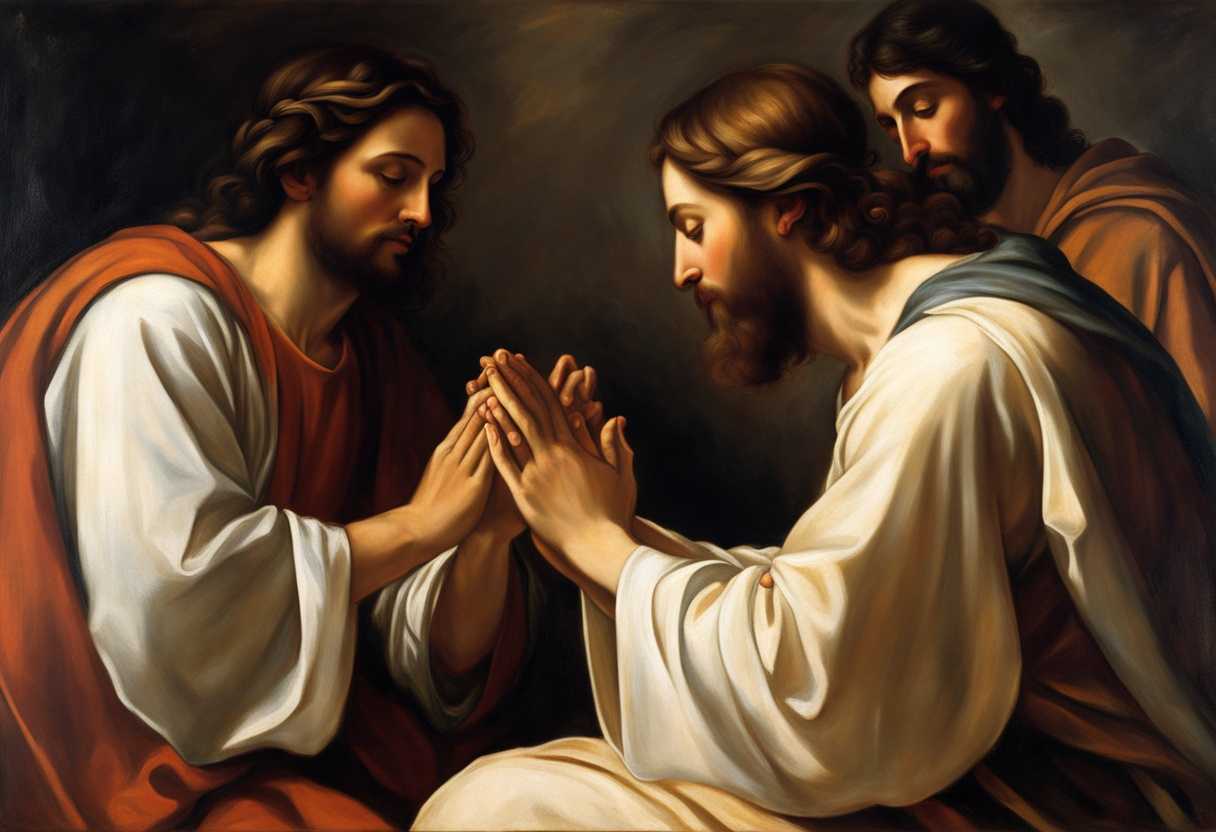
Setting the Scene for Luke 9:18-25
In Luke chapter 9, we find Jesus and his disciples traveling through the region of Caesarea Philippi. The group has been journeying together for some time, witnessing Jesus perform miracles, teach profound lessons, and draw large crowds wherever he goes. As they walk along dusty roads, the disciples engage in conversations with Jesus, trying to understand the depth of his teachings and the true nature of his identity.
One day, as they rest under the shade of a large tree, Jesus turns to his disciples and asks them a crucial question, “Who do the crowds say that I am?” The disciples share the various opinions they have heard from the people – some think Jesus is John the Baptist, others Elijah, or one of the prophets of old. Then Jesus looks directly at his disciples and asks, “But who do you say that I am?” It is a pivotal moment as Peter, filled with divine insight, declares, “You are the Christ of God.”
Surrounded by the picturesque landscape of Caesarea Philippi, with its lush greenery and the sound of a nearby stream, Jesus and his disciples engage in a profound conversation about the cost of discipleship. Jesus speaks of the necessity of taking up one’s cross daily and following him, emphasizing the importance of surrendering one’s own desires and ambitions for the sake of the Kingdom of God. The scene is filled with tension and anticipation as Jesus lays out the radical demands of true discipleship, challenging his followers to prioritize their commitment to him above all else.
What is Luke 9:18-25 about?
This verse is a pivotal moment in the Gospel narrative where Peter openly acknowledges Jesus as the long-awaited Messiah. It marks a significant turning point in the disciples’ understanding of Jesus’ true identity and mission. However, immediately following this declaration, Jesus begins to teach them about the necessity of His impending death and resurrection. This juxtaposition serves as a stark reminder that the Messiah’s path would not be one of earthly glory and power, but of sacrifice and redemption. This verse challenges us to consider our own beliefs about Jesus as we reflect on it. Do we truly recognize Him as the Messiah, the Son of God, and are we willing to follow Him wholeheartedly, even when it means embracing the way of the cross? Jesus’s call for self-denial reminds us that following Him requires letting go of our own desires and ambitions in order to fully surrender to God’s will. It prompts us to examine our own lives and ask ourselves if we are truly willing to sacrifice our own comfort and security for the sake of the gospel. Let us ponder these questions and deepen our faith and commitment to following Christ by allowing the profound truths of this verse to guide us.
Understanding what Luke 9:18-25 really means
In Luke 9:18-25, we encounter a pivotal moment where Peter acknowledges Jesus as the Christ, and Jesus foretells His suffering, death, and resurrection. This passage delves into the core of Jesus’ identity and the profound implications of discipleship. Jesus prompts His disciples to contemplate who the crowds perceive Him to be and then challenges them with the crucial question of who they believe Him to be. Peter’s response, “The Christ of God,” encapsulates the recognition of Jesus as the anointed Savior sent by God for humanity’s redemption.
Jesus proceeds to unveil the harsh reality of His impending suffering, death, and resurrection. This revelation underscores the divine plan for salvation, emphasizing the indispensable role of Jesus’ sacrificial journey. The phrase “The Son of Man must suffer many things” underscores the necessity of Jesus’ suffering as a pivotal component of God’s redemptive design. Furthermore, Jesus’ call to “take up their cross daily and follow me” epitomizes the essence of discipleship—a daily commitment to self-denial and unwavering allegiance to Jesus, even amidst trials and tribulations.
Parallel passages in Matthew 16:13-28 and Mark 8:27-38 echo Peter’s confession and Jesus’ teachings on discipleship, reinforcing the significance of understanding Jesus’ identity and the cost of following Him. Additionally, Paul’s words in Philippians 2:5-8 resonate with Jesus’ prediction of His suffering, highlighting the humility and obedience exemplified by Christ, even unto death on the cross.
Today, this passage remains profoundly relevant as it challenges believers to grasp Jesus’ identity as the Messiah and to embrace the sacrificial nature of discipleship. In a culture that often prioritizes self-gratification and comfort, the call to take up one’s cross daily serves as a poignant reminder of the continual commitment and sacrifice demanded by following Christ. It urges believers to reevaluate their priorities and wholeheartedly devote themselves to Christ above all else.
Consider a scenario where a successful professional forsakes a lucrative career to answer a call to serve in a challenging mission field. This individual’s decision mirrors the principle of taking up their cross daily, embodying the essence of sacrificial discipleship. Their narrative vividly illustrates the practical application of this passage, showcasing that authentic discipleship necessitates significant sacrifice and a radical reordering of one’s life.
In conclusion, Luke 9:18-25 beckons believers to acknowledge Jesus as the Messiah and comprehend the profound implications of discipleship. It advocates for a steadfast commitment to follow Jesus daily, even amidst adversity and personal sacrifice. By meditating on this passage and its interconnected scriptures, believers can deepen their understanding of what it truly means to walk in the footsteps of Christ in their everyday lives.
What does it mean to deny ourselves in life?
Denying ourselves means putting aside our own desires, ambitions, and comfort in order to follow Jesus wholeheartedly. It involves surrendering our will and submitting to God’s plan for our lives, even when it may be difficult or goes against our selfish desires. Denying ourselves means prioritizing God’s kingdom and living a life that reflects His will and teachings rather than our own desires or interests.
When we deny ourselves, we acknowledge that our own ways may not align with God’s perfect will for us. It involves humbling ourselves, recognizing that God’s ways are higher than ours, and trusting that His plans for us are good. Denying ourselves also involves sacrificing our own interests for the greater good, seeking to serve and love others as Jesus did, even if it means personal discomfort or inconvenience. Denying ourselves ultimately involves dying to our own selfishness and allowing Christ to be the center of our lives.
Application
Are you ready to embrace Jesus as the Son of God in your heart and let go of your own self-centered ambitions to walk in His ways? Just like the sacrifices we make in our daily lives for our families and work, following Christ requires dedication and commitment. Will you take up your cross daily, facing trials and tribulations with unwavering faith and obedience? Let’s embark on this spiritual journey together, where each step brings us closer to the divine path. Are you up for the challenge of following Jesus wholeheartedly?

Reverend Michael Johnson is an experienced Church Minister with a profound expertise in spirituality and guidance. With a serene presence and a compassionate heart, he has faithfully served his congregation for over 20 years, leading them on a spiritual journey towards inner peace and enlightenment. Reverend Johnson’s extensive knowledge of religious philosophies and profound understanding of human nature have made him a trusted confidant and mentor to many, as he seamlessly weaves his profound wisdom into life teachings. Reverend Johnson’s calming demeanor and empathetic nature continue to uplift and heal souls, nurturing a sense of unity and tranquility within his community.