
Mark 11:15-17 is about Jesus cleansing the temple, demonstrating his authority and revealing the true purpose of the temple as a place of prayer and worship, not of dishonest practices and exploitation.
15 And they came to Jerusalem. And he entered the temple and began to drive out those who sold and those who bought in the temple, and he overturned the tables of the money-changers and the seats of those who sold pigeons.
16 and would not allow anyone to carry anything through the temple.
17 And he was teaching them and saying to them, “Is it not written, ‘My house shall be called a house of prayer for all the nations’? But you have made it a den of robbers.”
Setting the Scene for Mark 11:15-17
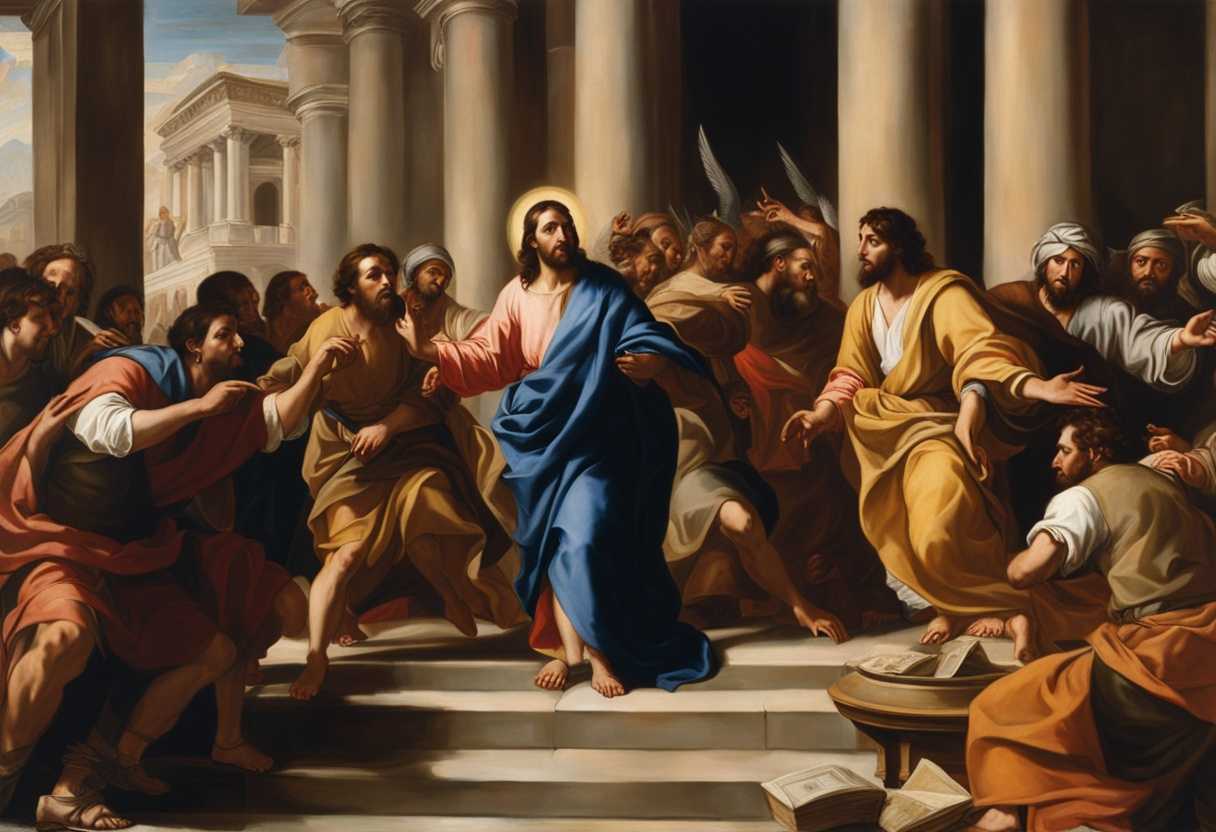
In Mark chapter 11, we find Jesus entering Jerusalem during the week leading up to his crucifixion. As he arrives at the temple, he is met with a bustling scene of merchants selling animals for sacrifice and money changers exchanging currency. The air is filled with the sounds of animals and the clinking of coins, creating a chaotic atmosphere.
Jesus, accompanied by his disciples, observes the scene with a mix of sadness and righteous anger. He sees the corruption and exploitation taking place in the holiest of places and knows that it is not in line with God’s will. With a determined expression, he begins to overturn the tables of the money changers and drive out those who were buying and selling, declaring, “Is it not written: ‘My house will be called a house of prayer for all nations’? But you have made it ‘a den of robbers.’”
The religious leaders and merchants are taken aback by Jesus’ actions, but the common people who had gathered in the temple courtyard watch in awe at the authority and conviction with which he speaks and acts. The scene is one of tension and confrontation, as Jesus challenges the status quo and calls for a return to true worship and reverence for God in the temple.
What is Mark 11:15-17 about?
Imagine being in a sacred space, a place meant for worship and reverence, only to witness greed and exploitation taking place instead. Jesus was condemning the corruption that had tainted a place meant for spiritual connection and devotion as he overturned tables in the temple. He emphasized the importance of sincerity in worship by his actions, urging us to reflect on our motives and ensure that our actions align with our beliefs.
Why did Jesus feel compelled to disrupt the status quo in such a dramatic way? Perhaps it was to shake us out of complacency and challenge us to prioritize authentic faith over material gain. Through this powerful act, Jesus reminds us that spiritual practices should never be tainted by selfish motives or deceit. It beckons us to examine our own intentions in our worship and service, encouraging us to strive for purity of heart and integrity in all that we do in the name of God.
Understanding what Mark 11:15-17 really means
Jesus’ actions in Mark 11:15-17, where he enters the temple in Jerusalem and overturns the tables of the money changers and sellers, are a powerful demonstration of his commitment to purity and integrity in worship. The temple, meant to be a “house of prayer for all nations,” had been turned into a “den of robbers” by those seeking personal gain. This stark contrast between the intended purpose of the temple and its current state serves as a poignant reminder for us to examine our own motives in worship and ensure they align with God’s intentions.
The parallel passages in Isaiah 56:7 and Jeremiah 7:11 further emphasize the significance of the temple as a place of prayer and the consequences of its misuse. These passages provide a broader context for understanding Jesus’ actions and the importance of maintaining the sanctity of places of worship. In today’s world, where issues of social justice and integrity are paramount, the message of Jesus cleansing the temple resonates deeply.
The relevance of this passage extends beyond historical context to our modern lives. It challenges us to consider the integrity of our worship practices, the pursuit of social justice, and the need to maintain a spiritual focus amidst worldly distractions. Just as Jesus sought to purify the temple, we are called to examine our hearts and ensure that our worship is genuine and free from corruption.
An anecdote illustrating a community center deviating from its original mission to serve the marginalized echoes the situation Jesus encountered in the temple. This comparison underscores the importance of staying true to our core values and not allowing greed or selfish motives to corrupt our worship spaces. Jesus’ actions serve as a powerful reminder to realign ourselves with God’s intentions and resist the temptations of materialism and exploitation.
The phrases used in the passage, such as “house of prayer for all nations” and “den of robbers,” carry profound meanings that urge us to reflect on the inclusivity of worship and the dangers of spiritual corruption. Jesus’ symbolic act of overturning the tables symbolizes a radical call to reform and renewal in our spiritual lives. By delving into the depths of this passage and contemplating its implications, we can glean valuable insights into the importance of sincerity, justice, and spiritual devotion in our worship practices today.
Is our place of worship truly a house of prayer?
We can reflect on the significance of prayer within the context of the verse to consider whether our place of worship is truly a house of prayer. The verse emphasizes the importance of the house of worship being a place where all people are welcomed to come and pray. It suggests that prayer should be central to the purpose and atmosphere of the house of worship. Reflecting on this, we can assess whether prayer permeates the practices and culture of our place of worship.
To determine if our place of worship is indeed a house of prayer, we can assess if prayer is not only present but also a priority in our communal gatherings. Are opportunities for prayer regularly incorporated into services and events? Is there an emphasis on fostering a culture of prayer among the congregation, encouraging individuals to communicate with and seek guidance from a higher power? We can gauge whether our place of worship aligns with the teachings and intentions highlighted in the verse by examining these aspects. The core message of the verse ultimately prompts us to reflect on the essence of our place of worship. Is it a space where prayer is revered, practiced, and encouraged, fostering a sense of reverence and connection with the divine? We can evaluate the extent to which our place of worship embodies the ideal of being a house of prayer by reflecting on these fundamental questions.
Application
Just like Jesus clearing the temple, it’s time to look at your life and remove what’s holding you back. In the hustle of work and family, don’t let distractions or bad habits cloud your focus. Cleanse your heart so you can truly connect with God. Will you take action now to clear your path and deepen your faith?

Reverend Michael Johnson is an experienced Church Minister with a profound expertise in spirituality and guidance. With a serene presence and a compassionate heart, he has faithfully served his congregation for over 20 years, leading them on a spiritual journey towards inner peace and enlightenment. Reverend Johnson’s extensive knowledge of religious philosophies and profound understanding of human nature have made him a trusted confidant and mentor to many, as he seamlessly weaves his profound wisdom into life teachings. Reverend Johnson’s calming demeanor and empathetic nature continue to uplift and heal souls, nurturing a sense of unity and tranquility within his community.