
36 And he said, “Abba, Father, all things are possible for you. Remove this cup from me. Yet not what I will, but what you will.”
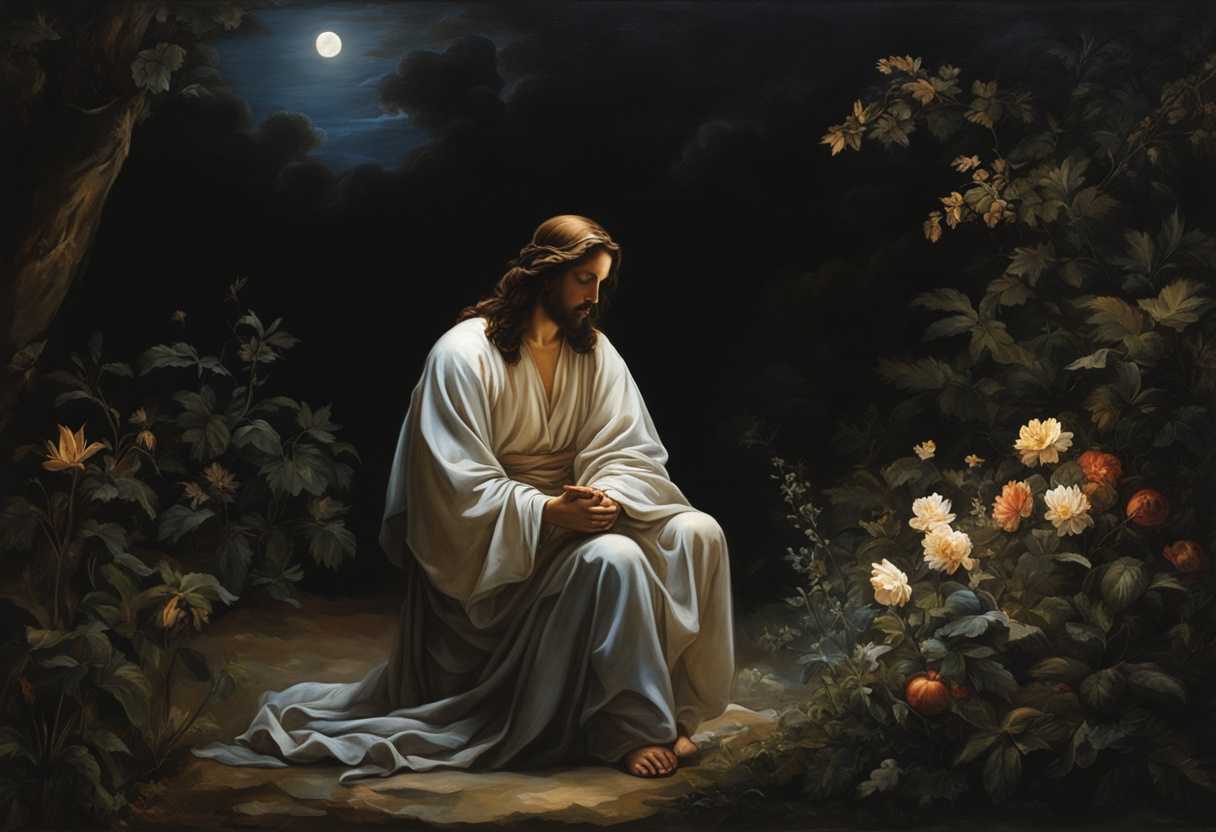
Setting the Scene for Mark 14:36
In Mark chapter 14, we find Jesus in the Garden of Gethsemane with his disciples. The scene is set late at night, with the moon casting a soft glow over the olive trees and the air filled with the scent of blossoms. Jesus, feeling the weight of what is to come, takes Peter, James, and John with him deeper into the garden to pray.
As they reach a secluded spot, Jesus falls to the ground in anguish, knowing the suffering that awaits him. He asks his disciples to keep watch while he prays to God, expressing his inner turmoil and asking if there is any other way for the cup of suffering to pass from him. The disciples, exhausted from the events of the day, struggle to stay awake and offer support to their beloved teacher.
The atmosphere is heavy with anticipation and fear as Jesus grapples with his impending betrayal and crucifixion. The disciples, though loyal, are unable to fully comprehend the magnitude of what is about to unfold. It is a moment of vulnerability and humanity for Jesus, showing his deep connection to God and the sacrifice he is willing to make for the salvation of all.
What is Mark 14:36 about?
We witness Jesus, the Son of God, praying to his heavenly Father in Gethsemane in this powerful moment in the Bible. Despite knowing the suffering and death that awaited him, Jesus humbly surrenders to God’s will. This act of submission showcases not only Jesus’ deep connection to the Father but also his unwavering faith and obedience. It serves as a profound example for all believers, highlighting the importance of trusting in God’s plan even when faced with immense challenges and struggles. Jesus demonstrated sacrificial love through his willingness to fulfill God’s purpose, even at great personal cost, as we reflect on this verse. His prayer in Gethsemane teaches us the importance of seeking God in times of trial, trusting in His wisdom, and surrendering our own desires for the greater good. Can we fully surrender to God’s will as Jesus did, releasing our fears, doubts, and uncertainties into His hands? How can we imitate Jesus’ example of obedience and surrender in our own lives, especially during times of difficulty and uncertainty? Let us draw inspiration from Jesus’ prayer in Gethsemane and strive to align our wills with God’s divine plan.
Understanding what Mark 14:36 really means
Introduction and Context
To begin, let’s set the stage for this verse. This passage is from the Gospel of Mark, specifically in the Garden of Gethsemane, where Jesus is praying deeply before His arrest and eventual crucifixion. This moment is filled with intense emotion and significance, capturing Jesus’ dual nature as both divine and human. The verse reveals His intimate conversation with God the Father, expressing both His anguish and submission. Jesus addresses God as “Abba, Father” in this verse.” The term “Abba” is an Aramaic word that translates to “Daddy” or “Papa,” reflecting a deep, personal, and affectionate relationship. This is significant because it highlights the intimacy and trust Jesus has with God. He then says, “everything is possible for you,” acknowledging God’s omnipotence. This statement doesn’t just affirm God’s power but sets the stage for the request that follows.
Next, Jesus asks, “Take this cup from me.” Here, “the cup” symbolizes the impending suffering and sacrifice He is about to endure. It’s a metaphor for the wrath and judgment that He will face on the cross. Jesus’ request is a very human moment, showing His vulnerability and the weight of what He is about to undergo. However, the verse doesn’t end there.
Submission to God’s Will
The climax of this verse is in the phrase, “Yet not what I will, but what you will.” Despite His anguish, Jesus submits to God’s will. This demonstrates ultimate obedience and trust, even in the face of extreme suffering. It’s a powerful lesson in surrender and faith, showing us that true devotion involves aligning our desires with God’s plan, even when it’s difficult.
Relevance to Other Biblical Passages
This moment in Gethsemane is mirrored in other Gospels, like Matthew 26:39 and Luke 22:42, which similarly depict Jesus’ struggle and submission. It also echoes the Lord’s Prayer in Matthew 6:10, where we pray, “Your will be done.” These passages collectively reinforce the importance of submitting to God’s will, trusting in His greater plan.
Application in Today’s World
Why is this relevant to us today? We all face moments of anguish, uncertainty, and difficult decisions. This verse teaches us that it’s okay to express our fears and desires to God, but ultimately, we should trust in His wisdom and submit to His will. This lesson in humility and faith is crucial in our fast-paced, often self-centered world. John, a man who faced a career-ending injury, is the subject of the story. Initially, he was devastated and prayed fervently for healing. However, as he reflected on this verse, he began to pray for God’s will to be done. Over time, John discovered new passions and talents he never explored before, leading to a fulfilling career in a completely different field. This taught him that God’s plans, though initially painful, often lead to greater joy and purpose. Mark 14:36 offers a profound lesson in faith, vulnerability, and submission. We are reminded to trust in God’s omnipotence and wisdom by examining Jesus’ intimate prayer. Let us strive to echo Jesus’ words as we navigate our own trials, embracing God’s will over our own. How might this perspective change the way you approach your own challenges and prayers?
What does surrendering to God’s will truly entail?
Surrendering to God’s will, as stated in Mark 14:36, involves acknowledging God’s supreme authority and submitting one’s desires and plans to His divine purpose. It requires letting go of personal agendas and trusting in God’s wisdom and sovereignty, even in the face of uncertainties or challenges. One accepts that God’s plans are ultimately for the greater good and are beyond human understanding by surrendering to His will.
This act of surrender is not passive resignation but an active choice to align one’s heart and mind with God’s intentions. It involves a surrender of the self, allowing God to guide and direct one’s path, knowing that His will is perfect and leads to fulfillment and spiritual growth. Surrendering to God’s will requires a deep sense of faith and willingness to relinquish control, trusting in His love and wisdom to unfold His purpose in our lives.
Application
Think of your toughest workdays or family struggles—those moments you feel overwhelmed. Jesus faced his own trials and chose to trust a higher purpose. Can you find the strength to surrender your will to God’s plan, even when it’s tough? Just like a team relies on trust or a family leans on love, seek your strength in prayer. Will you commit to trusting God fully, no matter the challenge?

Reverend Michael Johnson is an experienced Church Minister with a profound expertise in spirituality and guidance. With a serene presence and a compassionate heart, he has faithfully served his congregation for over 20 years, leading them on a spiritual journey towards inner peace and enlightenment. Reverend Johnson’s extensive knowledge of religious philosophies and profound understanding of human nature have made him a trusted confidant and mentor to many, as he seamlessly weaves his profound wisdom into life teachings. Reverend Johnson’s calming demeanor and empathetic nature continue to uplift and heal souls, nurturing a sense of unity and tranquility within his community.