
51 And a young man followed him, with nothing but a linen cloth about his body. And they seized him,
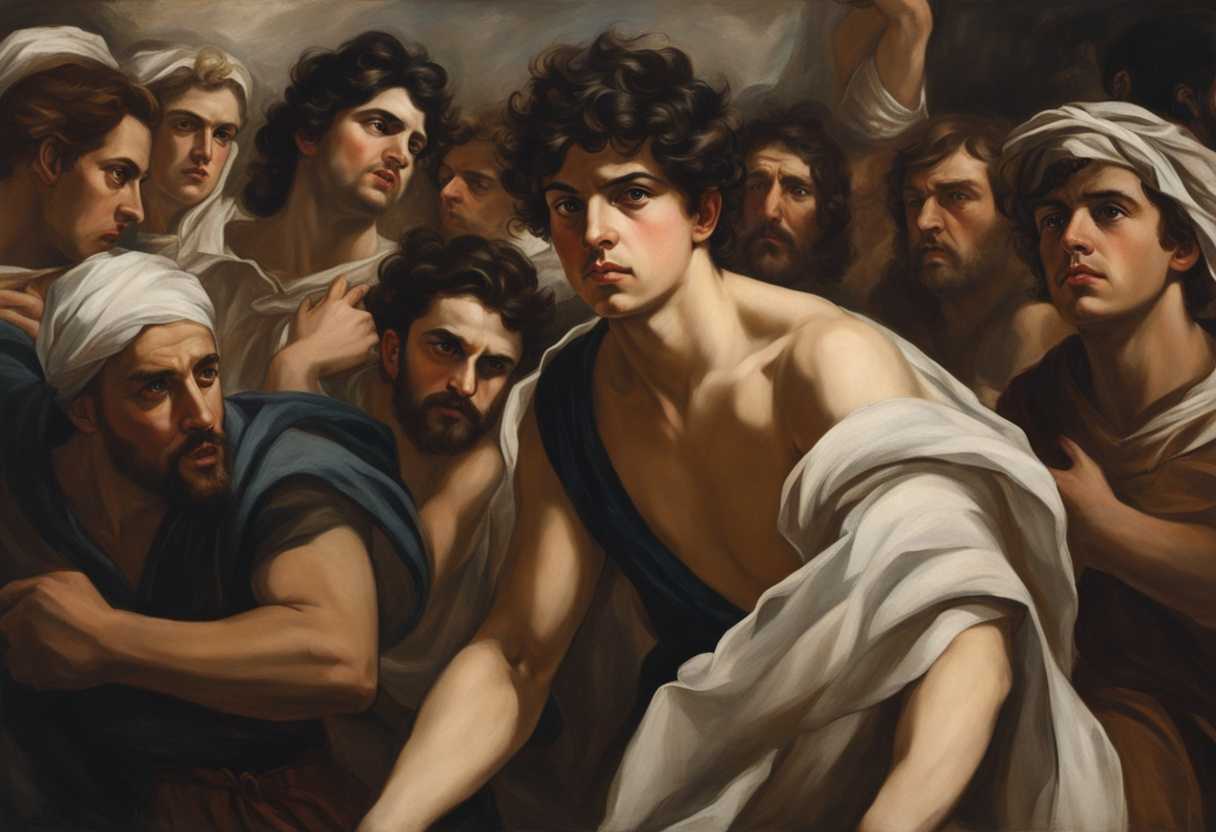
Setting the Scene for Mark 14:51
In Mark chapter 14, we find Jesus in the Garden of Gethsemane with his disciples. The scene is set late at night, with a full moon casting a soft glow over the olive trees and rocky terrain. Jesus, feeling the weight of what is to come, has gone off to pray, taking Peter, James, and John with him. The air is heavy with a sense of foreboding as Jesus asks his closest friends to stay awake and keep watch with him.
As Jesus pours out his heart to God in prayer, the disciples struggle to stay awake, their eyelids heavy with exhaustion. Suddenly, a disturbance breaks the stillness of the night as a young man, wearing nothing but a linen cloth, attempts to join them. Startled by the commotion, the guards seize the young man, who then flees, leaving behind his garment in their hands. This mysterious figure, often believed to be Mark himself, adds a sense of intrigue to the already tense atmosphere in the garden.
The betrayal of Judas is imminent, and the events leading to Jesus’ arrest and crucifixion are about to unfold. The Garden of Gethsemane becomes a pivotal setting in the narrative, symbolizing the moment of Jesus’ ultimate surrender to the will of God and the beginning of his journey to the cross.
What is Mark 14:51 about?
This verse is a well-known episode from the Bible, found in the Gospel of Mark. It highlights the moment when Jesus is arrested in the garden of Gethsemane, and in the chaos of that night, a young man, traditionally believed to be Mark himself, flees from the scene, leaving his garment behind.
This event serves as a powerful symbol of fear and vulnerability in the face of persecution and suffering. It demonstrates the human response to fear and the instinct for self-preservation. It also emphasizes the cost of discipleship and the challenges that come with following Jesus. The young man symbolizes the raw and exposed reality of human weakness and the struggle to remain faithful in difficult times by fleeing naked. The complexities of faith and the trials that believers may face remind us as we reflect on this verse. It prompts us to consider our own responses in times of adversity and to examine the depth of our commitment to our beliefs. It challenges us to confront our own vulnerabilities and to seek strength and courage in moments of doubt and fear. We are encouraged to reflect on how we can strengthen our faith and stand steadfast in the face of challenges, just as the young man fled in fear.
Understanding what Mark 14:51 really means
Structure for Commentary:
- Introduction and Context: Introduce the verse and its immediate context in the Bible.
- Detailed Explanation: Break down the key phrases and explain their meanings.
- Cross-references and Supporting Passages: Refer to other Bible passages that add depth and context.
- Relevance to Modern Life: Explain why this verse is relevant to readers today.
- Anecdotal Illustration: Share a story or example to illustrate the verse’s practical application.
- Reflective Questions: Pose questions to engage the reader in deeper thought.
- Conclusion: Summarize the key points and offer a final reflection.
Commentary:
-
Jesus is in the midst of his arrest in the Garden of Gethsemane in the Gospel of Mark, Chapter 14. A young man, only mentioned in this gospel, follows Jesus wearing nothing but a linen cloth. When the soldiers seize him, he escapes, leaving the cloth behind. This seemingly minor detail adds a layer of humanity and vulnerability to the narrative.
-
Detailed Explanation:
The phrase “a young man, wearing nothing but a linen cloth” signifies a state of unpreparedness and vulnerability. Linen, often associated with purity and simplicity, contrasts starkly with the chaos of the arrest. His fleeing, “leaving the cloth behind,” symbolizes a complete exposure and abandonment, underscoring the fear and desperation of the moment. -
Cross-references and Supporting Passages:
This incident can be seen in light of other moments of vulnerability in the Bible. Adam and Eve’s realization of their nakedness in Genesis 3:7 after sinning parallels the young man’s abandonment of his garment. Additionally, it echoes Peter’s denial in the same chapter (Mark 14:66-72), showcasing human frailty and fear. -
Relevance to Modern Life:
Today, this verse reminds us of our vulnerability and the moments when we feel exposed or unprepared. Fast-paced lives often subject us to situations that strip us of our confidence and security. The young man’s flight can symbolize our own tendencies to flee from fear rather than confront it. -
A young professional, despite their qualifications, feels unprepared for a high-stakes presentation. Fear grips them as the moment approaches, and they contemplate abandoning the task altogether. This scenario reflects the young man’s experience, revealing how moments of exposure are not confined to biblical times but are deeply human and timeless.
-
Reflective Questions:
- Have you ever felt unprepared or vulnerable in a crucial moment? How did you respond?
- What do you think God teaches us through our experiences of fear and exposure?
-
How can we find strength in our moments of weakness?
-
Conclusion:
The story of the young man in Mark 14:51, though brief, offers profound insights into human vulnerability and fear. Reflecting on this verse can help us better understand our own moments of exposure and learn to seek God’s strength when we feel most unprepared. Let this passage remind us that even in our most vulnerable moments, we are not alone as we navigate life’s challenges.
What does it mean to follow Jesus faithfully?
Following Jesus faithfully means staying committed to Him even when faced with challenges or adversity. Just like how the young man in this verse fled naked when he encountered trouble, it is a reminder that our faithfulness to Jesus may be tested, but we must remain steadfast in our devotion to Him. We are called to uphold our beliefs and values even in difficult times, trusting that Jesus is with us and will guide us through every situation. Being willing to sacrifice and surrendering ourselves completely to Jesus faithfully means following Him. This could involve letting go of our own desires and ambitions in order to follow His will for our lives. It means living a life that is aligned with His teachings and example, showing love and compassion to others, and seeking to bring glory to God in all that we do. We demonstrate our trust and loyalty to Jesus, even when it is not easy, by staying true to Him and His teachings. Following Jesus faithfully ultimately involves a journey of constant growth, learning, and transformation. It requires humility, obedience, and a deep connection with Him through prayer, study of the Scriptures, and fellowship with other believers. We can experience the fullness of His grace, love, and peace in our lives and ultimately fulfill His purpose for us on this earth by seeking to walk in His footsteps daily.
Application
Think about Mark 14:51 as a call to action for your daily life. Just like you commit to your work and family, now’s the time to double down on your faith. Reflect on the young man in the story who ran away. When challenges hit, will you stand strong and declare your loyalty to Christ? Are you ready to show unwavering faith when it matters most?

Reverend Michael Johnson is an experienced Church Minister with a profound expertise in spirituality and guidance. With a serene presence and a compassionate heart, he has faithfully served his congregation for over 20 years, leading them on a spiritual journey towards inner peace and enlightenment. Reverend Johnson’s extensive knowledge of religious philosophies and profound understanding of human nature have made him a trusted confidant and mentor to many, as he seamlessly weaves his profound wisdom into life teachings. Reverend Johnson’s calming demeanor and empathetic nature continue to uplift and heal souls, nurturing a sense of unity and tranquility within his community.