
Matthew 14:1 is about the fear and insecurity of King Herod, who is haunted by guilt and paranoia due to his recognition of John the Baptist’s righteousness and the growing popularity of Jesus.
1 At that time Herod the tetrarch heard about the fame of Jesus,
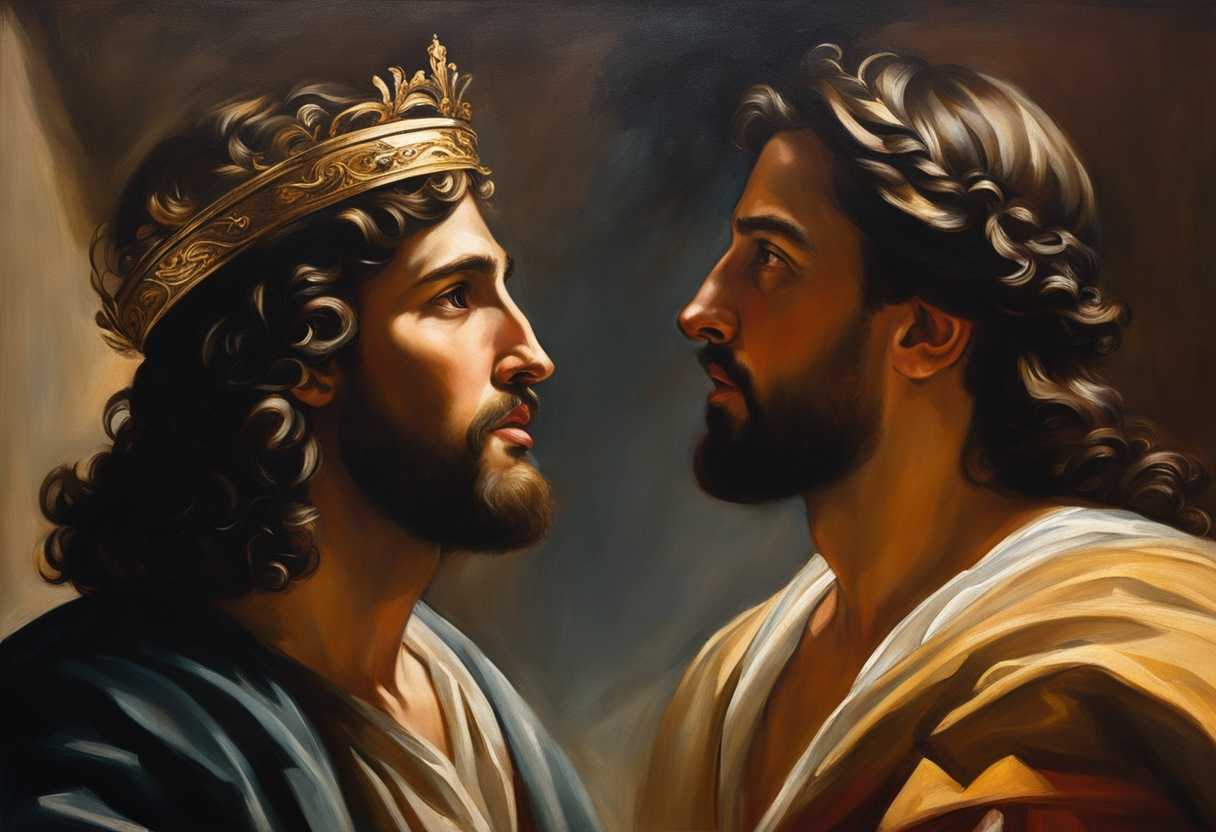
Setting the Scene for Matthew 14:1
In Matthew chapter 14, we find King Herod Antipas hosting a lavish banquet in his palace. The opulent hall is filled with distinguished guests, including Herod’s courtiers, military officials, and prominent members of society. The room is adorned with rich tapestries, golden candelabras, and exotic flowers, creating an atmosphere of grandeur and extravagance.
The guests are engaged in lively conversation, enjoying the finest food and wine that the kingdom has to offer. Herod, known for his love of luxury and entertainment, is holding court at the head of the table, regaling his guests with stories and jokes. The air is filled with laughter and music as the evening progresses, with servants moving gracefully around the room, attending to the needs of the guests.
It is in this sumptuous setting that the events of Matthew 14 unfold, leading to the infamous request of Herodias’ daughter and the subsequent beheading of John the Baptist. The scene is a stark contrast between the earthly pleasures of the banquet hall and the moral dilemmas faced by those in power, highlighting the complexities of human nature and the consequences of their actions.
What is Matthew 14:1 about?
King Herod’s reaction to Jesus’ miracles shows a moment of confusion and fear in this verse. Herod, having heard of the incredible works of Jesus, jumps to the conclusion that Jesus is actually John the Baptist resurrected. This misunderstanding speaks to the power and impact of Jesus’ teachings and miracles, as they were so profound that they led Herod to believe in the possibility of resurrection.
But why did Herod specifically think Jesus was John the Baptist resurrected? What did this mistaken identity reveal about Herod’s beliefs and fears? This moment serves as a reminder of the complexities of human perception and the ways in which our preconceived notions can shape our understanding of the world around us. It also highlights the political and social tensions that surrounded Jesus during his time, as figures like Herod grappled with the implications of his teachings and the impact he had on the people. We are called to consider how our own beliefs and biases might influence our interpretations of the world and those around us as we reflect on this verse. We too must be mindful of how our perceptions shape our interactions with others and the broader world, just as Herod’s fear and misunderstanding led him to mistakenly identify Jesus. This verse challenges us to approach new experiences with an open mind and a willingness to question our assumptions, so that we may truly see and understand the miracles that unfold before us.
Understanding what Matthew 14:1 really means
In Matthew 14:1, we are introduced to a pivotal moment in the Gospel narrative, the beginning of the account of John the Baptist’s tragic death. This verse serves as a precursor to the unfolding events that will shed light on the complexities of power, morality, and faith during that time. Understanding the context is crucial to grasp the weight of what is about to transpire. The mention of Herod the tetrarch immediately sets the stage, hinting at the political and social backdrop against which this story unfolds.
As we delve deeper into the related passages, such as Mark 6:14-29 and Luke 9:7-9, we gain a more comprehensive view of the circumstances surrounding John the Baptist’s demise. These parallel accounts offer additional insights into the characters involved and the intricate web of relationships that led to the prophet’s untimely end. Moreover, exploring passages like Matthew 11:2-6 sheds light on John the Baptist’s pivotal role as a herald of Jesus, emphasizing the interconnectedness of their missions.
The relevance of this narrative to contemporary audiences is striking. John the Baptist’s unwavering commitment to truth and righteousness serves as a beacon of moral courage, challenging us to stand firm in our convictions even when faced with adversity. Conversely, Herod’s moral failings and lack of accountability serve as a cautionary tale, prompting reflection on the responsibilities of leadership and the consequences of ethical compromise. The juxtaposition of faith and doubt in Herod’s perplexity about Jesus and John invites us to confront our own struggles with belief and understanding in the midst of uncertainty.
Consider a modern-day whistleblower who, like John the Baptist, risks everything to expose corruption and injustice. Their story resonates with the timeless themes of courage and integrity, inspiring us to confront wrongdoing and speak truth to power, regardless of the personal cost. The phrase “Herod the tetrarch” not only denotes Herod’s political stature but also symbolizes the inherent tensions between authority and morality. Similarly, the mention of Herod hearing reports about Jesus underscores the growing influence of Christ’s ministry and the profound impact it had on those in positions of power.
By immersing ourselves in the nuances of this verse and its surrounding context, we unearth profound lessons about integrity, leadership, and faith that transcend temporal boundaries. The narrative of John the Baptist’s martyrdom serves as a timeless reminder of the enduring struggle between good and evil, truth and deception, inviting us to reflect on our own choices and convictions in a world fraught with moral ambiguity.
What are we willing to sacrifice for truth?
The verse reminds us of the importance of pursuing truth despite the potential sacrifices we might have to make. It challenges us to consider what we are willing to give up in exchange for truth. Sacrifices can come in various forms, such as personal comforts, relationships, or even facing opposition or consequences for standing up for what is right. The verse prompts us to reflect on our own values and convictions and to consider the cost of following them.
Choosing truth often requires courage and perseverance, especially when faced with challenges or obstacles. It demands a willingness to let go of what is comfortable or easy in order to uphold what is true and just. Sacrifices made in pursuit of truth can lead to personal growth, transformation, and a deeper understanding of oneself and the world around us. Living a life guided by truth can bring about fulfillment, integrity, and a sense of purpose that outweigh any sacrifices made along the way.
Application
Imagine your life as a busy office or a bustling family home, every decision and action requires a guiding principle. Jesus is that guiding principle. Recognize His authority like you would respect a trusted boss or a loved family member. Reflect on how His teachings can shape your actions today. Will you align with His wisdom and make your life smoother and more meaningful? What choice will you make right now to embrace His truth?

Reverend Michael Johnson is an experienced Church Minister with a profound expertise in spirituality and guidance. With a serene presence and a compassionate heart, he has faithfully served his congregation for over 20 years, leading them on a spiritual journey towards inner peace and enlightenment. Reverend Johnson’s extensive knowledge of religious philosophies and profound understanding of human nature have made him a trusted confidant and mentor to many, as he seamlessly weaves his profound wisdom into life teachings. Reverend Johnson’s calming demeanor and empathetic nature continue to uplift and heal souls, nurturing a sense of unity and tranquility within his community.