
In the Bible, a tenant refers to someone who occupies or leases land or property owned by another, often responsible for paying rent or producing fruit for the landowner. This concept is illustrated in parables such as the Parable of the Wicked Tenants (Matthew 21:33-46), emphasizing themes of stewardship, accountability, and the consequences of rejecting the owner’s authority.
Scripture
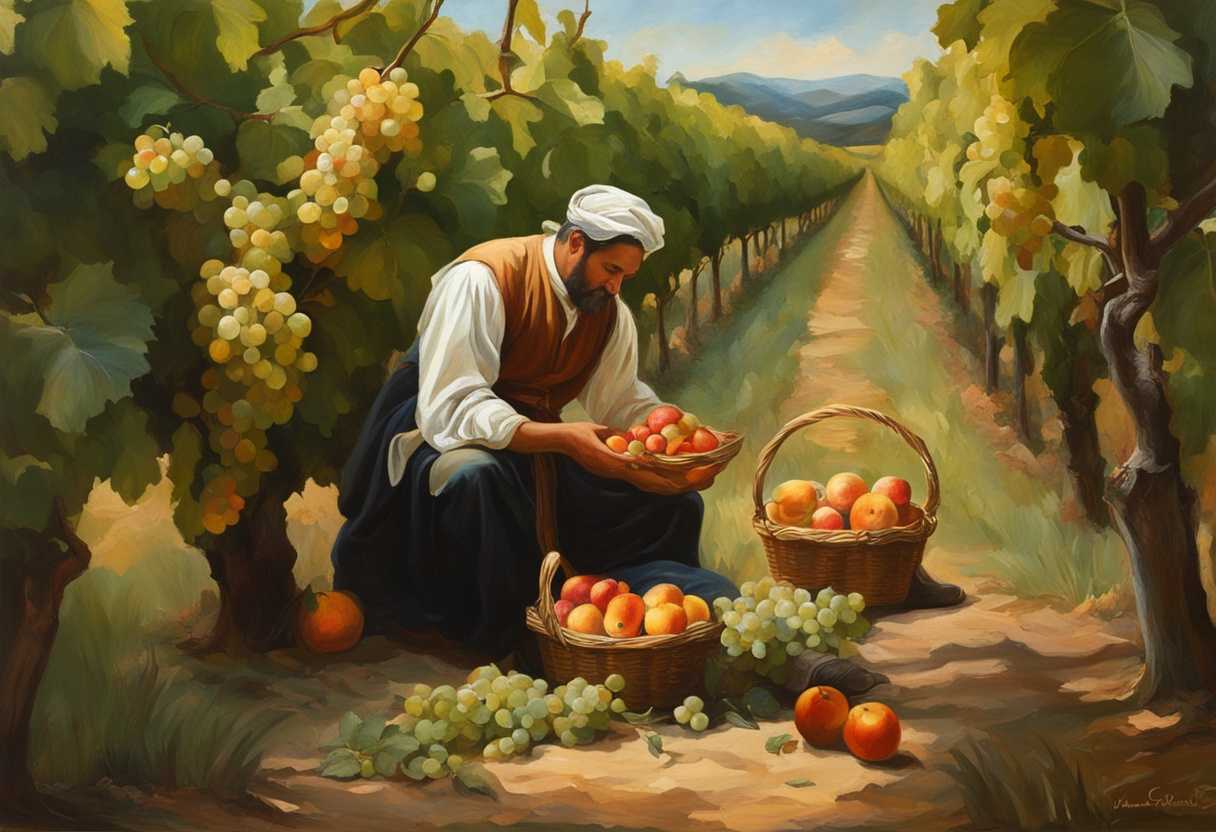
33 “Hear another parable. There was a master of a house who planted a vineyard and put a fence around it and dug a winepress in it and built a tower and leased it to tenants, and went into another country.
34 When the season for fruit drew near, he sent his servants to the tenants to get his fruit.
35 And the tenants took his servants and beat one, killed another, and stoned another.
36 Again he sent other servants, more than the first. And they did the same to them.
37 Finally he sent his son to them, saying, ‘They will respect my son.’
38 But when the tenants saw the son, they said to themselves, ‘This is the heir. Come, let us kill him and have his inheritance.’
39 And they took him and threw him out of the vineyard and killed him.
40 Now when the owner of the vineyard comes, what will he do to those tenants?”
41 They said to him, “He will put those wretches to a miserable death and let out the vineyard to other tenants who will give him the fruits in their seasons.”
42 Jesus said to them, “Have you never read in the Scriptures: “‘The stone that the builders rejected has become the cornerstone; this was the Lord’s doing, and it is marvelous in our eyes’?
43 Therefore I tell you, the kingdom of God will be taken away from you and given to a people producing its fruits.
44 And the one who falls on this stone will be broken to pieces; and when it falls on anyone, it will crush him.”
45 When the chief priests and the Pharisees heard his parables, they perceived that he was speaking about them.
46 And although they were seeking to arrest him, they feared the crowds, because they held him to be a prophet.
Biblical Meaning of Tenant Explained
The concept of tenants in the Bible extends beyond the simplistic idea of renting property; it encompasses profound spiritual and moral implications related to stewardship, responsibility, and divine authority. In the Parable of the Wicked Tenants found in Matthew 21:33-46, Jesus uses the relationship between a landowner and his tenants to illustrate God’s expectations for His people. The landowner represents God, who has entrusted His creation and His people with responsibilities. The tenants, who are expected to cultivate the vineyard and pay their dues, symbolize humanity, particularly the religious leaders of Israel who have failed to honor their obligations. When the tenants reject the landowner by mistreating his servants and even killing his son, it highlights the severe consequences of not recognizing and respecting God’s authority and intentions.
This parable also evokes broader themes found throughout scripture, emphasizing the responsibility of God’s people to live righteously and to produce fruit that honors the Creator. In Luke 12:42-48, Jesus further addresses the responsibilities of tenants by describing a faithful and wise steward—one who acts in accordance with the owner’s desires. The idea of being held accountable for one’s actions is a recurring theme in scripture; it warns what happens when people neglect their duties or act selfishly. Ultimately, the biblical idea of tenants serves as a reminder that all of creation belongs to God, and humanity is entrusted with the care, cultivation, and stewardship of God’s gifts, leading to the spiritual understanding that one must live in obedience and take responsibility for the gifts they have received.
The notion of tenants in biblical literature further illustrates the dynamic interplay between divine expectation and human accountability. In various contexts, tenants serve not just as caretakers of physical resources but as active participants in a covenant relationship with God. This relationship is emphasized in the Old Testament, specifically in the context of Israel as God’s chosen people. In this framework, the Israelites are often depicted as tenants of the land promised to them—an agricultural paradise requiring vigilance and righteousness in its stewardship. This portrayal underscores that the land and its resources are gifts from God, necessitating a corresponding ethical obligation to uphold justice, care for the vulnerable, and maintain fidelity to divine commandments.
Moreover, the metaphor of tenants frequently extends to the themes of judgment and redemption. In the prophetic writings, God calls out to His people for their failure to honor the covenant, comparing them to unfruitful tenants who have neglected their responsibilities. The consequences of their actions reveal a stark reminder of accountability—failure to engage faithfully with God’s blessings results in the loss of those very blessings. The overarching message points to the ultimate hope for restoration and reconciliation, as God lovingly seeks to reclaim His tenants and to renew their purpose. Therefore, understanding tenants in this broader biblical context invites reflection on the nature of one’s relationship with the divine and the critical importance of living out that relationship through responsible stewardship and fruitful living.
Stewardship and Responsibility
In biblical contexts, the concept of a tenant often symbolizes the idea of stewardship. Tenants are entrusted with the care and management of land or property that does not belong to them. This reflects a broader theological principle that humans are stewards of God’s creation. The expectation is that tenants will manage the resources wisely and responsibly, recognizing that they are accountable to the owner. This notion emphasizes the importance of using one’s gifts and resources in a manner that honors God and serves others.
Judgment and Accountability
The role of a tenant also carries implications of judgment and accountability. In biblical narratives, tenants are often held accountable for their actions and decisions regarding the property they manage. This serves as a reminder that individuals will ultimately face judgment for how they have lived their lives and managed the responsibilities entrusted to them. The biblical theme of accountability underscores the belief that God observes human actions and will evaluate them based on faithfulness and obedience to His commands.
Community and Relationships
Additionally, the tenant concept can highlight the importance of community and relationships. In many biblical stories, the interactions between tenants and landowners reflect broader social dynamics and the responsibilities individuals have toward one another. This can be seen in the way tenants are expected to cultivate not only the land but also relationships with the owner and other community members. The biblical narrative encourages a sense of interconnectedness, where individuals recognize their roles within a larger community and the impact of their actions on others.
How to Cultivate Faith through Stewardship and Responsibility
Cultivating faith through stewardship and responsibility is a beautiful journey that invites us to recognize the gifts we’ve been given and how we can share them with others. As we embrace our roles as stewards of God’s creation, we begin to see our resources—time, talents, and treasures—not just as personal possessions but as tools for service and love. This means being intentional about how we use our gifts, whether it’s volunteering in our communities, supporting those in need, or simply being present for a friend in distress. When we take responsibility for our actions and their impact on others, we deepen our relationship with God and strengthen our faith. It’s in these moments of giving and serving that we often find our own faith renewed, as we witness the transformative power of love in action. So, let’s step out in faith, knowing that every small act of stewardship can lead to profound changes in our lives and the lives of those around us.
Bible References to Tenant Biblical Meaning:
Mark 12:1-12: 1 And he began to speak to them in parables. “A man planted a vineyard and put a fence around it and dug a pit for the winepress and built a tower, and leased it to tenants and went into another country.
2 When the season came, he sent a servant to the tenants to get from them some of the fruit of the vineyard.
3 And they took him and beat him and sent him away empty-handed.
4 And he sent another, and him they killed. And so with many others: some they beat, and some they killed.
5 And he sent another, and him they killed. And so with many others: some they beat, and some they killed.
6 He had still one other, a beloved son. Finally he sent him to them, saying, ‘They will respect my son.’
7 But those tenants said to one another, ‘This is the heir. Come, let us kill him, and the inheritance will be ours.’
8 And they took him and killed him and threw him out of the vineyard.
9 What will the owner of the vineyard do? He will come and destroy the tenants and give the vineyard to others.
10 Have you not read this Scripture: “‘The stone that the builders rejected has become the cornerstone;
11 This was the Lord’s doing, and it is marvelous in our eyes.
12 And they were seeking to arrest him but feared the people, for they perceived that he had told the parable against them. So they left him and went away.
Luke 20:9-19: 9 And he began to tell the people this parable: “A man planted a vineyard and let it out to tenants and went into another country for a long while.
10 When the time came, he sent a servant to the tenants, so that they would give him some of the fruit of the vineyard. But the tenants beat him and sent him away empty-handed.
11 He sent yet another, and they wounded him and cast him out.
12 And he sent yet a third. This one also they wounded and cast out.
13 Then the owner of the vineyard said, ‘What shall I do? I will send my beloved son; perhaps they will respect him.’
14 But when the tenants saw him, they said to themselves, ‘This is the heir. Let us kill him, so that the inheritance may be ours.’
15 So they cast him out of the vineyard and killed him. What then will the owner of the vineyard do to them?
16 He will come and destroy those tenants and give the vineyard to others.” When they heard this, they said, “Surely not!”
17 But he looked directly at them and said, “What then is this that is written: “‘The stone that the builders rejected has become the cornerstone’?
18 Everyone who falls on that stone will be broken to pieces, and when it falls on anyone, it will crush him.”
19 The scribes and the chief priests sought to lay hands on him at that very hour, for they perceived that he had told this parable against them, but they feared the people.
Isaiah 5:1-7: 1 Let me sing for my beloved my love song concerning his vineyard: My beloved had a vineyard on a very fertile hill.
2 He dug it and cleared it of stones, and planted it with choice vines; he built a watchtower in the midst of it, and hewed out a wine vat in it; and he looked for it to yield grapes, but it yielded wild grapes.
3 And now, O inhabitants of Jerusalem and men of Judah, judge between me and my vineyard.
4 What more was there to do for my vineyard, that I have not done in it? When I looked for it to yield grapes, why did it yield wild grapes?
5 And now I will tell you what I will do to my vineyard. I will remove its hedge, and it shall be devoured; I will break down its wall, and it shall be trampled down.
6 I will make it a waste;
it shall not be pruned or hoed,
and briers and thorns shall grow up;
I will also command the clouds
that they rain no rain upon it.
7 For the vineyard of the Lord of hosts is the house of Israel, and the men of Judah are his pleasant planting; and he looked for justice, but behold, bloodshed; for righteousness, but behold, an outcry!
Psalm 80:8-16: 8 You brought a vine out of Egypt; you drove out the nations and planted it.
9 You cleared the ground for it; it took deep root and filled the land.
10 The mountains were covered with its shade, the mighty cedars with its branches.
11 It swayed its branches to the sea, and its shoots to the River.
12 Why then have you broken down its walls, so that all who pass along the way pluck its fruit?
13 The boar from the forest ravages it, and all that move in the field feed on it.
14 Turn again, O God of hosts! Look down from heaven, and see; have regard for this vine, the stock that your right hand planted.
15 the stock that your right hand planted, and for the son whom you made strong for yourself.
16 They have burned it with fire; they have cut it down; may they perish at the rebuke of your face!
Jeremiah 12:10-13: 10 Many shepherds have destroyed my vineyard; they have trampled down my portion; they have made my pleasant portion a desolate wilderness.
11 They have made it a desolation;
desolate, it mourns to me.
The whole land is made desolate,
but no man lays it to heart.
12 The destroyers have come upon all the bare heights in the desert, for the sword of the Lord devours from one end of the land to the other; no flesh has peace.
13 They have sown wheat and have reaped thorns; they have tired themselves out but profit nothing. They shall be ashamed of their harvests because of the fierce anger of the Lord.”
Ezekiel 19:10-14: 10 Your mother was like a vine in a vineyard planted by the water, fruitful and full of branches by reason of abundant water.
11 Its strong stem became a ruler’s scepter; it towered aloft among the thick boughs; it was seen in its height with the mass of its branches.
12 But she was plucked up in fury; she was cast down to the ground; the east wind dried up her fruit; her strong rods were broken and withered; the fire consumed them.
13 And now she is planted in the wilderness, in a dry and thirsty land.
14 And fire has gone out from the stem of its shoots, has consumed its fruit, so that there remains in it no strong stem, no scepter for ruling. This is a lamentation and has become a lamentation.
Romans 11:17-24: 11 But if some of the branches were broken off, and you, although a wild olive shoot, were grafted in among the others and now share in the nourishing root of the olive tree,
18 do not be arrogant toward the branches. If you are, remember it is not you who support the root, but the root that supports you.
19 Then you will say, “Branches were broken off so that I might be grafted in.”
20 That is true. They were broken off because of their unbelief, but you stand fast through faith. So do not become proud, but fear.
21 For if God did not spare the natural branches, neither will he spare you.
22 Note then the kindness and the severity of God: severity toward those who have fallen, but God’s kindness to you, provided you continue in his kindness. Otherwise you too will be cut off.
11 And even they, if they do not continue in their unbelief, will be grafted in, for God has the power to graft them in again.
24 For if you were cut from what is by nature a wild olive tree, and grafted, contrary to nature, into a cultivated olive tree, how much more will these, the natural branches, be grafted back into their own olive tree.

Reverend Michael Johnson is an experienced Church Minister with a profound expertise in spirituality and guidance. With a serene presence and a compassionate heart, he has faithfully served his congregation for over 20 years, leading them on a spiritual journey towards inner peace and enlightenment. Reverend Johnson’s extensive knowledge of religious philosophies and profound understanding of human nature have made him a trusted confidant and mentor to many, as he seamlessly weaves his profound wisdom into life teachings. Reverend Johnson’s calming demeanor and empathetic nature continue to uplift and heal souls, nurturing a sense of unity and tranquility within his community.