
In the Bible, a “Cushite” refers to a person from Cush, an ancient kingdom located south of Egypt, often associated with modern-day Sudan. The term is used in various contexts, including reference to ethnic identity and geographical origin, as seen in passages like Jeremiah 13:23 and Numbers 12:1, where it also denotes a specific individual, such as Moses’ wife.
Scripture
6 The sons of Ham: Cush, Egypt, Put, and Canaan.
7 The sons of Cush: Seba, Havilah, Sabtah, Raamah, and Sabteca. The sons of Raamah: Sheba and Dedan.
8 Cush fathered Nimrod; he was the first on earth to be a mighty man.
Meaning of Cushite in the Bible
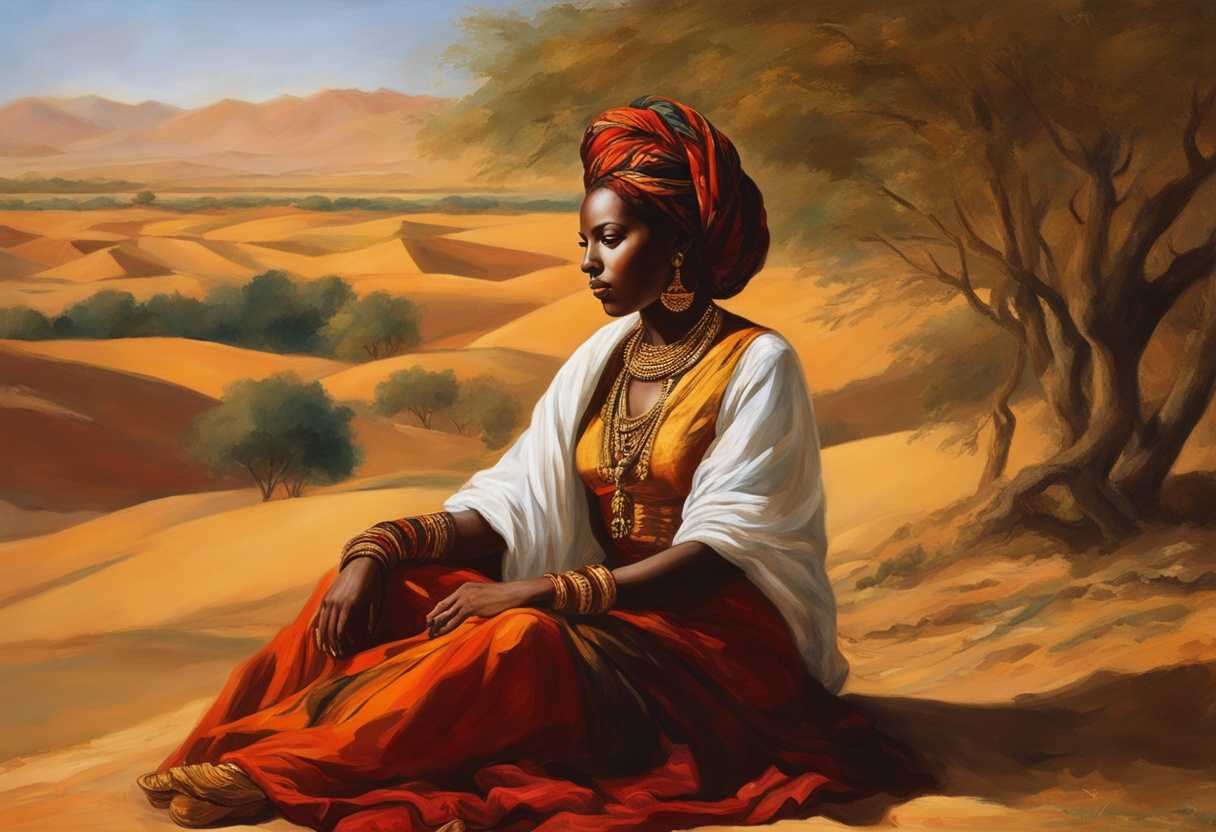
In biblical texts, the term “Cushite” not only designates an individual from the ancient kingdom of Cush but also encapsulates broader themes of cultural diversity, inclusion, and the implications of race. One notable instance is found in Numbers 12:1, where Miriam and Aaron speak against Moses because he had married a Cushite woman. This story highlights tensions arising from cross-cultural relationships and emphasizes that God’s intentions transcend ethnic boundaries. The Cushite identity, in this context, serves as a symbol of the richness of God’s creation and His acceptance of individuals from diverse backgrounds.
Moreover, Cushite figures in the Bible often represent a divine affirmation of the universality of God’s message. In Jeremiah 13:23, the prophet uses the rhetorical question about a Cushite changing his skin to illustrate the difficulty of repentance for a people accustomed to sin. This illustration underscores God’s concern for all nations and implies that transformation is possible for everyone, regardless of heritage. Thus, the identity of the Cushite transcends mere geographical reference, reflecting a profound theological narrative about God’s love, justice, and the call to unity among diverse peoples within the faith community. The mention of Cushites throughout scripture invites readers to consider the implications of identity, acceptance, and God’s overarching plan for humanity.
The identity of the Cushite also appears in connection with notable figures and moments throughout the biblical narrative, reflecting the diverse roles that individuals from Cush played in Israel’s history. For instance, in 2 Kings 19:9, an envoy from Cush is mentioned during the Assyrian siege of Jerusalem. This reference suggests the geopolitical significance of Cushite involvement in surrounding conflicts, implying a broader network of alliances and enmities in the region. The Cushites are not merely passive characters but instead engage actively in the historical and political dynamics of the time, highlighting their importance in the narrative fabric of the ancient Near East.
Furthermore, Cushite status is often associated with physical characteristics, particularly through the instance of the Cushite warrior in the biblical siege narratives. The Cushites were known for their formidable skills in warfare, and this perception often elevated their stature within the context of military exploits. The inclusion of such figures within the Bible emphasizes a complex relationship where physical attributes are acknowledged yet do not diminish one’s potential for leadership or valor. Thus, the Cushites serve as a reminder of the intricate interplay of identity, strength, and cultural exchange. Overall, Cushites in the biblical context open rich discourse on the complexity of human relationships and the inclusivity of divine purpose across boundaries.
Ethnic and Geographical Significance
The term “Cushite” in the Bible primarily refers to individuals from the region of Cush, which is often associated with the area south of Egypt, encompassing parts of modern-day Sudan and Ethiopia. This geographical context highlights the Cushites as a distinct ethnic group with their own cultural identity. The mention of Cushites in biblical texts often serves to illustrate the diversity of nations and peoples known to the ancient Israelites, emphasizing the interconnectedness of different cultures in the ancient Near East.
Symbol of Diversity and Inclusion
Cushites in the Bible also represent the broader theme of diversity within God’s creation. Their presence in biblical narratives underscores the idea that God’s message and salvation extend beyond the Israelites to all nations. This inclusion of Cushites can be seen as a precursor to the New Testament’s emphasis on the universality of the Gospel, where people from all backgrounds are invited to partake in God’s promises. The Cushites thus symbolize the richness of God’s plan for humanity, transcending ethnic and cultural boundaries.
Spiritual and Moral Lessons
The interactions between Israelites and Cushites in the Bible often carry moral and spiritual lessons. For instance, the Cushites are sometimes depicted in contrasting roles, serving as both allies and adversaries to the Israelites. These narratives can reflect themes of humility, the dangers of pride, and the importance of recognizing God’s sovereignty over all nations. The Cushites’ presence in biblical stories encourages readers to reflect on their own attitudes toward others, promoting a message of unity and respect among diverse peoples.
How to Embrace Faith Through Cultural Heritage and Identity
Embracing faith through your cultural heritage and identity can be a deeply enriching journey that connects you to both your roots and your beliefs. As you explore the traditions, stories, and values passed down through generations, consider how they align with the teachings of Christ and the principles of love, compassion, and community found in the Bible. Reflect on how your unique background can enhance your understanding of faith—perhaps through music, art, or communal gatherings that celebrate both your culture and your spirituality. Remember, God created each of us with a distinct identity, and by honoring your heritage, you can deepen your relationship with Him and share your faith in a way that resonates with others. Embrace the beauty of your cultural identity as a testament to God’s creativity, and let it inspire you to live out your faith authentically and joyfully in every aspect of your life.
Bible References to the Cushites:
Numbers 12:1-10: 1 Miriam and Aaron spoke against Moses because of the Cushite woman whom he had married, for he had married a Cushite woman.
2 And they said, “Has the Lord indeed spoken only through Moses? Has he not spoken through us also?” And the Lord heard it.
3 Now the man Moses was very meek, more than all people who were on the face of the earth.
4 And suddenly the Lord said to Moses and to Aaron and Miriam, “Come out, you three, to the tent of meeting.” And the three of them came out.
5 And the Lord came down in a pillar of cloud and stood at the entrance of the tent and called Aaron and Miriam, and they both came forward.
6 And he said, “Hear my words: If there is a prophet among you, I the Lord make myself known to him in a vision; I speak with him in a dream.
7 Not so with my servant Moses. He is faithful in all my house.
8 With him I speak mouth to mouth, clearly, and not in riddles, and he beholds the form of the Lord. Why then were you not afraid to speak against my servant Moses?
9 And the anger of the Lord was kindled against them, and he departed.
10 When the cloud removed from over the tent, behold, Miriam was leprous, like snow. And Aaron turned toward Miriam, and behold, she was leprous.
2 Samuel 18:19-32: 19 Then Ahimaaz the son of Zadok said, “Let me run and carry news to the king that the Lord has delivered him from the hand of his enemies.”
20 Then Joab said to him, “You will not carry news today. You may carry news another day, but today you shall carry no news, because the king’s son is dead.”
21 Then Joab said to the Cushite, “Go, tell the king what you have seen.” And the Cushite bowed before Joab and ran.
22 Then Ahimaaz the son of Zadok said, “Let me run and carry news to the king that the Lord has delivered him from the hand of his enemies.”
23 But whatever happens, he said, I will run.
24 Now David was sitting between the two gates, and the watchman went up to the roof of the gate by the wall, and lifted up his eyes and looked, and behold, a man running alone.
25 And the watchman cried out and told the king. And the king said, “If he is alone, there is news in his mouth.” And he drew nearer and nearer.
26 And the watchman saw another man running. And the watchman called to the gate and said, “See, another man running alone!” The king said, “He also brings news.”
27 The watchman said, “I think the running of the first is like the running of Ahimaaz the son of Zadok.”
28 Then Ahimaaz cried out to the king, “All is well.” And he bowed before the king with his face to the earth and said, “Blessed be the Lord your God, who has delivered up the men who raised their hand against my lord the king.”
29 The king said, “Is it well with the young man Absalom?” Ahimaaz answered, “When Joab sent the king’s servant, your servant, I saw a great commotion, but I do not know what it was.”
30 The king said, “Turn aside and stand here.” So he turned aside and stood still.
31 And behold, the Cushite came, and the Cushite said, “Good news for my lord the king! For the Lord has delivered you this day from the hand of all who rose up against you.”
32 The king said to the Cushite, “Is it well with the young man Absalom?” And the Cushite answered, “May the enemies of my lord the king and all who rise up against you for evil be like that young man.”
1 Chronicles 1:8-10: 8 The sons of Ham: Cush, Egypt, Put, and Canaan.
9 The sons of Cush: Seba, Havilah, Sabta, Raamah, and Sabteca. The sons of Raamah: Sheba and Dedan.
10 Cush fathered Nimrod. He was the first on earth to be a mighty man.
Isaiah 18:1-7: 1 Ah, land of whirring wings that is beyond the rivers of Cush,
2 which sends ambassadors by the sea, in vessels of papyrus on the waters. Go, you swift messengers, to a nation tall and smooth, to a people feared near and far, a nation mighty and conquering, whose land the rivers divide.
3 All you inhabitants of the world, you who dwell on the earth, when a signal is raised on the mountains, look! When a trumpet is blown, hear!
4 For thus the Lord said to me: “I will quietly look from my dwelling like clear heat in sunshine, like a cloud of dew in the heat of harvest.”
5 For, before the harvest, when the blossom is over, and the flower becomes a ripening grape, he cuts off the shoots with pruning hooks, and the spreading branches he lops off and clears away.
6 They shall all of them be left to the birds of prey of the mountains and to the beasts of the earth. And the birds of prey will summer on them, and all the beasts of the earth will winter on them.
7 At that time tribute will be brought to the Lord of hosts from a people tall and smooth, from a people feared near and far, a nation mighty and conquering, whose land the rivers divide, to Mount Zion, the place of the name of the Lord of hosts.
Jeremiah 13:23: 23 Can the Ethiopian change his skin
or the leopard his spots?
Then also you can do good
who are accustomed to do evil.
Jeremiah 38:7-13: 7 But Ebed-melech the Ethiopian, a eunuch who was in the king’s house, heard that they had put Jeremiah into the cistern. The king was sitting in the Benjamin Gate,
8 Ebed-melech went out from the king’s house and said to the king,
9 “My lord the king, these men have done evil in all that they did to Jeremiah the prophet by casting him into the cistern, and he will die there of hunger, for there is no bread left in the city.”
10 Then the king commanded Ebed-melech the Ethiopian, “Take thirty men with you from here, and lift Jeremiah the prophet out of the cistern before he dies.”
11 So Ebed-melech took the men with him and went to the house of the king, to a wardrobe in the storehouse, and took from there old rags and worn-out clothes, which he let down to Jeremiah in the cistern by ropes.
12 Ebed-melech the Ethiopian said to Jeremiah, “Put the rags and clothes between your armpits and the ropes.” Jeremiah did so.
13 So they drew Jeremiah up with ropes and lifted him out of the cistern. And Jeremiah remained in the court of the guard.
Zephaniah 3:10-11: 10 From beyond the rivers of Cush, my worshipers, the daughter of my dispersed people, shall bring me an offering.
11 On that day you shall not be put to shame because of the deeds by which you have rebelled against me; for then I will remove from your midst your proudly exultant ones, and you shall no longer be haughty in my holy mountain.
Amos 9:7-8: 7 “Are you not like the Cushites to me, O people of Israel?” declares the Lord. “Did I not bring up Israel from the land of Egypt, and the Philistines from Caphtor and the Syrians from Kir?”
8 Behold, the eyes of the Lord God are upon the sinful kingdom, and I will destroy it from the surface of the ground, except that I will not utterly destroy the house of Jacob,” declares the Lord.

Reverend Michael Johnson is an experienced Church Minister with a profound expertise in spirituality and guidance. With a serene presence and a compassionate heart, he has faithfully served his congregation for over 20 years, leading them on a spiritual journey towards inner peace and enlightenment. Reverend Johnson’s extensive knowledge of religious philosophies and profound understanding of human nature have made him a trusted confidant and mentor to many, as he seamlessly weaves his profound wisdom into life teachings. Reverend Johnson’s calming demeanor and empathetic nature continue to uplift and heal souls, nurturing a sense of unity and tranquility within his community.