
Elkanah is a Hebrew name meaning “God has possessed” or “God has created.” In the Bible, he is primarily known as the father of the prophet Samuel, described in 1 Samuel 1-2 as a righteous man who had two wives, Hannah and Peninnah.
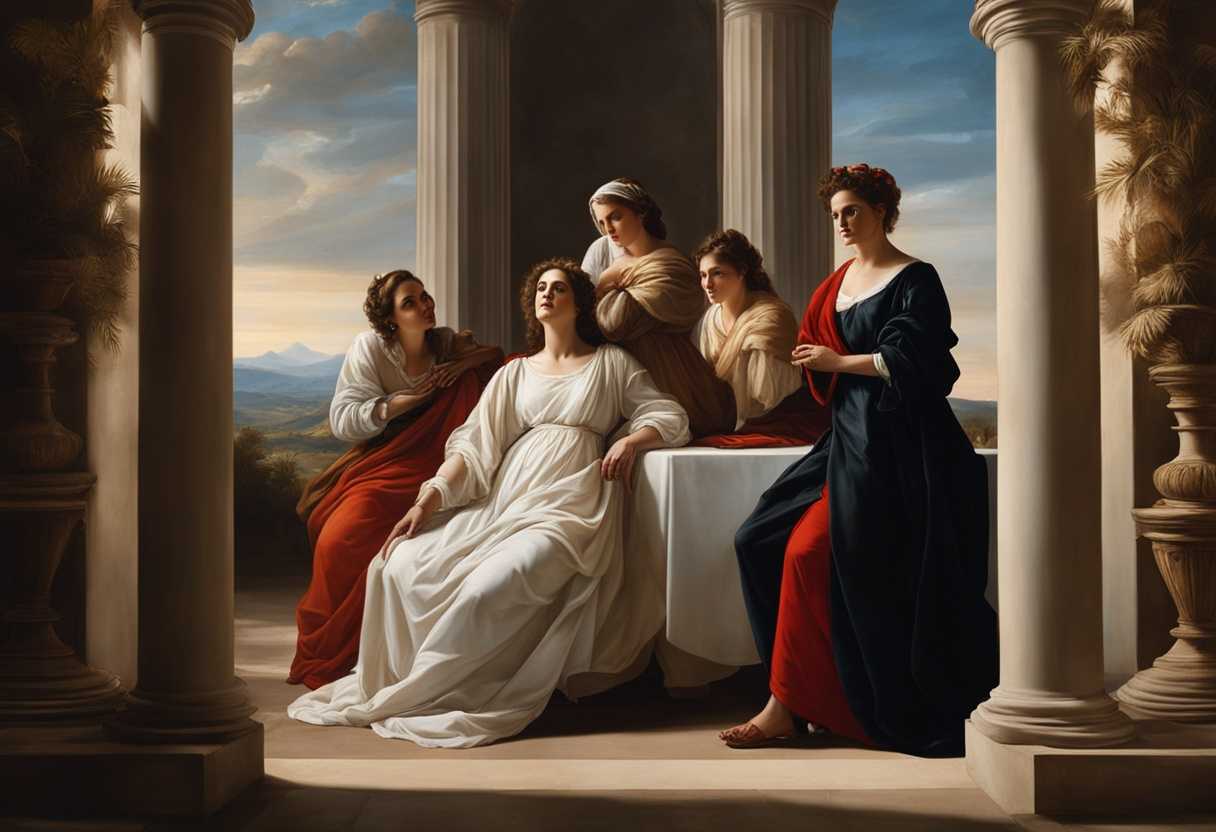
Scripture
1 There was a certain man of Ramathaim-zophim of the hill country of Ephraim whose name was Elkanah the son of Jeroham, son of Elihu, son of Tohu, son of Zuph, an Ephrathite.
2 He had two wives. The name of the one was Hannah, and the name of the other, Peninnah. And Peninnah had children, but Hannah had no children.
3 Now this man used to go up year by year from his city to worship and to sacrifice to the Lord of hosts at Shiloh, where the two sons of Eli, Hophni and Phinehas, were priests of the Lord.
4 On the day when Elkanah sacrificed, he would give portions to Peninnah his wife and to all her sons and daughters.
5 But to Hannah he gave a double portion, because he loved her, though the Lord had closed her womb.
6 And her rival used to provoke her grievously to irritate her, because the Lord had closed her womb.
7 So it went on year by year. As often as she went up to the house of the Lord, she used to provoke her. Therefore Hannah wept and would not eat.
8 And Elkanah, her husband, said to her, “Hannah, why do you weep? And why do you not eat? And why is your heart sad? Am I not more to you than ten sons?”
9 After they had eaten and drunk in Shiloh, Hannah rose. Now Eli the priest was sitting on the seat beside the doorpost of the temple of the Lord.
10 She was deeply distressed and prayed to the Lord and wept bitterly.
11 And she vowed a vow and said, “O Lord of hosts, if you will indeed look on the affliction of your servant and remember me and not forget your servant, but will give to your servant a son, then I will give him to the Lord all the days of his life, and no razor shall touch his head.”
12 As she continued praying before the Lord, Eli observed her mouth.
13 Hannah was speaking in her heart; only her lips moved, and her voice was not heard. Therefore Eli took her to be a drunken woman.
14 And Eli said to her, “How long will you go on being drunk? Put your wine away from you.”
15 But Hannah answered, “No, my lord, I am a woman troubled in spirit. I have drunk neither wine nor strong drink, but I have been pouring out my soul before the Lord.
16 Do not regard your servant as a worthless woman, for all along I have been speaking out of my great anxiety and vexation.”
17 Then Eli answered, “Go in peace, and the God of Israel grant your petition that you have made to him.”
18 And she said, “Let your servant find favor in your eyes.” Then the woman went her way and ate, and her face was no longer sad.
19 They rose early in the morning and worshiped before the Lord; then they went back to their house at Ramah. And Elkanah knew Hannah his wife, and the Lord remembered her.
20 And in due time Hannah conceived and bore a son, and she called his name Samuel, for she said, “I have asked for him from the Lord.”
21 The man Elkanah and all his house went up to offer to the Lord the yearly sacrifice and to pay his vow.
22 But Hannah did not go up, for she said to her husband, “As soon as the child is weaned, I will bring him, so that he may appear in the presence of the Lord and dwell there forever.”
23 And Elkanah her husband said to her, “Do what seems best to you; wait until you have weaned him; only, may the Lord establish his word.” So the woman remained and nursed her son until she weaned him.
24 And when she had weaned him, she took him up with her, along with a three-year-old bull, an ephah of flour, and a skin of wine, and she brought him to the house of the Lord at Shiloh.
25 Then they slaughtered the bull, and they brought the child to Eli.
26 And she said, “Oh, my lord! As you live, my lord, I am the woman who was standing here in your presence, praying to the Lord.
27 For this child I prayed, and the Lord has granted me my petition that I made to him.
28 Therefore I have lent him to the Lord. As long as he lives, he is lent to the Lord.” And he worshiped the Lord there.
Meaning of Elkanah in the Bible
Elkanah serves as a significant figure in the biblical narrative, particularly in the context of his role as the father of Samuel, whose birth is integral to the unfolding history of Israel. The meaning of his name, “God has possessed” or “God has created,” reflects a deeper spiritual significance that is illustrated throughout the story. In 1 Samuel 1:5-6, it is noted that Elkanah loved Hannah, and despite her barrenness, he provided her with a double portion of sacrifices, indicating his affectionate and gracious character. This act highlights the themes of grace and divine favor, which culminate in Hannah’s eventual prayer for a child, leading to Samuel’s miraculous birth—a child who would play a pivotal role in the transition of Israel from the era of judges to that of kings.
Moreover, Elkanah’s faithfulness and commitment to God also echo throughout the narrative. In 1 Samuel 1:9-11, Hannah’s heartfelt vow to dedicate her son to the Lord underscores the familial obligation to uphold spiritual values and the importance of consecration to God in their lineage. The legacy of Elkanah, therefore, signifies not only the importance of divine providence in the birth of Samuel but also emphasizes the interplay between human devotion and divine intervention. His story serves as a reminder that God’s possession and creation extend beyond mere existence; they involve purpose, faithfulness, and a covenant relationship that underscores the transformative power of prayer and the faith of individuals like Hannah and Elkanah in the divine plan.
Elkanah’s legacy in the biblical narrative can be viewed through the lens of community and worship, further illustrating his role beyond just a familial figure. As a Levite, Elkanah belonged to a priestly family, and his dedication to religious practices underscores the significance of lineage in the context of Israel’s worship and sacrificial system. His annual pilgrimage to Shiloh, where he offered sacrifices, highlights the communal aspect of faith, where worship plays an integral part in the life of the Israelites. This commitment to participate in religious rites not only reflects his own devotion but also sets a precedent for his family, ultimately influencing Samuel’s own future role as a prophet who would guide the nation toward righteousness.
Additionally, Elkanah’s willingness to support Hannah in her spiritual pursuits demonstrates an ideal partnership rooted in mutual respect and faith. While the societal norms of the time often placed men in authoritative roles, Elkanah’s interactions with Hannah reveal an understanding of emotional and spiritual sensitivity. His encouragement allowed Hannah to approach God earnestly, highlighting the dynamics of their relationship as a model for faith-based partnerships. This mutual encouragement not only fosters personal growth within their marriage but also contributes to the collaborative effort in fulfilling God’s plans, suggesting that the essence of Elkanah’s character lies in his commitment to uplift and support the divine calling within his family, thereby ensuring that God’s presence and purpose persist through generations.
The Significance of Name in Biblical Context
The name Elkanah translates to “God has created” or “God has possessed.” In the biblical context, names often carry deep significance, reflecting the character or destiny of the individual. Elkanah’s name suggests a divine connection and purpose, indicating that he is a person chosen or favored by God. This highlights the theme of divine intervention and the importance of faith in God’s plans, which is a recurring motif throughout the scriptures.
The Role of Elkanah as a Family Leader
Elkanah is depicted as a devoted family man, serving as a priest and a father. His role emphasizes the importance of family and spiritual leadership within the household. In a broader sense, Elkanah represents the ideal of a faithful leader who prioritizes worship and devotion to God, setting an example for his family. This reflects the biblical principle that strong family ties and spiritual guidance are essential for nurturing faith and community.
The Theme of Faith and Prayer
Elkanah’s story is intertwined with themes of faith and prayer, particularly in the context of his wife Hannah’s struggles with infertility. His support for Hannah during her distress illustrates the importance of compassion and understanding in relationships. This aspect of Elkanah’s character serves as a reminder of the power of prayer and the belief in God’s ability to answer petitions, reinforcing the idea that faith can lead to miraculous outcomes.
How to Embrace Faith and Live Christ-like Values
Embracing faith and living Christ-like values is a beautiful journey that begins with a sincere heart and a willingness to grow. Start by immersing yourself in the Scriptures, allowing the teachings of Jesus to shape your thoughts and actions. Reflect on His compassion, humility, and love, and strive to embody these qualities in your daily life. Surround yourself with a supportive community of fellow believers who can encourage you and hold you accountable. Remember, it’s not about perfection but progress; every small act of kindness, every moment of forgiveness, and every prayerful thought brings you closer to Christ. As you navigate challenges, lean on your faith, trusting that God’s grace is sufficient for you. Let your life be a testament to His love, shining brightly in a world that often feels dark.
Bible References to Elkanah’s Meaning:
1 Samuel 2:1-11: 2 And Hannah prayed and said, “My heart exults in the Lord; my horn is exalted in the Lord. My mouth derides my enemies, because I rejoice in your salvation.
2 “There is none holy like the Lord: for there is none besides you; there is no rock like our God.”
3 Talk no more so very proudly,
let not arrogance come from your mouth;
for the Lord is a God of knowledge,
and by him actions are weighed.
4 The bows of the mighty are broken, but the feeble bind on strength.
5 Those who were full have hired themselves out for bread,
but those who were hungry have ceased to hunger.
The barren has borne seven,
but she who has many children is forlorn.
6 The Lord kills and brings to life;
he brings down to Sheol and raises up.
7 The Lord makes poor and makes rich;
he brings low and he exalts.
8 He raises up the poor from the dust; he lifts the needy from the ash heap to make them sit with princes and inherit a seat of honor.
9 He will guard the feet of his faithful ones, but the wicked shall be cut off in darkness, for not by might shall a man prevail.
10 The adversaries of the Lord shall be broken to pieces; against them he will thunder in heaven. The Lord will judge the ends of the earth; he will give strength to his king and exalt the power of his anointed.”
11 Then Elkanah went home to Ramah. And the boy ministered to the Lord in the presence of Eli the priest.
1 Samuel 2:18-21: 18 But Samuel ministered before the Lord, a boy clothed with a linen ephod.
19 Moreover, his mother used to make for him a little robe and take it to him each year when she went up with her husband to offer the yearly sacrifice.
20 Then Eli would bless Elkanah and his wife, and say, “The Lord give you children by this woman for the petition she asked of the Lord.” So then they would return to their home.
21 Indeed the Lord visited Hannah, and she conceived and bore three sons and two daughters. And the young man Samuel grew in the presence of the Lord.
1 Samuel 2:26-36: 26 Now the boy Samuel continued to grow both in stature and in favor with the Lord and also with man.
27 And there came a man of God to Eli and said to him, “Thus says the Lord, ‘Did I indeed reveal myself to the house of your father when they were in Egypt subject to the house of Pharaoh?
28 Did I choose him out of all the tribes of Israel to be my priest, to go up to my altar, to burn incense, to wear an ephod before me? I gave to the house of your father all my offerings by fire from the people of Israel.
29 Why then do you scorn my sacrifices and my offerings that I commanded for my dwelling, and honor your sons above me by fattening yourselves on the choicest parts of every offering of my people Israel?’
30 Therefore the Lord, the God of Israel, declares: ‘I promised that your house and the house of your father should go in and out before me forever,’ but now the Lord declares: ‘Far be it from me, for those who honor me I will honor, and those who despise me shall be lightly esteemed.’
31 Behold, the days are coming when I will cut off your strength and the strength of your father’s house, so that there will not be an old man in your house.
32 Then you will see distress in the tent that is to befall Israel, and there shall not be an old man in your house forever.
33 The only one of you whom I shall not cut off from my altar shall be spared to weep his eyes out to grieve his heart, and all the descendants of your house shall die by the sword of men.
34 And this that shall come upon your two sons, Hophni and Phinehas, shall be the sign to you: both of them shall die on the same day.
35 And I will raise up for myself a faithful priest, who shall do according to what is in my heart and in my mind. And I will build him a sure house, and he shall go in and out before my anointed forever.
36 And everyone who is left in your house shall come to implore him for a piece of silver or a loaf of bread and shall say, “Please put me in one of the priests’ places, that I may eat a morsel of bread.”
1 Samuel 3:1-21: 3 Now the boy Samuel was ministering to the Lord in the presence of Eli. And the word of the Lord was rare in those days; there was no frequent vision.
2 At that time Eli, whose eyesight had begun to grow dim so that he could not see, was lying down in his own place.
3 The lamp of God had not yet gone out, and Samuel was lying down in the temple of the Lord, where the ark of God was.
4 Then the Lord called Samuel, and he said, “Here I am!”
5 and he ran to Eli and said, “Here I am, for you called me.” But he said, “I did not call; lie down again.” So he went and lay down.
6 And the Lord called again, “Samuel!” and Samuel arose and went to Eli and said, “Here I am, for you called me.” But he said, “I did not call, my son; lie down again.”
7 Now Samuel did not yet know the Lord, and the word of the Lord had not yet been revealed to him.
8 And the Lord called Samuel again the third time. And he arose and went to Eli and said, “Here I am, for you called me.” Then Eli perceived that the Lord was calling the boy.
9 Therefore Eli said to Samuel, “Go, lie down, and if he calls you, you shall say, ‘Speak, Lord, for your servant hears.’” So Samuel went and lay down in his place.
10 And the Lord came and stood, calling as at other times, “Samuel! Samuel!” And Samuel said, “Speak, for your servant hears.”
11 Then the Lord said to Samuel, “Behold, I am about to do a thing in Israel at which the two ears of everyone who hears it will tingle.
12 On that day I will fulfill against Eli all that I have spoken concerning his house, from beginning to end.
13 And I declare to him that I am about to punish his house forever, for the iniquity that he knew, because his sons were blaspheming God, and he did not restrain them.
14 Therefore I swear to the house of Eli that the iniquity of Eli’s house shall not be atoned for by sacrifice or offering forever.”
15 And Samuel lay until the morning; then he opened the doors of the house of the Lord. Samuel was afraid to tell the vision to Eli.
16 Then Eli called Samuel and said, “Samuel, my son.” And he said, “Here I am.”
17 And he said, “What is the word that the Lord spoke to you? Please do not hide it from me. May God do so to you and more also if you hide anything from me of all that he told you.”
18 So Samuel told him everything and hid nothing from him. And he said, “It is the Lord. Let him do what seems good to him.”
19 And Samuel grew, and the Lord was with him and let none of his words fall to the ground.
20 And all Israel from Dan to Beersheba knew that Samuel was established as a prophet of the Lord.
21 And the Lord appeared again at Shiloh, for the Lord revealed himself to Samuel at Shiloh by the word of the Lord.
1 Samuel 4:1-22: 1 And the word of Samuel came to all Israel. Now Israel went out to battle against the Philistines. They encamped at Ebenezer, and the Philistines encamped at Aphek.
2 And the Philistines drew up to meet Israel, and when the battle spread, Israel was defeated by the Philistines, who killed about four thousand men on the field of battle.
3 And when the troops came to the camp, the elders of Israel said, “Why has the Lord defeated us today before the Philistines? Let us bring the ark of the covenant of the Lord here from Shiloh, that it may come among us and save us from the power of our enemies.”
4 So the people sent to Shiloh and brought from there the ark of the covenant of the Lord of hosts, who is enthroned on the cherubim. And the two sons of Eli, Hophni and Phinehas, were there with the ark of the covenant of God.
5 As soon as the ark of the covenant of the Lord came into the camp, all Israel gave a mighty shout, so that the earth resounded.
6 And when the Philistines heard the noise of the shouting, they said, “What does this great shouting in the camp of the Hebrews mean?” And when they learned that the ark of the Lord had come to the camp,
7 And the Philistines were afraid, for they said, “A god has come into the camp.” And they said, “Woe to us! For nothing like this has happened before.
8 Woe to us! Who can deliver us from the power of these mighty gods? These are the gods who struck the Egyptians with every sort of plague in the wilderness.
9 Be strong, and behave like men, O Philistines, that you may not become slaves to the Hebrews as they have been to you; be men and fight.”
10 So the Philistines fought, and Israel was defeated, and they fled, every man to his home. And there was a very great slaughter, for thirty thousand foot soldiers of Israel fell.
11 And the ark of God was captured, and the two sons of Eli, Hophni and Phinehas, died.
12 A man of Benjamin ran from the battle line and came to Shiloh the same day, with his clothes torn and with dirt on his head.
13 When he arrived, Eli was sitting on his seat by the road watching, for his heart trembled for the ark of God. And when the man came into the city and told the news, all the city cried out.
14 And when Eli heard the sound of the outcry, he said, “What is this uproar?” Then the man hurried and came and told Eli.
15 Now Eli was ninety-eight years old and his eyes were set so that he could not see.
16 And the man said to Eli, “I am he who has come from the battle; I fled from the battle today.” And he said, “How did it go, my son?”
17 He who brought the news answered and said, “Israel has fled before the Philistines, and there has also been a great defeat among the people. Your two sons also, Hophni and Phinehas, are dead, and the ark of God has been captured.”
18 As soon as he mentioned the ark of God, Eli fell over backward from his seat by the side of the gate, and his neck was broken and he died, for the man was old and heavy. He had judged Israel forty years.
19 Now his daughter-in-law, the wife of Phinehas, was pregnant, about to give birth. And when she heard the news that the ark of God was captured, and that her father-in-law and her husband were dead, she bowed and gave birth, for her pains came upon her.
20 As she was about to die, the women attending her said to her, “Do not be afraid, for you have borne a son.” But she did not answer or pay attention.
21 And she named the child Ichabod, saying, “The glory has departed from Israel!” because the ark of God had been captured and because of her father-in-law and her husband.
22 And she said, “The glory has departed from Israel, for the ark of God has been captured.”
1 Samuel 7:1-17: 1 And the men of Kiriath-jearim came and took up the ark of the Lord and brought it to the house of Abinadab on the hill. And they consecrated his son Eleazar to have charge of the ark of the Lord.
2 From the day that the ark was lodged at Kiriath-jearim, a long time passed, some twenty years, and all the house of Israel lamented after the Lord.
3 Then Samuel said to all the house of Israel, “If you are returning to the Lord with all your heart, then put away the foreign gods and the Ashtaroth from among you and direct your heart to the Lord and serve him only, and he will deliver you out of the hand of the Philistines.”
4 So the people of Israel put away the Baals and the Ashtaroth, and they served the Lord only.
5 Then Samuel said, “Gather all Israel at Mizpah, and I will pray to the Lord for you.”
6 So they gathered at Mizpah and drew water and poured it out before the Lord and fasted on that day and said there, “We have sinned against the Lord.” And Samuel judged the people of Israel at Mizpah.
7 And when the Philistines heard that the people of Israel had gathered at Mizpah, the lords of the Philistines went up against Israel. And when the people of Israel heard of it, they were afraid of the Philistines.
8 And the people of Israel said to Samuel, “Do not cease to cry out to the Lord our God for us, that he may save us from the hand of the Philistines.”
9 So Samuel took a nursing lamb and offered it as a whole burnt offering to the Lord. And Samuel cried out to the Lord for Israel, and the Lord answered him.
10 As Samuel was offering up the burnt offering, the Philistines drew near to attack Israel. But the Lord thundered with a mighty sound that day against the Philistines and threw them into confusion, and they were defeated before Israel.
11 And the men of Israel went out of Mizpah and pursued the Philistines and struck them, as far as below Beth-car.
12 Then Samuel took a stone and set it up between Mizpah and Shen and called its name Ebenezer; for he said, “Till now the Lord has helped us.”
13 So the Philistines were subdued and did not again enter the territory of Israel. And the hand of the Lord was against the Philistines all the days of Samuel.
14 And the cities that the Philistines had taken from Israel were restored to Israel, from Ekron to Gath, and Israel delivered their territory from the hand of the Philistines. And there was peace also between Israel and the Amorites.
15 Samuel judged Israel all the days of his life.
16 He went on a circuit year by year to Bethel, Gilgal, and Mizpah. And he judged Israel in all these places.
17 Then he would return to Ramah, for his home was there, and there also he judged Israel. And he built there an altar to the Lord.
1 Samuel 8:1-22: 3 Yet his sons did not walk in his ways but turned aside after gain. They took bribes and perverted justice.
2 The name of his firstborn son was Joel, and the name of his second, Abijah; they were judges in Beersheba.
3 Yet his sons did not walk in his ways but turned aside after gain. They took bribes and perverted justice.
4 Then all the elders of Israel gathered together and came to Samuel at Ramah
5 and said to him, “Behold, you are old and your sons do not walk in your ways. Now appoint for us a king to judge us like all the nations.”
6 But the thing displeased Samuel when they said, “Give us a king to judge us.” And Samuel prayed to the Lord.
7 And the Lord said to Samuel, “Obey the voice of the people in all that they say to you, for they have not rejected you, but they have rejected me from being king over them.
8 According to all the deeds that they have done, from the day I brought them up out of Egypt even to this day, forsaking me and serving other gods, so they are also doing to you.
9 Now then, obey their voice; only you shall solemnly warn them and show them the ways of the king who shall reign over them.”
10 So Samuel told all the words of the Lord to the people who were asking for a king from him.
11 He said, “These will be the ways of the king who will reign over you: he will take your sons and appoint them to his chariots and to be his horsemen and to run before his chariots.
12 He will appoint for himself commanders of thousands and commanders of fifties, and some to plow his ground and to reap his harvest, and to make his implements of war and the equipment of his chariots.
13 He will take your daughters to be perfumers and cooks and bakers.
14 He will take the best of your fields and vineyards and olive orchards and give them to his servants.
15 He will take the tenth of your grain and of your vineyards and give it to his officers and to his servants.
16 He will take your male servants and female servants and the best of your young men and your donkeys, and put them to his work.
17 He will take the tenth of your flocks, and you shall be his slaves.
18 And in that day you will cry out because of your king, whom you have chosen for yourselves, but the Lord will not answer you in that day.”
19 But the people refused to obey the voice of Samuel. And they said, “No! But there shall be a king over us,
20 that we also may be like all the nations, and that our king may judge us and go out before us and fight our battles.”
21 And Samuel heard all the words of the people, and he repeated them in the ears of the Lord.
22 And the Lord said to Samuel, “Obey their voice and make them a king.” Samuel then said to the men of Israel, “Go every man to his city.”

Reverend Michael Johnson is an experienced Church Minister with a profound expertise in spirituality and guidance. With a serene presence and a compassionate heart, he has faithfully served his congregation for over 20 years, leading them on a spiritual journey towards inner peace and enlightenment. Reverend Johnson’s extensive knowledge of religious philosophies and profound understanding of human nature have made him a trusted confidant and mentor to many, as he seamlessly weaves his profound wisdom into life teachings. Reverend Johnson’s calming demeanor and empathetic nature continue to uplift and heal souls, nurturing a sense of unity and tranquility within his community.