
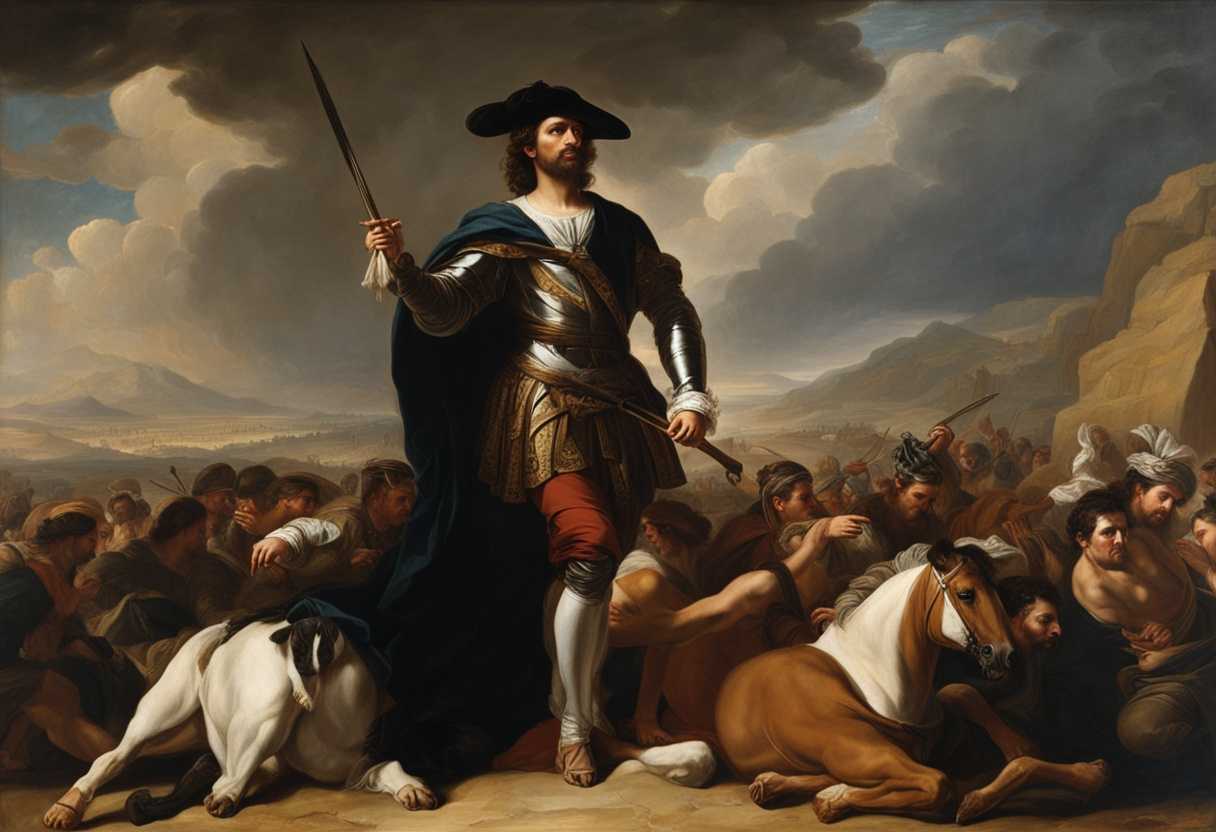
Dathan is a biblical figure mentioned in Numbers 16, known for being one of the leaders of the rebellion against Moses and Aaron. His name is often associated with dissent and disobedience to God’s appointed leadership.
Scripture
1 Now Korah the son of Izhar, son of Kohath, son of Levi, and Dathan and Abiram the sons of Eliab, and On the son of Peleth, sons of Reuben, took men.
2 And they rose up before Moses, with a number of the people of Israel, 250 chiefs of the congregation, chosen from the assembly, well-known men.
3 They assembled themselves together against Moses and against Aaron and said to them, “You have gone too far! For all in the congregation are holy, every one of them, and the Lord is among them. Why then do you exalt yourselves above the assembly of the Lord?”
4 When Moses heard it, he fell on his face,
5 And he said to Korah and all his company, “In the morning the Lord will show who is his, and who is holy, and will bring him near to him. The one whom he chooses he will bring near to him.
6 And Moses said to Korah, “Hear now, you sons of Levi:
7 and put fire in them and put incense on them before the Lord tomorrow. And the man whom the Lord chooses shall be the holy one. You have gone too far, sons of Levi!
8 And Moses said to Korah, “Hear now, you sons of Levi:
9 is it too small a thing for you that the God of Israel has separated you from the congregation of Israel, to bring you near to himself, to do service in the tabernacle of the Lord and to stand before the congregation to minister to them,
10 and that he has brought you near him, and all your brothers the sons of Levi with you? And would you seek the priesthood also?
11 Therefore it is against the Lord that you and all your company have gathered together. What is Aaron that you grumble against him?”
12 And Moses sent to call Dathan and Abiram, the sons of Eliab, and they said, “We will not come up.
13 Is it a small thing that you have brought us up out of a land flowing with milk and honey, to kill us in the wilderness, that you must also make yourself a prince over us?
14 Moreover, you have not brought us into a land flowing with milk and honey, nor given us inheritance of fields and vineyards. Will you put out the eyes of these men? We will not come up.”
15 Then Moses was very angry and said to the Lord, “Do not respect their offering. I have not taken one donkey from them, and I have not harmed one of them.”
16 And Moses said to Korah, “Be present, you and all your company, before the Lord, you and they, and Aaron, tomorrow.
17 And let every one of you take his censer and put incense on it, and every one of you bring before the Lord his censer, 250 censers; you also, and Aaron, each his censer.”
18 So they took every man his censer and put fire in them and laid incense on them and stood at the entrance of the tent of meeting with Moses and Aaron.
19 Then Korah assembled all the congregation against them at the entrance of the tent of meeting.
20 And the Lord spoke to Moses and to Aaron, saying,
21 “Separate yourselves from among this congregation, that I may consume them in a moment.”
22 And they fell on their faces and said, “O God, the God of the spirits of all flesh, shall one man sin, and will you be angry with all the congregation?”
23 And the Lord spoke to Moses, saying,
24 “Say to the congregation, ‘Get away from the dwelling of Korah, Dathan, and Abiram.’”
25 And Moses rose and went to Dathan and Abiram, and the elders of Israel followed him.
26 And he spoke to the congregation, saying, “Depart, please, from the tents of these wicked men, and touch nothing of theirs, lest you be swept away with all their sins.”
27 So they got away from the dwelling of Korah, Dathan, and Abiram. And Dathan and Abiram came out and stood at the door of their tents, together with their wives, their sons, and their little ones.
28 And Moses said, “By this you shall know that the Lord has sent me to do all these works, and that it has not been of my own accord.
29 If these men die as all men die, or if they are visited by the fate of all mankind, then the Lord has not sent me.
30 But if the Lord creates something new, and the ground opens its mouth and swallows them up with all that belongs to them, and they go down alive into Sheol, then you shall know that these men have despised the Lord.”
31 And as soon as he had finished speaking all these words, the ground under them split apart.
32 And the earth opened its mouth and swallowed them up, with their households and all the people who belonged to Korah and all their goods.
33 So they and all that belonged to them went down alive into Sheol, and the earth closed over them, and they perished from the midst of the assembly.
34 All Israel who were around them fled at their cry, for they said, “Lest the earth swallow us up!”
35 And fire came out from the Lord and consumed the 250 men offering the incense.
Meaning of Dathan in the Bible
Dathan, along with Korah and Abiram, led a significant rebellion against Moses’ leadership in Numbers 16. The narrative highlights the broader themes of authority, rebellion, and divine judgment within the community of Israel. Dathan’s insurrection sought to challenge the God-ordained leadership of Moses and Aaron, representing a profound distrust in God’s chosen instruments for guiding His people. His actions embody the ultimate folly of questioning divine authority, leading to severe consequences illustrated by the earth opening up and swallowing the dissenters (Numbers 16:31-33). This vividly depicts the importance of ascribing due respect to God’s appointed leaders and the dangers of straying from His ordained path.
The story of Dathan serves as a cautionary tale about the perils of pride and the desire for power over submission to divine will. Its implications stretch beyond the historical context, resonating with contemporary issues of leadership and followership within faith communities. As seen in verses such as Hebrews 13:17, which urges believers to obey their leaders, the narrative of Dathan exemplifies the potential consequences when individuals reject the God-established order. The rebellion of Dathan and his cohorts illustrates not only a specific historical moment but also a timeless warning against the human tendency to elevate personal ambition over collective obedience to God’s guidance. In this light, Dathan’s story urges believers to reflect on their own attitude towards authority and the foundational call to respect and support those whom God has appointed to lead.
Dathan’s rebellion also underscores the criticality of unity within the community of faith and the dangers posed by factions that arise from dissent. This narrative illustrates how discontent can quickly spiral into a collective uprising, threatening the cohesion of the entire community. When certain individuals, like Dathan, align themselves with a cause that opposes divinely established leadership, the very fabric of the community can unravel. The celebration of individual aspirations over communal stability often leads to strife and discord, echoing the broader biblical theme of communal responsibility before God.
Furthermore, the role of Dathan can be viewed through the lens of moral and spiritual integrity. His actions spotlight the consequences of choosing personal ambition over fidelity to God’s commands, illustrating the inherent risk in allowing self-interest to overshadow divine principles. Biblical narratives frequently emphasize the importance of faithfulness to one’s calling and the profound repercussions that arise from rebellion against divine authority. Dathan’s legacy thus serves as a reminder for contemporary believers to assess their own motivations, to cultivate a spirit of humility, and to remain vigilant against the allure of dissent that can emerge within their own faith communities. Ultimately, the story is a profound meditation on the complexities of leadership, the nature of authority, and the necessity of mutual submission to God’s will.
Rebellion Against Authority
Dathan is often associated with rebellion, particularly in the context of challenging divinely appointed leadership. His actions, along with those of Korah and Abiram, symbolize the dangers of dissent against God’s chosen leaders. This theme serves as a cautionary tale about the consequences of undermining authority and the importance of respecting divine order.
Consequences of Disobedience
The story of Dathan highlights the severe repercussions that can arise from disobedience to God’s commands. His fate serves as a reminder of the seriousness with which God views rebellion and the ultimate accountability individuals have for their actions. This broader meaning emphasizes the importance of faithfulness and obedience in the life of believers.
The Nature of Division
Dathan’s involvement in the rebellion illustrates the destructive nature of division within a community. His actions contributed to a significant rift among the Israelites, showcasing how discord can lead to chaos and judgment. This serves as a broader lesson on the importance of unity and the dangers of allowing personal grievances to disrupt communal harmony.
How to Embrace Godly Authority in Our Lives
Embracing godly authority in our lives is a transformative journey that begins with a heart open to God’s guidance and a willingness to submit to His will. It’s essential to recognize that authority, as outlined in Scripture, is not about control or dominance but rather about love, service, and protection. Start by immersing yourself in the Word, allowing the teachings of Jesus and the wisdom of the apostles to shape your understanding of authority. Reflect on Romans 13:1, which reminds us that all authority comes from God, and consider how this perspective can influence your relationships with leaders in your life—be it in your family, workplace, or church. Practically, this means approaching authority figures with respect and a spirit of cooperation, while also being discerning and grounded in prayer. Remember, embracing godly authority also means recognizing your own role in the body of Christ, where we are called to serve one another in humility and love. As you cultivate this mindset, you’ll find that submitting to Godly authority not only deepens your faith but also enriches your relationships and community.
Bible References to the Meaning of Dathan:
Numbers 26:9-11: 9 The sons of Eliab: Nemuel, Dathan, and Abiram. These are the Dathan and Abiram, chosen from the congregation, who contended against Moses and Aaron in the company of Korah, when they contended against the Lord,
10 and the earth opened its mouth and swallowed them up together with Korah, when that company died, when the fire devoured 250 men, and they became a warning.
11 But the sons of Korah did not die.
Deuteronomy 11:1-7: 1 “You shall therefore love the Lord your God and keep his charge, his statutes, his rules, and his commandments always.”
2 And consider today (since I am not speaking to your children who have not known or seen it), consider the discipline of the Lord your God, his greatness, his mighty hand and his outstretched arm,
3 his signs and his deeds that he did in Egypt to Pharaoh the king of Egypt and to all his land,
4 and what he did to the army of Egypt, to their horses and to their chariots, how he made the water of the Red Sea flow over them as they pursued after you, and how the Lord has destroyed them to this day,
5 and what he did to you in the wilderness, until you came to this place,
6 and what he did to Dathan and Abiram the sons of Eliab, son of Reuben, how the earth opened its mouth and swallowed them up, with their households, their tents, and every living thing that followed them, in the midst of all Israel.
7 but your own eyes have seen all the great work of the Lord that he did.
Psalms 106:16-18: 16 When men in the camp were jealous of Moses
and Aaron, the holy one of the Lord,
17 The earth opened and swallowed up Dathan, and covered the company of Abiram.
18 Fire also broke out in their company;
the flame burned up the wicked.

Reverend Ogunlade is a seasoned Church Minister with over three decades of experience in guiding and nurturing congregations. With profound wisdom and a serene approach, Reverend Ogunlade has carried out various pastoral duties, including delivering uplifting sermons, conducting religious ceremonies, and offering sage counsel to individuals seeking spiritual guidance. Their commitment to fostering harmony and righteousness within their community is exemplified through their compassionate nature, making them a beloved and trusted figure among the congregation.