
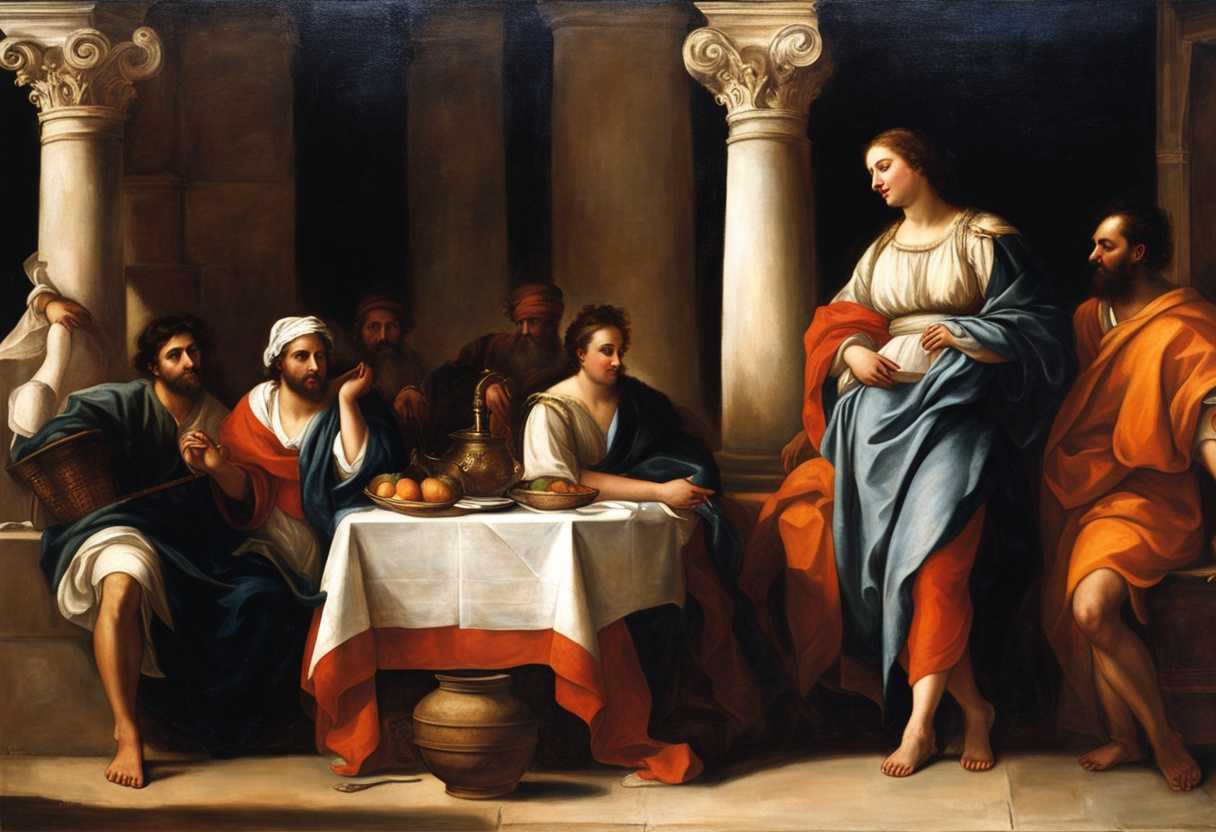
Mnason, mentioned in Acts 21:16, is described as an early disciple from Cyprus who provided hospitality to Paul and his companions. His name signifies a “friendly” or “welcoming” nature, highlighting the importance of fellowship within the early Christian community.
Scripture
15 After these days we got ready and went up to Jerusalem.
16 And some of the disciples from Caesarea went with us, bringing us to the house of Mnason of Cyprus, an early disciple, with whom we should lodge.
Meaning of Mnason in the Bible
In Acts 21:16, Mnason’s brief mention as an early disciple from Cyprus who offered hospitality to Paul and his companions underscores the critical role of community and support within the nascent church. The verse reads, “And some of the disciples from Caesarea went with us, taking us to Mnason of Cyprus, an early disciple, with whom we were to stay.” Mnason’s willingness to welcome Paul—an apostle recognized for his missionary journeys and challenges—reflects not only the personal characteristics of hospitality and friendliness, but also the broader theme of unity and mutual support among believers. In a society often marked by division and hostility towards Christians, Mnason’s home served as a refuge and a symbol of shared faith and purpose.
The significance of Mnason’s role can also be further examined through the lens of other New Testament teachings regarding hospitality and fellowship. Hebrews 13:2 reminds believers to show hospitality to strangers, as it could lead to unexpected blessings and interactions with angelic beings. The act of providing a home for travelers aligns with God’s call for His followers to care for one another. Furthermore, in 1 Peter 4:9-10, believers are encouraged to use their gifts to serve others generously. Mnason exemplifies what it means to live out these commands, demonstrating that individual contributions to the community, whether through hospitality or encouragement, are vital in the establishment of a cohesive and resilient church. Thus, Mnason represents the spirit of early Christian discipleship, highlighting the essence of interpersonal relationships as foundational to the church’s growth and vitality.
Beyond Mnason’s immediate implications in Acts, his mention serves as a broader testament to the significance of early Christian hospitality within the diverse cultural landscape of the time. The early church was characterized by its reliance on local believers who provided support to traveling missionaries and apostles. These figures, like Mnason, played a crucial role in the mission of the church by facilitating connections and fostering an atmosphere of trust and encouragement. Their homes became safe havens where spiritual leaders could rest and regroup, allowing the Gospel to spread more effectively. Mnason’s identity as an “early disciple” further emphasizes the importance of long-standing, committed believers who laid the groundwork for the faith, illustrating how foundational relationships were critical in the establishment and sustainability of early Christian communities.
Moreover, Mnason’s story invites reflection on the implications of one’s background and the richness of diversity within the early church. As a Cypriot, he represents the multicultural aspect of early Christianity, demonstrating that faith transcended geographical and ethnic boundaries. His ability to host Paul and his attendants showcases a spirit of openness and inclusivity, encouraging a sense of belonging among diverse believers. This phenomenon mirrors later New Testament teachings, emphasizing unity in the body of Christ despite varied backgrounds. Therefore, Mnason’s legacy extends beyond his single act of hospitality; he symbolizes the interconnectedness of the early church and the vital role that individuals played in cultivating a supportive religious environment, crucial for the spread and perseverance of the Christian faith during its formative years.
The Role of Hospitality in Early Christianity
Mnason, as a figure in the Book of Acts, represents the importance of hospitality within the early Christian community. His willingness to host Paul and his companions highlights the communal nature of the early church, where believers supported one another through acts of kindness and generosity. This practice of hospitality not only fostered fellowship but also served as a means of spreading the Gospel, as it provided a safe haven for missionaries and travelers.
Symbol of Cultural Integration
Mnason’s identity as an early disciple from Cyprus signifies the integration of diverse cultures within the Christian faith. His presence in Jerusalem, a hub of Jewish tradition, illustrates how the early church transcended ethnic and cultural boundaries. This reflects the broader theme of inclusivity in Christianity, where individuals from various backgrounds came together to form a unified body of believers, emphasizing the universal nature of the Gospel message.
Legacy of Faithfulness and Support
The mention of Mnason in Acts serves as a reminder of the unsung heroes of the faith who played crucial roles in the advancement of the church. His support for Paul and the mission work exemplifies the importance of faithful individuals who contribute to the spread of Christianity, often behind the scenes. This legacy encourages contemporary believers to recognize and value the contributions of those who may not be in the spotlight but are vital to the life and growth of the church.
How to Cultivate Meaningful Christian Relationships Through Hospitality
Cultivating meaningful Christian relationships through hospitality is a beautiful way to live out our faith and reflect Christ’s love to others. It starts with an open heart and a willingness to welcome people into our lives, whether that means inviting someone over for a meal, sharing a cup of coffee, or simply being present in their struggles. Remember, hospitality isn’t just about the food or the setting; it’s about creating a space where others feel valued and loved. As you practice this, consider how Jesus welcomed the outcasts and the weary, offering them a place at His table. By being intentional in your interactions, listening actively, and sharing your own journey of faith, you can foster deep connections that encourage and uplift one another. So, take that first step—reach out, invite someone in, and watch how God can transform those moments into lasting relationships that reflect His grace and love.
Bible References to Mnason in Acts:

Reverend Ogunlade is a seasoned Church Minister with over three decades of experience in guiding and nurturing congregations. With profound wisdom and a serene approach, Reverend Ogunlade has carried out various pastoral duties, including delivering uplifting sermons, conducting religious ceremonies, and offering sage counsel to individuals seeking spiritual guidance. Their commitment to fostering harmony and righteousness within their community is exemplified through their compassionate nature, making them a beloved and trusted figure among the congregation.