
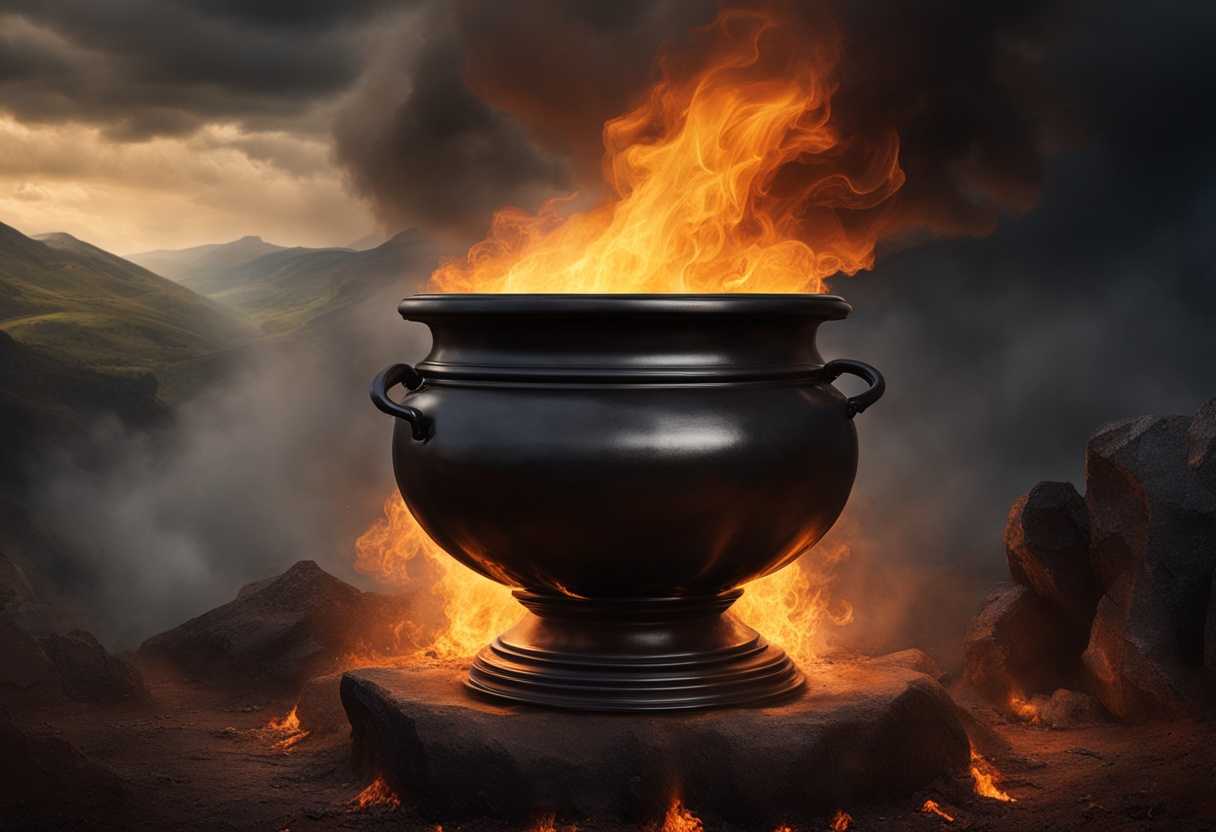
In the Bible, a cauldron generally symbolizes a vessel for cooking or boiling, often used in the context of preparing food or sacrifices. It can also represent judgment or divine wrath, as seen in passages like Jeremiah 1:13, where a boiling pot symbolizes impending disaster.
Scripture
13 The custom of the priests with the people was that when any man offered sacrifice, the priest’s servant would come, while the meat was boiling, with a three-pronged fork in his hand,
14 The fat portions of the offering he would burn on the altar, but the breast and the right thigh Aaron’s sons shall eat.
Cauldron in the Bible: Meaning Explained
In the Bible, the concept of a cauldron transcends its literal function as a vessel for cooking or boiling, evolving into a potent symbol of divine judgment, purification, and the complexity of human experience. The cauldron’s capacity to contain heat and facilitate transformation is often associated with God’s refining processes, whereby trials and tribulations serve to purify and strengthen the faithful. For instance, in Jeremiah 1:13, God shows the prophet a “boiling pot” facing away from the north, illustrating imminent judgment coming upon the people of Judah. This vivid imagery underscores how the cauldron can represent both the brewing of divine wrath and the necessary purification that precedes restoration, inviting reflections on the broader theme of God’s justice and mercy throughout scripture.
Moreover, the cauldron can also symbolize the idea of community and shared experiences, particularly in the context of sacrifices and offerings, as seen in Levitical practices outlined in books such as Leviticus 11. These communal meals often involved boiling vessels, which served to bring people together in worship, reflecting a relationship between God and His people. Thus, the cauldron serves as a multifaceted metaphor in the biblical narrative, embodying the interplay between judgment and grace, the necessity of transformation, and the communal aspect of faith. As believers navigate their journeys, the cauldron reminds them of the refining fire of trials that can lead to spiritual growth and unity in the body of Christ.
The metaphor of the cauldron extends beyond its physical characteristics into realms of prophecy and communal existence, signifying the deeper interplay between divine intervention and human accountability. In other parts of scripture, we witness references to boiling as an image of impending disaster or judgment. For example, in Ezekiel, the cauldron serves as a representation of Israel, indicating that the inhabitants will face calamity for their unfaithfulness to God. Here, the cauldron symbolizes both the perceived security of the people and the impending doom that shall come upon them, illustrating how the very vessel that provides nourishment can also threaten to consume those within it. This dichotomy prompts reflection on the fragility of earthly security contrasted with the steadfastness of divine will.
Furthermore, the cauldron serves as a reminder of the importance of unity and shared faith, especially in the context of cleansing and purification rituals. In the book of Proverbs, wisdom is often likened to food and drink, which align with the theme of preparation and spiritual nourishment. The preparation process—often taking place in a cauldron—underscores the importance of coming together as a community, seeking collective wisdom through shared experiences. Similarly, the New Testament emphasizes themes of fellowship and communal growth, echoing the idea that just as ingredients combine in a cauldron to create a nourishing dish, believers are called to unite and support one another in their spiritual journeys. Thus, the cauldron remains a valuable symbol, representing not only divine judgment but also the transformative power of community and learning through shared trials as the faithful remain steadfast in their walk with God.
Symbol of Judgment and Destruction
In biblical literature, a cauldron often symbolizes impending judgment and destruction. It represents a vessel that holds the consequences of sin and rebellion against God. The imagery of a cauldron can evoke the idea of divine wrath being poured out, illustrating the seriousness of turning away from God’s commandments. This symbolism serves as a warning to the faithful about the repercussions of disobedience.
Metaphor for Spiritual Transformation
A cauldron can also be seen as a metaphor for spiritual transformation and purification. Just as a cauldron is used to boil and refine substances, it can represent the process of believers undergoing trials and tribulations that lead to spiritual growth. This transformative aspect highlights the idea that through challenges, individuals can emerge stronger and more aligned with God’s will, akin to the refining of precious metals.
Representation of Community and Gathering
In some contexts, a cauldron may symbolize community and gathering, particularly in the sharing of meals or communal experiences. It can represent the collective nature of faith, where believers come together to share in the blessings and sustenance provided by God. This aspect emphasizes the importance of fellowship and unity among believers, as they partake in the spiritual nourishment that God offers.
How to Embrace Growth Through Judgment and Purification
Embracing growth through judgment and purification is a transformative journey that invites us to reflect deeply on our lives and our relationship with God. As we navigate the challenges and trials that come our way, it’s essential to view these moments not as punishments, but as opportunities for spiritual refinement. Just as gold is purified in fire, our faith is strengthened through the trials we face. When we allow ourselves to be judged—not by others, but by our own conscience and the Word of God—we open the door to self-awareness and repentance. This process can be uncomfortable, but it is in this discomfort that we often find our greatest growth. So, let’s lean into these moments with prayerful hearts, seeking God’s guidance to help us shed the burdens of sin and embrace the new life He offers. Remember, every step taken in faith, no matter how small, brings us closer to the person God created us to be.
Bible References to Cauldron Meaning:
Ezekiel 11:3-12: 3 who say, ‘The time is not near to build houses. This city is the cauldron, and we are the meat.’”
4 Therefore prophesy against them; prophesy, O son of man.”
5 And the Spirit of the Lord fell upon me, and he said to me, “Say, Thus says the Lord: So you think, O house of Israel. For I know the things that come into your mind.
6 You have multiplied your slain in this city and have filled its streets with the slain.
7 Therefore thus says the Lord God: Your slain whom you have laid in the midst of it, they are the meat, and this city is the cauldron, but you shall be brought out of the midst of it.
8 You have feared the sword, and I will bring the sword upon you, declares the Lord God.
9 And I will bring you out of the midst of it and give you into the hands of foreigners, and execute judgments against you.
10 You shall fall by the sword. I will judge you at the border of Israel, and you shall know that I am the Lord.
11 This city shall not be your cauldron, nor shall you be the meat in the midst of it. I will judge you at the border of Israel,
12 And you shall know that I am the Lord. For you have not walked in my statutes, nor obeyed my rules, but have acted according to the rules of the nations that are around you.
Micah 3:1-4: 3 And I said: Hear, you heads of Jacob
and rulers of the house of Israel!
Is it not for you to know justice?
2 you who hate the good and love the evil,
who tear the skin from off my people
and their flesh from off their bones,
3 who eat the flesh of my people, and flay their skin from off them, and break their bones in pieces and chop them up like meat in a pot, like flesh in a cauldron.
4 Then they will cry to the Lord, but he will not answer them; he will hide his face from them at that time, because they have made their deeds evil.

Reverend Ogunlade is a seasoned Church Minister with over three decades of experience in guiding and nurturing congregations. With profound wisdom and a serene approach, Reverend Ogunlade has carried out various pastoral duties, including delivering uplifting sermons, conducting religious ceremonies, and offering sage counsel to individuals seeking spiritual guidance. Their commitment to fostering harmony and righteousness within their community is exemplified through their compassionate nature, making them a beloved and trusted figure among the congregation.