
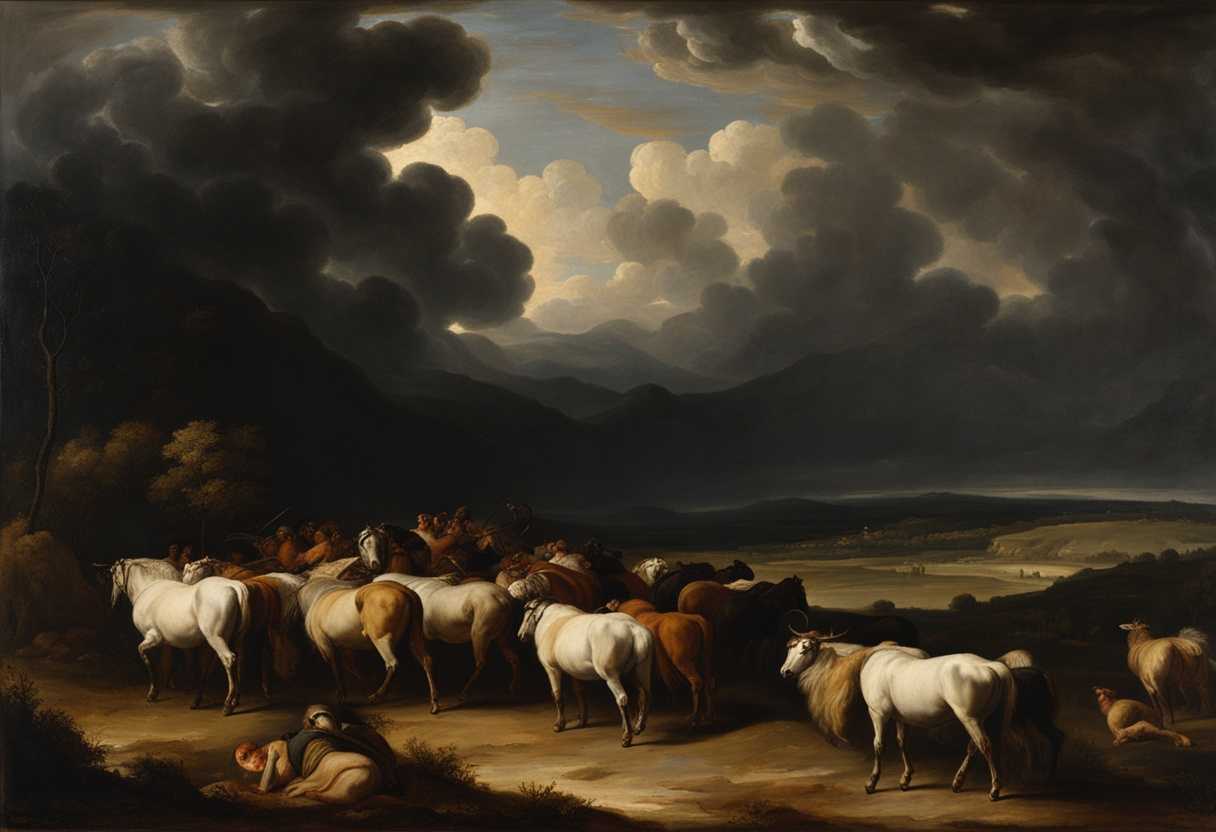
The story of Cain and Abel, found in Genesis 4:1-16, recounts the account of the first two sons of Adam and Eve, where Cain, a farmer, becomes envious of his brother Abel, a shepherd, after God favors Abel’s offering. In his jealousy, Cain kills Abel, leading to his curse and exile, illustrating themes of sin, jealousy, and the consequences of one’s actions.
Scripture
1 Now Adam knew Eve his wife, and she conceived and bore Cain, saying, “I have gotten a man with the help of the Lord.”
2 And again, she bore his brother Abel. Now Abel was a keeper of sheep, and Cain a worker of the ground.
3 In the course of time Cain brought to the Lord an offering of the fruit of the ground.
4 and Abel also brought of the firstborn of his flock and of their fat portions. And the Lord had regard for Abel and his offering,
5 but for Cain and his offering he had no regard. So Cain was very angry, and his face fell.
6 The Lord said to Cain, “Why are you angry, and why has your face fallen?
7 If you do well, will you not be accepted? And if you do not do well, sin is crouching at the door. Its desire is contrary to you, but you must rule over it.”
8 Cain spoke to Abel his brother. And when they were in the field, Cain rose up against his brother Abel and killed him.
9 Then the Lord said to Cain, “Where is Abel your brother?” He said, “I do not know; am I my brother’s keeper?”
10 And the Lord said, “What have you done? The voice of your brother’s blood is crying to me from the ground.
11 And now you are cursed from the ground, which has opened its mouth to receive your brother’s blood from your hand.
12 When you work the ground, it shall no longer yield to you its strength. You shall be a fugitive and a wanderer on the earth.
13 Cain said to the Lord, “My punishment is greater than I can bear.
14 Behold, you have driven me today away from the ground, and from your face I shall be hidden. I shall be a fugitive and a wanderer on the earth, and whoever finds me will kill me.
15 Then the Lord said to him, “Not so! If anyone kills Cain, vengeance shall be taken on him sevenfold.” And the Lord put a mark on Cain, lest any who found him should attack him.
16 Then Cain went away from the presence of the Lord and settled in the land of Nod, east of Eden.
Cain and Abel: A Biblical Tale
The story of Cain and Abel serves not only as the first narrative of fratricide but also as a profound exploration of human emotions and moral choices. In Genesis 4:3-5, we learn that God accepts Abel’s offering of the best of his flock but rejects Cain’s offerings from his crops, leading Cain to experience intense jealousy and anger. This response illuminates the human propensity to measure self-worth against others and how unchecked emotions can spiral into destructive actions. The Lord’s admonition to Cain in Genesis 4:6-7 underscores a key lesson: “If you do well, will you not be accepted? And if you do not do well, sin is crouching at the door; its desire is for you, but you must rule over it.” This serves as a reminder of personal responsibility in confronting moral failures and the importance of mastering one’s negative impulses.
Furthermore, Cain’s punishment and subsequent exile in Genesis 4:11-12 illustrate the consequences of his actions, not just for himself but also for humanity, as it sets a precedent for the severance of relationships and community due to sin. The narrative emphasizes God’s judgment, but also reveals His grace; despite Cain’s grave sin, he is given a mark to protect him from being killed by others, suggesting that even in punishment, there can be mercy (Genesis 4:15). Thus, the tale encapsulates essential themes of sin, ethics, and divine justice while offering insight into the complex interplay of familial relationships, the nature of jealousy, and the weight of responsibility for one’s choices, inviting readers to reflect on their own moral paths and the necessity of compassion in the face of human flaws.
The account of Cain and Abel resonates beyond its immediate context as it invites contemplation on the nature of relationships and the concept of rivalry within families. The tension between the two brothers symbolizes broader societal conflicts, where competition for approval often leads to destructive outcomes. This vignette serves as an archetype for understanding how divided loyalties, particularly in familial settings, can escalate into violence. As Cain’s path diverges from that of Abel, the narrative illustrates the dangers of prioritizing personal ambition over familial bonds. The anthropological implications of this story are profound, suggesting that the dynamics of sibling rivalry extend into contemporary discussions about inheritance, favoritism, and the values we hold dear in our closest relationships.
Moreover, the story prompts reflection on the themes of divine favor and human agency. In many interpretations, Abel’s choice to offer a sacrifice of the finest indicates an ideal of giving that reflects one’s devotion, while Cain’s approach, seen as inadequate, raises questions about authenticity in one’s actions. This moral dichotomy can prompt readers to examine their own offerings, not just in a religious context but in everyday life—how do we invest in our relationships and commitments? In juxtaposing Cain’s fate with that of Abel, the narrative encourages an exploration of the legacy we leave behind; it suggests that choices rooted in jealousy can have ripple effects that transcend personal boundaries, shaping societal norms and narratives through generations. This multifaceted tale thus continues to serve as a mirror reflecting human potential for both good and ill, calling into question the broader implications of our emotional and moral decisions.
The Nature of Human Relationships
The story of Cain and Abel serves as a profound exploration of human relationships, particularly the dynamics of jealousy, rivalry, and the consequences of unresolved conflict. It illustrates how envy can lead to destructive actions and highlights the importance of communication and understanding in maintaining healthy relationships. The narrative prompts reflection on how individuals respond to perceived injustices and the moral choices they face in their interactions with others.
The Concept of Sacrifice and Acceptance
At its core, the story delves into the themes of sacrifice and divine acceptance. It raises questions about what it means to offer something of value and how intentions behind actions can influence their reception. The differing responses to Cain and Abel’s offerings suggest that the quality of one’s heart and the sincerity of one’s actions are crucial in seeking approval, whether from God or from others. This theme encourages readers to consider the motivations behind their own sacrifices and the importance of authenticity in their endeavors.
The Consequences of Sin and Responsibility
Cain and Abel’s narrative serves as a cautionary tale about the consequences of sin and the weight of personal responsibility. It illustrates how unchecked emotions can lead to grave actions and emphasizes the need for accountability in one’s choices. The story invites reflection on the broader implications of moral failure and the importance of seeking redemption and reconciliation, both with oneself and with others. It underscores the idea that individuals must confront the repercussions of their actions and strive to make amends in the face of wrongdoing.
How to Foster Harmony and Growth in Faith
Fostering harmony and growth in your faith is a beautiful journey that begins with intentionality and openness. Start by surrounding yourself with a community of believers who uplift and challenge you; this could be a small group, a church, or even a few close friends who share your values. Engage in regular prayer and scripture study, allowing God’s word to shape your thoughts and actions. Remember, growth often comes from stepping outside your comfort zone—volunteer for service projects, participate in church activities, or simply reach out to someone in need. Embrace the differences in others, as they can enrich your understanding of God’s love and grace. Most importantly, practice forgiveness and humility, recognizing that we are all on this journey together, learning and growing in faith as we strive to reflect Christ’s love in our lives.
Bible References to Cain and Abel’s Story:

Reverend Ogunlade is a seasoned Church Minister with over three decades of experience in guiding and nurturing congregations. With profound wisdom and a serene approach, Reverend Ogunlade has carried out various pastoral duties, including delivering uplifting sermons, conducting religious ceremonies, and offering sage counsel to individuals seeking spiritual guidance. Their commitment to fostering harmony and righteousness within their community is exemplified through their compassionate nature, making them a beloved and trusted figure among the congregation.