
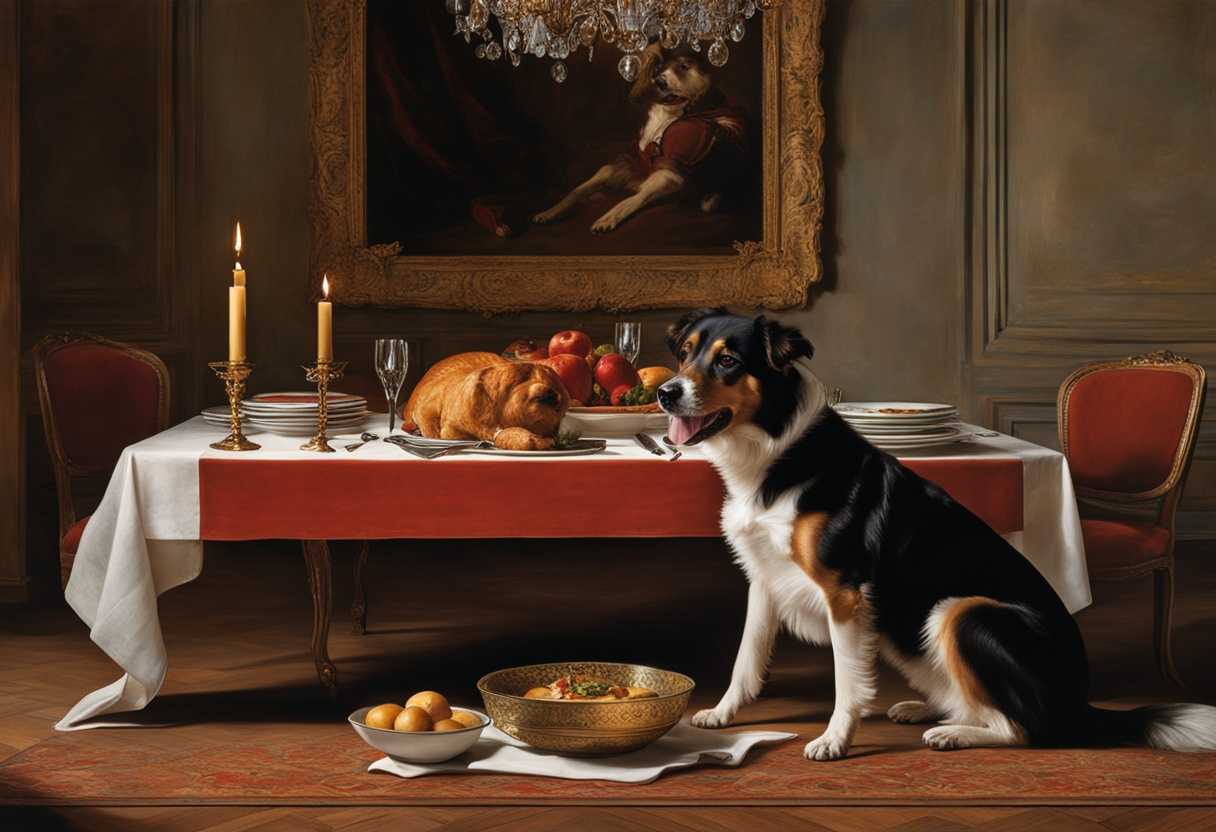
The phrase “dogs eat the crumbs that fall from their masters’ table” is taken from Matthew 15:27, where it symbolizes humility and the recognition of one’s lowly status. It reflects the idea that even those considered marginal or unworthy can receive grace and blessings, often illustrated through the persistence of faith.
Scripture
21 And Jesus went away from there and withdrew to the district of Tyre and Sidon.
22 And behold, a Canaanite woman from that region came out and was crying, “Have mercy on me, O Lord, Son of David; my daughter is severely oppressed by a demon.”
23 But he did not answer her a word. And his disciples came and begged him, saying, “Send her away, for she is crying out after us.”
24 He answered, “I was sent only to the lost sheep of the house of Israel.”
25 But she came and knelt before him, saying, “Lord, help me.”
26 But he answered, “It is not right to take the children’s bread and throw it to the dogs.”
27 She said, “Yes, Lord, yet even the dogs eat the crumbs that fall from their masters’ table.”
28 Then Jesus answered her, “O woman, great is your faith! Be it done for you as you desire.” And her daughter was healed instantly.
Meaning of ‘Dogs Eat Crumbs’ in the Bible
The phrase “dogs eat the crumbs that fall from their masters’ table” in Matthew 15:27 emerges in a dialogue between Jesus and a Canaanite woman seeking healing for her daughter. Her response serves as a profound acknowledgment of her position as a Gentile in Jewish society, illustrating humility and desperation. This woman’s faith is highlighted as she expresses a belief that even the smallest blessings, or “crumbs,” from Jesus would be powerful enough to heal her child. This moment underscores a significant biblical theme: the idea that God’s grace is not limited to a specific group but is available to all who demonstrate faith, often found in unexpected places or people (Matthew 15:21-28).
Furthermore, this encounter illuminates the tension between the chosen people and the outsiders, encapsulated in verses like Romans 1:16, which state that the gospel is for both the Jew first and then for the Gentile. The imagery of dogs eating crumbs from the table also reflects the broader message of inclusivity in Christ’s ministry. By turning the woman’s humble acceptance of her status into a testament of her faith, the passage exemplifies how recognition of one’s neediness can lead to a profound encounter with divine grace. It invites believers to reflect on their own humility and openness to God’s gifts, reinforcing the notion that even the seemingly marginalized possess a vital role in God’s redemptive plan.
Beyond the specific exchange between Jesus and the Canaanite woman, the metaphor of “dogs” and their relationship to the “table” resonates through other biblical narratives, illustrating deeper insights into social dynamics and God’s expansive mercy. For instance, in the parable of the Rich Man and Lazarus (Luke 16:19-31), we see Lazarus, a poor man covered in sores, longing for crumbs that fell from the rich man’s table. This imagery juxtaposes the lives of those in abundance with the destitute, showing how spiritual fulfillment and earthly satisfaction can be inversely related. Lazarus’s position as a beggar, akin to a dog waiting for crumbs, evokes a sense of desperation yet emphasizes his ultimate vindication in the afterlife, suggesting that God’s grace is accessible regardless of one’s earthly status.
Additionally, the broader biblical narrative consistently emphasizes themes of humility and recognition of one’s need for divine provision. In Philippians 2:7, Paul speaks of Jesus taking on the form of a servant, echoing the idea of lowliness and the readiness to serve others. This understanding invites reflection on how societal hierarchies are often upended in the Kingdom of God. Just as the Canaanite woman exemplifies faith despite societal barriers, so too do various biblical figures illustrate that true worth and blessing come not from status but from one’s receptivity to God’s grace. The invitation to partake in divine provision is extended to all, underscoring that every individual, regardless of perceived social standing, has a place at the table of God’s generosity, where even crumbs can carry profound significance.
Humility and Dependence on God’s Grace
The phrase “dogs eat crumbs from the table” symbolizes a recognition of one’s humble position before God. It reflects the understanding that, like dogs who rely on the leftovers from the table, individuals must acknowledge their dependence on God’s grace and mercy. This humility is essential in the spiritual journey, as it encourages believers to seek God’s provision and favor, even if they feel unworthy of His blessings.
Inclusion of the Marginalized
This expression also highlights the theme of inclusion within the Kingdom of God. The reference to dogs, often seen as unclean or lowly in biblical times, serves to remind us that God’s love and salvation are not limited to a select few but extend to all, including those who may be marginalized or considered outsiders. It emphasizes that even the smallest portion of God’s grace is sufficient and available to everyone, regardless of their status or background.
The Value of Faith
Furthermore, the phrase underscores the significance of faith and persistence in seeking God’s help. Just as the dogs eagerly await the crumbs that fall from the table, believers are encouraged to approach God with faith, trusting that even a small measure of His goodness can bring about transformation and healing. This teaches that faith, no matter how small, can lead to great blessings and that God honors those who earnestly seek Him.
How to Cultivate Humility and Grace in Your Faith
Cultivating humility and grace in your faith journey is a beautiful and transformative process that begins with a heart open to God’s guidance. Start by reflecting on the teachings of Jesus, who exemplified humility through His service to others, even washing the feet of His disciples. Make it a daily practice to acknowledge your own limitations and the grace you’ve received, reminding yourself that we are all works in progress. Engage in acts of kindness without seeking recognition, and listen more than you speak, allowing others to share their stories and struggles. Surround yourself with a community that encourages vulnerability and accountability, where you can grow together in faith. Remember, humility is not thinking less of yourself, but thinking of yourself less, and as you embrace this mindset, you’ll find that grace flows more freely in your life, enriching your relationships and deepening your connection with God.
Bible References to “Dogs Eat Crumbs”:
Mark 7:24-30: 24 And from there he arose and went away to the region of Tyre and Sidon. And he entered a house and did not want anyone to know, yet he could not be hidden.
25 But immediately a woman whose little daughter had an unclean spirit heard of him and came and fell down at his feet.
26 Now the woman was a Gentile, a Syrophoenician by birth. And she begged him to cast the demon out of her daughter.
27 And he said to her, “Let the children be fed first, for it is not right to take the children’s bread and throw it to the dogs.”
28 But she answered him, “Yes, Lord; yet even the dogs under the table eat the children’s crumbs.”
29 And he said to her, “For this statement you may go your way; the demon has left your daughter.”
30 And she went home and found the child lying in bed and the demon gone.

Reverend Michael Johnson is an experienced Church Minister with a profound expertise in spirituality and guidance. With a serene presence and a compassionate heart, he has faithfully served his congregation for over 20 years, leading them on a spiritual journey towards inner peace and enlightenment. Reverend Johnson’s extensive knowledge of religious philosophies and profound understanding of human nature have made him a trusted confidant and mentor to many, as he seamlessly weaves his profound wisdom into life teachings. Reverend Johnson’s calming demeanor and empathetic nature continue to uplift and heal souls, nurturing a sense of unity and tranquility within his community.