
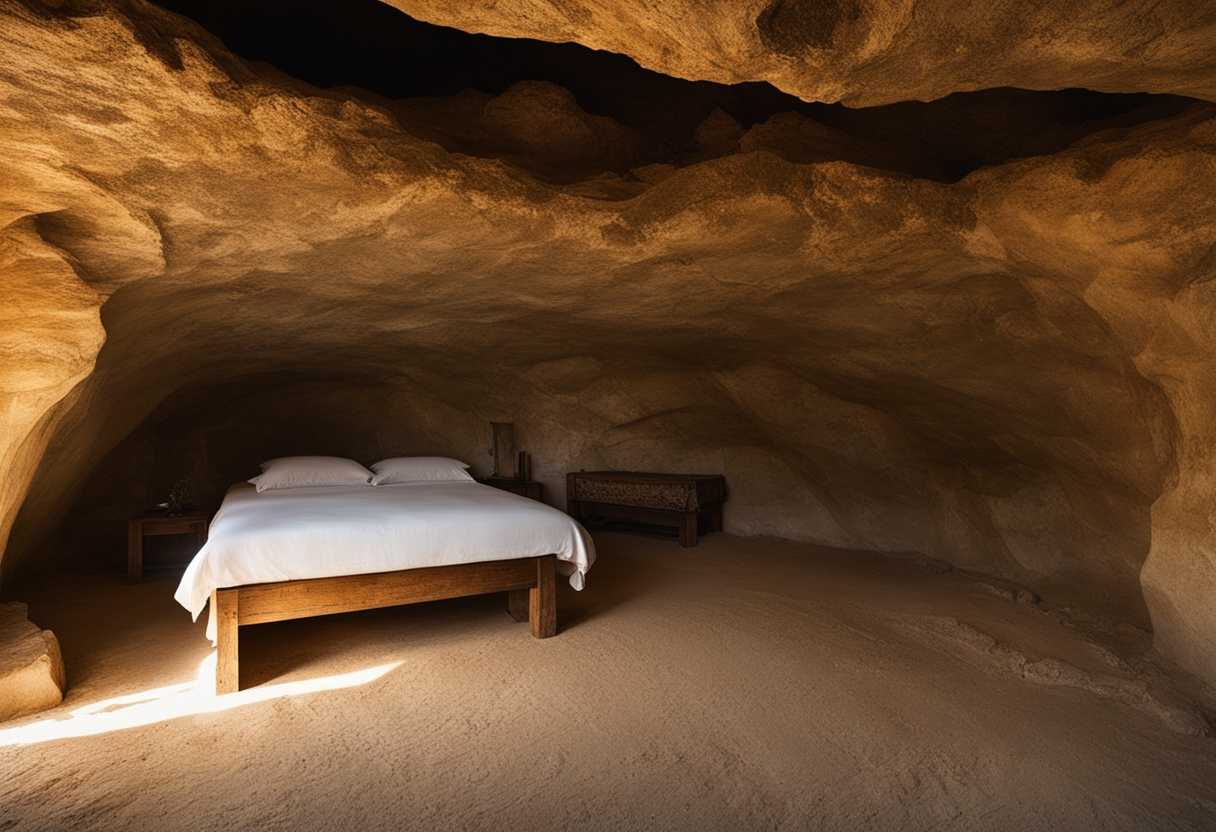
Machpelah is the name of the cave near Hebron that Abraham purchased as a burial site for his wife Sarah, marking it as the first piece of the Promised Land owned by the patriarchs. It symbolizes the enduring covenant between God and Abraham’s descendants, serving as a significant ancestral burial site for future generations.
Scripture
1 Sarah lived 127 years; these were the years of the life of Sarah.
2 And Sarah died at Kiriath-arba (that is, Hebron) in the land of Canaan, and Abraham went in to mourn for Sarah and to weep for her.
3 And Abraham rose up from before his dead and said to the Hittites,
4 “I am a sojourner and foreigner among you; give me property among you for a burying place, that I may bury my dead out of my sight.”
5 “And the Hittites answered Abraham,”
6 “Hear us, my lord; you are a prince of God among us. Bury your dead in the choicest of our tombs. None of us will withhold from you his tomb to hinder you from burying your dead.”
7 Abraham rose and bowed to the Hittites, the people of the land.
8 “He said to them, ‘If you are willing that I should bury my dead out of my sight, hear me and entreat for me Ephron the son of Zohar,’”
9 that he may give me the cave of Machpelah, which he owns; it is at the end of his field. For the full price let him give it to me in your presence as property for a burying place.”
10 Now Ephron was sitting among the Hittites, and Ephron the Hittite answered Abraham in the hearing of the Hittites, of all who went in at the gate of his city.
11 “No, my lord, hear me: I give you the field, and I give you the cave that is in it. In the sight of the sons of my people I give it to you. Bury your dead.”
12 And Abraham bowed before the people of the land.
13 and he said to Ephron in the hearing of the people of the land, “But if you will, hear me: I give the price of the field. Accept it from me, that I may bury my dead there.”
14 Ephron answered Abraham, “My lord, listen to me: a piece of land worth four hundred shekels of silver, what is that between you and me? Bury your dead.”
15 “My lord, listen to me; a piece of land worth four hundred shekels of silver, what is that between you and me? Bury your dead.”
16 Abraham listened to Ephron, and Abraham weighed out for Ephron the silver that he had named in the hearing of the Hittites, four hundred shekels of silver, according to the weights current among the merchants.
17 So the field of Ephron in Machpelah, which was to the east of Mamre, the field with the cave that was in it and all the trees that were in the field, throughout its whole area, was made over
18 to Abraham as a possession in the presence of the Hittites, before all who went in at the gate of his city.
19 After this, Abraham buried Sarah his wife in the cave of the field of Machpelah east of Mamre (that is, Hebron) in the land of Canaan.
20 the field and the cave that is in it were made over to Abraham as property for a burying place by the Hittites.
Meaning of Machpelah in the Bible
The Cave of Machpelah holds profound significance in the Biblical narrative as it represents both a tangible connection to the Promised Land and a spiritual legacy for Abraham’s descendants. Found in Genesis 23, where Abraham purchases the cave to provide a burial site for Sarah, the transaction is underscored by the deep cultural and theological weight of land ownership in Ancient Israel. The purchase shall mark Machpelah as the first plot of land owned by the patriarchs, fulfilling God’s promise to Abraham regarding the land that would belong to his offspring (Genesis 12:7). This act underscores themes of faith, legacy, and divine promise, revealing the importance of the land in the worship and identity of the Israelites and serving as a testament to God’s fidelity in fulfilling His covenant.
Furthermore, the Cave of Machpelah is more than a burial site; it is a sacred space that symbolizes the deep-rooted connection between the land and the people of Israel. It becomes a family mausoleum, as Abraham, Isaac, Rebekah, Jacob, and Leah are all laid to rest there (Genesis 49:30-31). This act of burial in Machpelah highlights the significance of familial ties and heritage in the Biblical tradition. In essence, Machpelah transcends its physical aspect and embodies the promises of God – a reminder of Israel’s journey and the eventual fulfillment of God’s covenant in the establishment of a nation from Abraham’s lineage. As such, Machpelah stands as a powerful symbol of hope, continuity, and the enduring faith of the patriarchs, reinforcing the message of God’s unwavering commitment to His people across generations.
In addition to its significance as a burial site, Machpelah serves as an emblem of reconciliation and the fulfillment of God’s promises to the patriarchs. The negotiation between Abraham and the Hittites for the purchase of the cave reflects the importance of cultural and social relations in the ancient world. This transaction not only solidifies Abraham’s authority as a landowner but also exemplifies the respect he commanded among the local inhabitants. The nature of this acquisition underscores a critical lesson in faithfulness, emphasizing that the blessings promised by God require active, sometimes difficult, engagement with the world. The cave, therefore, becomes a symbol of Abraham’s faith in God’s promises, serving to testify that even amidst uncertainties, the patriarch held firmly to the belief in a future for his descendants in the land.
Moreover, the Cave of Machpelah epitomizes the concept of belonging and identity for the Israelites. It represents a physical marker of the covenant made with Abraham, a sacred space where the bones of the patriarchs rest, linking generations to the divine promise. This site subsequently becomes a focal point in the Israelites’ narrative, forging a sense of unity among the descendants as they recall their shared heritage and covenant relationship with God. In later texts, references to Machpelah go beyond mere geography; they evoke deep theological reflections on land, covenant, and God’s unbreakable promise to His chosen people. As the Israelites navigate their history, Machpelah remains a potent reminder of their origins and the divine assurance that they are part of a grand, unfolding plan, grounded in faith and the steadfastness of God’s will.
A Symbol of Covenant and Promise
Machpelah, the burial site of the patriarch Abraham and his family, represents the fulfillment of God’s promises to His people. It serves as a tangible reminder of the covenant established between God and Abraham, highlighting the significance of land ownership and the divine assurance of future generations. The purchase of Machpelah signifies the beginning of the Israelites’ claim to the Promised Land, reinforcing the idea that God’s promises are not only spiritual but also material and historical.
A Place of Rest and Legacy
The cave of Machpelah is not just a burial site; it symbolizes a place of rest and the continuation of legacy. For Abraham, Sarah, Isaac, Rebekah, Jacob, and Leah, Machpelah becomes a sacred space where their earthly lives conclude, yet their stories and faith continue through their descendants. This underscores the biblical theme of life after death and the importance of honoring one’s ancestors, as well as the belief in a community that transcends generations.
The Intersection of Faith and Geography
Machpelah serves as a geographical marker that intertwines faith with physical space. It illustrates how specific locations in the Bible are imbued with spiritual significance, acting as focal points for worship, remembrance, and identity. The cave becomes a symbol of the Israelites’ connection to their heritage and their relationship with God, emphasizing that faith is often rooted in tangible places that hold historical and spiritual importance.
How to Honor Heritage While Strengthening Christian Faith
Honoring your heritage while deepening your Christian faith is a beautiful journey that intertwines your roots with your spiritual growth. Start by reflecting on the values and traditions passed down through generations—these often align with the teachings of Christ, such as love, compassion, and community. Engage with your family stories and cultural practices, and find ways to incorporate them into your faith life, perhaps through prayer, worship, or service that resonates with both your heritage and your beliefs. Remember, the Bible encourages us to honor our parents and elders (Exodus 20:12), and by doing so, you can create a rich tapestry of faith that celebrates where you come from while also embracing the transformative power of Christ. As you navigate this path, seek out fellowship with others who share similar backgrounds, allowing for a supportive community that nurtures both your cultural identity and your spiritual journey. Ultimately, your heritage can serve as a foundation that enriches your understanding of God’s love and purpose in your life.
Bible References to the Meaning of Machpelah:
Genesis 25:7-10: 7 These are the days of the years of Abraham’s life, 175 years.
8 Abraham breathed his last and died in a good old age, an old man and full of years, and was gathered to his people.
9 And his sons Isaac and Ishmael buried him in the cave of Machpelah, in the field of Ephron the son of Zohar the Hittite, east of Mamre,
10 the field that Abraham purchased from the Hittites. There Abraham was buried, with Sarah his wife.
Genesis 49:29-32: 29 Then he commanded them and said to them, “I am to be gathered to my people; bury me with my fathers in the cave that is in the field of Ephron the Hittite,
30 in the cave that is in the field at Machpelah, to the east of Mamre, in the land of Canaan, which Abraham bought with the field from Ephron the Hittite to possess as a burying place.
31 There they buried Abraham and Sarah his wife. There they buried Isaac and Rebekah his wife, and there I buried Leah—
32 the field that Abraham bought from the Hittites. There Abraham was buried, with Sarah his wife.
Genesis 50:12-14: 12 Thus his sons did for him as he had commanded them,
13 for his sons carried him to the land of Canaan and buried him in the cave of the field at Machpelah, to the east of Mamre, which Abraham bought with the field from Ephron the Hittite to possess as a burying place.
14 After he had buried his father, Joseph returned to Egypt with his brothers and all who had gone up with him to bury his father.

Reverend Ogunlade is a seasoned Church Minister with over three decades of experience in guiding and nurturing congregations. With profound wisdom and a serene approach, Reverend Ogunlade has carried out various pastoral duties, including delivering uplifting sermons, conducting religious ceremonies, and offering sage counsel to individuals seeking spiritual guidance. Their commitment to fostering harmony and righteousness within their community is exemplified through their compassionate nature, making them a beloved and trusted figure among the congregation.