
Naioth, in the Bible, refers to a prophetic community or dwelling place associated with the prophet Samuel, mentioned in 1 Samuel 10:5 and 1 Samuel 19:18-24. It signifies a place where prophets gathered and where David fled from Saul, highlighting its importance as a center of spiritual activity and divine guidance.
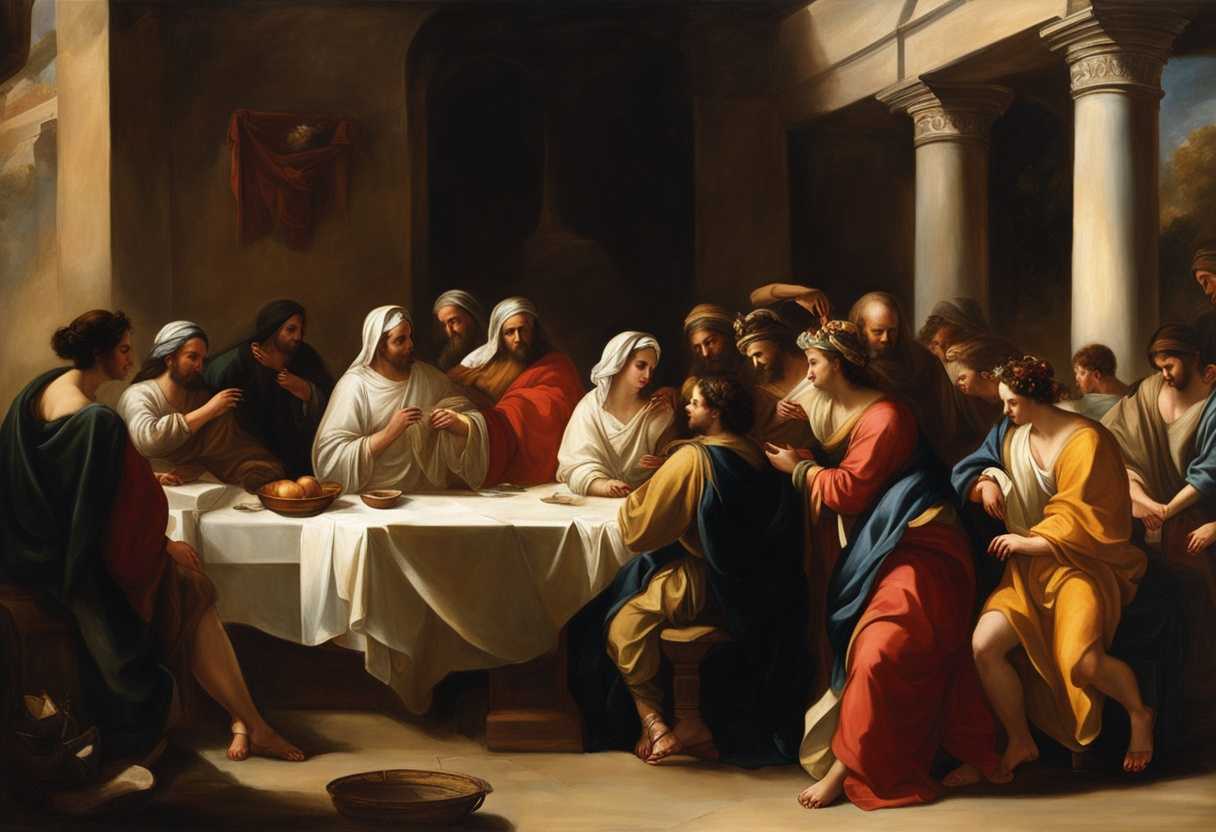
Scripture
18 Now David fled and escaped, and he came to Samuel at Ramah and told him all that Saul had done to him. And he and Samuel went and lived at Naioth.
19 And it was told Saul, “Behold, David is at Naioth in Ramah.”
20 Then Saul sent messengers to take David, and when they saw the company of the prophets prophesying, and Samuel standing as head over them, the Spirit of God came upon the messengers of Saul, and they also prophesied.
21 And when it was told Saul, he sent other messengers, and they also prophesied. And Saul sent messengers again the third time, and they also prophesied.
22 Then he himself went to Ramah and came to the great well that is in Secu. And he asked, “Where are Samuel and David?” And one said, “Behold, they are at Naioth in Ramah.”
23 And he went there to Naioth in Ramah. And the Spirit of God came upon him also, and as he went he prophesied until he came to Naioth in Ramah.
24 And he too stripped off his clothes, and he too prophesied before Samuel and lay naked all that day and all that night. Thus it is said, “Is Saul also among the prophets?”
Meaning of Naioth in the Bible
Naioth, as depicted in the books of 1 Samuel, symbolizes a sacred space where prophetic activity flourished and divine communication was prominent. In 1 Samuel 10:5, it is referenced as part of a prophetic journey, indicating its role in the establishment of a prophetic order under Samuel. This community is not merely a physical location but represents a spiritual sanctuary dedicated to worship and guidance through divine revelation. Its mention in 1 Samuel 19:18-24, where David retreats to Naioth to escape King Saul’s deadly pursuit, emphasizes its function as a refuge for those seeking God’s protection and guidance. The expressions of worship and prophecy that occur there reflect the intimate connection between divine authority and the community of believers.
Moreover, Naioth epitomizes the intersections of kingship, prophecy, and the need for divine approval in biblical narratives. Saul’s encounter with the prophets at Naioth, where he is transformed into a different man and begins to prophesy himself (1 Samuel 19:23-24), illustrates the overwhelming power of God’s presence to challenge and change human intentions, particularly those of kings. This transformation indicates that even leaders are subject to God’s will and can experience His presence intimately. In a broader theological context, Naioth serves as a precursor to the New Testament concept of the church as a community of believers, where individuals come to seek God, find protection, and engage in His divine mission. Thus, Naioth helps illuminate the ongoing relationship between God, His messengers, and His people, foregrounding the critical role of community in spiritual development and divine revelation.
Naioth further illustrates the critical dynamics of relational encounters with God and the transformative impact these moments can have on individuals. As a haven for the prophets, it becomes a focal point for spiritual rejuvenation and clarity amidst the complexities of leadership and faith. The concept of Naioth as a prophetic community signifies not only a geographical location but also an embodiment of collective faith, where individuals converge to experience God’s presence and voice. The interactions that transpire within these walls foster an environment conducive to prophetic revelation and spiritual empowerment, thereby influencing key figures throughout Israel’s history.
In a broader narrative scope, Naioth represents a critical juncture in the evolving relationship between God and His anointed leaders. The incidents associated with this place serve as reminders of God’s continued engagement in human affairs, particularly in shaping the destinies of His people. It underscores the reality that prophetic guidance and divine intervention are accessible to all, including those in positions of power. Moreover, the community aspect of Naioth anticipates the New Testament church as a gathering of believers called to pursue divine purpose together. As a model of unity, spirituality, and divine reassurance, Naioth stands as a testament to the enduring importance of communal worship and the necessity of seeking divine insight amidst life’s challenges. Through these dimensions, Naioth continues to resonate with themes of faith, community, and divine guidance, reinforcing its significance in biblical literature and its implications for contemporary faith practices.
A Place of Prophetic Encounter
Naioth is often understood as a location associated with prophetic activity and divine encounters. It serves as a significant backdrop for moments when individuals experience the presence of God and receive prophetic revelations. This highlights the importance of sacred spaces in the biblical narrative, where believers can connect with the divine and receive guidance.
Symbol of Refuge and Safety
Naioth also represents a place of refuge and safety for those in distress. In the biblical context, it is a sanctuary where individuals can find solace from their troubles and adversaries. This aspect emphasizes the theme of God providing safe havens for His people, illustrating His protective nature and the importance of community in times of crisis.
Connection to Spiritual Transformation
The significance of Naioth extends to its role in spiritual transformation. It is a place where individuals undergo profound changes, often marked by the influence of the Holy Spirit. This transformation is indicative of the broader biblical theme of renewal and the power of God to change hearts and lives, encouraging believers to seek spiritual growth and deeper connections with God.
How to Deepen Your Faith Through Community Involvement
Deepening your faith through community involvement is a beautiful journey that not only strengthens your relationship with God but also enriches the lives of those around you. Start by seeking out local service opportunities—whether it’s volunteering at a food bank, participating in church outreach programs, or simply helping a neighbor in need. These acts of service allow you to live out the teachings of Christ, reminding you that faith is not just a personal endeavor but a communal one. As you engage with others, you’ll find that your understanding of love, compassion, and grace deepens, and you’ll be surrounded by fellow believers who can encourage and challenge you in your walk with God. Remember, it’s in the shared experiences and the bonds formed through service that you’ll often find the most profound moments of spiritual growth. So, step out of your comfort zone, get involved, and watch how your faith flourishes in the warmth of community.
Bible References to Naioth in Scripture:
1 Samuel 20:1-10: 1 Then David fled from Naioth in Ramah and came and said before Jonathan, “What have I done? What is my guilt? And what is my sin before your father, that he seeks my life?”
2 he said to him, “Far be it from you! You shall not die. Behold, my father does nothing either great or small without disclosing it to me. And why should my father hide this from me? It is not so.”
3 Then David took an oath again, and said, “Your father knows well that I have found favor in your eyes, and he thinks, ‘Do not let Jonathan know this, lest he be grieved.’ But truly, as the Lord lives and as your soul lives, there is but a step between me and death.”
4 Then Jonathan said to David, “Whatever you say, I will do for you.”
5 David said to Jonathan, “Behold, tomorrow is the new moon, and I should not fail to sit at table with the king. But let me go, that I may hide myself in the field till the third day at evening.
6 If your father misses me at all, then say, ‘David earnestly asked leave of me to run to Bethlehem his city, for there is a yearly sacrifice there for all the clan.’
7 If he says, ‘Good!’ it will be well with your servant, but if he is angry, then know that harm is determined by him.
8 Therefore deal kindly with your servant, for you have brought your servant into a covenant of the Lord with you. But if there is guilt in me, kill me yourself, for why should you bring me to your father?”
9 And Jonathan said, “Far be it from you! If I knew that it was determined by my father that harm should come to you, would I not tell you?”
10 Then David said to Jonathan, “Who will tell me if your father answers you roughly?”
1 Samuel 20:11-23: 11 Jonathan said to David, “Come, let us go out into the field.” So they both went out into the field.
12 And Jonathan said to David, “The Lord, the God of Israel, be witness! When I have sounded out my father, about this time tomorrow, or the third day, behold, if he is well disposed toward David, shall I not then send and disclose it to you?
13 But should it please my father to do you harm, the Lord do so to Jonathan and more also if I do not disclose it to you and send you away, that you may go in safety. May the Lord be with you, as he has been with my father.
14 If I am still alive, show me the steadfast love of the Lord, that I may not die;
15 but do not cut off your steadfast love from my house forever, when the Lord cuts off every one of the enemies of David from the face of the earth.
16 So Jonathan made a covenant with the house of David, saying, “May the Lord take vengeance on David’s enemies.”
17 And Jonathan made David swear again by his love for him, for he loved him as he loved his own soul.
18 Then Jonathan said to David, “Tomorrow is the new moon, and you will be missed, because your seat will be empty.
19 And on the third day I will shoot three arrows to the side of it, as though I shot at a mark.
20 I will shoot three arrows to the side of it, as though I shot at a mark.
21 And behold, I will send the boy, saying, ‘Go, find the arrows.’ If I say to the boy, ‘Look, the arrows are on this side of you, take them,’ then you are to come, for, as the Lord lives, it is safe for you and there is no danger.
22 But if I say to the youth, ‘Look, the arrows are beyond you,’ then go, for the Lord has sent you away.
23 And as for the matter of which you and I have spoken, behold, the Lord is between you and me forever.”
1 Samuel 20:24-34: 24 So David hid himself in the field. And when the new moon came, the king sat down to eat food.
25 And the king sat on his seat, as at other times, on the seat by the wall. Jonathan sat opposite, and Abner sat by Saul’s side, but David’s place was empty.
26 Nevertheless, Saul did not say anything that day, for he thought, “Something has happened to him. He is not clean; surely he is not clean.”
27 But on the second day, the day after the new moon, David’s place was empty. And Saul said to Jonathan his son, “Why has not the son of Jesse come to the meal, either yesterday or today?”
28 Then Jonathan answered Saul, “David earnestly asked leave of me to go to Bethlehem.
29 He said, ‘Let me go, for our clan holds a sacrifice in the city, and my brother has commanded me to be there. So now, if I have found favor in your eyes, let me get away and see my brothers.’ For this reason he has not come to the king’s table.”
30 Then Saul’s anger was kindled against Jonathan, and he said to him, “You son of a perverse, rebellious woman, do I not know that you have chosen the son of Jesse to your own shame, and to the shame of your mother’s nakedness?
31 For as long as the son of Jesse lives on the earth, neither you nor your kingdom shall be established. Therefore send and bring him to me, for he shall surely die.”
32 And Jonathan answered Saul his father, “Why should he be put to death? What has he done?”
33 But Saul hurled his spear at him to strike him. So Jonathan knew that his father was determined to put David to death.
34 Jonathan rose from the table in fierce anger and ate no food the second day of the month, for he was grieved for David, because his father had disgraced him.
1 Samuel 20:35-42: 35 In the morning Jonathan went out into the field to the appointment with David, and with him a little boy.
36 And he said to his servant, “Run, find the arrows that I shoot.” As the boy ran, he shot an arrow beyond him.
37 And when the boy had come to the place of the arrow that Jonathan had shot, Jonathan called after the boy and said, “Is not the arrow beyond you?”
38 And Jonathan called after the boy, “Hurry! Be quick! Do not stay!” So Jonathan’s boy gathered up the arrows and came to his master.
39 But the boy knew nothing. Only Jonathan and David knew the matter.
40 Then Jonathan gave his weapons to his boy and said to him, “Go and carry them to the city.”
41 And as soon as the boy had gone, David rose from beside the stone heap and fell on his face to the ground and bowed three times. And they kissed one another and wept with one another, David weeping the most.
42 Then Jonathan said to David, “Go in peace, because we have sworn both of us in the name of the Lord, saying, ‘The Lord shall be between me and you, and between my offspring and your offspring, forever.’” And he rose and departed, and Jonathan went into the city.

Reverend Ogunlade is a seasoned Church Minister with over three decades of experience in guiding and nurturing congregations. With profound wisdom and a serene approach, Reverend Ogunlade has carried out various pastoral duties, including delivering uplifting sermons, conducting religious ceremonies, and offering sage counsel to individuals seeking spiritual guidance. Their commitment to fostering harmony and righteousness within their community is exemplified through their compassionate nature, making them a beloved and trusted figure among the congregation.