
In the Bible, the term “stiff-necked” refers to a person who is stubborn, resistant to guidance, and unwilling to submit to authority, particularly God’s will. It often describes the Israelites’ repeated disobedience and hardness of heart in their relationship with God (Exodus 32:9; Acts 7:51).
Scripture
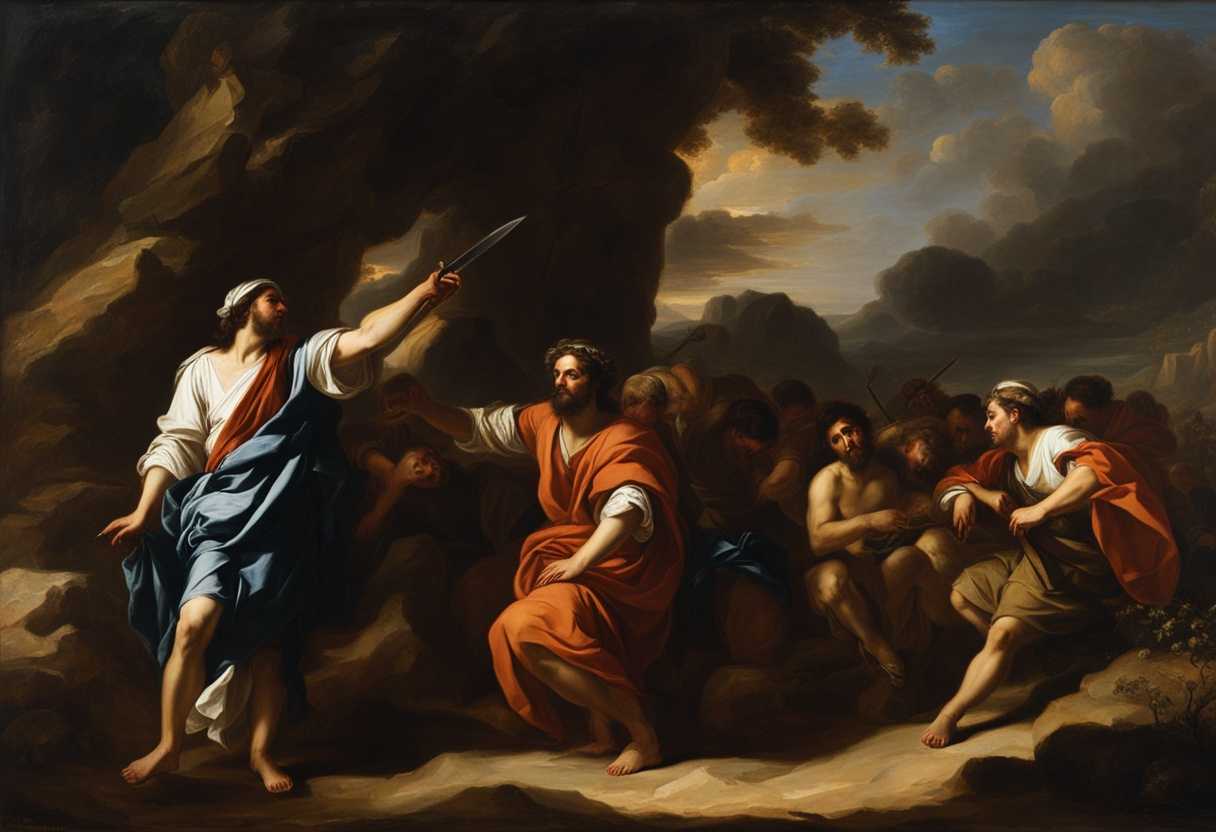
9 And the Lord said to Moses, “I have seen this people, and behold, it is a stiff-necked people.
10 Now therefore let me alone, that my wrath may burn hot against them and I may consume them, in order that I may make a great nation of you.
11 But Moses implored the Lord his God and said, “O Lord, why does your wrath burn hot against your people, whom you have brought out of the land of Egypt with great power and with a mighty hand?
12 Why should the Egyptians say, ‘With evil intent did he bring them out, to kill them in the mountains and to consume them from the face of the earth’? Turn from your burning anger and relent from this disaster against your people.
13 Remember Abraham, Isaac, and Israel, your servants, to whom you swore by your own self, and said to them, ‘I will multiply your offspring as the stars of heaven, and all this land that I have promised I will give to your offspring, and they shall inherit it forever.’”
14 And the Lord relented from the disaster that he had spoken of bringing on his people.
Biblical Meaning of Stiff Neck
The term “stiff-necked” embodies a profound theological concept in the Bible, symbolizing an obstinate refusal to heed divine guidance and a blatant unwillingness to submit to God’s authority. This metaphor derives from the imagery of stubborn animals resistant to yoke or bridle, illustrating human tendencies toward rebellion. In Exodus 32:9, God describes the Israelites as a “stiff-necked people” following their creation of the golden calf, highlighting their disobedience despite the miraculous deliverance from Egypt. Similarly, Acts 7:51 reinforces this characterization, with Stephen accusing the Jewish leaders of being “stiff-necked” and uncircumcised in heart and ears, indicating their persistent rejection of the Holy Spirit and God’s prophetic messages.
The broader meaning of being “stiff-necked” emphasizes not just disobedience but also the relational aspect of humanity’s struggle with sin—the refusal to accept God’s sovereignty and guidance. This stubbornness leads to spiritual blindness and separation from God. The term invites believers to engage in self-reflection regarding their own hearts, urging them to remain open and receptive to divine correction rather than resistant like the Israelites. As captured in Proverbs 29:1, “He who is often reproved, yet stiffens his neck, will suddenly be broken beyond healing,” the consequences of such obstinacy can be dire, reiterating the need for humility and responsiveness to God’s leading in our lives.
The biblical notion of being “stiff-necked” can also be seen in the context of the covenant relationship between God and His people. Throughout the Old Testament, the Israelites are frequently depicted as turning away from God’s commands, choosing their own paths instead. This recurring theme illustrates not only a failing to respect the covenant but also a deeper spiritual affliction of hard-heartedness. This heart posture can be contrasted with the attitudes that God desires from His followers—a heart of flesh, as described in Ezekiel 36:26. The metaphor of the stiff neck serves to alert the faithful to the dangers of spiritual complacency, reminding them that a refusal to change can lead to estrangement from God.
Moreover, the New Testament reinforces the significance of humility and teachability. In Matthew 11:29, Jesus invites those who are weary to learn from Him, presenting His gentleness as the antidote to the stiffness of heart exhibited by many in the past. The call to humility and acceptance of divine guidance is a recurring thread throughout scripture, encouraging believers to examine their spiritual condition. Rather than adopting a stiff-necked posture, followers of Christ are encouraged to cultivate pliability in their hearts, thereby fostering a vibrant relationship with God characterized by faithfulness, growth, and transformation. This narrative arc invites a continual examination of personal attitudes and behaviors in light of scriptural teachings, showcasing the importance of being responsive to God’s leading and correction.
Symbol of Rebellion Against God
In the Bible, the term “stiff neck” often signifies a refusal to submit to divine authority. It represents a hardened heart and a rebellious spirit that resists guidance and correction. This attitude reflects a broader theme of disobedience, where individuals or groups choose to follow their own desires rather than adhere to God’s commandments. Such rebellion can lead to spiritual consequences and a distancing from God’s grace.
Indication of Spiritual Blindness
A “stiff neck” can also symbolize spiritual blindness or an inability to perceive truth. This condition often arises from pride or self-righteousness, where individuals are unwilling to acknowledge their faults or the need for change. This blindness prevents them from recognizing the importance of humility and repentance, ultimately hindering their relationship with God and their ability to grow spiritually.
Call for Humility and Submission
Conversely, the concept of a “stiff neck” serves as a call for humility and submission to God’s will. It highlights the importance of being open to correction and willing to change one’s ways. In contrast to a stiff neck, a humble heart is receptive to divine guidance and willing to follow the path laid out by God. This broader meaning encourages believers to cultivate a spirit of obedience and to seek alignment with God’s purpose for their lives.
How to Embrace God’s Guidance for a Fulfilling Life
Embracing God’s guidance is a transformative journey that can lead to a truly fulfilling life, and it begins with cultivating a heart open to His voice. Start by immersing yourself in Scripture, allowing the Word to illuminate your path and provide wisdom for your daily decisions. Prayer is your lifeline—make it a regular practice to seek God’s direction, sharing your hopes, fears, and uncertainties with Him. Remember, His guidance often comes through the gentle nudges of the Holy Spirit, so be attentive to those quiet moments of inspiration and conviction. Surround yourself with a community of believers who can offer support and insight, as we often find clarity through the perspectives of others. Lastly, trust in His timing; sometimes, the waiting is part of the journey, teaching us patience and deepening our faith. By surrendering your plans to God and being willing to follow where He leads, you’ll discover a life rich with purpose and joy, reflecting His love in all you do.
Bible References to Stiff Neck Symbolism:
Exodus 33:3-6: 3 Go up to a land flowing with milk and honey; but I will not go up among you, lest I consume you on the way, for you are a stiff-necked people.”
4 When the people heard this disastrous word, they mourned, and no one put on his ornaments.
5 For the Lord had said to Moses, “Say to the people of Israel, ‘You are a stiff-necked people; if for a single moment I should go up among you, I would consume you. So now take off your ornaments, that I may know what to do with you.’”
6 So the people of Israel stripped themselves of their ornaments, from Mount Horeb onward.
Deuteronomy 9:6-13: 6 “Know, therefore, that the Lord your God is not giving you this good land to possess because of your righteousness, for you are a stubborn people.”
7 Remember and do not forget how you provoked the Lord your God to wrath in the wilderness. From the day you came out of the land of Egypt until you came to this place, you have been rebellious against the Lord.
8 Even at Horeb you provoked the Lord to wrath, and the Lord was so angry with you that he was ready to destroy you.
9 When I went up the mountain to receive the tablets of stone, the tablets of the covenant that the Lord made with you, I remained on the mountain forty days and forty nights. I neither ate bread nor drank water.
10 And the Lord gave me the two tablets of stone written with the finger of God, and on them were all the words that the Lord had spoken with you on the mountain out of the midst of the fire on the day of the assembly.
11 And at the end of forty days and forty nights the Lord gave me the two tablets of stone, the tablets of the covenant.
12 Then the Lord said to me, ‘Arise, go down quickly from here, for your people whom you have brought from Egypt have acted corruptly. They have turned aside quickly out of the way that I commanded them; they have made themselves a metal image.’
13 “Furthermore, the Lord said to me, ‘I have seen this people, and behold, it is a stubborn people.”
2 Chronicles 30:8-9: 8 Do not be like your fathers and your brothers, who were faithless to the Lord God of their fathers, so that he made them a desolation, as you see.
9 For if you return to the Lord, your brothers and your children will find compassion with their captors and return to this land. For the Lord your God is gracious and merciful and will not turn away his face from you, if you return to him.”
Nehemiah 9:16-19: 16 “But they and our fathers acted presumptuously and stiffened their neck and did not obey your commandments.”
17 They refused to obey and were not mindful of the wonders that you performed among them, but they stiffened their neck and appointed a leader to return to their slavery in Egypt. But you are a God ready to forgive, gracious and merciful, slow to anger and abounding in steadfast love, and did not forsake them.
18 Even when they had made for themselves a golden calf and said, ‘This is your God who brought you up out of Egypt,’ and had committed great blasphemies,
19 you in your great mercies did not forsake them in the wilderness.
Psalm 75:4-7: 4 I say to the boastful, “Do not boast,” and to the wicked, “Do not lift up your horn;”
5 Do not lift up your horn on high, or speak with haughty neck.
6 For not from the east or from the west and not from the wilderness comes lifting up,
7 But it is God who executes judgment, putting down one and lifting up another.
Proverbs 29:1-3: 1 He who is often reproved, yet stiffens his neck, will suddenly be broken beyond healing.
2 When the righteous increase, the people rejoice, but when the wicked rule, the people groan.
3 He who loves wisdom makes his father glad,
but a companion of prostitutes squanders his wealth.
Isaiah 48:3-5: 3 “The former things I declared of old;
they went out from my mouth, and I announced them;
then suddenly I did them, and they came to pass.”
4 Because I know that you are obstinate,
and your neck is an iron sinew
and your forehead brass,
5 I declared them to you from of old,
before they came to pass I announced them to you,
lest you should say, ‘My idol did them,
my carved image and my metal image commanded them.’
Jeremiah 7:23-26: 23 But this command I gave them: ‘Obey my voice, and I will be your God, and you shall be my people. And walk in all the way that I command you, that it may be well with you.’
24 But they did not obey or incline their ear, but walked in their own counsels and the stubbornness of their evil hearts, and went backward and not forward.
25 From the day that your fathers came out of the land of Egypt to this day, I have persistently sent all my servants the prophets to them, day after day.
26 Yet they did not listen to me or incline their ear, but stiffened their neck. They did worse than their fathers.
Acts 7:51-53: 51 “You stiff-necked people, uncircumcised in heart and ears, you always resist the Holy Spirit. As your fathers did, so do you.”
Which of the prophets did your fathers not persecute? And they killed those who announced beforehand the coming of the Righteous One, whom you have now betrayed and murdered,
You who received the law as delivered by angels and did not keep it.

Reverend Michael Johnson is an experienced Church Minister with a profound expertise in spirituality and guidance. With a serene presence and a compassionate heart, he has faithfully served his congregation for over 20 years, leading them on a spiritual journey towards inner peace and enlightenment. Reverend Johnson’s extensive knowledge of religious philosophies and profound understanding of human nature have made him a trusted confidant and mentor to many, as he seamlessly weaves his profound wisdom into life teachings. Reverend Johnson’s calming demeanor and empathetic nature continue to uplift and heal souls, nurturing a sense of unity and tranquility within his community.