
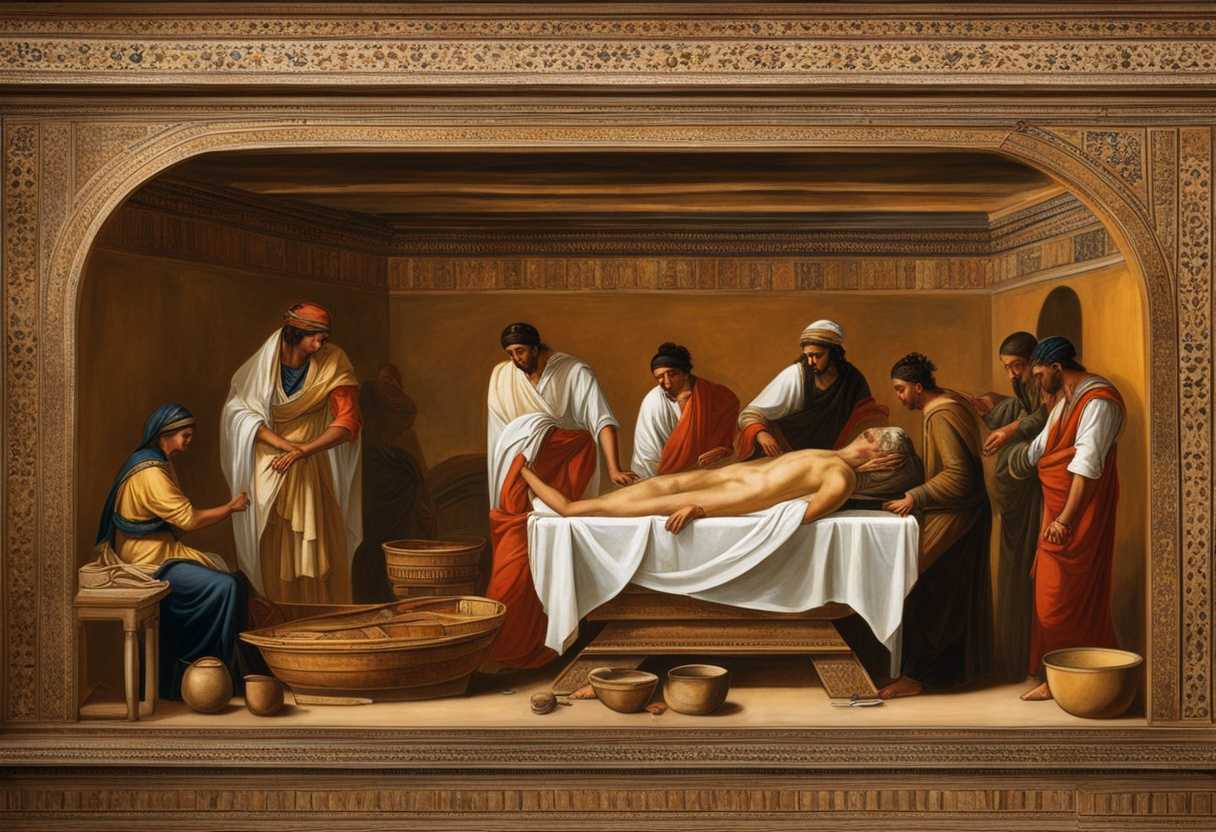
In the Bible, “embalmed” refers to a process used to preserve a body after death, as seen in the account of Joseph in Genesis 50:2-3, where he is described as having his father Jacob embalmed in Egypt. The practice involved applying spices and resins to prevent decay, signifying respect for the deceased and preparation for burial.
Scripture
2 And Joseph commanded his servants the physicians to embalm his father. So the physicians embalmed Israel.
3 Forty days were required for it, for that is how many are required for embalming. And the Egyptians wept for him seventy days.
Embalmed in the Bible: Meaning Explained
In the Bible, the act of embalming, particularly in the context of Genesis 50:2-3, carries deeper significance than mere preservation of the body. When Joseph had his father Jacob embalmed, it was not only a matter of physical care but also a manifestation of love, honor, and respect for family legacy. This practice illustrates the cultural practices of the time but also reveals a profound understanding of the relationship between life, death, and memory. Joseph’s actions show a recognition of the continuity of family and the weight of heritage, as Jacob’s body was to be transported back to Canaan for burial, affirming the importance of honoring one’s ancestors and maintaining familial connections even after death (Genesis 50:13).
Moreover, embalming can also be seen within the broader theological context of life after death. Though the physical body is preserved, the biblical narrative emphasizes that life continues in a different form beyond death. This idea resonates with verses such as Psalm 116:15, which states, “Precious in the sight of the LORD is the death of his faithful servants.” The preservation of the body through embalming can thus symbolize the hope of resurrection and God’s promise of eternal life, highlighting the idea that while the physical form may decay, the spirit endures. In Jewish tradition, preservation practices serve to affirm the sanctity of life, even while acknowledging the inevitability of death—a theme that runs through various narratives in Scripture and invites reflection on mortality, legacy, and the eternal promise of God.
The act of embalming also carries a significant cultural resonance among the ancient peoples depicted in the Bible, notably among the Egyptians, who were renowned for their sophisticated mummification practices. Such customs were deeply intertwined with their beliefs about the afterlife and the importance of preparing the deceased for the journey beyond this world. This connection underscores the significance of the body as a vessel for the soul, illustrating the belief that careful preparation and preservation were essential for ensuring a favorable existence in the afterlife. The biblical narrative acknowledges these practices, demonstrating an understanding and respect for the customs of surrounding nations while simultaneously weaving in its own theological insights about life, death, and the divine.
In addition to Joseph’s honoring of Jacob, the topic of embalming can also touch on themes of ritual purity and respect for the dead as outlined in various laws and customs found throughout the Scriptures. For instance, the requirements for handling the dead, including burial practices seen later in the accounts of Moses and other figures, reinforce the solemnity attached to death. These rituals are often aimed at ensuring not only the dignity of the deceased but also a reflection of the community’s faith and beliefs in the resurrection and a future hope. Such narratives position the act of caring for the dead as a vital expression of faith that transcends the finality of death, affirming a connection to the divine and a collective memory that underscores the promise of eternal faithfulness despite life’s ephemeral nature.
Preservation of the Body
In biblical contexts, embalming often signifies the preservation of the body after death. This practice reflects a cultural understanding of the importance of honoring the deceased and ensuring that their physical form is treated with respect. The act of embalming can symbolize a desire to maintain the integrity of the body for the afterlife, indicating a belief in the continuation of existence beyond death.
Ritual and Mourning Practices
Embalming is also associated with the rituals and mourning practices of ancient cultures, particularly in Egypt. It serves as a significant aspect of the grieving process, allowing family and community members to pay their respects. This practice highlights the communal aspect of mourning, where the act of preparing the body becomes a shared experience that fosters connection and remembrance among the living.
Symbol of Transition
In a broader spiritual sense, embalming can represent the transition from life to death and the journey of the soul. It serves as a metaphor for the transformation that occurs at the end of life, emphasizing the belief in an afterlife or resurrection. This concept invites reflection on mortality and the hope of eternal life, encouraging individuals to consider their own spiritual journeys and the legacy they leave behind.
How to Honor Life and Cultivate Christian Values
Honoring life and cultivating Christian values is a beautiful journey that begins with recognizing the inherent worth of every individual as a creation of God. To truly honor life, we must embrace compassion, kindness, and respect in our daily interactions, reflecting the love that Christ showed us. This means actively listening to others, offering help to those in need, and standing up for the marginalized. Additionally, immersing ourselves in Scripture and prayer can deepen our understanding of God’s will, guiding us to live out our faith authentically. Remember, it’s not just about following rules; it’s about embodying the grace and mercy that Jesus exemplified. As we strive to live out these values, we not only honor life but also inspire those around us to do the same, creating a ripple effect of love and hope in our communities.
Bible References to Embalming Meaning:
Genesis 50:26: 26 So Joseph died, being 110 years old. They embalmed him, and he was put in a coffin in Egypt.
2 Chronicles 16:13-14: 13 And Asa slept with his fathers, dying in the forty-first year of his reign.
14 They buried him in the tomb that he had cut for himself in the city of David. They laid him on a bier that had been filled with various kinds of spices prepared by the perfumer’s art, and they made a very great fire in his honor.
John 19:39-40: 39 Nicodemus also, who earlier had come to Jesus by night, came bringing a mixture of myrrh and aloes, about seventy-five pounds in weight.
40 So they took the body of Jesus and bound it in linen cloths with the spices, as is the burial custom of the Jews.

Reverend Ogunlade is a seasoned Church Minister with over three decades of experience in guiding and nurturing congregations. With profound wisdom and a serene approach, Reverend Ogunlade has carried out various pastoral duties, including delivering uplifting sermons, conducting religious ceremonies, and offering sage counsel to individuals seeking spiritual guidance. Their commitment to fostering harmony and righteousness within their community is exemplified through their compassionate nature, making them a beloved and trusted figure among the congregation.