
In the Bible, cutting hair can symbolize a significant change or a covenant with God. For instance, in the story of Samson (Judges 16), the cutting of his hair represented the loss of his strength due to broken vows, while in some interpretations, it can also signify humility or a new beginning (as seen in Numbers 6 with the Nazarite vow).
Scripture
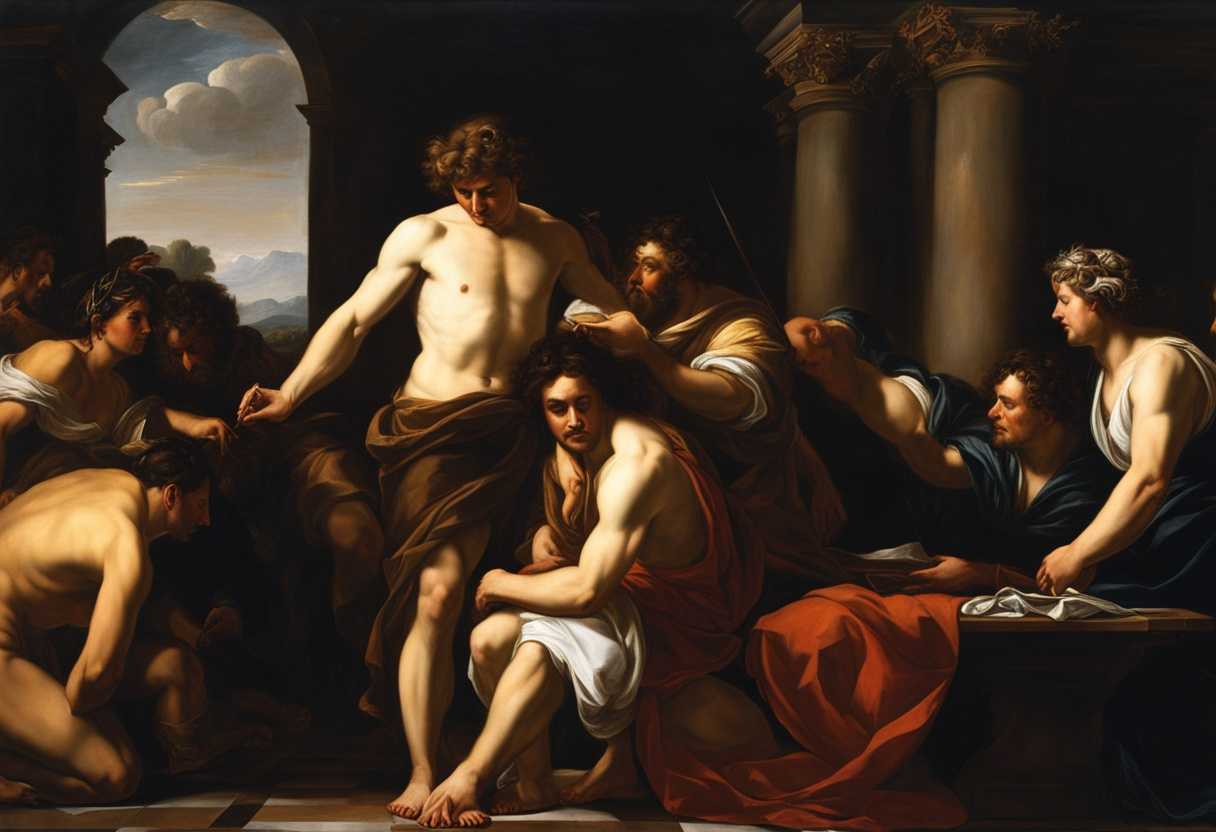
17 And he told her all his heart, and said to her, “A razor has never come upon my head, for I have been a Nazirite to God from my mother’s womb. If my head is shaved, then my strength will leave me, and I shall become weak and be like any other man.”
18 When Delilah saw that he had told her all his heart, she sent and called the lords of the Philistines, saying, “Come up again, for he has told me all his heart.” Then the lords of the Philistines came up to her and brought the money in their hands.
19 She made him sleep on her knees. And she called a man and had him shave off the seven locks of his head. Then she began to torment him, and his strength left him.
20 And she said, “The Philistines are upon you, Samson!” And he awoke from his sleep and said, “I will go out as at other times and shake myself free.” But he did not know that the Lord had left him.
21 And the Philistines seized him and gouged out his eyes and brought him down to Gaza and bound him with bronze shackles. And he ground at the mill in the prison.
22 But the hair of his head began to grow again after it had been shaved.
Biblical Dream Interpretation: Cutting Hair
In the Bible, the act of cutting hair carries profound symbolism, often signifying pivotal moments of transformation, covenant, and spiritual renewal. In the narrative of Samson, detailed in Judges 16, the cutting of his hair is emblematic of not only the breaking of his vow to God but also a drastic alteration of his identity and purpose. Samson’s strength was inextricably linked to his unshorn hair, and its loss indicates both a physical and spiritual degradation that occurs when one strays from divine commandments. This narrative serves as a cautionary tale about the consequences of broken vows and the potential fall from grace when one turns away from God’s path.
Conversely, hair cutting can also represent acts of devotion and a new beginning, seen in the context of the Nazarite vow outlined in Numbers 6. Those who took this vow often engaged in the cutting of their hair as a ritualistic act of dedication to God after a period of separation and commitment to holiness. This act not only symbolizes the completion of a vow but also encapsulates a return to spiritual focus, signifying a fresh start in one’s relationship with God. The act of cutting hair, therefore, is multilayered in its meaning within biblical texts, serving as both a warning against losing one’s way and an illustration of the possibility of renewal and recommitment to divine purposes.
Another noteworthy instance of hair cutting occurs in the context of spiritual leadership and identity, particularly with the prophet Jeremiah. Throughout his tumultuous ministry, Jeremiah’s messages often included signs and symbols to convey God’s impending judgment. In Jeremiah 7:29, the act of shaving one’s head is depicted as a sign of mourning and despair over the people’s eventual destruction due to their disobedience. This illustrates how cutting hair can serve as a public declaration of grief and discontent, reinforcing the seriousness of the spiritual condition of the people. The act of shaving therefore becomes a prophetic act, where hair symbolizes the collective identity of a nation—its glory, pride, and eventual shame when separation from God occurs.
In another biblical reference, the New Testament brings forth the apostle Paul, who in Acts 18:18 completes a vow by having his hair cut at Cenchreae. This act signifies the completion of his commitment and is seen as an affirmation of his faithfulness to God’s calling. It shows that despite the potential pitfalls associated with hair cutting, when acted upon in faith, it can reinforce one’s dedication and signify a new chapter of service. This multifaceted understanding of hair cutting throughout the scriptures illustrates how intertwined personal and communal identities are with physical appearance, and underscores the powerful implications of such acts in relation to one’s covenant with God. Ultimately, these biblical examples reveal the dual nature of hair cutting—both as an articulation of loss and as a recommitment to spiritual purpose.
Symbol of Loss and Sacrifice
In biblical contexts, cutting hair often symbolizes a significant loss or sacrifice. Hair can represent strength, identity, and vitality, and its removal may indicate a relinquishing of power or a transition into a new phase of life. This act can reflect a deeper spiritual journey where one must let go of certain aspects of themselves to grow or evolve.
Transformation and Renewal
Cutting hair can also signify transformation and renewal. In many biblical narratives, the act of cutting hair is associated with a change in status or a new beginning. This can represent a shedding of the old self and the emergence of a new identity, often aligned with divine purpose or calling. Such transformations may involve trials or challenges that lead to spiritual growth and a deeper understanding of one’s faith.
Consequences of Disobedience
In some biblical interpretations, cutting hair can symbolize the consequences of disobedience or straying from one’s commitments. This theme is often linked to the idea of covenant and the responsibilities that come with it. When individuals fail to uphold their vows or deviate from their path, the act of cutting hair may serve as a metaphor for the loss of divine favor or protection, highlighting the importance of faithfulness and adherence to one’s spiritual commitments.
How to Embrace Sacrifice for Spiritual Transformation
Embracing sacrifice for spiritual transformation is a profound journey that invites us to let go of our comforts and desires in pursuit of a deeper relationship with God. It’s about recognizing that true growth often comes through the act of giving—whether that’s our time, resources, or even our preconceived notions about what we think we need. As you navigate this path, consider the example of Jesus, who sacrificed everything for our sake. Reflect on what you might need to surrender in your own life; perhaps it’s a habit that holds you back or a fear that keeps you from serving others. Remember, sacrifice doesn’t always mean grand gestures; it can be as simple as choosing to listen more, to forgive, or to be present for someone in need. Each small act of sacrifice can lead to significant spiritual transformation, drawing you closer to the heart of God and allowing His love to flow through you in ways you never imagined. Embrace this journey with an open heart, and watch how it reshapes not only your spirit but also the world around you.
Bible References to Hair Cutting Dreams:
1 Corinthians 11:14-15: 14 Does not nature itself teach you that if a man wears long hair it is a disgrace for him,
15 but if a woman has long hair, it is her glory? For her hair is given to her for a covering.
Numbers 6:5-7: 5 “All the days of his vow of separation, no razor shall touch his head. Until the time is completed for which he separates himself to the Lord, he shall be holy. He shall let the locks of hair of his head grow long.
6 “All the days that he separates himself to the Lord he shall not go near a dead body.
7 He shall not make himself unclean for his father or for his mother, for his brother or his sister, when they die, because his separation to God is on his head.
Ezekiel 44:20-22: 20 They shall not shave their heads or let their locks grow long; they shall surely trim the hair of their heads.
21 No priest shall drink wine when he enters the inner court.
22 They shall not marry a widow or a divorced woman, but only virgins of the offspring of the house of Israel, or a widow who is the widow of a priest.
Isaiah 7:20-22: 20 In that day the Lord will shave with a razor that is hired beyond the River—with the king of Assyria—the head and the hair of the feet, and it will sweep away the beard also.
21 In that day a man will keep alive a young cow and two sheep,
22 In that day a man will keep alive a young cow and two sheep,
Leviticus 19:26-28: 26 “You shall not eat any flesh with the blood in it. You shall not interpret omens or tell fortunes.
27 You shall not round off the hair on your temples or mar the edges of your beard.
28 You shall not make any cuts on your body for the dead or tattoo yourselves: I am the Lord.
1 Samuel 1:11-12: 11 And she vowed a vow and said, “O Lord of hosts, if you will indeed look on the affliction of your servant and remember me and not forget your servant, but will give to your servant a son, then I will give him to the Lord all the days of his life, and no razor shall touch his head.”
12 As she continued praying before the Lord, Eli observed her mouth.
2 Samuel 14:25-26: 25 Now in all Israel there was no one so much to be praised for his handsome appearance as Absalom. From the sole of his foot to the crown of his head there was no blemish in him.
26 And when he cut the hair of his head (for at the end of every year he used to cut it; when it was heavy on him, he cut it), he weighed the hair of his head, two hundred shekels by the king’s weight.
Jeremiah 7:29-31: 29 Cut off your hair and cast it away;
raise a lamentation on the bare heights,
for the Lord has rejected and forsaken
the generation of his wrath.
30 “For the sons of Judah have done evil in my sight, declares the Lord. They have set their detestable things in the house that is called by my name, to defile it.”
31 And they have built the high places of Topheth, which is in the Valley of the Son of Hinnom, to burn their sons and their daughters in the fire, which I did not command, nor did it come into my mind.
Acts 18:18-19: 18 After this, Paul stayed many days longer and then took leave of the brothers and set sail for Syria, and with him Priscilla and Aquila. At Cenchreae he had cut his hair, for he was under a vow.
19 And they came to Ephesus, and he left them there, but he himself went into the synagogue and reasoned with the Jews.

Reverend Michael Johnson is an experienced Church Minister with a profound expertise in spirituality and guidance. With a serene presence and a compassionate heart, he has faithfully served his congregation for over 20 years, leading them on a spiritual journey towards inner peace and enlightenment. Reverend Johnson’s extensive knowledge of religious philosophies and profound understanding of human nature have made him a trusted confidant and mentor to many, as he seamlessly weaves his profound wisdom into life teachings. Reverend Johnson’s calming demeanor and empathetic nature continue to uplift and heal souls, nurturing a sense of unity and tranquility within his community.