
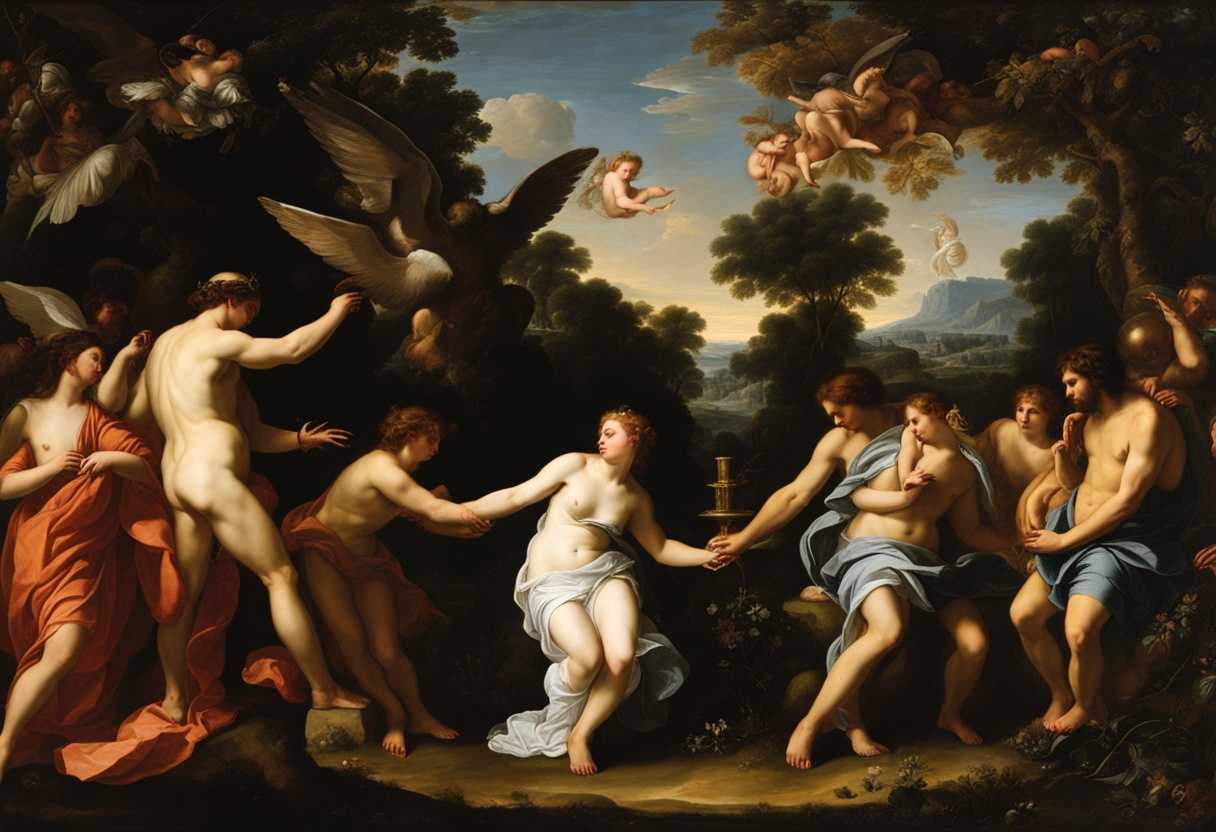
The Garden of Eden represents the ideal state of communion between God and humanity, where separation ultimately occurs due to sin. This separation is symbolized by Adam and Eve’s expulsion from the garden, signifying the broken relationship with God and the loss of paradise.
Scripture
8 And the Lord God planted a garden in Eden, in the east, and there he put the man whom he had formed.
9 And out of the ground the Lord God made to spring up every tree that is pleasant to the sight and good for food. The tree of life was in the midst of the garden, and the tree of the knowledge of good and evil.
10 A river flowed out of Eden to water the garden, and there it divided and became four rivers.
11 The name of the first is the Pishon. It is the one that flowed around the whole land of Havilah, where there is gold.
12 The gold of that land is good; bdellium and onyx stone are there.
13 The name of the second river is the Gihon. It is the one that flowed around the whole land of Cush.
14 The name of the third river is the Tigris, which flows east of Assyria. And the fourth river is the Euphrates.
15 The Lord God took the man and put him in the garden of Eden to work it and keep it.
16 And the Lord God commanded the man, saying, “You may surely eat of every tree of the garden,
17 but of the tree of the knowledge of good and evil you shall not eat, for in the day that you eat of it you shall surely die.”
Garden of Eden: Biblical Significance of Separation
The Garden of Eden embodies the pinnacle of creation, representing an idyllic sanctuary where humanity existed in perfect harmony with God, as described in Genesis 2:8-9, which depicts the garden as a place of abundance and divine provision. Here, Adam and Eve enjoy a direct, unmediated relationship with their Creator, emphasizing the intended closeness and intimacy of this communion. However, the act of disobedience—symbolized by eating the forbidden fruit from the tree of the knowledge of good and evil (Genesis 3:6)—introduces sin into the world, severing this vital connection. The repercussions of their choice lead to expulsion from Eden (Genesis 3:23-24), underscoring the theological concept of separation that permeates the biblical narrative.
This separation not only signifies the loss of paradise but also establishes a profound rift between God and humanity, which echoes throughout scripture. The consequences of sin are further illustrated in Isaiah 59:2, where it is stated, “But your iniquities have separated you from your God; your sins have hidden his face from you.” This theme of separation becomes a foundation for the biblical story, portraying the human condition as one marked by a longing for reunion with God, ultimately fulfilled through the redemptive work of Christ. The narrative of Eden thus encapsulates a larger theological arc, where the initial separation calls for restoration, culminating in the promise of reconciliation found in the New Testament (2 Corinthians 5:18-19), where believers are invited back into communion with God through faith.
The Garden of Eden serves as a crucial theological framework for understanding the concept of separation in the biblical narrative, representing not only the initial harmonious existence but also the subsequent estrangement from divine presence. This foundational event reflects humanity’s inherent desire to return to a state of unity with God, a yearning that persists throughout scripture. The journey from Eden to the eventual restoration is marked by various moments of separation that reinforce the need for reconciliation. For instance, the Israelites’ experience during the Exile becomes emblematic of this estrangement, wherein they grapple with the consequences of turning away from God’s commands, mirroring the experience of Adam and Eve who lost their direct access to divine communion.
Moreover, the theme of separation is further explored through the prophetic literature, which often laments the disconnection between God and His people due to their unfaithfulness. The imagery of the vineyard in Isaiah, where God expresses His disappointment over the failure to bear good fruit, serves as a potent reminder of the physical and spiritual separation that results from sin. In these passages, the emotional weight of separation from God’s grace is palpable, generating an ongoing cry for restoration that characterizes much of the Old Testament. Ultimately, the narrative of the Garden of Eden establishes a critical lens through which the entirety of the biblical text can be interpreted, revealing a continuous tension between separation from and the hopeful return to divine presence, consistently fulfilled in the redemptive arc leading to New Testament promises.
The Separation of Humanity from Divine Presence
The Garden of Eden represents the initial state of harmony between humanity and God. The separation that occurs following the disobedience of Adam and Eve signifies a profound shift in the relationship between the Creator and creation. This separation highlights the consequences of sin, illustrating how disobedience can lead to estrangement from divine fellowship. The loss of direct access to God’s presence serves as a reminder of the need for reconciliation and restoration, a theme that resonates throughout the biblical narrative.
The Division Between Good and Evil
The Garden of Eden also symbolizes the moral dichotomy between good and evil. The choice presented to Adam and Eve reflects the human capacity for free will and the inherent struggle to choose righteousness over temptation. This separation between good and evil is foundational to the biblical understanding of sin and its repercussions. The narrative emphasizes the importance of discernment and the consequences of moral choices, illustrating how separation from God’s will leads to spiritual and physical ramifications.
The Foreshadowing of Redemption
The separation experienced in the Garden of Eden foreshadows the broader biblical theme of redemption. While the expulsion from Eden signifies a loss, it also sets the stage for God’s redemptive plan through Jesus Christ. This separation serves as a catalyst for the unfolding narrative of salvation, where the restoration of the relationship between humanity and God becomes central. The longing for re-entry into the divine presence, as symbolized by the Garden, reflects the hope for reconciliation and the ultimate fulfillment of God’s promise to restore what was lost.
How to Embrace Grace and Strengthen Your Faith
Embracing grace is a transformative journey that invites us to recognize our imperfections and lean into God’s unconditional love. As you seek to strengthen your faith, remember that grace is not just a one-time gift; it’s a daily reminder that we are worthy of love and forgiveness, no matter our past. Start by cultivating a habit of gratitude—take a moment each day to reflect on the blessings in your life, no matter how small. This practice opens your heart to the grace that surrounds you. Additionally, immerse yourself in Scripture, allowing the words to wash over you and remind you of God’s promises. Surround yourself with a community of believers who uplift and encourage you, sharing in both struggles and triumphs. As you embrace grace, you’ll find that your faith deepens, transforming not only your relationship with God but also how you interact with the world around you. Remember, it’s not about perfection; it’s about progress and the beautiful journey of growing closer to Him.
Bible References to Separation in Eden:
Genesis 3:1-24: 1 Now the serpent was more crafty than any other beast of the field that the Lord God had made.
2 And the woman said to the serpent, “We may eat the fruit of the trees of the garden,
3 but God said, ‘You shall not eat of the fruit of the tree that is in the midst of the garden, neither shall you touch it, lest you die.’”
4 But the serpent said to the woman, “You will not surely die.
5 For God knows that when you eat of it your eyes will be opened, and you will be like God, knowing good and evil.
6 So when the woman saw that the tree was good for food, and that it was a delight to the eyes, and that the tree was to be desired to make one wise, she took of its fruit and ate, and she also gave some to her husband who was with her, and he ate.
7 Then the eyes of both were opened, and they knew that they were naked. And they sewed fig leaves together and made themselves loincloths.
8 And they heard the sound of the Lord God walking in the garden in the cool of the day, and the man and his wife hid themselves from the presence of the Lord God among the trees of the garden.
9 But the Lord God called to the man and said to him, “Where are you?”
10 And he said, “I heard the sound of you in the garden, and I was afraid, because I was naked, and I hid myself.”
11 He said, “Who told you that you were naked? Have you eaten of the tree of which I commanded you not to eat?”
12 The man said, “The woman whom you gave to be with me, she gave me fruit of the tree, and I ate.”
13 Then the Lord God said to the woman, “What is this that you have done?” The woman said, “The serpent deceived me, and I ate.”
14 The Lord God said to the serpent, “Because you have done this, cursed are you above all livestock and above all beasts of the field; on your belly you shall go, and dust you shall eat all the days of your life.
15 I will put enmity between you and the woman,
and between your offspring and her offspring;
he shall bruise your head,
and you shall bruise his heel.”
16 To the woman he said, “I will surely multiply your pain in childbearing; in pain you shall bring forth children. Your desire shall be contrary to your husband, but he shall rule over you.”
17 And to Adam he said, “Because you have listened to the voice of your wife and have eaten of the tree of which I commanded you, ‘You shall not eat of it,’ cursed is the ground because of you; in pain you shall eat of it all the days of your life;
18 thorns and thistles it shall bring forth for you; and you shall eat the plants of the field.
19 By the sweat of your face you shall eat bread, till you return to the ground, for out of it you were taken; for you are dust, and to dust you shall return.
20 The man called his wife’s name Eve, because she was the mother of all living.
21 And the Lord God made for Adam and for his wife garments of skins and clothed them.
22 Then the Lord God said, “Behold, the man has become like one of us in knowing good and evil. Now, lest he reach out his hand and take also of the tree of life and eat, and live forever—”
23 therefore the Lord God sent him out from the garden of Eden to work the ground from which he was taken.
24 He drove out the man, and at the east of the garden of Eden he placed the cherubim and a flaming sword that turned every way to guard the way to the tree of life.
Isaiah 51:3: 3 For the Lord comforts Zion; he comforts all her waste places and makes her wilderness like Eden, her desert like the garden of the Lord; joy and gladness will be found in her, thanksgiving and the voice of song.
Ezekiel 28:13-17: 13 You were in Eden, the garden of God; every precious stone was your covering, sardius, topaz, and diamond, beryl, onyx, and jasper, sapphire, emerald, and carbuncle; and crafted in gold were your settings and your engravings. On the day that you were created they were prepared.
14 You were an anointed guardian cherub.
15 You were blameless in your ways from the day you were created, till unrighteousness was found in you.
16 In the abundance of your trade you were filled with violence in your midst, and you sinned; so I cast you as a profane thing from the mountain of God, and I destroyed you, O guardian cherub, from the midst of the stones of fire.
17 Your heart was proud because of your beauty;
you corrupted your wisdom for the sake of your splendor.
Revelation 2:7: 7 He who has an ear, let him hear what the Spirit says to the churches. To the one who conquers I will grant to eat of the tree of life, which is in the paradise of God.
Revelation 22:1-5: 1 Then the angel showed me the river of the water of life, bright as crystal, flowing from the throne of God and of the Lamb,
2 through the middle of the street of the city; also, on either side of the river, the tree of life with its twelve kinds of fruit, yielding its fruit each month. The leaves of the tree were for the healing of the nations.
3 No longer will there be anything accursed, but the throne of God and of the Lamb will be in it, and his servants will worship him.
4 They will see his face, and his name will be on their foreheads.
5 And night will be no more. They will need no light of lamp or sun, for the Lord God will be their light, and they will reign forever and ever.

Reverend Michael Johnson is an experienced Church Minister with a profound expertise in spirituality and guidance. With a serene presence and a compassionate heart, he has faithfully served his congregation for over 20 years, leading them on a spiritual journey towards inner peace and enlightenment. Reverend Johnson’s extensive knowledge of religious philosophies and profound understanding of human nature have made him a trusted confidant and mentor to many, as he seamlessly weaves his profound wisdom into life teachings. Reverend Johnson’s calming demeanor and empathetic nature continue to uplift and heal souls, nurturing a sense of unity and tranquility within his community.