
Numbers 36:1-4 is about the importance of preserving inheritance within the tribes of Israel by restricting marriage outside the tribe, in order to maintain the land and property allotted to each tribe by God.
1 The heads of the fathers’ houses of the clan of the people of Gilead the son of Machir, son of Manasseh, from the clans of the people of Joseph, came near and spoke before Moses and before the chiefs, the heads of the fathers’ houses of the people of Israel.
2 And they said, “The Lord commanded my lord to give the land for inheritance by lot to the people of Israel, and my lord was commanded by the Lord to give the inheritance of Zelophehad our brother to his daughters.
3 But if they are married to any of the sons of the other tribes of the people of Israel, then their inheritance will be taken from the inheritance of our fathers and added to the inheritance of the tribe into which they marry. So it will be taken away from the lot of our inheritance.
4 When the jubilee of the people of Israel comes, then their inheritance will be added to the inheritance of the tribe into which they marry, and their inheritance will be taken away from the inheritance of the tribe of our fathers.”
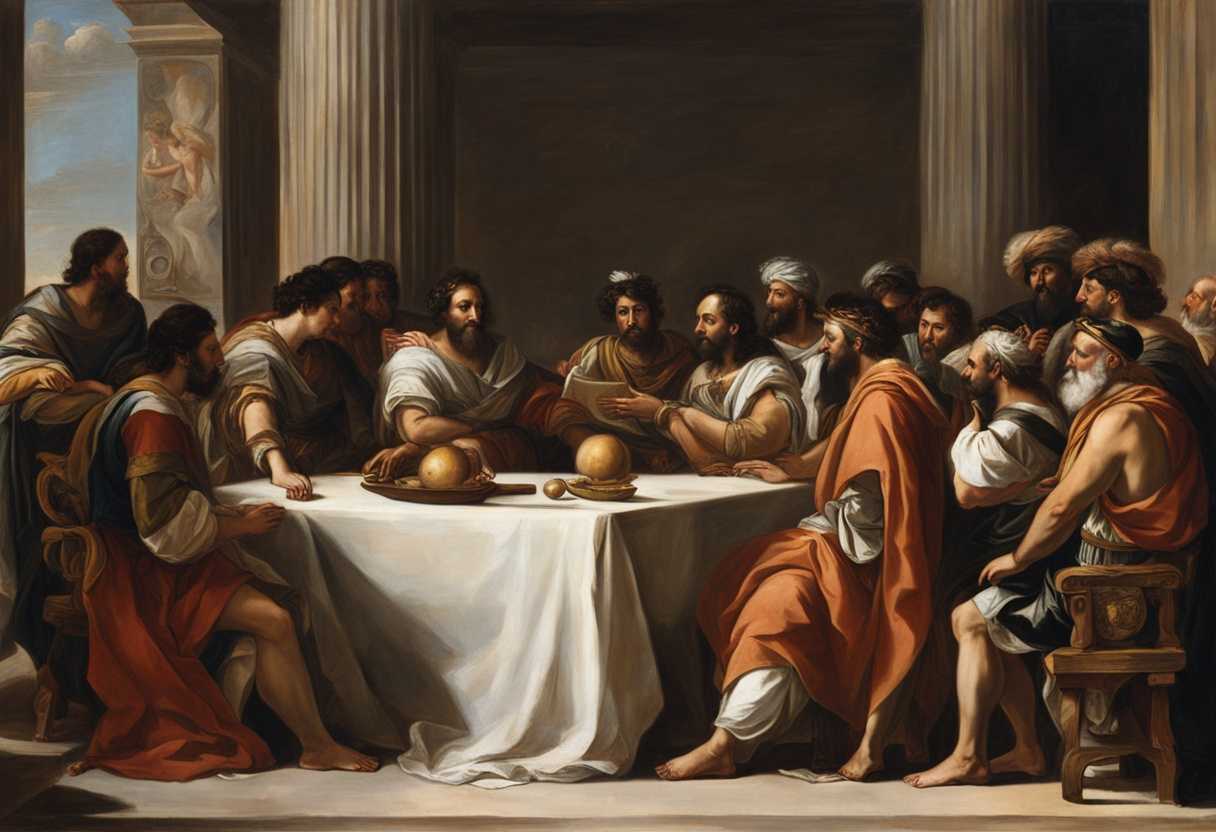
Setting the Scene for Numbers 36:1-4
The scene in Numbers 36:1-4 takes place at the entrance of the Tabernacle, where the leaders of the tribe of Manasseh, including Zelophehad’s daughters – Mahlah, Noah, Hoglah, Milcah, and Tirzah – have gathered. They have come before Moses, Eleazar the priest, the leaders, and all the congregation to address a concern regarding their inheritance. The setting is solemn and respectful, with the leaders and the people gathered around, listening attentively.
The daughters of Zelophehad explain to Moses and the assembly that they are concerned about inheriting land if they marry men from another tribe. They express their desire to keep their father’s inheritance within their own tribe of Manasseh, in accordance with the Lord’s command. The leaders and the congregation listen intently, understanding the importance of upholding the laws and traditions set by God for the division of land among the tribes of Israel.
Moses, guided by the Lord, responds to their plea with wisdom and fairness, establishing a new law that allows the daughters of Zelophehad to marry within their tribe to ensure that their inheritance remains within the tribe of Manasseh. The scene is filled with a sense of justice and reverence for God’s laws, as the leaders and the people witness the resolution of this important matter.
What is Numbers 36:1-4 about?
Oh, the story of the daughters of Zelophehad is truly remarkable! These brave women challenged the norm and sought justice for themselves in a society where inheritance was traditionally passed down to sons. Their actions remind us of the importance of standing up for our rights and advocating for equality, even in the face of adversity.
This verse highlights the daughters’ determination to ensure that they are not deprived of their rightful inheritance simply because they were women. It serves as a powerful reminder of the need to challenge unjust social norms and fight for gender equality. The daughters of Zelophehad set a precedent for future generations by asserting their rights, demonstrating the importance of standing up for what is fair and just. Let the courage and resilience of these women inspire us as we reflect on this verse. We too have the power to challenge injustice and strive for a more equitable society. Just like the daughters of Zelophehad, may we never be afraid to speak out and demand our rightful place in the world.
Understanding what Numbers 36:1-4 really means
The Book of Numbers, nestled within the Torah, recounts the Israelites’ journey through the wilderness, navigating various challenges and receiving divine guidance. In Numbers 36:1-4, we encounter a specific issue concerning inheritance rights for the daughters of Zelophehad, who lacked brothers to inherit their father’s portion of land. This narrative unfolds as a continuation of the daughters’ initial plea to Moses in Numbers 27, showcasing their courage in seeking justice within the societal norms of ancient Israel.
“The heads of the fathers’ houses of the family of the children of Gilead” underscores the significance of family and tribal leadership in Israelite society, where lineage and inheritance were deeply intertwined. The directive from the Lord to distribute the land by lot among the tribes ensured fairness and divine allocation of resources, as seen in the phrase, “The Lord commanded my lord to give the land for inheritance.” This divine guidance aimed to prevent disputes and maintain order within the community.
The passage also addresses the concern of inter-tribal marriages impacting inheritance, emphasizing the importance of preserving tribal boundaries and ancestral heritage. This focus on maintaining the integrity of inheritance within the tribe reflects a broader theme of upholding traditions and honoring familial legacies. The daughters of Zelophehad’s case serves as a poignant example of individuals advocating for their rights while respecting communal norms.
In exploring related passages such as Numbers 27:1-11 and Joshua 17:3-6, we witness the fulfillment of God’s promise to the daughters of Zelophehad, highlighting His faithfulness in upholding justice and providing for those who seek righteousness. The principles of equality and fairness echoed in Galatians 3:28 resonate across both Old and New Testaments, emphasizing God’s enduring commitment to justice and impartiality.
Today, the themes of justice, fairness, and equality found in Numbers 36:1-4 remain relevant in contemporary discussions on gender equality, inheritance rights, and resource distribution. This passage prompts us to consider how we can uphold principles of justice in our own lives, ensuring equitable treatment for all individuals regardless of gender or background. Just as the daughters of Zelophehad sought a fair resolution within their community, we are called to advocate for justice and fairness in our modern contexts.
In reflecting on the narrative of Numbers 36:1-4, we are reminded of the timeless importance of maintaining justice and fairness within our communities. By seeking equitable solutions that honor both tradition and individual rights, we embody the principles of righteousness and respect for others. This passage, alongside its related scriptures, lays a foundation for understanding God’s heart for justice and His call for us to uphold fairness and equality in all aspects of life.
How can we navigate conflicting cultural and spiritual norms?
Navigating conflicting cultural and spiritual norms can be challenging, especially when trying to uphold traditions and beliefs that may differ from those around us. Finding a balance between respecting our own cultural and spiritual values while also being open to understanding and acknowledging the perspectives of others is important in such situations. This can involve engaging in respectful dialogue to learn from each other’s traditions and beliefs, and finding common ground where possible. We can work towards finding mutually acceptable solutions that honor the diversity of cultural and spiritual practices by approaching conflicting norms with an attitude of empathy, patience, and openness. We can foster understanding and harmony among different communities by recognizing that despite differences, there is often a shared humanity that connects us all. We can promote inclusivity and unity in a world that is rich in its diversity by striving to navigate conflicting norms with respect and understanding.
Application
Reflect on the sacred teachings passed down to you and honor the legacy entrusted to your care. Uphold the values that shape your beliefs and guide your actions. Let’s commit to being faithful stewards of the blessings bestowed upon us. Will you take the vow to preserve tradition and honor the teachings of the Lord in your daily life?

Reverend Michael Johnson is an experienced Church Minister with a profound expertise in spirituality and guidance. With a serene presence and a compassionate heart, he has faithfully served his congregation for over 20 years, leading them on a spiritual journey towards inner peace and enlightenment. Reverend Johnson’s extensive knowledge of religious philosophies and profound understanding of human nature have made him a trusted confidant and mentor to many, as he seamlessly weaves his profound wisdom into life teachings. Reverend Johnson’s calming demeanor and empathetic nature continue to uplift and heal souls, nurturing a sense of unity and tranquility within his community.