
In the Bible, a “testament” refers to a covenant or agreement between God and humanity, specifically seen in the Old Testament (Hebrew Scriptures) and the New Testament (Christian Scriptures). The term signifies God’s promises and the relationship established through His laws and the life of Jesus Christ, highlighting the divine commitment to redeem and guide His people.
Scripture
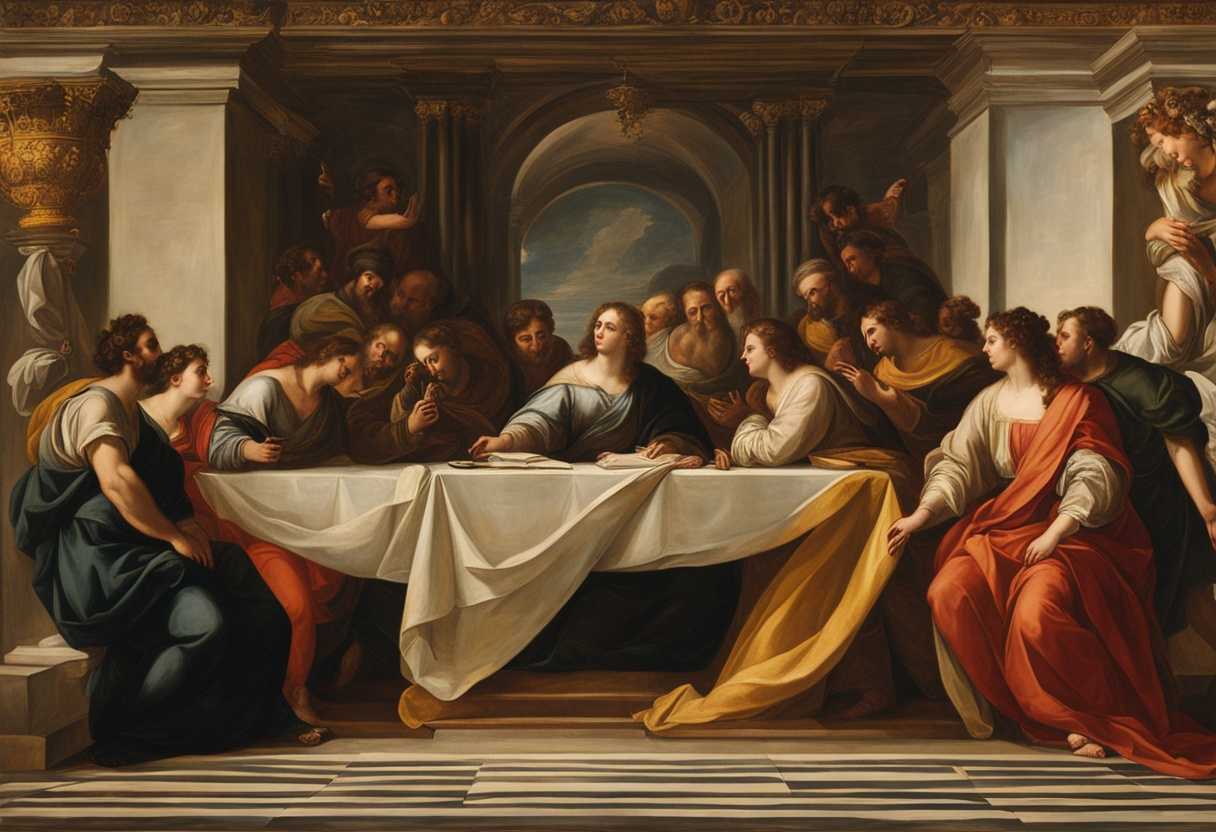
3 Moses came and told the people all the words of the Lord and all the rules. And all the people answered with one voice and said, “All the words that the Lord has spoken we will do.”
4 And Moses wrote down all the words of the Lord. He rose early in the morning and built an altar at the foot of the mountain, and twelve pillars, according to the twelve tribes of Israel.
5 And he sent young men of the people of Israel, who offered burnt offerings and sacrificed peace offerings of oxen to the Lord.
6 And Moses took half of the blood and put it in basins, and half of the blood he threw against the altar.
7 Then he took the Book of the Covenant and read it in the hearing of the people. And they said, “All that the Lord has spoken we will do, and we will be obedient.”
8 And Moses took the blood and threw it on the people and said, “Behold the blood of the covenant that the Lord has made with you in accordance with all these words.”
Biblical Definition of Testament Explained
The term “testament” in the Bible encapsulates the profound relationship established between God and humanity, serving as a foundational concept that reflects God’s unchanging nature and His unwavering commitment to His creation. In the Old Testament, the numerous covenants made — from the Abrahamic covenant (Genesis 12:1-3) to the Mosaic covenant (Exodus 19:5-6) — illustrate God’s desire for a personal relationship and His intentions to guide His people through laws and regulations that shape their identity and community. These covenants were often accompanied by signs, such as the rainbow with Noah (Genesis 9:12-17) or circumcision with Abraham, symbolizing God’s faithfulness and the reciprocal responsibility of humanity to remain obedient to His commands.
Transitioning into the New Testament, this divine relationship culminates in the person of Jesus Christ, who is seen as the new covenant prophesied in Jeremiah 31:31-34, where God declares that He will write His laws on the hearts of His people. Through Jesus’ sacrifice and resurrection, the promises of redemption and eternal life are fully realized (John 3:16), establishing a new testament that emphasizes faith and grace rather than merely adherence to the law. This signifies a shift from a covenant based on legalistic observance to one rooted in love, embodying the heart of Christ’s message that emphasizes internal transformation and a personal, relational faith. Thus, both testaments serve to illustrate the overarching narrative of God’s relentless pursuit of humanity and the transformative power of His love and grace, fostering a lifelong journey of faith and obedience.
In the study of testament in the biblical context, it is crucial to explore the thematic continuity that exists between the covenants of the Old and New Testaments. Each testament showcases God’s overarching desire to engage with humanity at various levels, emphasizing principles such as faithfulness, loyalty, and community. The Old Testament narratives are rich with examples of God selecting individuals and nations to bear witness to His glory, as seen in the covenant with David, where God promises that his lineage will endure forever (2 Samuel 7:12-16). This covenant not only signifies a personal relationship but also underscores a national aspiration that points toward future hope and restoration.
Furthermore, the New Testament builds upon this established foundation by introducing the idea of a global salvation narrative, inviting all of humanity into this covenant relationship with God. In the teachings of Paul, particularly in Romans, the concept of being grafted into the Abrahamic covenant signifies an inclusive approach to God’s promises, which now extend beyond the Hebrew people to Gentiles as well. This transition reflects a significant understanding of testament not just as an agreement but as a divine invitation to transform lives and societies through the grace of Christ. The testimony of the early church serves as an illustration of how these covenant dynamics played out in real-life settings, leading to the establishment of communities that embraced and lived out the radical love and reconciliation exemplified by Christ. Thus, the biblical definition of testament unfolds as a continuous dialogue about faith, commitment, and the invitation to partake in God’s transformative reality for all of creation.
The Covenant Relationship
In the biblical context, a testament often refers to a covenant, which is a solemn agreement between God and His people. This relationship is characterized by promises, obligations, and commitments. The covenant signifies not only God’s faithfulness to His people but also the expectation of loyalty and obedience from them. It establishes a framework for how God interacts with humanity and how individuals are called to respond to His divine will.
The Revelation of God’s Will
Another broader meaning of testament in the Bible is the revelation of God’s will and purpose for humanity. Testaments serve as a means through which God communicates His intentions, laws, and teachings. They provide guidance on moral and ethical living, illustrating how believers are to conduct themselves in accordance with divine principles. This aspect emphasizes the importance of scripture as a source of wisdom and instruction for followers of faith.
The Assurance of Salvation
The concept of testament also encompasses the assurance of salvation and eternal life. In biblical terms, a testament signifies the promise of redemption and the hope of a future with God. This assurance is rooted in the belief that through faith and adherence to God’s covenant, individuals can attain spiritual salvation. The testament serves as a reminder of God’s grace and mercy, offering believers confidence in their relationship with Him and the eternal life that awaits them.
How to Strengthen Your Faith Through Covenant Relationships
Strengthening your faith through covenant relationships is a beautiful journey that invites you to deepen your connection with God and others. A covenant relationship, rooted in mutual commitment and love, mirrors the sacred bond God has with His people. To cultivate this, start by surrounding yourself with fellow believers who encourage and challenge you in your walk with Christ. Engage in regular prayer and Bible study together, sharing your struggles and victories, which fosters vulnerability and trust. Remember, it’s not just about receiving support; it’s also about being a source of encouragement and accountability for others. As you invest in these relationships, you’ll find that your faith grows stronger, not just in isolation but in the rich tapestry of community, reflecting the love and grace that God extends to us all. Embrace this journey, and watch how your faith flourishes in the warmth of covenant love.
Bible References to the Definition of Testament:
Deuteronomy 31:24-26: 24 When Moses had finished writing the words of this law in a book to the very end,
25 that Moses commanded the Levites who carried the ark of the covenant of the Lord,
26 “Take this Book of the Law and put it by the side of the ark of the covenant of the Lord your God, that it may be there for a witness against you.
Jeremiah 31:31-34: 31 “Behold, the days are coming, declares the Lord, when I will make a new covenant with the house of Israel and the house of Judah,
32 not like the covenant that I made with their fathers on the day when I took them by the hand to bring them out of the land of Egypt, my covenant that they broke, though I was their husband, declares the Lord.
33 For this is the covenant that I will make with the house of Israel after those days, declares the Lord: I will put my law within them, and I will write it on their hearts. And I will be their God, and they shall be my people.
34 And no longer shall each one teach his neighbor and each his brother, saying, ‘Know the Lord,’ for they shall all know me, from the least of them to the greatest, declares the Lord.
Matthew 26:26-29: 26 Now as they were eating, Jesus took bread, and after blessing it broke it and gave it to the disciples, and said, “Take, eat; this is my body.”
27 And he took a cup, and when he had given thanks he gave it to them, saying, “Drink of it, all of you,
28 for this is my blood of the covenant, which is poured out for many for the forgiveness of sins.
29 I tell you I will not drink again of this fruit of the vine until that day when I drink it new with you in my Father’s kingdom.”
Mark 14:22-25: 22 And as they were eating, he took bread, and after blessing it broke it and gave it to them, and said, “Take; this is my body.”
23 And he took a cup, and when he had given thanks he gave it to them, and they all drank of it.
24 And he said to them, “This is my blood of the covenant, which is poured out for many.
25 Truly, I say to you, I will not drink again of the fruit of the vine until that day when I drink it new in the kingdom of God.”
Luke 22:19-20: 19 And he took bread, and when he had given thanks, he broke it and gave it to them, saying, “This is my body, which is given for you. Do this in remembrance of me.”
20 And likewise the cup after they had eaten, saying, “This cup that is poured out for you is the new covenant in my blood.
Romans 8:1-4: 1 There is therefore now no condemnation for those who are in Christ Jesus.
2 For the law of the Spirit of life has set you free in Christ Jesus from the law of sin and death.
3 For God has done what the law, weakened by the flesh, could not do. By sending his own Son in the likeness of sinful flesh and for sin, he condemned sin in the flesh,
4 in order that the righteous requirement of the law might be fulfilled in us, who walk not according to the flesh but according to the Spirit.
2 Corinthians 3:6-18: 6 who has made us sufficient to be ministers of a new covenant, not of the letter but of the Spirit. For the letter kills, but the Spirit gives life.
7 Now if the ministry of death, carved in letters on stone, came with such glory that the Israelites could not gaze at Moses’ face because of its glory, which was being brought to an end,
8 will not the ministry of the Spirit have even more glory?
9 For if there was glory in the ministry of condemnation, the ministry of righteousness must far exceed it in glory.
10 Indeed, in this case, what once had glory has come to have no glory at all, because of the glory that surpasses it.
11 For if what was being brought to an end came with glory, much more will what is permanent have glory.
12 Since we have such a hope, we are very bold,
13 not like Moses, who would put a veil over his face so that the Israelites might not gaze at the outcome of what was being brought to an end.
14 But their minds were hardened. For to this day, when they read the old covenant, that same veil remains unlifted, because only through Christ is it taken away.
15 Yes, to this day whenever Moses is read a veil lies over their hearts.
16 But when one turns to the Lord, the veil is removed.
17 Now the Lord is the Spirit, and where the Spirit of the Lord is, there is freedom.
18 And we all, with unveiled face, beholding the glory of the Lord, are being transformed into the same image from one degree of glory to another. For this comes from the Lord who is the Spirit.
Hebrews 7:22-28: 22 This makes Jesus the guarantor of a better covenant.
23 The former priests were many in number, because they were prevented by death from continuing in office,
24 but he holds his priesthood permanently, because he continues forever.
25 Consequently, he is able to save to the uttermost those who draw near to God through him, since he always lives to make intercession for them.
26 For it was indeed fitting that we should have such a high priest, holy, innocent, unstained, separated from sinners, and exalted above the heavens.
27 He has no need, like those high priests, to offer sacrifices daily, first for his own sins and then for those of the people, since he did this once for all when he offered up himself.
28 For the law appoints men in their weakness as high priests, but the word of the oath, which came later than the law, appoints a Son who has been made perfect forever.
Hebrews 8:6-13: 6 But as it is, Christ has obtained a ministry that is as much more excellent than the old as the covenant he mediates is better, since it is enacted on better promises.
7 For if that first covenant had been faultless, there would have been no occasion to look for a second.
8 For he finds fault with them when he says: “Behold, the days are coming, declares the Lord, when I will establish a new covenant with the house of Israel and with the house of Judah,
9 not like the covenant that I made with their fathers on the day when I took them by the hand to bring them out of the land of Egypt.
10 For this is the covenant that I will make with the house of Israel after those days, declares the Lord: I will put my laws into their minds, and write them on their hearts, and I will be their God, and they shall be my people.
11 And they shall not teach, each one his neighbor and each one his brother, saying, ‘Know the Lord,’ for they shall all know me, from the least of them to the greatest.
12 For I will be merciful toward their iniquities, and I will remember their sins no more.
13 In speaking of a new covenant, he makes the first one obsolete. And what is becoming obsolete and growing old is ready to vanish away.
Hebrews 9:11-22: 11 But when Christ appeared as a high priest of the good things that have come, then through the greater and more perfect tent (not made with hands, that is, not of this creation)
12 he entered once for all into the holy places, not by means of the blood of goats and calves but by means of his own blood, thus securing an eternal redemption.
13 For if the blood of goats and bulls, and the sprinkling of defiled persons with the ashes of a heifer, sanctify for the purification of the flesh,
14 how much more will the blood of Christ, who through the eternal Spirit offered himself without blemish to God, purify our conscience from dead works to serve the living God.
15 Therefore he is the mediator of a new covenant, so that those who are called may receive the promised eternal inheritance, since a death has occurred that redeems them from the transgressions committed under the first covenant.
16 For where a will is involved, the death of the one who made it must be established.
17 For a will takes effect only at death, since it is not in force as long as the one who made it is alive.
18 Therefore not even the first covenant was inaugurated without blood.
19 For when every commandment of the law had been declared by Moses to all the people, he took the blood of calves and goats, with water and scarlet wool and hyssop, and sprinkled both the book itself and all the people,
20 saying, “This is the blood of the covenant that God commanded for you.”
21 And in the same way he sprinkled with the blood both the tent and all the vessels used in worship.
22 Indeed, under the law almost everything is purified with blood, and without the shedding of blood there is no forgiveness of sins.
Hebrews 10:15-18: 15 And the Holy Spirit also bears witness to us; for after saying,
16 “This is the covenant that I will make with them
after those days, declares the Lord:
I will put my laws on their hearts,
and write them on their minds,”
17 then he adds, “I will remember their sins and their lawless deeds no more.”
18 Where there is forgiveness of these, there is no longer any offering for sin.

Rev. François Dupont is a dedicated church minister with a wealth of experience in serving spiritual communities. With a calm and serene demeanor, he has been devoted to sharing the message of love, compassion, and tolerance for over two decades. Through his thoughtful sermons, compassionate counseling, and unwavering support, Rev. Dupont has touched the lives of countless individuals, allowing them to find solace and strength during difficult times. His serene presence and deep understanding of the human condition make him a trusted guide for those seeking spiritual nourishment and guidance.