
In the Bible, a “mite” refers to a very small coin, specifically the lepton, which was the least valuable currency in ancient Judea. It is famously mentioned in the story of the widow’s offering in Mark 12:41-44, symbolizing a sacrificial gift given with all one’s heart despite its minimal monetary value.
Scripture
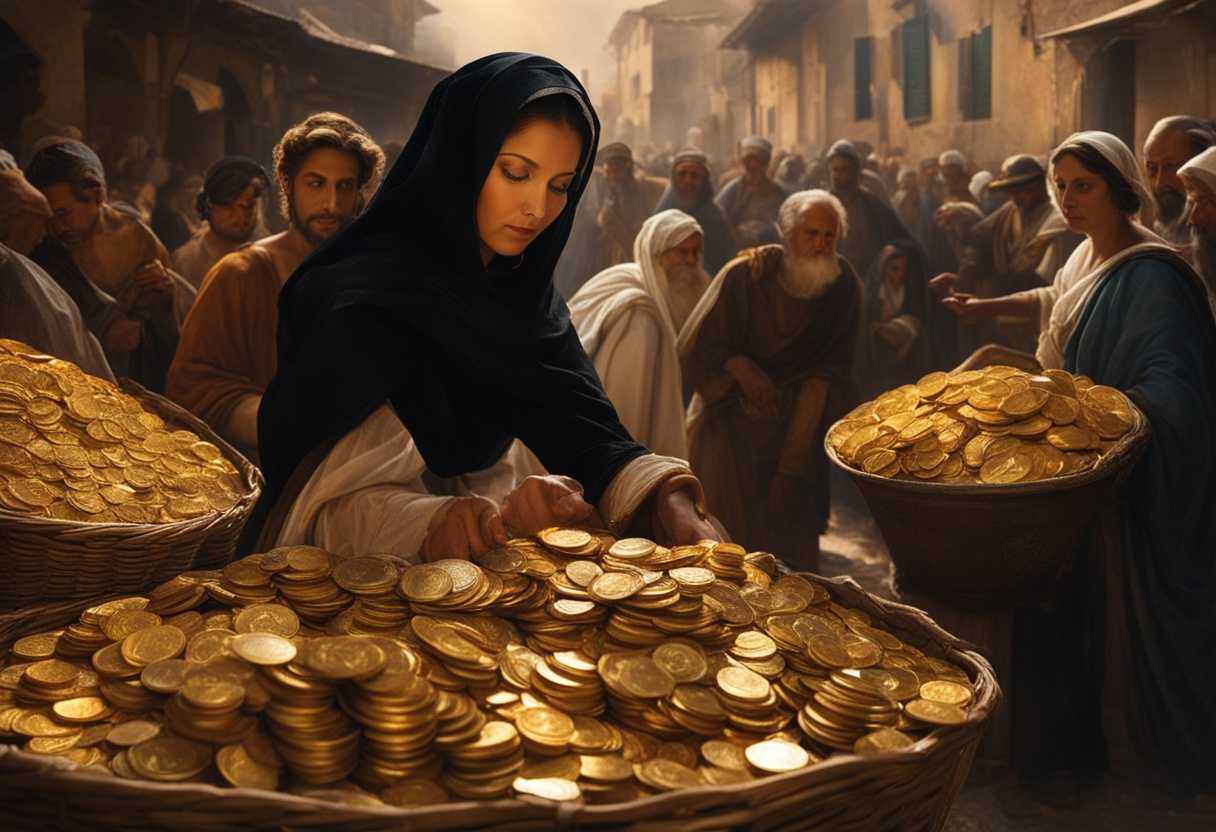
41 And he sat down opposite the treasury and watched the people putting money into the offering box. Many rich people put in large sums.
42 And a poor widow came and put in two small copper coins, which make a penny.
43 And he called his disciples to him and said to them, “Truly, I say to you, this poor widow has put in more than all those who are contributing to the offering box.
44 For they all contributed out of their abundance, but she out of her poverty has put in everything she had, all she had to live on.”
Definition of a Mite in the Bible
The concept of a “mite” in the Bible, particularly illustrated through the widow’s offering in Mark 12:41-44, signifies much more than just a small denomination of currency; it embodies the essence of true generosity and sacrificial giving. In this passage, Jesus observes rich individuals contributing large sums to the temple treasury, yet he highlights the significance of a poor widow who donates two mites—an amount that is virtually worthless in monetary terms. However, Jesus points out that her offering, though meager, is greater than all the others because she gave out of her poverty, while they gave out of their abundance. This teaches that the value of a gift is not determined by its financial worth but by the spirit in which it is given. The widow’s act of giving all she had reflects a profound faith and total reliance on God, serving as a powerful reminder that genuine devotion often comes from a place of sacrifice.
The broader implications of the mite extend into themes of stewardship and the heart of the giver. In Luke 21:1-4, the story is recounted, reinforcing the idea that God values the heart’s intent over the amount offered. This idea aligns with other biblical teachings, such as 2 Corinthians 9:7, which emphasizes that “God loves a cheerful giver.” The mite symbolizes faithfulness in stewardship for those with less, encouraging individuals to recognize that every act of giving, no matter how small, contributes to the larger tapestry of God’s work. It invites believers to reflect on their own contributions—financial or otherwise—and to consider the motivations behind their generosity, thus transforming the act of giving into an expression of worship and trust in God’s provision, no matter the size of their offering.
Expanding on the notion of a “mite,” we find that it evokes a deeper theological underpinning about the nature of wealth, priorities, and humility in giving. Throughout the scriptures, God often emphasizes the importance of the heart posture behind giving rather than the quantity. This paradigm shift is echoed in 1 Samuel 16:7, where God tells Samuel, “For the LORD sees not as man sees: man looks on the outward appearance, but the LORD looks on the heart.” This passage reinforces the idea that true worth lies not in the material value of an offering, but in the sincerity and sacrifice of the one who gives it.
Moreover, the concept of small yet significant offerings finds resonance in the teaching of proportionate giving. In Deuteronomy 16:17, it states, “Every man shall give as he is able, according to the blessing of the LORD your God that he has given you.” This principle acknowledges that each person’s capacity to give varies, but what matters is the willingness to give from one’s blessings, however modest they may be. Thus, like the mite, even small contributions can have a profound impact when they embody a spirit of selflessness and commitment to God’s work. These narratives collectively encourage believers to embrace a mindset of generosity that transcends mere transactional giving, fostering a community where every act of kindness and support, no matter the size, holds intrinsic value in the eyes of God.
The Value of Small Contributions
In biblical context, a “mite” represents a small coin, often associated with the idea that even the smallest contributions can hold significant value. This notion emphasizes that every act of giving, regardless of size, is important and can have a profound impact. It challenges the perception that only large donations or grand gestures are worthy, highlighting that sincerity and intention behind the gift matter more than the amount.
The Principle of Sacrificial Giving
The concept of a mite also illustrates the principle of sacrificial giving. It suggests that true generosity is measured not by the quantity of what is given but by the sacrifice involved. When individuals give from their poverty or limited means, it reflects a deeper commitment and faith. This principle encourages believers to consider the heart behind their giving, promoting a spirit of selflessness and devotion.
The Call to Humility and Trust
Furthermore, the mite serves as a reminder of humility and trust in God. Those who give what little they have demonstrate a reliance on divine provision rather than material wealth. This act of faith encourages believers to trust in God’s ability to multiply their offerings, no matter how small, and to recognize that true wealth lies in spiritual richness rather than earthly possessions.
How to Embrace Humility and Transform Your Generosity
Embracing humility is a beautiful journey that can profoundly transform your approach to generosity. When we recognize that all we have is a gift from God, it shifts our perspective from ownership to stewardship. Start by reflecting on the blessings in your life—your time, talents, and resources—and consider how you can share them with others. Humility invites us to listen more and serve more, allowing us to see the needs around us without the cloud of pride. As you practice giving, whether it’s your time volunteering, sharing your skills, or offering financial support, do so with a heart that seeks to uplift others rather than seeking recognition. Remember, true generosity flows from a humble spirit, and as you cultivate this mindset, you’ll find that your acts of kindness not only bless others but also deepen your own faith and connection to God.
Bible References to the Mite in Scripture:
Luke 21:1-4: 1 Jesus looked up and saw the rich putting their gifts into the offering box.
2 He also saw a poor widow put in two small copper coins.
3 And he said, “Truly, I tell you, this poor widow has put in more than all of them.
4 For they all contributed out of their abundance, but she out of her poverty put in all she had to live on.”

Reverend Ogunlade is a seasoned Church Minister with over three decades of experience in guiding and nurturing congregations. With profound wisdom and a serene approach, Reverend Ogunlade has carried out various pastoral duties, including delivering uplifting sermons, conducting religious ceremonies, and offering sage counsel to individuals seeking spiritual guidance. Their commitment to fostering harmony and righteousness within their community is exemplified through their compassionate nature, making them a beloved and trusted figure among the congregation.