
In the Bible, spiders are mentioned to illustrate the concept of fragility and the futility of human effort without divine support. For example, Proverbs 30:28 speaks of a spider skillfully making its home, yet highlights its vulnerability.
Scripture
13 Such are the paths of all who forget God; the hope of the godless shall perish.
14 His confidence is severed, and his trust is a spider’s web.
15 He leans against his house, but it does not stand; he lays hold of it, but it does not endure.
Job 8:13-15
Biblical Significance of the Spider
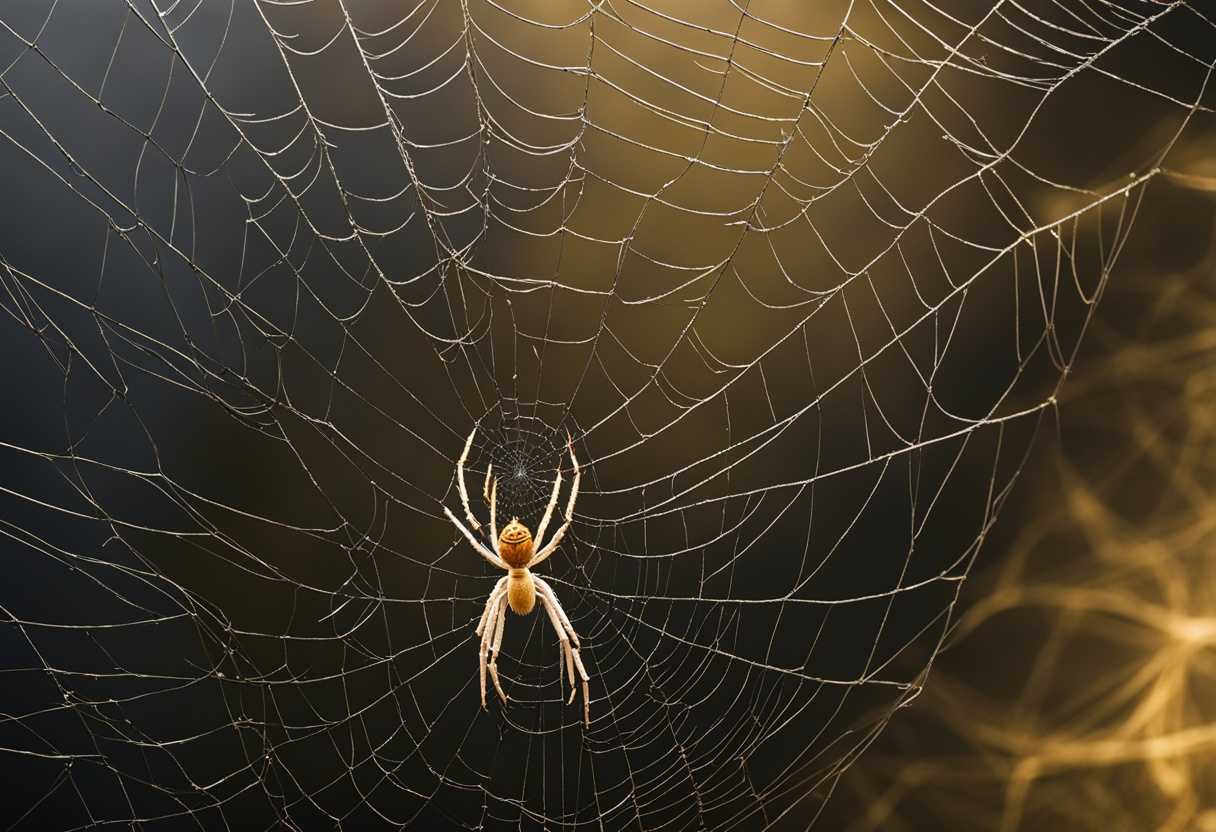
The imagery of the spider in the Bible serves as a profound metaphor for human existence and endeavor in the absence of divine strength. In Proverbs 30:28, the verse notes, “The spider taketh hold with her hands, and is in kings’ palaces.” This suggests a certain ingenuity and resilience in the spider’s ability to weave its web and find shelter even in the most opulent environments. However, the underlying message conveys the fragility and impermanence of its efforts. The wispy webs—representative of the artistically crafted yet tenuous nature of human accomplishments—can easily be swept away, illustrating that no matter how skillfully one may build their life or status, without foundation in faith or divine support, those undertakings can be rendered meaningless.
Furthermore, the mention of spiders in Job 8:14 echoes this theme of vulnerability, as it states, “Whose hope shall be as the spider’s web.” Here, the spider’s web is contrasted with hope, suggesting it is fundamentally weak and insubstantial. This serves as a cautionary reminder about placing trust solely in material pursuits or human efforts without an underlying faith. Overall, the biblical references to spiders highlight the larger truth of human frailty, underscoring the necessity of relying on God’s strength and guidance in building a life that withstands the inevitable challenges and uncertainties. In doing so, believers are encouraged to seek divine wisdom and support, recognizing that true stability and significance come through a relationship with the Creator, rather than from worldly accomplishments alone.
In addition to the previously noted examples, the spider’s presence in Scripture can be interpreted as a reminder of the transitory nature of life and the deceptive allure of self-sufficiency. For instance, one can draw parallels between the spider and the weaving of tales or illusions that people create about their lives, often embodying a veneer of security and success. Just as the spider meticulously spins its web, humans may engage in crafting a life that appears fulfilling outwardly. Yet, these intricate webs represent an existence detached from spiritual anchoring, hinting at the biblical principle that true assurance comes not from human ambition but from a firm foundation in faith.
Moreover, the mention of spider-like creatures and their webs throughout ancient texts can carry a symbolic weight that extends beyond mere physical representations. These creatures beckon readers to contemplate the complexities and entanglements of life. In various proverbs and parables found in biblical literature, the web serves as a metaphor for temptation and entrapment, drawing attention to the risks of straying from God’s path. Thus, the biblical commentary on spiders resonates with themes of humility, dependence on divine providence, and the reality that external circumstances should not dictate one’s sense of purpose or worth. Ultimately, these lessons urge believers to foster an unwavering trust in God, reinforcing the notion that irrespective of one’s perceived achievements, true stability lies in communion with the Divine.
Symbol of Fragility and Vulnerability
In the biblical context, the spider can represent the fragility of human life and the vulnerability of our existence. Just as a spider weaves intricate webs that can easily be destroyed, human endeavors and achievements can also be transient and subject to the whims of fate. This serves as a reminder of the need for humility and reliance on God, as our strength and security are ultimately not found in our own creations but in divine providence.
Representation of Craftiness and Deception
The spider is often associated with craftiness and cunning, reflecting the ability to ensnare and trap. This symbolism can extend to the idea of temptation and sin, where individuals may be lured into destructive behaviors through deceptive means. The spider’s web can serve as a metaphor for the entanglements of sin, illustrating how easily one can become ensnared by their own choices or the influence of others.
Reflection of Divine Creation and Order
Despite its negative connotations, the spider also embodies the complexity and intricacy of God’s creation. The ability of a spider to create a web demonstrates the intelligence and design inherent in nature. This can lead to a broader understanding of the divine order in the world, where even the smallest creatures play a role in the ecosystem. It invites contemplation on the interconnectedness of all life and the purpose that each being serves within God’s plan.
How to Cultivate Discernment and Integrity in Faith
Cultivating discernment and integrity in your faith journey is a deeply personal and transformative process that requires intentionality and prayer. Start by immersing yourself in Scripture, allowing the Word of God to shape your understanding and guide your decisions. As you read, ask the Holy Spirit for wisdom to discern truth from falsehood, especially in a world filled with conflicting messages. Surround yourself with a community of believers who challenge and support you, fostering an environment where you can discuss your doubts and insights openly. Integrity comes from aligning your actions with your beliefs; practice honesty in your daily life, even when it’s difficult, and strive to reflect Christ’s love in all your interactions. Remember, discernment is not just about making the right choices but also about developing a heart that seeks to honor God in every aspect of life. Embrace this journey with patience, knowing that growth in faith is a lifelong process.
Bible References to the Meaning of Spider:
Job 27:18-19: 18 He builds his house like a moth’s, like a booth that a watchman makes.
19 He goes to bed rich, but will do so no more; he opens his eyes, and his wealth is gone.
Isaiah 59:4-6: 4 No one enters suit justly;
no one goes to law honestly;
they rely on empty pleas, they speak lies;
they conceive mischief and give birth to iniquity.
5 They hatch adders’ eggs;
they weave the spider’s web;
he who eats their eggs dies,
and from one that is crushed a viper is hatched.
6 Their webs will not serve as clothing; men will not cover themselves with what they make. Their works are works of iniquity, and deeds of violence are in their hands.
Proverbs 30:24-28: 24 Four things on earth are small,
but they are exceedingly wise:
25 The ants are a people not strong,
yet they provide their food in the summer;
26 the rock badgers are a people not mighty, yet they make their homes in the cliffs;
27 The locusts have no king,
yet all of them march in rank;
28 the lizard you can take in your hands, yet it is in kings’ palaces.

Reverend Ogunlade is a seasoned Church Minister with over three decades of experience in guiding and nurturing congregations. With profound wisdom and a serene approach, Reverend Ogunlade has carried out various pastoral duties, including delivering uplifting sermons, conducting religious ceremonies, and offering sage counsel to individuals seeking spiritual guidance. Their commitment to fostering harmony and righteousness within their community is exemplified through their compassionate nature, making them a beloved and trusted figure among the congregation.