
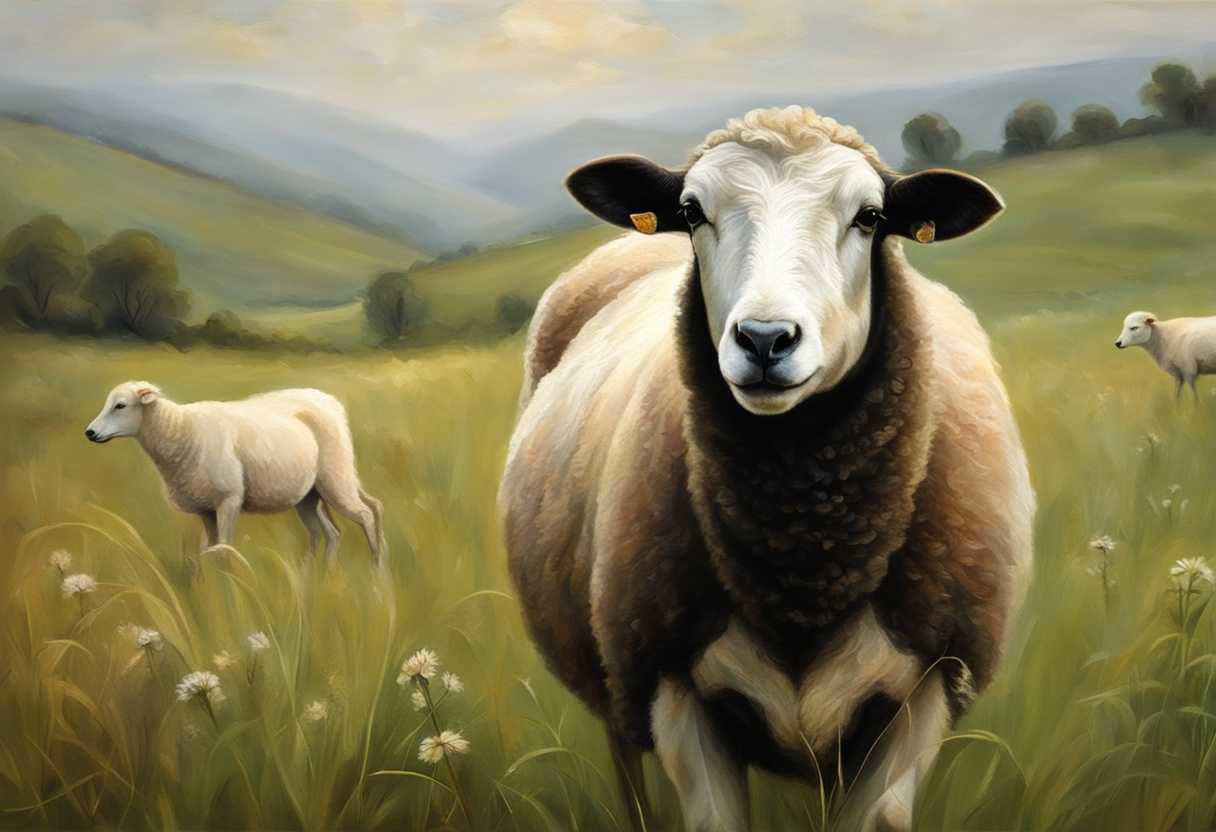
In the Bible, the term “ewe” typically refers to a female sheep, symbolizing innocence, gentleness, and sacrifice. It is often used in agricultural contexts and as a metaphor for God’s care for His people, as seen in passages like Psalm 23 where God is depicted as a shepherd.
Scripture
28 Then Abraham set seven ewe lambs of the flock apart.
29 And Abimelech said to Abraham, “What is the meaning of these seven ewe lambs that you have set apart?”
30 He said, “You shall take these seven ewe lambs from my hand, so that you may be a witness for me that I dug this well.”
Meaning of Ewe in the Bible
In the Bible, the ewe serves as a potent symbol of innocence and sacrifice, reflecting God’s intricate relationship with His creation. The imagery of sheep and shepherds permeates the Scriptures, emphasizing the gentle care and guidance that God provides. For instance, Psalm 23 illustrates this beautifully, where the Lord is described as a shepherd who leads His flock beside still waters, symbolizing comfort and safety (Psalm 23:1-2). The ewe, representing the vulnerable and docile nature of sheep, highlights the tenderness with which God nurtures His people, underscoring themes of trust and reliance on divine protection.
Moreover, the concept of the ewe extends into the sacrificial system detailed in the Old Testament. In Leviticus 14:10, the use of lambs (young sheep) in offerings signifies purity and total surrender to God. The New Testament reframes this imagery through the lens of Jesus Christ, who is referred to as “the Lamb of God” (John 1:29), emphasizing His role as the ultimate sacrifice for humanity’s sins. This multifaceted significance of the ewe, therefore, not only captures the essence of innocence and gentleness but also encapsulates the broader themes of sacrifice, redemption, and divine love, which are woven throughout the biblical narrative.
Beyond the metaphors of innocence and sacrifice, the ewe also symbolizes obedience and community within the biblical context. The sheep, including ewes, are often depicted as followers of their shepherd, representing the faithful who heed God’s voice and guidance. This theme resonates in various passages where the relationship between sheep and shepherd illustrates the importance of belonging to a community under divine leadership. The dynamic plays a crucial role in the understanding of Israel as God’s chosen people, where the collective obedience of the flock is vital for their survival and prosperity in the sight of God.
Furthermore, in biblical poetry and prophetic literature, ewes are used to depict the vulnerability of God’s people, often in contrast to their adversaries. For instance, the prophetic books reflect on the dangers faced by the flock amidst threats from outside forces, symbolizing the trials and tribulations that often test faith and resilience. This imagery serves to remind nations and individuals of their inherent reliance on God, who protects and restores. The continued use of the ewe throughout Scripture emphasizes a rich tapestry of meanings that encompass divine care, community responsibility, and a reminder of dependence on divine grace and strength amidst challenges. This multiplicity invites believers to reflect on their own roles as both members of a larger flock and as individuals under the compassionate shepherding of God.
Symbol of Innocence and Purity
In biblical literature, the ewe often symbolizes innocence and purity. This is particularly evident in the portrayal of sheep as gentle and defenseless creatures, which can represent the ideal qualities of humility and submission. The imagery of a ewe evokes a sense of vulnerability, making it a fitting metaphor for the faithful and the righteous who rely on divine guidance and protection.
Representation of Sacrifice
The ewe also holds significant meaning in the context of sacrifice. In ancient Israelite culture, lambs, including ewes, were commonly used in sacrificial rituals to atone for sins and seek favor from God. This practice underscores the themes of redemption and the cost of atonement, illustrating the deep connection between sacrifice and the restoration of one’s relationship with the divine.
Metaphor for God’s Care
Furthermore, the ewe serves as a metaphor for God’s care and provision for His people. The imagery of a shepherd tending to his flock, which includes ewes, highlights the nurturing and protective nature of God. This relationship emphasizes the idea of guidance, safety, and the assurance that believers are watched over and cared for, reinforcing the theme of divine love and faithfulness throughout the scriptures.
How to Embrace Sacrifice and Innocence in Faith
Embracing sacrifice and innocence in your faith journey is a profound way to deepen your relationship with God and reflect Christ’s love in the world. Start by recognizing that sacrifice is not just about giving up something valuable; it’s about willingly laying down your desires for the sake of others and for the glory of God. This could mean volunteering your time, offering forgiveness, or even sharing your resources with those in need. Innocence, on the other hand, invites you to approach your faith with a childlike trust and purity of heart, free from the cynicism that often creeps in as we navigate life’s challenges. Remember, Jesus said in Matthew 18:3, “Unless you change and become like little children, you will never enter the kingdom of heaven.” So, as you strive to embody these virtues, pray for the strength to let go of your burdens and the grace to see the world through a lens of love and hope, allowing your faith to shine brightly in both your actions and your heart.
Bible References to the Meaning of Ewe:
Leviticus 22:27-28: 27 “When an ox or sheep or goat is born, it shall remain seven days with its mother, and from the eighth day on it shall be acceptable as a food offering to the Lord.
28 But you shall not kill an ox or a sheep and her young in one day.
Numbers 15:27-29: 27 “If one person sins unintentionally, he shall offer a female goat a year old for a sin offering.”
28 And the priest shall make atonement before the Lord for the person who makes a mistake, when he sins unintentionally, to make atonement for him, and he shall be forgiven.
29 You shall have one law for him who does anything unintentionally, for him who is native among the people of Israel and for the stranger who sojourns among them.
Deuteronomy 14:4-6: 4 These are the animals you may eat: the ox, the sheep, the goat,
5 the deer, the gazelle, the roebuck, the wild goat, the ibex, the antelope, and the mountain sheep.
6 And every beast that parts the hoof and has the hoof cloven in two and chews the cud, among the animals, you may eat.
1 Samuel 15:22-23: 22 And Samuel said, “Has the Lord as great delight in burnt offerings and sacrifices, as in obeying the voice of the Lord? Behold, to obey is better than sacrifice, and to listen than the fat of rams.
23 For rebellion is as the sin of divination, and presumption is as iniquity and idolatry. Because you have rejected the word of the Lord, he has also rejected you from being king.”
Isaiah 53:6-7: 6 All we like sheep have gone astray;
we have turned—every one—to his own way;
and the Lord has laid on him
the iniquity of us all.
7 He was oppressed, and he was afflicted,
yet he opened not his mouth;
like a lamb that is led to the slaughter,
and like a sheep that before its shearers is silent,
so he opened not his mouth.
Jeremiah 11:19-20: 19 But I was like a gentle lamb led to the slaughter.
20 But, O Lord of hosts, who judges righteously, who tests the heart and the mind, let me see your vengeance upon them, for to you have I committed my cause.
Ezekiel 34:17-19: 17 “As for you, my flock, thus says the Lord God: Behold, I judge between sheep and sheep, between rams and male goats.
18 Is it not enough for you to feed on the good pasture, that you must tread down with your feet the rest of your pasture; and to drink of clear water, that you must muddy the rest of the water with your feet?
19 And as for my flock, they shall eat what you have trodden with your feet, and they shall drink what you have muddied with your feet.
John 10:11-15: 11 I am the good shepherd. The good shepherd lays down his life for the sheep.
12 He who is a hired hand and not a shepherd, who does not own the sheep, sees the wolf coming and leaves the sheep and flees, and the wolf snatches them and scatters them.
13 He flees because he is a hired hand and cares nothing for the sheep.
14 I am the good shepherd. I know my own and my own know me,
15 just as the Father knows me and I know the Father; and I lay down my life for the sheep.
Hebrews 13:20-21: 20 Now may the God of peace who brought again from the dead our Lord Jesus, the great shepherd of the sheep, by the blood of the eternal covenant,
21 equip you with everything good that you may do his will, working in us that which is pleasing in his sight, through Jesus Christ, to whom be glory forever and ever. Amen.

Reverend Michael Johnson is an experienced Church Minister with a profound expertise in spirituality and guidance. With a serene presence and a compassionate heart, he has faithfully served his congregation for over 20 years, leading them on a spiritual journey towards inner peace and enlightenment. Reverend Johnson’s extensive knowledge of religious philosophies and profound understanding of human nature have made him a trusted confidant and mentor to many, as he seamlessly weaves his profound wisdom into life teachings. Reverend Johnson’s calming demeanor and empathetic nature continue to uplift and heal souls, nurturing a sense of unity and tranquility within his community.