
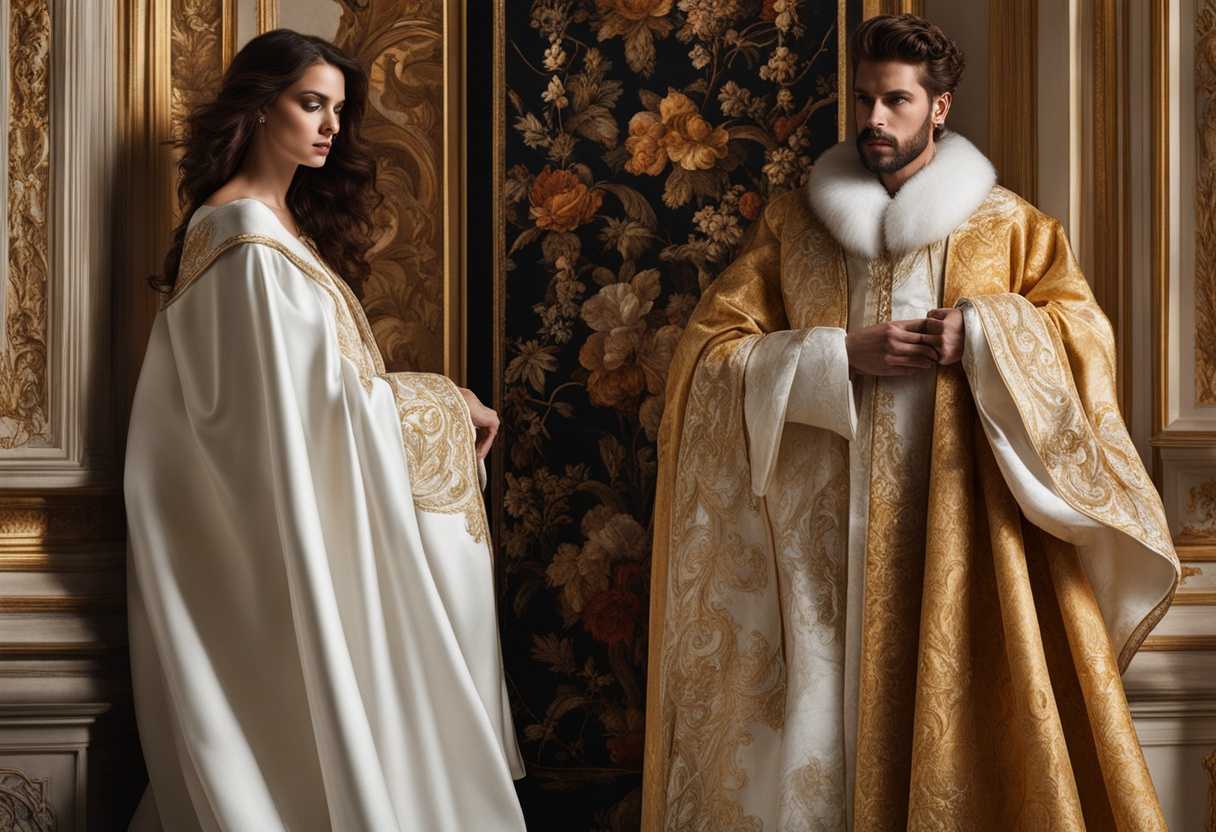
In the Bible, robes often symbolize righteousness, purity, and status. They can represent garments of honor, such as the robes of a king or priest, and are also associated with the attire of believers, signifying their new identity in Christ (Isaiah 61:10, Revelation 7:14).
Scripture
3 Now Israel loved Joseph more than any other of his sons, because he was the son of his old age. And he made him a robe of many colors.
4 But when his brothers saw that their father loved him more than all his brothers, they hated him and could not speak peacefully to him.
Meaning of Robes in the Bible
Robes in the Bible serve as powerful symbols of various spiritual and social truths, often reflecting the righteousness and status of the individuals they adorn. In Isaiah 61:10, it is proclaimed, “I will rejoice greatly in the LORD; my soul will exult in my God; for He has clothed me with garments of salvation, He has wrapped me with a robe of righteousness.” This verse illustrates that the robe signifies not only a covering but also a transformation of identity through divine grace. The act of being clothed in righteousness conveys the believer’s acceptance and sanctification before God, representing the purity that comes from a relationship with Him.
Furthermore, in Revelation 7:14, the saints are depicted as having “washed their robes and made them white in the blood of the Lamb,” emphasizing the cleansing and redemptive power of Christ’s sacrifice. This imagery highlights how the robes of believers signify their transformation from sin to purity and their new identity in Christ. Additionally, in contexts where robes are associated with priestly or royal garments, such as in Exodus 28 where the priestly garments are detailed, they indicate a special status and responsibility in service to God and the community. Through these various representations, robes in Scripture not only denote physical attire but encapsulate profound theological truths about sanctification, inheritance, and the believer’s standing within God’s kingdom.
The symbolism of robes in the Bible continues to unfold across various narratives and metaphors, serving as an integral part of the spiritual wardrobe that reflects a person’s relationship with God. In the parable of the prodigal son, for instance, the father orders the best robe to be put on his son upon his return, symbolizing forgiveness and acceptance after a period of estrangement (Luke 15:22). This act of donning the robe represents restoration and honor, signifying that the son is once again a part of the family with renewed status and dignity. Thus, the robe in this context embodies not just a physical garment, but also the profound grace that reconciles and elevates the repentant sinner.
Moreover, the concept of robes is intricately tied to the theme of divine appointment and purpose. In the Old Testament, we see Joseph gifted a “robe of many colors” by his father, Jacob, which symbolizes his favored status and sets the stage for the trials and tribulations he would later endure (Genesis 37:3). This colorful attire is emblematic of Joseph’s unique role in God’s unfolding narrative, suggesting that robes can signify not only righteousness but also the calling and destiny of individuals chosen for significant roles within God’s plan. In both the joyful reunification of the prodigal son and the complex journey of Joseph, robes emerge as markers of identity, purpose, and the transformative power of God’s grace over the lives of believers.
Symbol of Righteousness and Purity
In the Bible, robes often symbolize righteousness and purity. They represent the moral and spiritual state of an individual, indicating a life lived in accordance with God’s will. The imagery of being clothed in fine garments is frequently associated with the idea of being justified and sanctified, reflecting a believer’s right standing before God. This symbolism emphasizes the transformative power of faith, where believers are seen as being adorned with the righteousness of Christ.
Representation of Authority and Identity
Robes in the Bible also signify authority and identity. Different types of robes are worn by various figures, such as kings, priests, and prophets, each representing their unique roles and responsibilities within the community of faith. The garments serve as a visual cue of one’s position and calling, highlighting the importance of divine appointment and the responsibilities that come with it. This aspect of robes underscores the idea that one’s identity in Christ carries with it a sense of purpose and mission in the world.
Sign of Celebration and Joy
Additionally, robes can signify celebration and joy, particularly in the context of feasts and significant life events. In biblical narratives, the act of putting on a new robe often accompanies moments of restoration, reconciliation, or celebration, such as a return from exile or a joyous occasion. This use of robes reflects the abundant grace and blessings bestowed by God, symbolizing the joy that comes from being in a right relationship with Him and the community.
How to Embrace Righteousness for a Stronger Faith
Embracing righteousness is a transformative journey that can significantly strengthen your faith and deepen your relationship with God. It begins with a sincere desire to align your thoughts, actions, and intentions with His will, which is beautifully outlined in Scripture. Start by immersing yourself in the Word—let it guide your daily decisions and interactions. Reflect on the teachings of Jesus, who exemplified righteousness through love, compassion, and humility. Surround yourself with a community of believers who encourage and challenge you to grow, and don’t shy away from accountability. Remember, righteousness isn’t about perfection; it’s about progress and a heart that seeks to honor God in all things. As you cultivate this mindset, you’ll find that your faith becomes more resilient, allowing you to navigate life’s challenges with grace and confidence.
Bible References to Robes in Scripture:
Exodus 28:2-4: 2 And you shall make holy garments for Aaron your brother, for glory and for beauty.
3 You shall speak to all the skillful, whom I have filled with a spirit of skill, that they make Aaron’s garments to consecrate him for my priesthood.
4 These are the garments that they shall make: a breastpiece, an ephod, a robe, a coat of checker work, a turban, and a sash. They shall make holy garments for Aaron your brother and his sons to serve me as priests.
Leviticus 8:7-9: 7 And he put the coat on him and tied the sash around his waist and clothed him with the robe and put the ephod on him and tied the skillfully woven band of the ephod around him, binding it to him with the band.
8 And he placed the breastpiece on him, and in the breastpiece he put the Urim and the Thummim.
9 And he set the turban on his head, and on the turban, in front, he set the golden plate, the holy crown, as the Lord commanded Moses.
2 Samuel 13:18-19: 18 Now she was wearing a long robe with sleeves, for thus were the virgin daughters of the king dressed. So his servant put her out and bolted the door after her.
19 And Tamar put ashes on her head and tore the long robe that she wore. And she laid her hand on her head and went away, crying aloud as she went.
Isaiah 61:10-11: 10 I will greatly rejoice in the Lord; my soul shall exult in my God, for he has clothed me with the garments of salvation; he has covered me with the robe of righteousness, as a bridegroom decks himself like a priest with a beautiful headdress, and as a bride adorns herself with her jewels.
11 For as the earth brings forth its sprouts,
and as a garden causes what is sown in it to sprout up,
so the Lord God will cause righteousness and praise
to sprout up before all the nations.
Zechariah 3:3-5: 3 Now Joshua was standing before the angel, clothed with filthy garments.
4 And the angel said to those who were standing before him, “Remove the filthy garments from him.” And to him he said, “Behold, I have taken your iniquity away from you, and I will clothe you with pure vestments.”
5 And I said, “Let them put a clean turban on his head.” So they put a clean turban on his head and clothed him with garments. And the angel of the Lord was standing by.
Matthew 17:1-2: 1 And after six days Jesus took with him Peter and James, and John his brother, and led them up a high mountain by themselves.
2 And he was transfigured before them, and his face shone like the sun, and his clothes became white as light.
Luke 15:22-24: 22 But the father said to his servants, ‘Bring quickly the best robe, and put it on him, and put a ring on his hand, and shoes on his feet.
23 And bring the fattened calf and kill it, and let us eat and celebrate.
24 For this my son was dead, and is alive again; he was lost, and is found.’ And they began to celebrate.
Revelation 3:4-5: 4 Yet you have still a few names in Sardis, people who have not soiled their garments, and they will walk with me in white, for they are worthy.
5 The one who conquers will be clothed thus in white garments, and I will never blot his name out of the book of life. I will confess his name before my Father and before his angels.
Revelation 6:9-11: 9 When he opened the fifth seal, I saw under the altar the souls of those who had been slain for the word of God and for the witness they had borne.
10 They cried out with a loud voice, “O Sovereign Lord, holy and true, how long before you will judge and avenge our blood on those who dwell on the earth?”
11 Then they were each given a white robe and told to rest a little longer, until the number of their fellow servants and their brothers should be complete, who were to be killed as they themselves had been.
Revelation 7:9-14: 9 After this I looked, and behold, a great multitude that no one could number, from every nation, from all tribes and peoples and languages, standing before the throne and before the Lamb, clothed in white robes, with palm branches in their hands,
10 and crying out with a loud voice, “Salvation belongs to our God who sits on the throne, and to the Lamb!”
11 And all the angels were standing around the throne and around the elders and the four living creatures, and they fell on their faces before the throne and worshiped God,
12 saying, “Amen! Blessing and glory and wisdom and thanksgiving and honor and power and might be to our God forever and ever! Amen.”
13 Then one of the elders addressed me, saying, “Who are these, clothed in white robes, and from where have they come?”
14 I said to him, “Sir, you know.” And he said to me, “These are the ones coming out of the great tribulation. They have washed their robes and made them white in the blood of the Lamb.
Revelation 19:13-16: 13 He is clothed in a robe dipped in blood, and the name by which he is called is The Word of God.
14 And the armies of heaven, arrayed in fine linen, white and pure, were following him on white horses.
15 From his mouth comes a sharp sword with which to strike down the nations, and he will rule them with a rod of iron. He will tread the winepress of the fury of the wrath of God the Almighty.
16 On his robe and on his thigh he has a name written, King of kings and Lord of lords.

Reverend Michael Johnson is an experienced Church Minister with a profound expertise in spirituality and guidance. With a serene presence and a compassionate heart, he has faithfully served his congregation for over 20 years, leading them on a spiritual journey towards inner peace and enlightenment. Reverend Johnson’s extensive knowledge of religious philosophies and profound understanding of human nature have made him a trusted confidant and mentor to many, as he seamlessly weaves his profound wisdom into life teachings. Reverend Johnson’s calming demeanor and empathetic nature continue to uplift and heal souls, nurturing a sense of unity and tranquility within his community.