
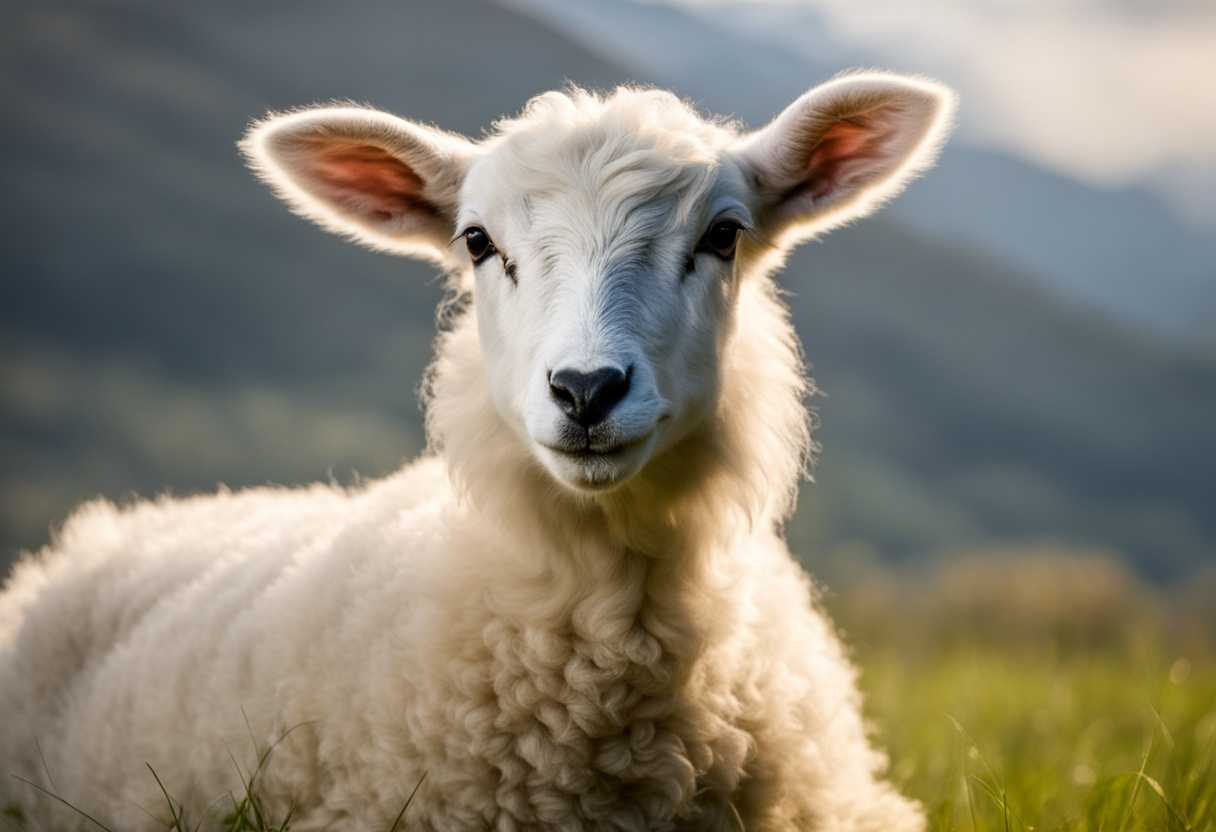
In the Bible, an ewe lamb typically symbolizes innocence, purity, and sacrificial offerings. It is often associated with the concept of atonement, as seen in the Passover sacrifice (Exodus 12) and references to Jesus as the “Lamb of God” in the New Testament (John 1:29).
Scripture
1 And the Lord sent Nathan to David. He came to him and said to him, “There were two men in a certain city, the one rich and the other poor.
2 The rich man had very many flocks and herds,
3 But the poor man had nothing but one little ewe lamb, which he had bought. And he brought it up, and it grew up with him and with his children. It used to eat of his morsel and drink from his cup and lie in his arms, and it was like a daughter to him.
4 Now there came a traveler to the rich man, and he was unwilling to take one of his own flock or herd to prepare for the guest who had come to him, but he took the poor man’s lamb and prepared it for the man who had come to him.”
5 Then David’s anger was greatly kindled against the man, and he said to Nathan, “As the Lord lives, the man who has done this deserves to die,
6 He shall restore the lamb fourfold, because he did this thing, and because he had no pity.”
Meaning of Ewe Lamb in the Bible
In the Bible, the ewe lamb is a powerful symbol of innocence and purity, often tied to notions of sacrificial offerings and atonement. This symbolism is poignantly illustrated during the Passover in Exodus 12, where the Israelites are commanded to select a year-old lamb without blemish, kill it, and use its blood to mark their doorposts. This act of sacrifice not only signifies the safety and deliverance of the Israelites from the impending death of the firstborn but also underscores the lamb’s representation of life being given to protect and redeem others. The innocence of the lamb starkly contrasts with the gravity of the sin it atones for, serving as a visual reminder of both the cost of sin and the grace factor inherent in divine salvation.
In the New Testament, the significance of the ewe lamb is further emphasized in John’s proclamation of Jesus as the “Lamb of God” (John 1:29), which encapsulates the fulfillment of Old Testament sacrificial practices. Jesus, identified as sinless and pure, embodies the ultimate sacrifice, paving the way for humanity’s redemption. His sacrificial death is likened to that of the Passover lamb, reflecting themes of grace, mercy, and reconciliation. Additionally, Revelation 5:6 portrays the Lamb of God as standing “as if it had been slain,” highlighting the ongoing importance of this theme in the narrative of salvation. Thus, the ewe lamb serves not only as a symbol of physical sacrifice in the biblical text but also embodies the profound spiritual truth of restoration and hope found in the redemptive work of Christ.
The symbolism of the ewe lamb extends beyond sacrificial contexts, also embodying themes of gentleness and vulnerability, as seen in various biblical narratives. For instance, in the parable of the lost sheep found in Luke 15, Jesus speaks of a shepherd who leaves his ninety-nine sheep to seek out one that is lost. This parable illustrates not only the value of every individual but also the tender care that a shepherd has for his flock, paralleling the innocence of a lamb. The shepherd’s relentless pursuit demonstrates God’s loving nature and His deep desire to restore those who have strayed. Here, the ewe lamb becomes a representation of the follower who might falter, revealing God’s commitment to seeking and saving the lost.
Furthermore, the ewe lamb is also found in references during David’s life, specifically when he recalls his shepherding past in Psalm 23. In this Psalm, the lamb is emblematic of peace and security as the shepherd provides for all its needs, ensuring that it lacks nothing. The image of the ewe lamb illustrates the nurturing aspect of divine guardianship, portraying God as a provider who leads His people to safety beside still waters and green pastures. This depiction not only reinforces the innocence associated with the lamb but also invites reflection on the comforting presence of God that fosters growth and tranquility in the lives of believers, ultimately emphasizing the multifaceted significance of the ewe lamb throughout Scripture.
Symbol of Innocence and Purity
In biblical literature, the ewe lamb often represents innocence and purity. This symbolism is rooted in the characteristics of lambs, which are gentle and vulnerable creatures. The imagery of a lamb, particularly a ewe lamb, evokes a sense of unblemished purity, making it a fitting representation for themes of sacrifice and atonement. This association highlights the idea that the sacrifice of an innocent being can serve as a means of redemption for humanity.
Representation of Sacrifice
The ewe lamb also serves as a powerful symbol of sacrifice in the biblical narrative. In various contexts, lambs were used in sacrificial rituals, signifying the offering of something valuable to God. The act of sacrificing a ewe lamb underscores the seriousness of sin and the need for atonement. This theme is prevalent in the Old Testament, where the lamb’s blood is seen as a means of covering sin, foreshadowing the ultimate sacrifice in the New Testament.
Foreshadowing of Redemption
Furthermore, the ewe lamb can be viewed as a foreshadowing of redemption. Throughout the Bible, the lamb is often linked to the concept of deliverance and salvation. The imagery of the lamb points toward a future hope, where the ultimate sacrifice would bring about a new covenant and restore the relationship between God and humanity. This prophetic significance emphasizes the transformative power of sacrifice and the promise of redemption that is central to the Christian faith.
How to Embrace Innocence for a Christlike Life
Embracing innocence in our daily lives is a beautiful way to reflect Christ’s love and purity in a world that often feels chaotic and tainted. To cultivate this innocence, we can start by nurturing a childlike faith, as Jesus encouraged in Matthew 18:3, where He tells us to become like little children to enter the kingdom of heaven. This means approaching life with wonder, trust, and a willingness to forgive, just as children do. It also involves letting go of cynicism and judgment, choosing instead to see the good in others and in ourselves. Practically, we can engage in prayer and scripture reading, allowing God’s word to renew our minds and hearts, helping us to shed the burdens of past hurts and disappointments. Surrounding ourselves with uplifting influences—be it through community, worship, or service—can further reinforce this innocence. Remember, embracing innocence doesn’t mean being naive; rather, it’s about choosing to live with a heart open to love, grace, and the transformative power of Christ.
Bible References to Ewe Lamb Significance:
Leviticus 4:32-35: 32 And if he brings a lamb as his offering for a sin offering, he shall bring a female without blemish.
33 And all its fat he shall remove as the fat is removed from the lamb, and the priest shall burn it on the altar, on top of the Lord’s food offerings. And the priest shall make atonement for him for the sin which he has committed, and he shall be forgiven.
34 And the priest shall take some of the blood of the sin offering with his finger and put it on the horns of the altar of burnt offering and pour out all the rest of its blood at the base of the altar.
35 And all its fat he shall remove as the fat of the lamb is removed from the sacrifice of peace offerings, and the priest shall burn it on the altar, on top of the Lord’s food offerings. And the priest shall make atonement for him for the sin which he has committed, and he shall be forgiven.
Exodus 12:3-5: 3 Tell all the congregation of Israel that on the tenth day of this month every man shall take a lamb according to their fathers’ houses, a lamb for a household.
4 And if the household is too small for a lamb, then he and his nearest neighbor shall take according to the number of persons; according to what each can eat you shall make your count for the lamb.
5 Your lamb shall be without blemish, a male a year old.
Isaiah 53:6-7: 6 All we like sheep have gone astray;
we have turned—every one—to his own way;
and the Lord has laid on him
the iniquity of us all.
7 He was oppressed, and he was afflicted,
yet he opened not his mouth;
like a lamb that is led to the slaughter,
and like a sheep that before its shearers is silent,
so he opened not his mouth.
Numbers 6:14-15: 14 and he shall bring his offering to the Lord, one male lamb a year old without blemish for a burnt offering, and one ewe lamb a year old without blemish as a sin offering, and one ram without blemish as a peace offering,
15 and a basket of unleavened bread, loaves of fine flour mixed with oil, and unleavened wafers smeared with oil, and their grain offering and their drink offerings.
Genesis 22:7-8: 7 And Isaac said to his father Abraham, “My father!” And he said, “Here I am, my son.” He said, “Behold, the fire and the wood, but where is the lamb for a burnt offering?”
8 Abraham said, “God will provide for himself the lamb for a burnt offering, my son.” So they went both of them together.
Jeremiah 11:19-20: 19 But I was like a gentle lamb led to the slaughter.
20 But, O Lord of hosts, who judges righteously, who tests the heart and the mind, let me see your vengeance upon them, for to you have I committed my cause.
John 1:29-34: 29 The next day he saw Jesus coming toward him, and said, “Behold, the Lamb of God, who takes away the sin of the world!
30 This is he of whom I said, ‘After me comes a man who ranks before me, because he was before me.’
31 I myself did not know him, but for this purpose I came baptizing with water, that he might be revealed to Israel.”
32 And John bore witness: “I saw the Spirit descend from heaven like a dove, and it remained on him.
33 I myself did not know him, but he who sent me to baptize with water said to me, ‘He on whom you see the Spirit descend and remain, this is he who baptizes with the Holy Spirit.’
34 And I have seen and have borne witness that this is the Son of God.”
1 Peter 1:18-20: 18 knowing that you were ransomed from the futile ways inherited from your forefathers, not with perishable things such as silver or gold,
19 but with the precious blood of Christ, like that of a lamb without blemish or spot.
20 He was foreknown before the foundation of the world but was made manifest in the last times for the sake of you

Reverend Michael Johnson is an experienced Church Minister with a profound expertise in spirituality and guidance. With a serene presence and a compassionate heart, he has faithfully served his congregation for over 20 years, leading them on a spiritual journey towards inner peace and enlightenment. Reverend Johnson’s extensive knowledge of religious philosophies and profound understanding of human nature have made him a trusted confidant and mentor to many, as he seamlessly weaves his profound wisdom into life teachings. Reverend Johnson’s calming demeanor and empathetic nature continue to uplift and heal souls, nurturing a sense of unity and tranquility within his community.