
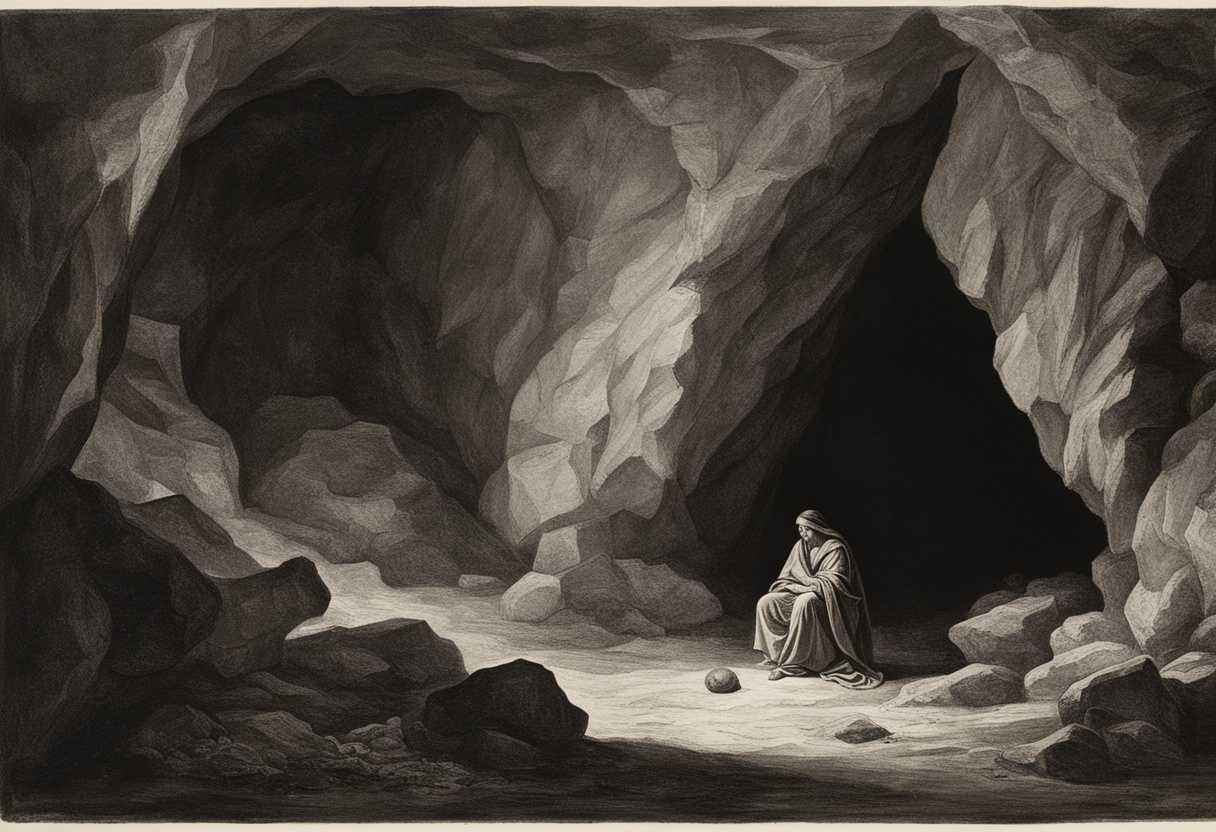
Adullam is a location mentioned in the Bible, notably as the site of a cave where David sought refuge from Saul (1 Samuel 22:1). The name Adullam is often interpreted to mean “a retreat” or “a place for the oppressed,” symbolizing a refuge for those in distress.
Scripture
1 David departed from there and escaped to the cave of Adullam.
2 And everyone who was in distress, and everyone who was in debt, and everyone who was bitter in soul, gathered to him. And he became commander over them. And there were with him about four hundred men.
Meaning of Adullam in the Bible
The significance of Adullam in the Bible extends beyond its geographical location; it serves as a powerful symbol of refuge, restoration, and community for the marginalized. In 1 Samuel 22:1-2, David, fleeing from King Saul, finds solace in the cave of Adullam. This narrative highlights the cave as a sanctuary not only for David but also for those who were in distress, discontent, or indebted. The text states, “And when his brothers and all his father’s house heard it, they went down there to him.” The convergence of these individuals around David presents Adullam as a place of gathering for the oppressed, thereby transforming it into a significant community space where God’s chosen leader would later form a band of followers who would become his mighty men (2 Samuel 23).
Moreover, the broader theological implications of Adullam resonate with themes of divine provision and grace. The cave represents a critical turning point in David’s life, one where he begins to prepare for his future as king amidst his trials. This motif of refuge connects with other biblical themes such as God’s protection and deliverance, as seen in Psalms where David often expresses trust in the Lord during times of distress (Psalm 46:1, “God is our refuge and strength, an ever-present help in trouble”). Thus, Adullam encapsulates the essence of spiritual sanctuary, emphasizing that in our moments of vulnerability, we can find solace not only in physical retreats but also in the divine presence that guides and nurtures us through adversity.
The name “Adullam” itself carries connotations of justice and the interplay between life in exile and the fulfillment of divine purpose. Beyond its role as a physical refuge for David and his followers, Adullam embodies the idea of repentance and redemption. Throughout the Biblical narrative, places of refuge often provide the backdrop for transformation, where individuals confront their pasts and seek forgiveness. This aligns with the thematic exploration found in other scriptural references that highlight God’s mercy towards those who earnestly return to Him, indicating that Adullam serves not just as a safe haven but also as a place of spiritual awakening.
Additionally, the designation of Adullam as a gathering place for those in need sets a precedent for later biblical communities, particularly the Church, which is described as a body for the broken and marginalized. This connection signifies the continuity of God’s intent to create spaces where people can come together to find healing, support, and purpose, echoing the New Testament’s message of unconditional love and acceptance. As such, Adullam functions as a metaphorical archetype for modern believers, reinforcing the importance of community in the journey of faith where individuals can rally together amidst their struggles and emerge strengthened, much like David’s band of loyal warriors who would ultimately stand by him in the challenging seasons of leadership that lay ahead.
A Place of Refuge and Safety
Adullam is often seen as a symbol of refuge, representing a safe haven for those in distress. In biblical narratives, it serves as a location where individuals can find solace and protection from their adversaries. This broader meaning highlights the importance of having a sanctuary during times of turmoil, reflecting the human need for safety and support in challenging circumstances.
A Symbol of Transformation and Leadership
The story of Adullam also signifies a transformative journey, particularly in the context of leadership. It is a place where individuals, often marginalized or in despair, come together to form a community. This gathering of the discontented and the distressed can lead to the emergence of strong leaders, illustrating how adversity can foster resilience and the development of leadership qualities in individuals who rise to the occasion.
A Representation of Isolation and Community
Adullam embodies the duality of isolation and community. While it is a place where individuals may initially feel alone in their struggles, it also becomes a gathering point for those who share similar experiences. This dynamic illustrates the biblical theme of finding strength in community, as individuals come together to support one another, transforming their isolation into a collective strength that can overcome challenges.
How to Find Community and Refuge in Faith
Finding community and refuge in faith is a beautiful journey that can transform your spiritual life. Start by seeking out a local church or fellowship group where you feel welcomed and valued; this is often the first step in building meaningful connections with others who share your beliefs. Don’t hesitate to engage in small groups or Bible studies, as these intimate settings allow for deeper conversations and support. Remember, vulnerability is key—sharing your struggles and joys can foster authentic relationships. Additionally, consider volunteering for church activities or outreach programs; serving alongside others not only strengthens bonds but also deepens your faith. Above all, pray for guidance and openness, trusting that God will lead you to the community that feels like home, where you can find both refuge and encouragement on your walk with Christ.
Bible References to Adullam’s Meaning:
2 Samuel 23:13-17: 23:13 And three of the thirty chief men went down and came about harvest time to David at the cave of Adullam, when a band of Philistines was encamped in the Valley of Rephaim.
14 And David was then in the stronghold, and the garrison of the Philistines was then at Bethlehem.
15 And David said longingly, “Oh, that someone would give me water to drink from the well of Bethlehem that is by the gate!”
16 Then the three mighty men broke through the camp of the Philistines and drew water out of the well of Bethlehem that was by the gate and carried and brought it to David. But he would not drink of it. He poured it out to the Lord,
17 And he said, “Far be it from me, O Lord, that I should do this. Is it not the blood of men who went at the risk of their lives?” Therefore he would not drink it. These things the three mighty men did.
1 Chronicles 11:15-19: 15 Three of the thirty chief men went down to the rock to David at the cave of Adullam, when the army of Philistines was encamped in the Valley of Rephaim.
16 And David was then in the stronghold, while the garrison of the Philistines was then at Bethlehem.
17 And David said longingly, “Oh, that someone would give me water to drink from the well of Bethlehem that is by the gate!”
18 Then the three broke through the camp of the Philistines and drew water out of the well of Bethlehem that was by the gate and took it and brought it to David. But David would not drink it. He poured it out to the Lord
19 And he said, “Far be it from me before my God that I should do this. Shall I drink the lifeblood of these men? For at the risk of their lives they brought it.” Therefore he would not drink it. These things the three mighty men did.
Micah 1:15-16: 15 I will again bring a conqueror to you, inhabitants of Mareshah; the glory of Israel shall come to Adullam.
16 Make yourselves bald and cut off your hair,
for the children of your delight;
make yourselves as bald as the eagle,
for they shall go from you into exile.

Rev. François Dupont is a dedicated church minister with a wealth of experience in serving spiritual communities. With a calm and serene demeanor, he has been devoted to sharing the message of love, compassion, and tolerance for over two decades. Through his thoughtful sermons, compassionate counseling, and unwavering support, Rev. Dupont has touched the lives of countless individuals, allowing them to find solace and strength during difficult times. His serene presence and deep understanding of the human condition make him a trusted guide for those seeking spiritual nourishment and guidance.