
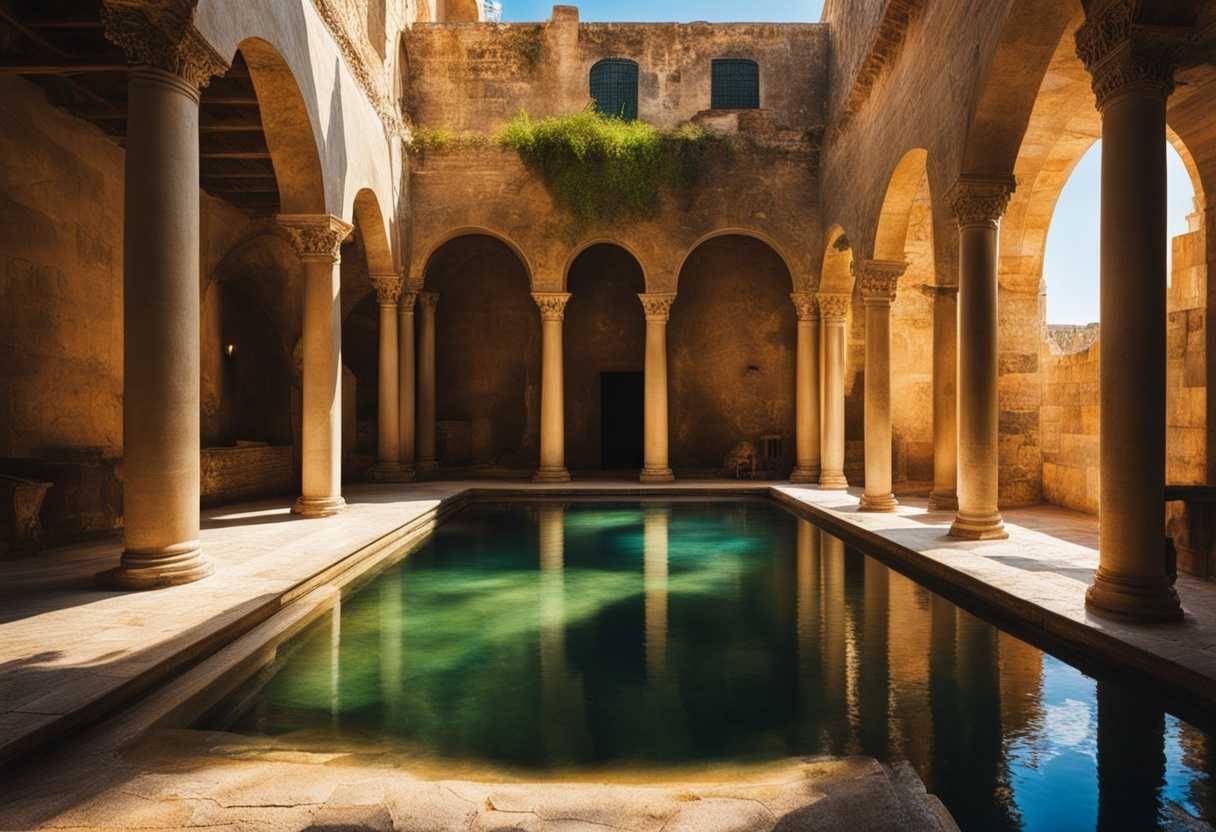
Siloam, in the Bible, refers to a pool in Jerusalem, known for its healing properties, where the blind man was sent by Jesus to wash and regain his sight (John 9:7). The name “Siloam” means “sent,” highlighting its significance as a place of divine instruction and healing.
Scripture
2 And his disciples asked him, “Rabbi, who sinned, this man or his parents, that he was born blind?”
2 And his disciples asked him, “Rabbi, who sinned, this man or his parents, that he was born blind?”
3 Jesus answered, “It was not that this man sinned, or his parents, but that the works of God might be displayed in him.
4 We must work the works of him who sent me while it is day; night is coming, when no one can work.
5 As long as I am in the world, I am the light of the world.”
6 Having said these things, he spit on the ground and made mud with the saliva. Then he anointed the man’s eyes with the mud.
7 and said to him, “Go, wash in the pool of Siloam” (which means Sent). So he went and washed and came back seeing.
8 The neighbors and those who had seen him before as a beggar were saying, “Is this not the man who used to sit and beg?”
9 Some said, “It is he.” Others said, “No, but he is like him.” He kept saying, “I am the man.”
10 So they said to him, “Then how were your eyes opened?”
11 He answered, “The man called Jesus made mud and anointed my eyes and said to me, ‘Go to Siloam and wash.’ So I went and washed and received my sight.”
12 They said to him, “Where is he?” He said, “I do not know.”
Meaning of Siloam in the Bible
The Pool of Siloam carries profound spiritual and theological significance in the biblical narrative, especially illustrated in John 9, where Jesus heals a man born blind. The very name “Siloam,” which means “sent,” not only emphasizes the act of being sent by Jesus to the pool but also symbolizes the broader theme of divine mission and the fulfillment of God’s purposes in the world. The act of washing in Siloam mirrors the themes of obedience and faith; the blind man’s willingness to follow Jesus’ directive leads to his physical healing and, subsequently, his spiritual enlightenment (John 9:35-38). This reflects the dual nature of healing—physical restoration accompanied by spiritual awakening.
Moreover, Siloam embodies the idea of a transformative encounter with God in the context of community and faith. The pool’s location and its historical background as a water source for Jerusalem remind the faithful of the sustenance and life-giving properties associated with water in biblical tradition. It connects to other significant biblical texts, such as Isaiah 8:6, which speaks of the waters of Shiloah that flow gently, often interpreted as a metaphor for God’s quiet but persistent presence in the lives of His people. Thus, Siloam serves as a metaphorical gateway to understanding how obedience to God’s word leads to healing, both physically and spiritually, and highlights how divine instructions can lead to transformative experiences in the lives of believers.
In the biblical context, the significance of Siloam extends beyond its healing properties to embody the themes of purification and renewal. The pool is often associated with ritual cleansing, an essential component in the religious practices of the time. Such rites were fundamental for maintaining holiness within the community, reinforcing the notion that physical water also symbolizes spiritual cleansing. Just as the blind man gained his sight through obedience to Jesus’ command, those who approached the waters of Siloam for purification sought not only to cleanse their physical bodies but also to restore their spiritual standing before God. This dual purpose deepens the significance of Siloam as a sacred space, where the physical intertwines with the spiritual.
Furthermore, Siloam is rich in its historical context, tied to the greater narrative of Jerusalem’s struggle and redemption. The name itself recalls the story of Israel—a people often “sent” on missions by God to fulfill divine promises. Throughout the Old Testament, references to water as a source of life point to God’s ongoing provision for His people, linking the concept of Siloam to the wilderness experiences of Israel and their reliance on God’s guidance. This theme resonates in the wider biblical motif of God being a trustworthy source of sustenance and salvation. In this way, Siloam is not merely a physical location but emblematic of the covenant relationship between God and His people, illustrating the importance of responding to divine invitations for transformation and new beginnings.
The Significance of Healing and Restoration
Siloam, often associated with the Pool of Siloam, symbolizes healing and restoration in biblical narratives. The pool was known for its waters, which were believed to have therapeutic properties. This connection to healing reflects a broader theme in the Bible where water is often a symbol of life, renewal, and divine intervention. The act of washing in the waters of Siloam can be seen as a metaphor for spiritual cleansing and the transformative power of faith.
A Symbol of Divine Provision
The name Siloam itself is derived from a Hebrew word meaning “sent.” This aspect highlights the idea of divine provision and guidance. In biblical contexts, Siloam represents the notion that God sends resources and blessings to His people, often in unexpected ways. This theme resonates throughout scripture, where God provides for the needs of His followers, reinforcing the belief in His active presence in their lives.
A Place of Encounter with the Divine
Siloam serves as a significant location for encounters with the divine. It is a place where individuals experience moments of revelation and transformation. This aspect emphasizes the importance of physical spaces in spiritual journeys, where believers can come to seek healing, guidance, and a deeper relationship with God. The Pool of Siloam thus becomes a metaphorical crossroads for faith, where the physical act of coming to the water leads to profound spiritual experiences.
How to Embrace Faith for Healing and Understanding
Embracing faith for healing and understanding is a deeply personal journey that invites us to lean into our relationship with God, especially during times of struggle. Start by cultivating a daily practice of prayer and meditation, allowing space for God’s voice to guide you through your pain and confusion. Remember, healing often comes not just from physical restoration but from a profound sense of peace and acceptance that God is with you in every moment. Dive into Scripture, seeking verses that resonate with your heart—like Psalm 147:3, which reminds us that God heals the brokenhearted. Surround yourself with a supportive community, whether through a church group or friends who share your faith, as they can provide encouragement and insight. Finally, be open to the lessons that come from your experiences; sometimes, understanding unfolds in unexpected ways, revealing God’s purpose in our trials. Trust that your faith can be a powerful source of healing, guiding you toward a deeper understanding of yourself and your relationship with the divine.
Bible References to the Meaning of Siloam:
Luke 13:1-5: 1 There were some present at that very time who told him about the Galileans whose blood Pilate had mingled with their sacrifices.
2 And he answered them, “Do you think that these Galileans were worse sinners than all the other Galileans, because they suffered in this way?
3 No, I tell you; but unless you repent, you will all likewise perish.
4 Or those eighteen on whom the tower in Siloam fell and killed them: do you think that they were worse offenders than all the others who lived in Jerusalem?
5 No, I tell you; but unless you repent, you will all likewise perish.”
Nehemiah 3:15: 15 And Shallum the son of Col-hozeh, ruler of the district of Mizpah, repaired the Fountain Gate. He rebuilt it and covered it and set its doors, its bolts, and its bars. And he built the wall of the Pool of Shelah of the king’s garden, as far as the stairs that go down from the city of David.
Isaiah 8:5-8: 5 The Lord spoke to me again:
6 “Because this people has refused the waters of Shiloah that flow gently, and rejoice over Rezin and the son of Remaliah,
7 therefore, behold, the Lord is bringing up against them the waters of the River, mighty and many, the king of Assyria and all his glory. And it will rise over all its channels and go over all its banks,
8 and it will sweep on into Judah, it will overflow and pass on, reaching even to the neck, and its outspread wings will fill the breadth of your land, O Immanuel.”
2 Kings 20:20: 20 The rest of the deeds of Hezekiah and all his might and how he made the pool and the conduit and brought water into the city, are they not written in the Book of the Chronicles of the Kings of Judah?
Isaiah 22:9-11: 9 and you saw that the breaches of the city of David were many. You collected the waters of the lower pool,
10 and you counted the houses of Jerusalem, and you broke down the houses to fortify the wall.
11 You made a reservoir between the two walls for the water of the old pool. But you did not look to him who did it, or see him who planned it long ago.

Reverend Michael Johnson is an experienced Church Minister with a profound expertise in spirituality and guidance. With a serene presence and a compassionate heart, he has faithfully served his congregation for over 20 years, leading them on a spiritual journey towards inner peace and enlightenment. Reverend Johnson’s extensive knowledge of religious philosophies and profound understanding of human nature have made him a trusted confidant and mentor to many, as he seamlessly weaves his profound wisdom into life teachings. Reverend Johnson’s calming demeanor and empathetic nature continue to uplift and heal souls, nurturing a sense of unity and tranquility within his community.