
Moriah in the Bible refers to the region where Abraham was commanded to offer his son Isaac as a sacrifice (Genesis 22:2). It is often associated with the future site of Jerusalem, particularly the location of the Temple, symbolizing a place of divine provision and faith.
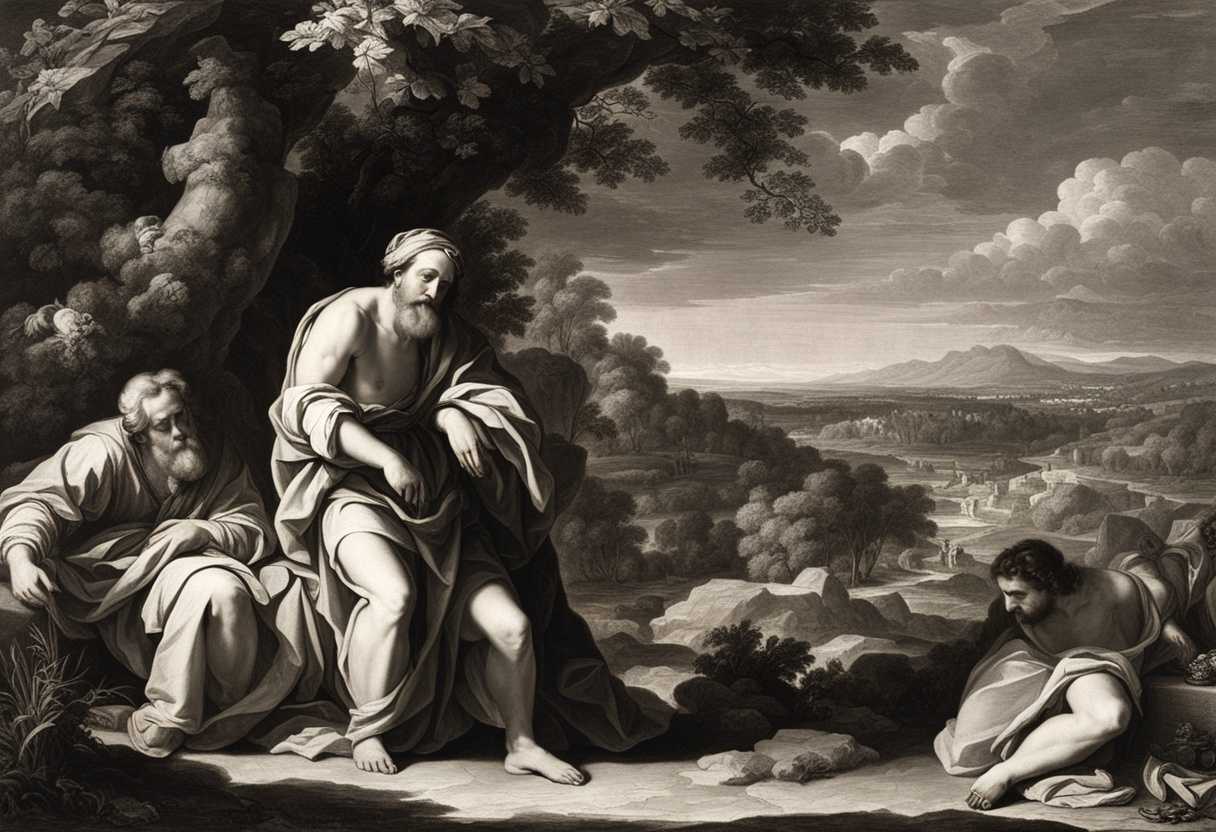
Scripture
22 After these things God tested Abraham and said to him, “Abraham!” And he said, “Here I am.”
2 He said, “Take your son, your only son Isaac, whom you love, and go to the land of Moriah, and offer him there as a burnt offering on one of the mountains of which I shall tell you.”
3 So Abraham rose early in the morning, saddled his donkey, and took two of his young men with him, and his son Isaac. And he cut the wood for the burnt offering and arose and went to the place of which God had told him.
4 On the third day Abraham lifted up his eyes and saw the place from afar.
5 Then Abraham said to his young men, “Stay here with the donkey; I and the boy will go over there and worship and come again to you.”
6 And Abraham took the wood of the burnt offering and laid it on Isaac his son. And he took in his hand the fire and the knife. So they went both of them together.
7 And Isaac said to his father Abraham, “My father!” And he said, “Here I am, my son.” He said, “Behold, the fire and the wood, but where is the lamb for a burnt offering?”
8 Abraham said, “God will provide for himself the lamb for a burnt offering, my son.” So they went both of them together.
9 When they came to the place of which God had told him, Abraham built the altar there and laid the wood in order and bound Isaac his son and laid him on the altar, on top of the wood.
10 Then Abraham reached out his hand and took the knife to slaughter his son.
11 But the angel of the Lord called to him from heaven and said, “Abraham, Abraham!” And he said, “Here I am.”
12 He said, “Do not lay your hand on the boy or do anything to him, for now I know that you fear God, seeing you have not withheld your son, your only son, from me.”
13 And Abraham lifted up his eyes and looked, and behold, behind him was a ram, caught in a thicket by his horns. And Abraham went and took the ram and offered it up as a burnt offering instead of his son.
14 So Abraham called the name of that place, “The Lord will provide”; as it is said to this day, “On the mount of the Lord it shall be provided.”
15 And the angel of the Lord called to Abraham a second time from heaven
22 and said, “By myself I have sworn, declares the Lord, because you have done this and have not withheld your son, your only son,
17 I will surely bless you, and I will surely multiply your offspring as the stars of heaven and as the sand that is on the seashore. And your offspring shall possess the gate of his enemies,
18 and in your offspring shall all the nations of the earth be blessed, because you have obeyed my voice.”
19 So Abraham returned to his young men, and they arose and went together to Beersheba. And Abraham lived at Beersheba.
Meaning of Moriah in the Bible
The significance of Moriah in the Bible extends beyond its geographical location; it serves as a profound representation of faith, sacrifice, and divine providence. In Genesis 22:2, God commands Abraham to take his son Isaac to the land of Moriah, where he is to offer him as a burnt offering. This harrowing narrative highlights Abraham’s unwavering faith in God’s promise, demonstrating that true faith may demand extreme obedience. The act of preparing to sacrifice Isaac symbolizes a test of faith and exemplifies the belief that God will provide, as seen when Abraham names the location “The Lord Will Provide” (Genesis 22:14).
Moriah becomes a prophetic precursor to Jerusalem, the location where the future temple would be built, and ultimately where Christ’s sacrificial death would occur. The association of Moriah with divine providence resonates throughout scripture. 2 Chronicles 3:1 notes that Solomon built the temple on Mount Moriah, further linking it to God’s plan of redemption. Thus, Moriah encapsulates the themes of sacrifice and providence, pointing to the overarching biblical narrative of faith amid testing, the hope in God’s promises, and the foreshadowing of the ultimate sacrifice in Jesus, who is described as the Lamb of God (John 1:29).
Beyond its immediate significance in the Abrahamic narrative, Moriah embodies a broader theological context that resonates throughout the scriptures. The concept of Moriah as a site of divine encounters serves to reinforce the deeply interwoven relationship between faith and worship in the biblical tradition. Moriah, as a place of testing and potential sacrifice, is also seen as a landscape of transformation. It marks moments where the divine purpose aligns with human obedience, suggesting that significant events in salvation history are often anchored in acts of faith that challenge human understanding and comfort.
Moreover, the association of Moriah with sacred space evolves through various biblical accounts. Its identification with the location of Jerusalem enriches its symbolic importance. This convergence of place highlights how God orchestrates pivotal moments in history within specific geographical and spiritual boundaries. Many later references to Jerusalem evoke echoes of Moriah’s original significance—an altar not just for sacrifice, but also a center for worship and a testimony of God’s enduring fidelity to His covenant people. In this way, Moriah symbolizes the intersection of human struggle and divine grace, reminding believers of the monumental lessons learned through faith that transcends generations and points toward a future hope anchored in God’s everlasting promise.
The Place of Divine Testing
Moriah is often associated with significant moments of divine testing and faith. It represents a location where individuals are called to demonstrate their trust in God, even in the face of profound challenges. This theme of testing is central to the narrative surrounding Moriah, highlighting the importance of obedience and faithfulness in one’s relationship with the divine.
A Symbol of Sacrifice
Moriah also embodies the concept of sacrifice, both in a literal and metaphorical sense. It serves as a reminder of the sacrifices that are often required in the pursuit of spiritual growth and understanding. The notion of giving up something valuable for a higher purpose resonates throughout biblical teachings, making Moriah a symbol of the ultimate act of devotion and surrender to God’s will.
A Foreshadowing of Redemption
In a broader theological context, Moriah can be seen as a foreshadowing of redemption. The events that transpire in this location hint at future themes of sacrifice and salvation found throughout the biblical narrative. Moriah’s significance extends beyond its immediate context, pointing towards the overarching story of God’s plan for humanity and the promise of redemption through sacrifice.
How to Embrace God’s Gifts and Serve Others Effectively
Embracing God’s gifts and serving others effectively is a beautiful journey that begins with recognizing the unique talents and blessings He has bestowed upon you. Take a moment to reflect on what you are passionate about and how those passions can be used to uplift others. Whether it’s through acts of kindness, sharing your skills, or simply being a listening ear, remember that service is not just about grand gestures; it’s often the small, consistent acts of love that make the most profound impact. Pray for guidance and opportunities to use your gifts, and don’t hesitate to step out of your comfort zone—sometimes, the most rewarding experiences come from unexpected places. As you serve, let your actions be rooted in love and humility, mirroring Christ’s own example, and you’ll find that in giving, you receive immeasurable joy and fulfillment.
Bible References to Moriah’s Meaning:
2 Chronicles 3:1-2: 3 Then Solomon began to build the house of the Lord in Jerusalem on Mount Moriah, where the Lord had appeared to David his father, at the place that David had appointed, on the threshing floor of Ornan the Jebusite.
2 He began to build in the second day of the second month in the fourth year of his reign.
Hebrews 11:17-19: 17 By faith Abraham, when he was tested, offered up Isaac, and he who had received the promises was in the act of offering up his only son,
18 of whom it was said, “Through Isaac shall your offspring be named.”
19 He considered that God was able even to raise him from the dead, from which, figuratively speaking, he did receive him back.
John 8:56-58: 56 Your father Abraham rejoiced that he would see my day. He saw it and was glad.”
57 So the Jews said to him, “You are not yet fifty years old, and have you seen Abraham?”
58 Jesus said to them, “Truly, truly, I say to you, before Abraham was, I am.”

Reverend Michael Johnson is an experienced Church Minister with a profound expertise in spirituality and guidance. With a serene presence and a compassionate heart, he has faithfully served his congregation for over 20 years, leading them on a spiritual journey towards inner peace and enlightenment. Reverend Johnson’s extensive knowledge of religious philosophies and profound understanding of human nature have made him a trusted confidant and mentor to many, as he seamlessly weaves his profound wisdom into life teachings. Reverend Johnson’s calming demeanor and empathetic nature continue to uplift and heal souls, nurturing a sense of unity and tranquility within his community.