
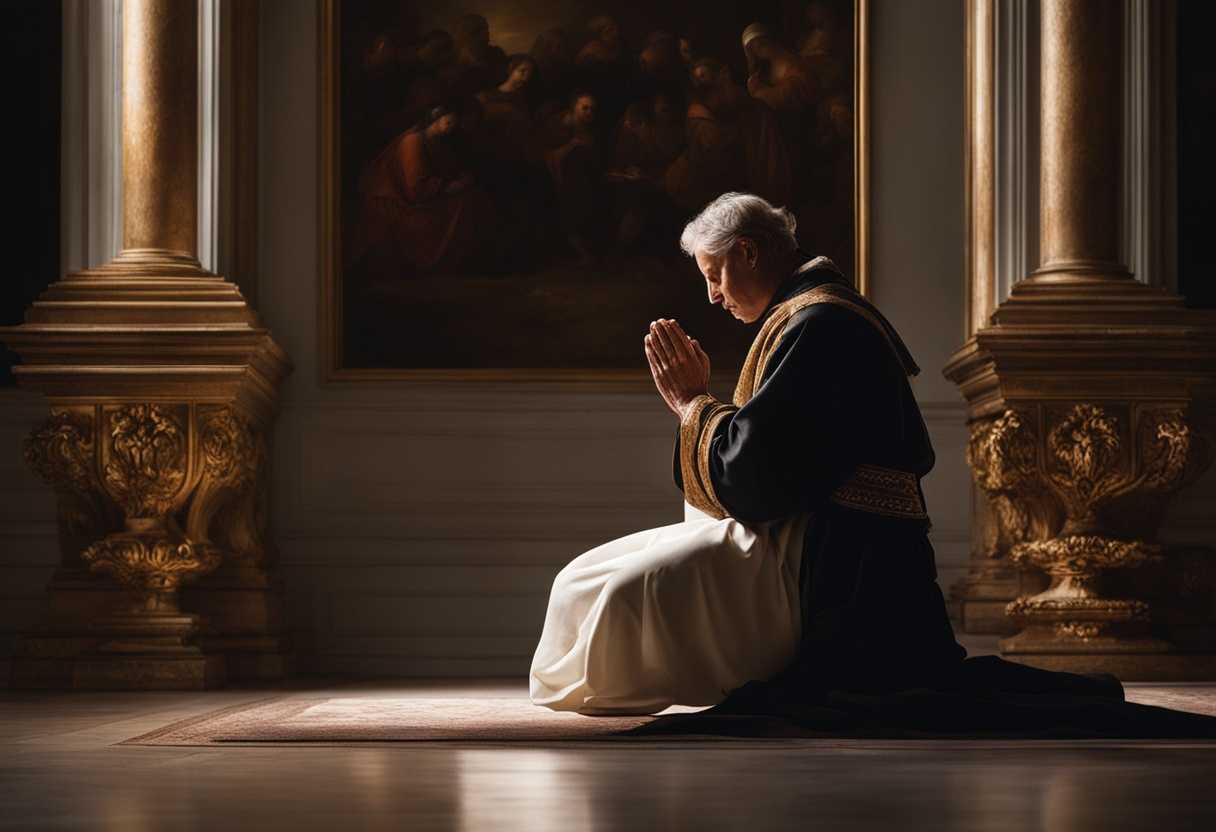
In scripture, kneeling is often a posture of humility, reverence, and submission before God. It signifies a recognition of God’s authority and a willingness to pray, worship, and seek His guidance (e.g., Psalm 95:6, Philippians 2:10).
Scripture
54 Now as Solomon finished offering all this prayer and plea to the Lord, he arose from before the altar of the Lord, where he had knelt with hands outstretched toward heaven.
55 And he stood and blessed all the assembly of Israel with a loud voice, saying:
56 “Blessed be the Lord who has given rest to his people Israel, according to all that he promised. Not one word has failed of all his good promise, which he spoke by Moses his servant.”
57 be with us, as he was with our fathers. May he not leave us or forsake us,
58 that he may incline our hearts to him, to walk in all his ways and to keep his commandments, his statutes, and his rules, which he commanded our fathers.
59 Let these words of mine, with which I have pleaded before the Lord, be near to the Lord our God day and night, and may he maintain the cause of his servant and the cause of his people Israel, as each day requires,
60 that all the peoples of the earth may know that the Lord is God; there is no other.
61 Let your heart therefore be wholly true to the Lord our God, walking in his statutes and keeping his commandments, as at this day.”
The Significance of Kneeling in Scripture
Kneeling in scripture serves as a profound expression of humility and reverence, illustrating an individual’s recognition of God’s sovereignty and holiness. For example, Psalm 95:6 states, “Oh come, let us worship and bow down; let us kneel before the Lord, our Maker!” This verse conveys the idea that kneeling is an intentional act of worship, acknowledging God’s greatness and our subordinate position as His creation. Additionally, Philippians 2:10 emphasizes the significance of every knee bowing before Jesus, signifying total submission to Christ’s lordship. This act of kneeling reflects a spiritual posture that goes beyond mere physicality; it embodies an inward reality of surrender, openness, and an earnest desire for intimacy with the divine.
Moreover, kneeling is also a posture associated with prayer and intercession throughout the Bible. In Acts 9:40, for instance, Peter kneels in prayer before raising Tabitha from the dead, demonstrating reliance on God’s power in critical moments. Similarly, in Luke 22:41, Jesus withdraws and kneels to pray in the Garden of Gethsemane, showcasing His submission to the Father’s will amidst His emotional anguish. In these instances, kneeling symbolizes not just an act of worship but also a proactive engagement in prayer, heightening the believer’s connection with God and underscoring the seriousness of the commitment to seek His will. Overall, kneeling encapsulates a multifaceted expression of faith that merges reverence, humility, and the heartfelt pursuit of divine communion.
The significance of kneeling in scripture extends into many pivotal moments of biblical history, revealing its integral role in the life of prayer and supplication. In the Old Testament, figures such as Solomon exemplified kneeling during prayer, specifically during the dedication of the temple. As he knelt and spread his hands toward heaven, it became a tangible representation of his deep reliance on God’s guidance and favor for Israel. This posture of kneeling during such public and sacred moments emphasizes the importance of approaching God with humility and recognition of His omnipotence, especially in contexts where collective worship and intercession for the people are involved.
Furthermore, kneeling is frequently portrayed as a rite of penitence and confession. The act of kneeling before God in acknowledgment of sin serves not only as an individual act of repentance but also as a collective expression for the community seeking restoration. In the book of Nehemiah, when the people gathered to hear the law, they prostrated themselves in reverence, exemplifying that kneeling in sorrow for transgressions signifies awareness of moral shortcomings and a yearning for reconciliation with God. This act is not merely physical; it embodies an internal state of brokenness and the hopeful cry for mercy. Thus, the multifaceted role of kneeling throughout scripture illustrates that it is not only a posture of worship but also a powerful symbol of contrition, need, and the desire for divine companionship.
Expression of Humility and Submission
Kneeling in scripture often symbolizes a deep sense of humility and submission before God. It reflects an acknowledgment of one’s own limitations and the recognition of God’s supreme authority. This physical posture serves as a powerful reminder that believers are called to surrender their will to the divine, demonstrating a heart that is open to guidance and transformation.
A Gesture of Worship and Reverence
Kneeling is also a significant act of worship and reverence in the biblical context. It conveys a deep respect and honor towards God, recognizing His holiness and majesty. This act of bowing down is not merely a physical position but an expression of the inner attitude of the heart, emphasizing the importance of approaching God with awe and devotion.
A Sign of Intercession and Prayer
In many instances, kneeling is associated with prayer and intercession. It signifies a posture of earnestness and earnest supplication, where individuals seek divine intervention or express their needs before God. This act of kneeling during prayer highlights the seriousness of the request and the desire for a deeper connection with the divine, illustrating the importance of prayer as a means of communication with God.
How to Cultivate Humility and Reverence in Prayer
Cultivating humility and reverence in prayer is a beautiful journey that invites us to draw closer to God. Start by recognizing the vastness of His greatness and our own limitations; this awareness can transform our approach to prayer from a mere routine to a heartfelt conversation with our Creator. Begin your prayer time with moments of silence, allowing yourself to be still in His presence, acknowledging that He knows your heart better than you do. As you pray, use language that reflects your dependence on Him—express gratitude for His grace and mercy, and seek His guidance rather than presenting a list of demands. Remember, humility is not about thinking less of yourself, but rather thinking of yourself less; focus on His will and the needs of others. Incorporating scripture into your prayers can also deepen your reverence, as you align your thoughts with His Word. Ultimately, let your prayer life be a reflection of your relationship with God, where you approach Him with awe and respect, knowing that in your humility, His strength is made perfect.
Bible References to Kneeling in Scripture:
2 Chronicles 6:12-14: 12 Then Solomon stood before the altar of the Lord in the presence of all the assembly of Israel and spread out his hands.
13 For Solomon had made a bronze platform five cubits long, five cubits wide, and three cubits high, and had set it in the court, and he stood on it. Then he knelt on his knees in the presence of all the assembly of Israel, and spread out his hands toward heaven,
14 and said, “O LORD, God of Israel, there is no God like you, in heaven or on earth, keeping covenant and showing steadfast love to your servants who walk before you with all their heart,
Ezra 9:5-6: 5 And at the evening sacrifice I rose from my fasting, with my garment and my cloak torn, and fell upon my knees and spread out my hands to the Lord my God,
6 saying: “O my God, I am ashamed and blush to lift my face to you, my God, for our iniquities have risen higher than our heads, and our guilt has mounted up to the heavens.
Psalm 95:6-7: 6 Oh come, let us worship and bow down; let us kneel before the Lord, our Maker!
7 For he is our God, and we are the people of his pasture, and the sheep of his hand. Today, if you hear his voice,
Daniel 6:10-11: 10 When Daniel knew that the document had been signed, he went to his house where he had windows in his upper chamber open toward Jerusalem. He got down on his knees three times a day and prayed and gave thanks before his God, as he had done previously.
11 Then these men came by agreement and found Daniel making petition and plea before his God.
Luke 22:39-41: 39 And he came out and went, as was his custom, to the Mount of Olives, and the disciples followed him.
40 And when he came to the place, he said to them, “Pray that you may not enter into temptation.”
41 And he withdrew from them about a stone’s throw, and knelt down and prayed,
Acts 7:59-60: 59 And as they were stoning Stephen, he called out, “Lord Jesus, receive my spirit.”
60 Then falling to his knees he cried out with a loud voice, “Lord, do not hold this sin against them.” And when he had said this, he fell asleep.
Acts 9:40-41: 40 But Peter put them all outside, and knelt down and prayed; and turning to the body he said, “Tabitha, arise.” And she opened her eyes, and when she saw Peter she sat up.
41 And he gave her his hand and raised her up. Then, calling the saints and widows, he presented her alive.
Acts 20:36-38: 36 And when he had said these things, he knelt down and prayed with them all.
37 And there was much weeping on the part of all; they embraced Paul and kissed him,
38 Being sorrowful most of all because of the word he had spoken, that they would not see his face again. And they accompanied him to the ship.
Ephesians 3:14-19: 14 For this reason I bow my knees before the Father,
15 from whom every family in heaven and on earth is named,
16 that according to the riches of his glory he may grant you to be strengthened with power through his Spirit in your inner being,
17 so that Christ may dwell in your hearts through faith—that you, being rooted and grounded in love,
18 may have strength to comprehend with all the saints what is the breadth and length and height and depth,
19 and to know the love of Christ that surpasses knowledge, that you may be filled with all the fullness of God.

Rev. François Dupont is a dedicated church minister with a wealth of experience in serving spiritual communities. With a calm and serene demeanor, he has been devoted to sharing the message of love, compassion, and tolerance for over two decades. Through his thoughtful sermons, compassionate counseling, and unwavering support, Rev. Dupont has touched the lives of countless individuals, allowing them to find solace and strength during difficult times. His serene presence and deep understanding of the human condition make him a trusted guide for those seeking spiritual nourishment and guidance.