
The Lutheran Stations of the Cross, also known as the Way of the Cross, is a Christian tradition that reflects on the events of Jesus’ Passion as he journeys to his crucifixion. Each station typically includes a reading of scripture, a reflection, and a prayer, emphasizing themes of suffering, redemption, and the significance of Christ’s sacrifice for humanity.
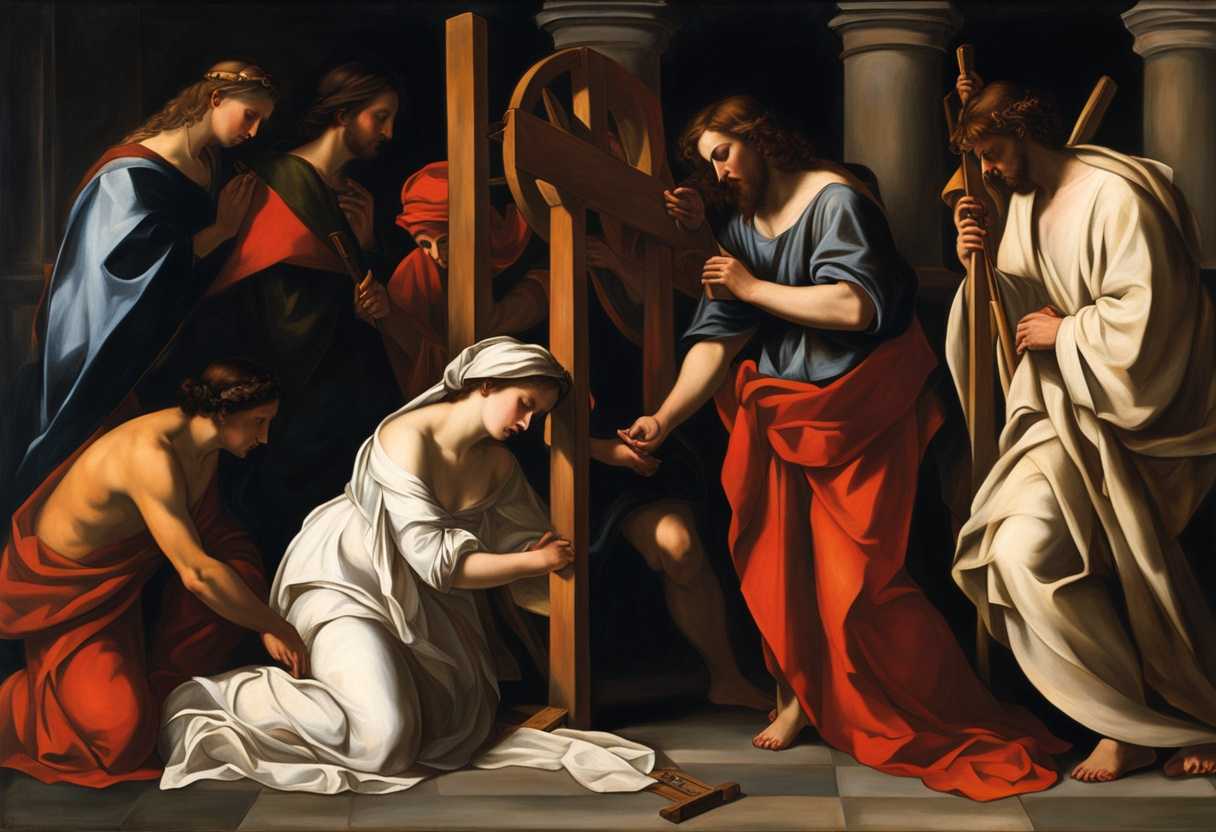
Scripture
36 Then Jesus went with them to a place called Gethsemane, and he said to his disciples, “Sit here, while I go over there and pray.”
37 And taking with him Peter and the two sons of Zebedee, he began to be sorrowful and troubled.
38 Then he said to them, “My soul is very sorrowful, even to death; remain here, and watch with me.”
39 And going a little farther he fell on his face and prayed, saying, “My Father, if it be possible, let this cup pass from me; nevertheless, not as I will, but as you will.”
40 And he came to the disciples and found them sleeping. And he said to Peter, “So, could you not watch with me one hour?
41 Watch and pray that you may not enter into temptation. The spirit indeed is willing, but the flesh is weak.
42 Again, for the second time, he went away and prayed, “My Father, if this cannot pass unless I drink it, your will be done.”
43 And again he came and found them sleeping, for their eyes were heavy.
44 So, leaving them again, he went away and prayed for the third time, saying the same words again.
45 Then he came to the disciples and said to them, “Sleep and take your rest later on. See, the hour is at hand, and the Son of Man is betrayed into the hands of sinners.
46 Rise, let us be going; see, my betrayer is at hand.
Lutheran Stations of the Cross: Biblical Insights
The Lutheran Stations of the Cross serve as a profound meditation on the sufferings of Jesus and the depths of God’s love for humanity, encapsulating a journey that leads to redemption. Each station is marked by specific events from the Passion narrative, which can be linked to scripture such as Isaiah 53:5, where it is prophesied, “But he was pierced for our transgressions, he was crushed for our iniquities; the punishment that brought us peace was on him, and by his wounds, we are healed.” This verse highlights the theological significance of suffering—Jesus’ pain is not merely an event to be mourned but a vital act that brings about reconciliation between humanity and God.
Furthermore, the practice of reflecting on the Stations encourages believers to confront their own sin and suffering while recognizing the hope that is found in Christ’s sacrifice. Romans 5:8 affirms this message of grace, stating, “But God demonstrates his own love for us in this: While we were still sinners, Christ died for us.” The Stations embody this duality of despair and hope, urging participants to empathize with Christ’s sufferings and understand that through His crucifixion, God enters into human suffering, ultimately restoring us to fellowship with Him. In this way, the Lutheran Stations of the Cross invite believers not only to bear witness to Christ’s passion but also to embrace the transformative power of His love and sacrifice.
The Lutheran Stations of the Cross serve as a visual and spiritual guide for believers, illuminating the profound journey of Jesus through His betrayal, trial, and crucifixion. Each station, a poignant reminder of an event in Christ’s suffering, invites reflection on the depth of Jesus’ commitment to His mission and His unwavering love for humanity. This form of devotion emphasizes that Jesus actively chose to bear the weight of the world’s sin, a theme encapsulated in the narrative around His trial and ultimate execution. Through recognizing His silent strength in the face of injustice, believers are encouraged to contemplate their own responses to suffering and opposition.
Additionally, the significance of the Stations extends beyond individual reflection; they foster a communal acknowledgment of both the burdens carried by Jesus and those experienced by individuals within the church and society. This communal aspect fosters a deeper understanding of empathy as followers of Christ stand alongside each other in their respective trials. The Lutheran tradition’s emphasis on grace beautifully integrates this communal journey; it acknowledges human frailty while celebrating the redemptive power inherent in acts of compassion and solidarity. As participants meditate on each station, they are reminded of the living hope experienced through interpretation of the resurrection, crucial in linking the somber reality of the Cross to the joyous promise of new life found in Christ.
The Journey of Suffering and Redemption
The Lutheran Stations of the Cross reflect the profound journey of suffering that Jesus undertook for humanity’s redemption. This journey emphasizes the significance of Christ’s passion, illustrating how His trials and tribulations serve as a pathway to salvation. Each station represents a moment of deep emotional and physical pain, inviting believers to meditate on the gravity of sin and the lengths to which God went to restore the relationship between humanity and Himself. This journey not only highlights the suffering of Christ but also encourages believers to embrace their own struggles, recognizing that suffering can lead to spiritual growth and deeper faith.
The Call to Discipleship
The Stations of the Cross also serve as a powerful reminder of the call to discipleship. As followers of Christ, believers are invited to take up their own crosses and follow Him, embodying the principles of sacrifice, love, and service. Each station illustrates the challenges faced by Jesus, which can inspire believers to reflect on their own lives and the ways they can live out their faith in action. This call to discipleship emphasizes that the Christian journey is not without its trials, but through these experiences, believers can grow closer to Christ and fulfill their mission to love and serve others in His name.
The Assurance of God’s Presence
Another significant aspect of the Lutheran Stations of the Cross is the assurance of God’s presence in times of suffering. Each station not only recounts the events of Christ’s passion but also serves as a reminder that God is intimately involved in the human experience of pain and sorrow. This theological perspective reassures believers that they are never alone in their struggles; God walks alongside them, offering comfort and strength. The Stations encourage a deeper understanding of God’s empathy and compassion, reinforcing the belief that He understands human suffering and provides hope and healing through Christ’s sacrifice.
How to Embrace Suffering and Grow in Faith
Embracing suffering as a part of our Christian journey can be incredibly challenging, yet it is often through our trials that we find the deepest growth in faith. When we face hardships, it’s essential to remember that God is not distant; He walks alongside us, offering comfort and strength. I’ve found that prayer becomes a lifeline during these times—pouring out my heart to God allows me to process my pain and seek His guidance. Reflecting on Scripture, particularly passages like Romans 5:3-5, reminds me that suffering produces perseverance, character, and hope. It’s in these moments of vulnerability that we can truly lean into God’s promises, allowing our struggles to deepen our relationship with Him. So, when you encounter suffering, try to shift your perspective; see it as an opportunity to draw closer to God, to learn, and to grow, trusting that He is using these experiences to shape you into the person He created you to be.
Bible References to Lutheran Stations of the Cross:
Matthew 26:47-56: 47 While he was still speaking, Judas came, one of the twelve, and with him a great crowd with swords and clubs, from the chief priests and the elders of the people.
48 Now the betrayer had given them a sign, saying, “The one I will kiss is the man; seize him.”
49 And he came up to Jesus at once and said, “Greetings, Rabbi!” And he kissed him.
50 Jesus said to him, “Friend, do what you came to do.” Then they came up and laid hands on Jesus and seized him.
51 And behold, one of those who were with Jesus stretched out his hand and drew his sword and struck the servant of the high priest and cut off his ear.
52 Then Jesus said to him, “Put your sword back into its place. For all who take the sword will perish by the sword.
53 Do you think that I cannot appeal to my Father, and he will at once send me more than twelve legions of angels?
54 But how then should the Scriptures be fulfilled, that it must be so?”
55 At that hour Jesus said to the crowds, “Have you come out as against a robber, with swords and clubs to capture me? Day after day I sat in the temple teaching, and you did not seize me.
56 But all this has taken place that the Scriptures of the prophets might be fulfilled.” Then all the disciples left him and fled.
Matthew 26:57-68: 57 Then those who had seized Jesus led him to Caiaphas the high priest, where the scribes and the elders had gathered.
58 But Peter was following him at a distance, as far as the courtyard of the high priest, and going inside he sat with the guards to see the end.
59 Now the chief priests and the whole council were seeking false testimony against Jesus that they might put him to death,
60 but they found none, though many false witnesses came forward. At last two came
61 and said, “This man said, ‘I am able to destroy the temple of God, and to rebuild it in three days.’”
62 And the high priest stood up and said, “Have you no answer to make? What is it that these men testify against you?”
63 But Jesus remained silent. And the high priest said to him, “I adjure you by the living God, tell us if you are the Christ, the Son of God.”
64 Jesus said to him, “You have said so. But I tell you, from now on you will see the Son of Man seated at the right hand of Power and coming on the clouds of heaven.”
65 Then the high priest tore his robes and said, “He has uttered blasphemy. What further witnesses do we need? You have now heard his blasphemy.
66 What is your judgment?” They answered, “He deserves death.”
67 Then they spit in his face and struck him. And some slapped him,
68 saying, “Prophesy to us, you Christ! Who is it that struck you?”
Matthew 26:69-75: 69 Now Peter was sitting outside in the courtyard. And a servant girl came up to him and said, “You also were with Jesus the Galilean.”
70 But he denied it before them all, saying, “I do not know what you mean.”
71 And when he went out to the entrance, another servant girl saw him, and she said to the bystanders, “This man was with Jesus of Nazareth.”
72 And again he denied it with an oath: “I do not know the man.”
73 After a little while the bystanders came up and said to Peter, “Certainly you too are one of them, for your accent betrays you.”
74 Then he began to invoke a curse on himself and to swear, “I do not know the man.” And immediately the rooster crowed.
75 And Peter remembered the saying of Jesus, “Before the rooster crows, you will deny me three times.” And he went out and wept bitterly.
Matthew 27:1-10: 1 When morning came, all the chief priests and the elders of the people took counsel against Jesus to put him to death.
2 And they bound him and led him away and delivered him over to Pilate the governor.
3 Then when Judas, his betrayer, saw that Jesus was condemned, he changed his mind and brought back the thirty pieces of silver to the chief priests and the elders,
4 saying, “I have sinned by betraying innocent blood.” They said, “What is that to us? See to it yourself.”
5 And throwing down the pieces of silver into the temple, he departed, and he went and hanged himself.
6 But the chief priests, taking the pieces of silver, said, “It is not lawful to put them into the treasury, since it is blood money.”
7 So they took counsel and bought with them the potter’s field as a burial place for strangers.
8 Therefore that field has been called the Field of Blood to this day.
5 Then he threw down the pieces of silver in the temple and departed, and went and hanged himself.
10 and they gave them for the potter’s field, as the Lord directed me.”
Matthew 27:11-26: 11 Now Jesus stood before the governor, and the governor asked him, “Are you the King of the Jews?” Jesus said, “You have said so.”
12 But when he was accused by the chief priests and elders, he gave no answer.
27 Then Pilate said to him, “Do you not hear how many things they testify against you?”
14 But he gave him no answer, not even to a single charge, so that the governor was greatly amazed.
15 Now at the feast the governor was accustomed to release for the crowd any one prisoner whom they wanted.
16 And they had then a notorious prisoner called Barabbas.
17 So when they had gathered, Pilate said to them, “Whom do you want me to release for you: Barabbas, or Jesus who is called Christ?”
18 For he knew that it was out of envy that they had delivered him up.
19 Besides, while he was sitting on the judgment seat, his wife sent word to him, “Have nothing to do with that righteous man, for I have suffered much because of him today in a dream.”
20 Now the chief priests and the elders persuaded the crowd to ask for Barabbas and destroy Jesus.
21 The governor again said to them, “Which of the two do you want me to release for you?” And they said, “Barabbas.”
22 Pilate said to them, “Then what shall I do with Jesus who is called Christ?” They all said, “Let him be crucified!”
23 And he said, “Why? What evil has he done?” But they shouted all the more, “Let him be crucified!”
24 So when Pilate saw that he was gaining nothing, but rather that a riot was beginning, he took water and washed his hands before the crowd, saying, “I am innocent of this man’s blood; see to it yourselves.”
25 And all the people answered, “His blood be on us and on our children!”
26 Then he released for them Barabbas, and having scourged Jesus, delivered him to be crucified.
Matthew 27:27-31: 27 Then the soldiers of the governor took Jesus into the governor’s headquarters, and they gathered the whole battalion before him.
28 And they stripped him and put a scarlet robe on him,
29 and twisting together a crown of thorns, they put it on his head and put a reed in his right hand. And kneeling before him, they mocked him, saying, “Hail, King of the Jews!”
30 And they spit on him and took the reed and struck him on the head.
31 And when they had mocked him, they stripped him of the robe and put his own clothes on him and led him away to crucify him.
Matthew 27:32-44: 32 As they went out, they found a man of Cyrene, Simon by name. They compelled this man to carry his cross.
33 And when they came to a place called Golgotha (which means Place of a Skull),
34 they offered him wine to drink, mixed with gall, but when he tasted it, he would not drink it.
35 And when they had crucified him, they divided his garments among them by casting lots.
36 Then sitting down, they kept watch over him there.
37 And over his head they put the charge against him, which read, “This is Jesus, the King of the Jews.”
38 Then two robbers were crucified with him, one on the right and one on the left.
39 And those who passed by derided him, wagging their heads
40 and saying, “You who would destroy the temple and rebuild it in three days, save yourself! If you are the Son of God, come down from the cross.”
41 So also the chief priests, with the scribes and elders, mocked him, saying,
42 “He saved others; he cannot save himself. He is the King of Israel; let him come down now from the cross, and we will believe in him.”
43 He trusts in God; let God deliver him now, if he desires him. For he said, ‘I am the Son of God.’”
44 And the robbers who were crucified with him also reviled him in the same way.
Matthew 27:45-56: 46 And about the ninth hour Jesus cried out with a loud voice, saying, “Eli, Eli, lema sabachthani?” that is, “My God, my God, why have you forsaken me?”
46 And about the ninth hour Jesus cried out with a loud voice, saying, “Eli, Eli, lema sabachthani?” that is, “My God, my God, why have you forsaken me?”
47 And some of the bystanders, hearing it, said, “This man is calling Elijah.”
48 And one of them at once ran and took a sponge, filled it with sour wine, and put it on a reed and gave it to him to drink.
49 And the rest said, “Let us see whether Elijah will come to save him.”
50 And Jesus cried out again with a loud voice and yielded up his spirit.
51 And behold, the curtain of the temple was torn in two, from top to bottom. And the earth shook, and the rocks were split.
52 The tombs also were opened. And many bodies of the saints who had fallen asleep were raised,
53 They came out of the tombs after his resurrection and went into the holy city and appeared to many.
54 When the centurion and those who were with him, keeping watch over Jesus, saw the earthquake and what took place, they were filled with awe and said, “Truly this was the Son of God!”
55 There were also many women there, looking on from a distance, who had followed Jesus from Galilee, ministering to him,
56 among whom were Mary Magdalene and Mary the mother of James and Joseph, and the mother of the sons of Zebedee.
Matthew 27:57-61: 57 When it was evening, there came a rich man from Arimathea, named Joseph, who also was a disciple of Jesus.
58 He went to Pilate and asked for the body of Jesus. Then Pilate ordered it to be given to him.
59 And Joseph took the body and wrapped it in a clean linen shroud
60 and laid it in his own new tomb, which he had cut in the rock. And he rolled a great stone to the entrance of the tomb and went away.
61 Mary Magdalene and the other Mary were there, sitting opposite the tomb.
Matthew 27:62-66: 62 The next day, that is, after the day of Preparation, the chief priests and the Pharisees gathered before Pilate
63 and said, “Sir, we remember how that impostor said, while he was still alive, ‘After three days I will rise.’
64 Therefore order the tomb to be made secure until the third day, lest his disciples go and steal him away and tell the people, ‘He has risen from the dead,’ and the last fraud will be worse than the first.”
“Take a guard,” Pilate answered. “Go, make the tomb as secure as you can.”
66 So they went and made the tomb secure by sealing the stone and setting a guard.
Matthew 28:1-10: 1 Now after the Sabbath, toward the dawn of the first day of the week, Mary Magdalene and the other Mary went to see the tomb.
2 And behold, there was a great earthquake, for an angel of the Lord descended from heaven and came and rolled back the stone and sat on it.
3 His appearance was like lightning, and his clothing white as snow.
4 And for fear of him the guards trembled and became like dead men.
5 But the angel said to the women, “Do not be afraid, for I know that you seek Jesus who was crucified.
6 He is not here, for he has risen, as he said. Come, see the place where he lay.
7 Then go quickly and tell his disciples that he has risen from the dead, and behold, he is going before you to Galilee; there you will see him. See, I have told you.”
8 So they departed quickly from the tomb with fear and great joy, and ran to tell his disciples.
9 And behold, Jesus met them and said, “Greetings!” And they came up and took hold of his feet and worshiped him.
10 Then Jesus said to them, “Do not be afraid; go and tell my brothers to go to Galilee, and there they will see me.”
Mark 14:32-42: 32 And they went to a place called Gethsemane. And he said to his disciples, “Sit here while I pray.”
33 And he took with him Peter and James and John, and began to be greatly distressed and troubled.
34 And he said to them, “My soul is very sorrowful, even to death. Remain here and watch.”
35 And going a little farther, he fell on the ground and prayed that, if it were possible, the hour might pass from him.
36 And he said, “Abba, Father, all things are possible for you. Remove this cup from me. Yet not what I will, but what you will.”
37 And he came and found them sleeping, and he said to Peter, “Simon, are you asleep? Could you not watch one hour?
38 Watch and pray that you may not enter into temptation. The spirit indeed is willing, but the flesh is weak.
39 And again he went away and prayed, saying the same words.
40 And again he came and found them sleeping, for their eyes were very heavy, and they did not know what to answer him.
41 And he came the third time and said to them, “Are you still sleeping and taking your rest? It is enough; the hour has come. The Son of Man is betrayed into the hands of sinners.
42 “Rise, let us be going; see, my betrayer is at hand.”
Mark 14:43-52: 43 And immediately, while he was still speaking, Judas came, one of the twelve, and with him a crowd with swords and clubs, from the chief priests and the scribes and the elders.
44 Now the betrayer had given them a sign, saying, “The one I will kiss is the man. Seize him and lead him away under guard.”
45 And when he came, he went up to him at once and said, “Rabbi!” And he kissed him.
46 And they laid hands on him and seized him.
47 But one of those who stood by drew his sword and struck the servant of the high priest and cut off his ear.
48 And Jesus said to them, “Have you come out as against a robber, with swords and clubs to capture me?
49 Day after day I was with you in the temple teaching, and you did not seize me. But let the Scriptures be fulfilled.
50 And they all left him and fled.
51 And a young man followed him, with nothing but a linen cloth about his body. And they seized him,
52 And he left the linen cloth and ran away naked.
Mark 14:53-65: 53 And they led Jesus to the high priest. And all the chief priests and the elders and the scribes came together.
54 And Peter had followed him at a distance, right into the courtyard of the high priest. And he was sitting with the guards and warming himself at the fire.
55 Now the chief priests and the whole council were seeking testimony against Jesus to put him to death, but they found none.
56 For many bore false witness against him, but their testimony did not agree.
57 And some stood up and bore false witness against him, saying,
58 “We heard him say, ‘I will destroy this temple that is made with hands, and in three days I will build another, not made with hands.’”
59 Yet even about this their testimony did not agree.
60 And the high priest stood up in the midst and asked Jesus, “Have you no answer to make? What is it that these men testify against you?”
61 But he remained silent and made no answer. Again the high priest asked him, “Are you the Christ, the Son of the Blessed?”
62 And Jesus said, “I am, and you will see the Son of Man seated at the right hand of Power, and coming with the clouds of heaven.”
63 And the high priest tore his garments and said, “What further witnesses do we need?
64 You have heard his blasphemy. What is your decision?” And they all condemned him as deserving death.
65 And some began to spit on him and to cover his face and to strike him, saying to him, “Prophesy!” And the guards received him with blows.
Mark 14:66-72: 66 And as Peter was below in the courtyard, one of the servant girls of the high priest came,
67 And seeing Peter warming himself, she looked at him and said, “You also were with the Nazarene, Jesus.”
68 But he denied it, saying, “I neither know nor understand what you mean.” And he went out into the gateway and the rooster crowed.
69 And the servant girl saw him and began again to say to the bystanders, “This man is one of them.”
70 But again he denied it. And after a little while the bystanders again said to Peter, “Certainly you are one of them, for you are a Galilean.”
71 But he began to invoke a curse on himself and to swear, “I do not know this man of whom you speak.”
72 And immediately the rooster crowed a second time. And Peter remembered how Jesus had said to him, “Before the rooster crows twice, you will deny me three times.” And he broke down and wept.
Mark 15:1-15: 1 And as soon as it was morning, the chief priests held a consultation with the elders and scribes and the whole council. And they bound Jesus and led him away and delivered him over to Pilate.
2 And Pilate asked him, “Are you the King of the Jews?” And he answered him, “You have said so.”
3 And the chief priests accused him of many things.
4 And Pilate again asked him, “Have you no answer to make? See how many charges they bring against you.”
5 But Jesus made no further answer, so that Pilate was amazed.
6 Now at the feast he used to release for them one prisoner for whom they asked.
7 And among the rebels in prison, who had committed murder in the insurrection, there was a man called Barabbas.
8 And the crowd came up and began to ask Pilate to do as he usually did for them.
9 And Pilate answered them, saying, “Do you want me to release for you the King of the Jews?”
10 For he perceived that it was out of envy that the chief priests had delivered him up.
11 But the chief priests stirred up the crowd to have him release for them Barabbas instead.
12 And Pilate again said to them, “Then what shall I do with the man you call the King of the Jews?”
13 And they cried out again, “Crucify him.”
14 And Pilate said to them, “Why? What evil has he done?” But they shouted all the more, “Crucify him.”
15 So Pilate, wishing to satisfy the crowd, released for them Barabbas, and having scourged Jesus, he delivered him to be crucified.
Mark 15:16-20: 16 And the soldiers led him away inside the palace (that is, the governor’s headquarters), and they called together the whole battalion.
17 And they clothed him in a purple cloak, and twisting together a crown of thorns, they put it on him.
18 And they began to salute him, “Hail, King of the Jews!”
19 And they struck his head with a reed and spat on him and knelt down in homage to him.
20 And when they had mocked him, they stripped him of the purple cloak and put his own clothes on him. And they led him out to crucify him.
Mark 15:21-32: 21 And they compelled a passerby, Simon of Cyrene, who was coming in from the country, the father of Alexander and Rufus, to carry his cross.
22 And they brought him to the place called Golgotha (which means Place of a Skull).
23 And they offered him wine mixed with myrrh, but he did not take it.
24 And they crucified him and divided his garments among them, casting lots for them, to decide what each should take.
25 And it was the third hour when they crucified him.
26 And the inscription of the charge against him read, “The King of the Jews.”
27 And with him they crucified two robbers, one on his right and one on his left.
28 And the Scripture was fulfilled that says, “He was numbered with the transgressors.”
29 And those who passed by derided him, wagging their heads and saying, “Aha! You who would destroy the temple and rebuild it in three days,
30 save yourself, and come down from the cross!
31 So also the chief priests with the scribes mocked him to one another, saying, “He saved others; he cannot save himself.
32 Let the Christ, the King of Israel, come down now from the cross that we may see and believe.” Those who were crucified with him also reviled him.
Mark 15:33-41: 33 And when the sixth hour had come, there was darkness over the whole land until the ninth hour.
34 And at the ninth hour Jesus cried with a loud voice, “Eloi, Eloi, lema sabachthani?” which means, “My God, my God, why have you forsaken me?”
35 And some of the bystanders hearing it said, “Behold, he is calling Elijah.”
36 And someone ran and filled a sponge with sour wine, put it on a reed and gave it to him to drink, saying, “Wait, let us see whether Elijah will come to take him down.”
37 And Jesus uttered a loud cry and breathed his last.
38 And the curtain of the temple was torn in two, from top to bottom.
39 And when the centurion, who stood facing him, saw that in this way he breathed his last, he said, “Truly this man was the Son of God!”
40 There were also women looking on from a distance, among whom were Mary Magdalene, and Mary the mother of James the younger and of Joses, and Salome.
41 When he was in Galilee, they followed him and ministered to him, and there were also many other women who came up with him to Jerusalem.
Mark 15:42-47: 42 And when evening had come, since it was the day of Preparation, that is, the day before the Sabbath,
43 Joseph of Arimathea, a respected member of the council, who was also himself looking for the kingdom of God, took courage and went to Pilate and asked for the body of Jesus.
44 Pilate was surprised to hear that he should have already died. And summoning the centurion, he asked him whether he was already dead.
45 And when he learned from the centurion that he was dead, he granted the corpse to Joseph.
46 And Joseph bought a linen shroud, and taking him down, wrapped him in the linen shroud and laid him in a tomb that had been cut out of the rock. And he rolled a stone against the entrance of the tomb.
47 Mary Magdalene and Mary the mother of Joses saw where he was laid.
Mark 16:1-8: 1 When the Sabbath was past, Mary Magdalene, Mary the mother of James, and Salome bought spices, so that they might go and anoint him.
2 And very early on the first day of the week, when the sun had risen, they went to the tomb.
3 And they were saying to one another, “Who will roll away the stone for us from the entrance of the tomb?”
4 And looking up, they saw that the stone had been rolled back—it was very large.
5 And entering the tomb, they saw a young man sitting on the right side, dressed in a white robe, and they were alarmed.
6 And he said to them, “Do not be alarmed. You seek Jesus of Nazareth, who was crucified. He has risen; he is not here. See the place where they laid him.
7 But go, tell his disciples and Peter that he is going before you to Galilee. There you will see him, just as he told you.”
8 And they went out and fled from the tomb, for trembling and astonishment had seized them, and they said nothing to anyone, for they were afraid.
Luke 22:39-46: 39 And he came out and went, as was his custom, to the Mount of Olives, and the disciples followed him.
40 And when he came to the place, he said to them, “Pray that you may not enter into temptation.”
41 And he withdrew from them about a stone’s throw, and knelt down and prayed,
42 saying, “Father, if you are willing, remove this cup from me. Nevertheless, not my will, but yours, be done.”
43 And there appeared to him an angel from heaven, strengthening him.
44 And being in agony he prayed more earnestly; and his sweat became like great drops of blood falling down to the ground.
45 And when he rose from prayer, he came to the disciples and found them sleeping for sorrow.
46 and he said to them, “Why are you sleeping? Rise and pray that you may not enter into temptation.”
Luke 22:47-53: 47 While he was still speaking, there came a crowd, and the man called Judas, one of the twelve, was leading them. He drew near to Jesus to kiss him.
48 But Jesus said to him, “Judas, would you betray the Son of Man with a kiss?”
49 And when those who were around him saw what would follow, they said, “Lord, shall we strike with the sword?”
50 And one of them struck the servant of the high priest and cut off his right ear.
51 But Jesus said, “No more of this!” And he touched his ear and healed him.
52 Then Jesus said to the chief priests and officers of the temple and elders, who had come out against him, “Have you come out as against a robber, with swords and clubs?
53 When I was with you day after day in the temple, you did not lay hands on me. But this is your hour, and the power of darkness.
Luke 22:54-62: 54 Then they seized him and led him away, bringing him into the high priest’s house, and Peter was following at a distance.
55 And when they had kindled a fire in the middle of the courtyard and sat down together, Peter sat down among them.
56 Then a servant girl, seeing him as he sat in the light and looking closely at him, said, “This man also was with him.”
57 But he denied it, saying, “Woman, I do not know him.”
58 And a little later someone else saw him and said, “You also are one of them.” But Peter said, “Man, I am not.”
59 And after an interval of about an hour still another insisted, saying, “Certainly this man also was with him, for he too is a Galilean.”
60 But Peter said, “Man, I do not know what you are talking about.” And immediately, while he was still speaking, the rooster crowed.
61 And the Lord turned and looked at Peter. And Peter remembered the saying of the Lord, how he had said to him, “Before the rooster crows today, you will deny me three times.”
62 And he went out and wept bitterly.
Luke 22:63-71: 63 Now the men who were holding Jesus in custody were mocking him as they beat him.
64 They also blindfolded him and kept asking him, “Prophesy! Who is it that struck you?”
65 And they said many other things against him, blaspheming him.
66 When day came, the assembly of the elders of the people gathered together, both chief priests and scribes. And they led him away to their council, and they said,
67 “If you are the Christ, tell us.” But he said to them, “If I tell you, you will not believe,”
68 But from now on the Son of Man shall be seated at the right hand of the power of God.”
69 But from now on the Son of Man shall be seated at the right hand of the power of God.”
70 So they all said, “Are you the Son of God, then?” And he said to them, “You say that I am.”
71 Then they said, “What further testimony do we need? We have heard it ourselves from his own lips.”
Luke 23:1-12: 1 Then the whole company of them arose and brought him before Pilate.
2 And they began to accuse him, saying, “We found this man misleading our nation and forbidding us to give tribute to Caesar, and saying that he himself is Christ, a king.”
3 And Pilate asked him, “Are you the King of the Jews?” He answered him, “You have said so.”
4 Then Pilate said to the chief priests and the crowds, “I find no guilt in this man.”
5 But they were urgent, saying, “He stirs up the people, teaching throughout all Judea, from Galilee even to this place.”
6 When Pilate heard this, he asked whether the man was a Galilean.
7 And when he learned that he belonged to Herod’s jurisdiction, he sent him over to Herod, who was himself in Jerusalem at that time.
8 When Herod saw Jesus, he was very glad, for he had long desired to see him, because he had heard about him, and he was hoping to see some sign done by him.
9 Then he questioned him with many words, but he made no answer.
10 The chief priests and the scribes stood by, vehemently accusing him.
11 And Herod with his soldiers treated him with contempt and mocked him. Then, arraying him in splendid clothing, he sent him back to Pilate.
12 And Herod and Pilate became friends with each other that very day, for before this they had been at enmity with each other.
Luke 23:13-25: 13 Pilate then called together the chief priests and the rulers and the people,
14 and said to them, “You brought me this man as one who was misleading the people. And after examining him before you, behold, I did not find this man guilty of any of your charges against him.
15 Neither did Herod, for he sent him back to us. Look, nothing deserving death has been done by him.
16 I will therefore punish and release him.”
17 Now he was obliged to release one man to them at the festival.
18 But they all cried out together, “Away with this man, and release to us Barabbas”—
19 (He had been thrown into prison for an insurrection started in the city and for murder.)
20 Pilate addressed them once more, desiring to release Jesus,
21 but they kept shouting, “Crucify, crucify him!”
22 He said to them the third time, “Why, what evil has he done? I have found in him no guilt deserving death. I will therefore punish and release him.”
23 But they were urgent, demanding with loud cries that he should be crucified. And their voices prevailed.
24 So Pilate decided that their demand should be granted.
25 He released the man who had been thrown into prison for insurrection and murder, for whom they asked, but he delivered Jesus over to their will.
Luke 23:26-31: 26 And as they led him away, they seized one Simon of Cyrene, who was coming in from the country, and laid on him the cross, to carry it behind Jesus.
27 And there followed him a great multitude of the people and of women who were mourning and lamenting for him.
28 But turning to them Jesus said, “Daughters of Jerusalem, do not weep for me, but weep for yourselves and for your children.
29 For behold, the days are coming when they will say, ‘Blessed are the barren and the wombs that never bore and the breasts that never nursed!’
30 Then they will begin to say to the mountains, ‘Fall on us,’ and to the hills, ‘Cover us.’
23 And when they came to the place that is called The Skull, there they crucified him, and the criminals, one on his right and one on his left.
Luke 23:32-43: 32 Two others, who were criminals, were led away to be put to death with him.
33 And when they came to the place that is called The Skull, there they crucified him, and the criminals, one on his right and one on his left.
34 And Jesus said, “Father, forgive them, for they know not what they do.” And they cast lots to divide his garments.
35 And the people stood by, watching, but the rulers scoffed at him, saying, “He saved others; let him save himself, if he is the Christ of God, his Chosen One!”
36 The soldiers also mocked him, coming up and offering him sour wine
37 and saying, “If you are the King of the Jews, save yourself!”
38 There was also an inscription over him, “This is the King of the Jews.”
43 And he said to him, “Truly, I say to you, today you will be with me in paradise.”
40 But the other rebuked him, saying, “Do you not fear God, since you are under the same sentence of condemnation?
41 And we indeed justly, for we are receiving the due reward of our deeds; but this man has done nothing wrong.”
42 And he said, “Jesus, remember me when you come into your kingdom.”
43 And he said to him, “Truly, I say to you, today you will be with me in paradise.”
Luke 23:44-49: 44 It was now about the sixth hour, and there was darkness over the whole land until the ninth hour,
45 while the sun’s light failed. And the curtain of the temple was torn in two.
46 Then Jesus, calling out with a loud voice, said, “Father, into your hands I commit my spirit!” And having said this he breathed his last.
47 Now when the centurion saw what had taken place, he praised God, saying, “Certainly this man was innocent!”
48 But all the crowds that had assembled for this spectacle, when they saw what had taken place, returned home beating their breasts.
49 And all his acquaintances and the women who had followed him from Galilee stood at a distance watching these things.
Luke 23:50-56: 50 Now there was a man named Joseph, from the Jewish town of Arimathea. He was a member of the council, a good and righteous man,
51 who had not consented to their decision and action; and he was looking for the kingdom of God.
52 This man went to Pilate and asked for the body of Jesus.
53 Then he took it down and wrapped it in a linen shroud and laid him in a tomb cut in stone, where no one had ever yet been laid.
54 It was the day of Preparation, and the Sabbath was beginning.
55 The women who had come with him from Galilee followed and saw the tomb and how his body was laid.
56 Then they returned and prepared spices and ointments. On the Sabbath they rested according to the commandment.
Luke 24:1-12: 1 But on the first day of the week, at early dawn, they went to the tomb, taking the spices they had prepared.
2 They found the stone rolled away from the tomb,
3 but when they went in they did not find the body of the Lord Jesus.
4 While they were perplexed about this, behold, two men stood by them in dazzling apparel.
5 And as they were frightened and bowed their faces to the ground, the men said to them, “Why do you seek the living among the dead?
6 He is not here, but has risen. Remember how he told you, while he was still in Galilee,
7 that the Son of Man must be delivered into the hands of sinful men and be crucified and on the third day rise.”
8 And they remembered his words,
9 and returning from the tomb they told all these things to the eleven and to all the rest.
10 Now it was Mary Magdalene and Joanna and Mary the mother of James and the other women with them who told these things to the apostles,
11 but these words seemed to them an idle tale, and they did not believe them.
12 But Peter rose and ran to the tomb; stooping and looking in, he saw the linen cloths by themselves; and he went home marveling at what had happened.
John 18:1-11: 1 When Jesus had spoken these words, he went out with his disciples across the Kidron Valley, where there was a garden, which he and his disciples entered.
2 Now Judas, who betrayed him, also knew the place, for Jesus often met there with his disciples.
3 So Judas, having procured a band of soldiers and some officers from the chief priests and the Pharisees, went there with lanterns and torches and weapons.
4 Then Jesus, knowing all that would happen to him, came forward and said to them, “Whom do you seek?”
5 They answered him, “Jesus of Nazareth.” Jesus said to them, “I am he.” Judas, who betrayed him, was standing with them.
6 When Jesus said to them, “I am he,” they drew back and fell to the ground.
7 So he asked them again, “Whom do you seek?” And they said, “Jesus of Nazareth.”
8 Jesus answered, “I told you that I am he. So, if you seek me, let these men go.”
9 This was to fulfill the word that he had spoken: “Of those whom you gave me I have lost not one.”
10 Then Simon Peter, having a sword, drew it and struck the high priest’s servant and cut off his right ear. The servant’s name was Malchus.
11 So Jesus said to Peter, “Put your sword into its sheath; shall I not drink the cup that the Father has given me?”
John 18:12-27: 12 So the band of soldiers and their captain and the officers of the Jews arrested Jesus and bound him.
13 First they led him to Annas, for he was the father-in-law of Caiaphas, who was high priest that year.
14 Now it was Caiaphas who had advised the Jews that it would be expedient that one man should die for the people.
15 Simon Peter followed Jesus, and so did another disciple. Since that disciple was known to the high priest, he entered with Jesus into the courtyard of the high priest,
16 but Peter stood outside at the door. So the other disciple, who was known to the high priest, went out and spoke to the servant girl who kept watch at the door, and brought Peter in.
17 The servant girl at the door said to Peter, “You also are not one of this man’s disciples, are you?” He said, “I am not.”
18 Now the servants and officers had made a charcoal fire, because it was cold, and they were standing and warming themselves. Peter also was with them, standing and warming himself.
19 The high priest then questioned Jesus about his disciples and his teaching.
20 Jesus answered him, “I have spoken openly to the world. I have always taught in synagogues and in the temple, where all Jews come together. I have said nothing in secret.
21 Why do you ask me? Ask those who have heard me what I said to them; they know what I said.”
22 When he had said these things, one of the officers standing by struck Jesus with his hand, saying, “Is that how you answer the high priest?”
23 Jesus answered him, “If I have spoken wrongly, bear witness to the wrong; but if I have spoken rightly, why do you strike me?”
24 Annas then sent him bound to Caiaphas the high priest.
25 Now Simon Peter was standing and warming himself. So they said to him, “You also are not one of his disciples, are you?” He denied it and said, “I am not.”
26 One of the servants of the high priest, a relative of the man whose ear Peter had cut off, asked, “Did I not see you in the garden with him?”
27 Peter again denied it, and at once a rooster crowed.
John 18:28-40: 28 Then they led Jesus from the house of Caiaphas to the governor’s headquarters. It was early morning. They themselves did not enter the governor’s headquarters, so that they would not be defiled, but could eat the Passover.
29 So Pilate went outside to them and said, “What accusation do you bring against this man?”
30 They answered him, “If this man were not doing evil, we would not have delivered him over to you.”
31 Pilate said to them, “Take him yourselves and judge him by your own law.” The Jews said to him, “It is not lawful for us to put anyone to death.”
32 This was to fulfill the word that Jesus had spoken to show by what kind of death he was going to die.
33 So Pilate entered his headquarters again and called Jesus and said to him, “Are you the King of the Jews?”
34 Jesus answered, “Do you say this of your own accord, or did others say it to you about me?”
35 Pilate answered, “Am I a Jew? Your own nation and the chief priests have delivered you over to me. What have you done?”
36 Jesus answered, “My kingdom is not of this world. If my kingdom were of this world, my servants would have been fighting, that I might not be delivered over to the Jews. But my kingdom is not from the world.”
37 Then Pilate said to him, “So you are a king?” Jesus answered, “You say that I am a king. For this purpose I was born and for this purpose I have come into the world—to bear witness to the truth. Everyone who is of the truth listens to my voice.”
38 Pilate said to him, “What is truth?”
39 But you have a custom that I should release one man for you at the Passover. So do you want me to release to you the King of the Jews?”
40 They cried out again, “Not this man, but Barabbas!” Now Barabbas was a robber.
John 19:1-16: 1 Then Pilate took Jesus and flogged him.
2 And the soldiers twisted together a crown of thorns and put it on his head and arrayed him in a purple robe.
3 They came up to him, saying, “Hail, King of the Jews!” and struck him with their hands.
4 Pilate went out again and said to them, “See, I am bringing him out to you that you may know that I find no guilt in him.”
5 So Jesus came out, wearing the crown of thorns and the purple robe. Pilate said to them, “Behold the man!”
6 When the chief priests and the officers saw him, they cried out, “Crucify him, crucify him!” Jesus said to them, “Take him yourselves and crucify him, for I find no guilt in him.”
7 The Jews answered him, “We have a law, and according to that law he ought to die because he has made himself the Son of God.”
8 When Pilate heard this statement, he was even more afraid.
9 He entered his headquarters again and said to Jesus, “Where are you from?” But Jesus gave him no answer.
10 So Pilate said to him, “You will not speak to me? Do you not know that I have authority to release you and authority to crucify you?”
11 Jesus answered him, “You would have no authority over me at all unless it had been given you from above. Therefore he who delivered me over to you has the greater sin.”
12 From then on Pilate sought to release him, but the Jews cried out, “If you release this man, you are not Caesar’s friend. Everyone who makes himself a king opposes Caesar.”
19 When Pilate heard these words, he brought Jesus out and sat down on the judgment seat at a place called The Stone Pavement, and in Aramaic Gabbatha.
14 Now it was the day of Preparation of the Passover. It was about the sixth hour. He said to the Jews, “Behold your King!”
15 They cried out, “Away with him, away with him, crucify him!” Pilate said to them, “Shall I crucify your King?” The chief priests answered, “We have no king but Caesar.”
16 So he delivered him over to them to be crucified.
John 19:17-27: 17 and he went out, bearing his own cross, to the place called The Place of a Skull, which in Aramaic is called Golgotha.
18 There they crucified him, and with him two others, one on either side, and Jesus between them.
19 Pilate also wrote an inscription and put it on the cross. It read, “Jesus of Nazareth, the King of the Jews.”
20 Many of the Jews read this inscription, for the place where Jesus was crucified was near the city, and it was written in Aramaic, in Latin, and in Greek.
21 So the chief priests of the Jews said to Pilate, “Do not write, ‘The King of the Jews,’ but rather, ‘This man said, I am King of the Jews.’”
22 Pilate answered, “What I have written I have written.”
23 When the soldiers had crucified Jesus, they took his garments and divided them into four parts, one part for each soldier; also his tunic. But the tunic was seamless, woven in one piece from top to bottom.
24 so they said to one another, “Let us not tear it, but cast lots for it to see whose it shall be.” This was to fulfill the Scripture which says, “They divided my garments among them, and for my clothing they cast lots.” So the soldiers did these things,
25 but standing by the cross of Jesus were his mother and his mother’s sister, Mary the wife of Clopas, and Mary Magdalene.
26 When Jesus saw his mother and the disciple whom he loved standing nearby, he said to his mother, “Woman, behold, your son!”
27 Then he said to the disciple, “Behold, your mother!” And from that hour the disciple took her to his own home.
John 19:28-37: 28 After this, Jesus, knowing that all was now finished, said (to fulfill the Scripture), “I thirst.”
29 A jar full of sour wine stood there, so they put a sponge full of the sour wine on a hyssop branch and held it to his mouth.
30 When Jesus had received the sour wine, he said, “It is finished,” and he bowed his head and gave up his spirit.
31 Since it was the day of Preparation, and so that the bodies would not remain on the cross on the Sabbath (for that Sabbath was a high day), the Jews asked Pilate that their legs might be broken and that they might be taken away.
32 So the soldiers came and broke the legs of the first, and of the other who had been crucified with him.
33 But when they came to Jesus and saw that he was already dead, they did not break his legs.
34 But one of the soldiers pierced his side with a spear, and at once there came out blood and water.
35 He who saw it has borne witness—his testimony is true, and he knows that he is telling the truth—that you also may believe.
36 For these things took place that the Scripture might be fulfilled: “Not one of his bones will be broken.”
37 And again another Scripture says, “They will look on him whom they have pierced.”
John 19:38-42: 38 After these things Joseph of Arimathea, who was a disciple of Jesus, but secretly for fear of the Jews, asked Pilate that he might take away the body of Jesus, and Pilate gave him permission. So he came and took away his body.
39 Nicodemus also, who earlier had come to Jesus by night, came bringing a mixture of myrrh and aloes, about seventy-five pounds in weight.
40 So they took the body of Jesus and bound it in linen cloths with the spices, as is the burial custom of the Jews.
41 Now in the place where he was crucified there was a garden, and in the garden a new tomb in which no one had yet been laid.
42 So because of the Jewish day of Preparation, since the tomb was close at hand, they laid Jesus there.
John 20:1-10: 1 Now on the first day of the week Mary Magdalene came to the tomb early, while it was still dark, and saw that the stone had been taken away from the tomb.
2 So she ran and went to Simon Peter and the other disciple, the one whom Jesus loved, and said to them, “They have taken the Lord out of the tomb, and we do not know where they have laid him.”
3 So Peter went out with the other disciple, and they were going toward the tomb.
4 Both of them were running together, but the other disciple outran Peter and reached the tomb first.
5 And stooping to look in, he saw the linen cloths lying there, but he did not go in.
6 Then Simon Peter came, following him, and went into the tomb. He saw the linen cloths lying there,
7 and the face cloth, which had been on Jesus’ head, not lying with the linen cloths but folded up in a place by itself.
8 Then the other disciple, who had reached the tomb first, also went in, and he saw and believed;
9 for as yet they did not understand the Scripture, that he must rise from the dead.
10 Then the disciples went back to their homes.

Reverend Ogunlade is a seasoned Church Minister with over three decades of experience in guiding and nurturing congregations. With profound wisdom and a serene approach, Reverend Ogunlade has carried out various pastoral duties, including delivering uplifting sermons, conducting religious ceremonies, and offering sage counsel to individuals seeking spiritual guidance. Their commitment to fostering harmony and righteousness within their community is exemplified through their compassionate nature, making them a beloved and trusted figure among the congregation.