
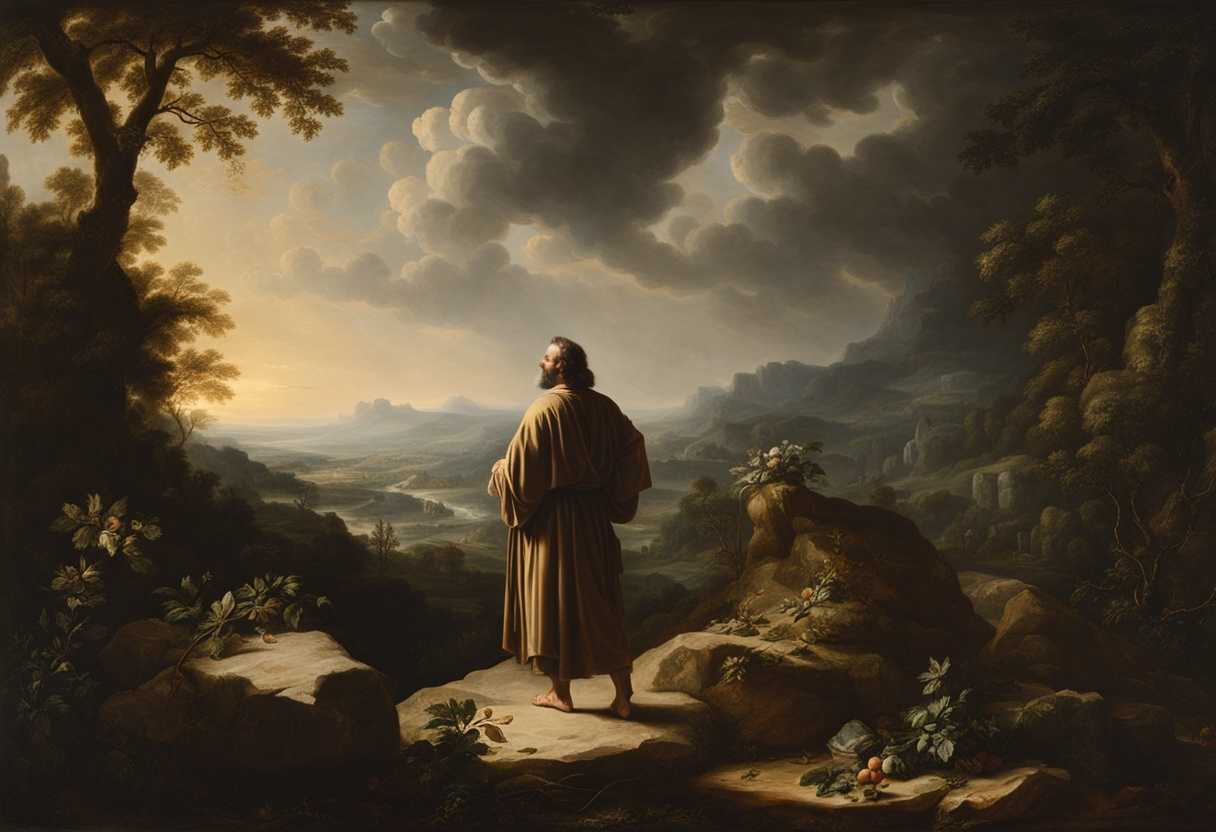
The phrase “a voice crying in the wilderness” refers to a messenger or prophet who calls people to repentance and prepares the way for God’s revelation or action. It is famously associated with John the Baptist, who preached in the wilderness as described in Isaiah 40:3 and fulfilled in the New Testament (Matthew 3:3).
Scripture
1 Comfort, comfort my people, says your God.
2 Speak tenderly to Jerusalem,
and cry to her
that her warfare is ended,
that her iniquity is pardoned,
that she has received from the Lord’s hand
double for all her sins.
3 A voice cries: “In the wilderness prepare the way of the Lord; make straight in the desert a highway for our God.
4 Every valley shall be lifted up,
and every mountain and hill be made low;
the uneven ground shall become level,
and the rough places a plain.
5 And the glory of the Lord shall be revealed, and all flesh shall see it together, for the mouth of the Lord has spoken.”
“Voice Crying in the Wilderness” Meaning
The phrase “a voice crying in the wilderness” has profound theological significance, encapsulating the idea of divine preparation and the urgent call to repentance. Originating in Isaiah 40:3, where it states, “A voice cries: In the wilderness prepare the way of the Lord; make straight in the desert a highway for our God,” this imagery emphasizes the role of a forerunner heralding significant spiritual awakening. John’s ministry, as detailed in the New Testament, particularly in Matthew 3:3, explicitly identifies him as the fulfillment of this prophecy, indicating not only a physical location of his preaching but also a metaphorical wilderness that represents spiritual desolation. John’s call to repent “for the kingdom of heaven has come near” (Matthew 3:2) signifies an urgent, transformative message meant to awaken a complacent society.
Beyond its immediate context, this motif resonates with the broader narrative of the Bible, illustrating God’s continuous pursuit of His people even in the bleakest of circumstances. It signifies the contrast between spiritual barrenness and the flourishing promise of God’s presence. Further, the wilderness itself serves as a powerful symbol of both trial and revelation, where divine truths emerge amidst adversity. The voice in the wilderness beckons individuals to reflect on their lives, urging repentance as a pathway to experiencing God’s grace and forgiveness. This theme not only defines John’s prophetic role but echoes through the scriptures, calling believers today to be vigilant and responsive to God’s beckoning in their own lives, challenging them to navigate their personal wildernesses with hope and resilience.
The concept of “a voice crying in the wilderness” extends beyond the ministry of John the Baptist, permeating the overarching biblical narrative as a representation of God’s persistent communication with humanity. It highlights moments when divine intervention pierces through human silence and chaos, often emerging from places of desolation or despair. Throughout scripture, wilderness often serves as a backdrop for transformative encounters with God, where prophets and leaders receive guidance and revelation. For instance, the calling of Moses from the burning bush while he tended his flock in the wilderness provides a profound example of how divine messages arise from seemingly desolate settings, leading to monumental shifts in the trajectory of God’s people.
Similarly, the wilderness functions as a place for introspection and renewal, where the noise of worldly distractions is stripped away, allowing for clarity and deep spiritual communion. The experiences of figures such as Elijah, who fled into the wilderness after his confrontation with Jezebel, demonstrate how divine voices often come to individuals who find themselves exhausted and disheartened. In these moments, the wilderness becomes a sanctuary for receiving God’s whispers of encouragement, restoration, and purpose. Ultimately, the theme of a voice crying in the wilderness invites believers to embrace their own wilderness experiences as opportunities for growth, calling them to listen actively for God’s voice and to prepare their hearts for the transformative kingdom He offers, reinforcing the promise that even in solitude, God’s presence is an ever-echoing reality.
The Call for Repentance and Preparation
The phrase “voice crying in the wilderness” symbolizes a call to repentance and spiritual preparation. It emphasizes the need for individuals to turn away from their sins and prepare their hearts for divine intervention or the coming of a significant figure. This call often resonates with the idea that true transformation requires a period of introspection and acknowledgment of one’s shortcomings, urging believers to seek a deeper relationship with the divine.
The Role of the Prophet
This expression also highlights the role of the prophet as a messenger of God. The wilderness represents a place of desolation and isolation, where the prophet’s voice stands out against the silence of the world. It signifies the importance of prophetic voices that challenge societal norms and call for a return to faithfulness. The wilderness serves as a backdrop for the prophetic mission, illustrating that even in the most barren places, God’s message can be proclaimed and heard.
The Theme of Hope Amidst Despair
Additionally, “voice crying in the wilderness” conveys a theme of hope amidst despair. The wilderness often symbolizes a place of struggle, uncertainty, and hardship. However, the voice that cries out signifies that even in the darkest times, there is a promise of hope and redemption. This message reassures believers that God is present and active, even when circumstances seem bleak, and that a new beginning is possible through faith and perseverance.
How to Embrace Truth for a Stronger Faith
Embracing truth is a transformative journey that can significantly strengthen your faith as a Christian. Start by immersing yourself in Scripture, allowing the Word of God to illuminate your understanding and guide your actions. Reflect on passages that resonate with you, and don’t shy away from asking tough questions—God welcomes our inquiries and desires a deep, authentic relationship with us. Surround yourself with a community of believers who encourage honesty and vulnerability, as sharing your struggles and insights can lead to profound growth. Remember, truth isn’t always comfortable; it may challenge your beliefs or reveal areas in need of change. Yet, as you confront these truths with an open heart, you’ll find that they lead you closer to Christ, who is the ultimate embodiment of truth. Embrace this journey with patience and prayer, trusting that each step taken in truth will fortify your faith and deepen your connection to God.
Bible References to “Voice Crying in the Wilderness”:
Matthew 3:1-6: 1 In those days John the Baptist came preaching in the wilderness of Judea,
2 “Repent, for the kingdom of heaven is at hand.”
3 For this is he who was spoken of by the prophet Isaiah when he said, “The voice of one crying in the wilderness: ‘Prepare the way of the Lord; make his paths straight.’”
4 Now John wore a garment of camel’s hair and a leather belt around his waist, and his food was locusts and wild honey.
5 Then Jerusalem and all Judea and all the region about the Jordan were going out to him,
6 and they were baptized by him in the river Jordan, confessing their sins.
Mark 1:1-5: 1 The beginning of the gospel of Jesus Christ, the Son of God.
2 As it is written in Isaiah the prophet, “Behold, I send my messenger before your face, who will prepare your way,”
3 “The voice of one crying in the wilderness: ‘Prepare the way of the Lord, make his paths straight,’”
4 John appeared, baptizing in the wilderness and proclaiming a baptism of repentance for the forgiveness of sins.
5 And all the country of Judea and all Jerusalem were going out to him and were being baptized by him in the river Jordan, confessing their sins.
Luke 3:1-6: 1 In the fifteenth year of the reign of Tiberius Caesar, Pontius Pilate being governor of Judea, and Herod being tetrarch of Galilee, and his brother Philip tetrarch of the region of Ituraea and Trachonitis, and Lysanias tetrarch of Abilene,
3 In the high priesthood of Annas and Caiaphas, the word of God came to John the son of Zechariah in the wilderness.
3 And he went into all the region around the Jordan, proclaiming a baptism of repentance for the forgiveness of sins.
3 As it is written in the book of the words of Isaiah the prophet, “The voice of one crying in the wilderness: ‘Prepare the way of the Lord, make his paths straight.
5 Every valley shall be filled, and every mountain and hill shall be made low, and the crooked shall become straight, and the rough places shall become level ways,
3 and all flesh shall see the salvation of God.
John 1:19-23: 19 And this is the testimony of John, when the Jews sent priests and Levites from Jerusalem to ask him, “Who are you?”
20 He confessed, and did not deny, but confessed, “I am not the Christ.”
21 And they asked him, “What then? Are you Elijah?” He said, “I am not.” “Are you the Prophet?” And he answered, “No.”
22 So they said to him, “Who are you? We need to give an answer to those who sent us. What do you say about yourself?”
23 He said, “I am the voice of one crying out in the wilderness, ‘Make straight the way of the Lord,’ as the prophet Isaiah said.”

Reverend Michael Johnson is an experienced Church Minister with a profound expertise in spirituality and guidance. With a serene presence and a compassionate heart, he has faithfully served his congregation for over 20 years, leading them on a spiritual journey towards inner peace and enlightenment. Reverend Johnson’s extensive knowledge of religious philosophies and profound understanding of human nature have made him a trusted confidant and mentor to many, as he seamlessly weaves his profound wisdom into life teachings. Reverend Johnson’s calming demeanor and empathetic nature continue to uplift and heal souls, nurturing a sense of unity and tranquility within his community.