
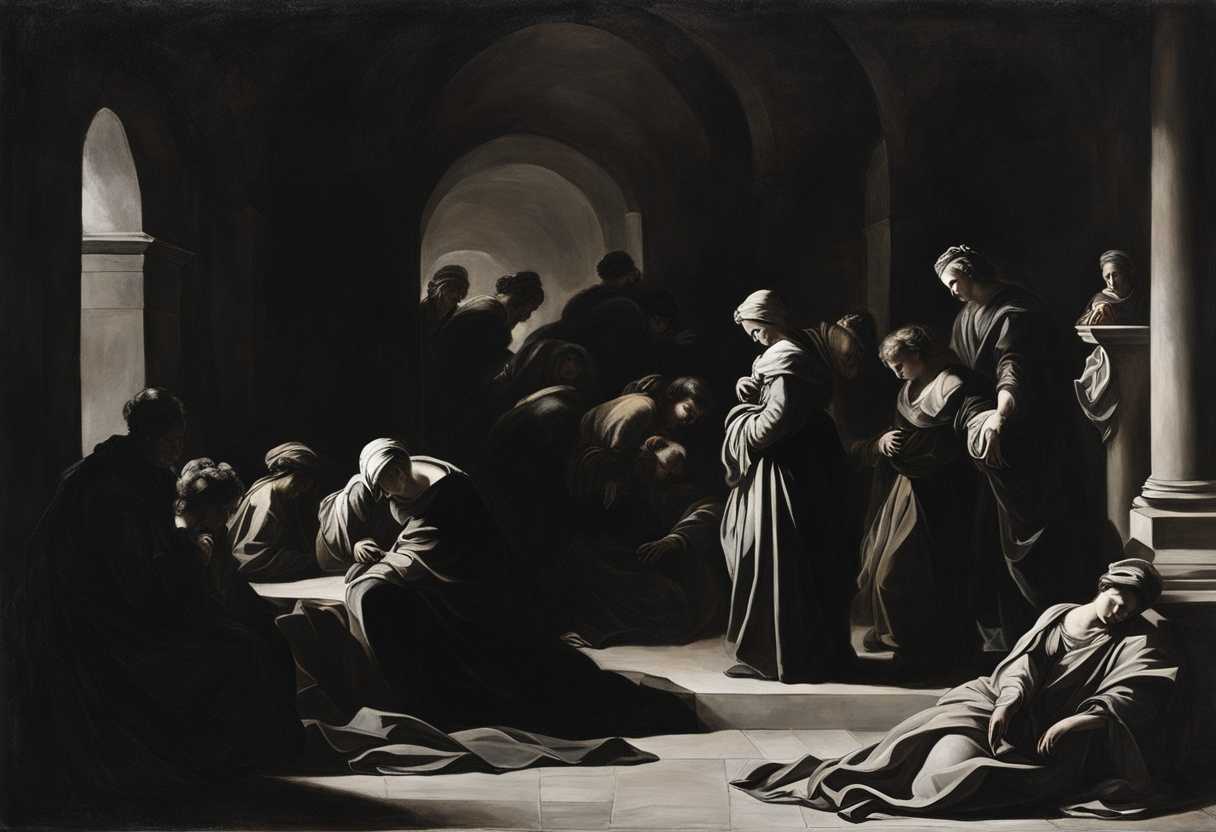
In the Bible, the color black often symbolizes mourning, sin, and judgment. It is frequently associated with darkness and despair, contrasting with light and purity, as seen in passages such as Lamentations 5:10 and Revelation 6:5-6.
Scripture
31 Then they took Joseph’s robe and slaughtered a goat and dipped the robe in the blood.
32 And they sent the robe of many colors and brought it to their father and said, “This we have found; please identify whether it is your son’s robe or not.”
33 And he identified it and said, “It is my son’s robe. A fierce animal has devoured him. Joseph is without doubt torn to pieces.”
34 Then Jacob tore his garments and put sackcloth on his loins and mourned for his son many days.
35 All his sons and all his daughters rose up to comfort him, but he refused to be comforted and said, “No, I shall go down to Sheol to my son, mourning.” Thus his father wept for him.
Biblical Significance of the Color Black
The color black in the Bible carries a profound significance, often representing themes of mourning, sin, and divine judgment. In Lamentations 5:10, the author laments, “Our skin is hot as an oven because of the fever of famine,” evoking a vivid imagery of suffering and loss, where darkness reflects the despair of the people. This association with mourning can be further seen in scenarios where individuals or communities undergo profound grief or repentance, reinforcing the notion that black is indicative of suffering, vulnerability, and the absence of God’s favor. Moreover, in Job 30:30, Job describes his sorrow with the phrase “my skin is black upon me,” emphasizing the physical manifestation of grief, which extends beyond mere emotional pain.
In contrast, the Book of Revelation draws upon black to symbolize judgment and the harbingers of divine wrath. Revelations 6:5-6 describes a black horse whose rider carries scales, indicating a time of scarcity and economic disparity—an emblem of God’s judgment upon a sinful world. This contrasts sharply with the imagery of light and purity often associated with God and righteousness. Black serves as a powerful visual cue to the human condition in the face of sin and divine justice, revealing a consistent biblical theme: darkness is not merely a visual absence of light but a state of being that signifies a separation from God’s presence. Thus, the use of black in biblical literature evokes a deep understanding of the moral and spiritual complexities inherent in humanity’s relationship with the divine.
Beyond the expressions of mourning and judgment, the color black in the Bible also serves as a symbol of chaos and the unknown. In Genesis, during the creation narrative, the earth is described as formless and void, covered in darkness before God’s command to bring light. This initial state of blackness reflects not only absence but potential for disorder and the tumultuous beginnings of the cosmos, setting the stage for the divine order that follows. This theme of chaos can be further associated with the Black Sea in certain Old Testament accounts; regions characterized by darker waters often suggest danger or the potential for calamity, reinforcing the notion of a world at odds with divine intention.
Additionally, the color black can denote the reality of spiritual darkness, where individuals or entire nations fall away from the divine path. In prophetic texts, symbols such as blackness can evoke images of moral decay resulting from idolatry or injustice, placing a stark contrast against God’s intended light and righteousness. The imagery serves as a warning against the consequences of straying from divine commandments. Thus, throughout biblical narratives, black threads through the tapestry of human experience—representing not just sorrow and judgment, but also invoking the early chaotic state of creation and the deeper spiritual implications of sin and rebellion that separate humanity from God’s grace and truth. Such representations challenge believers to recognize and confront the darker aspects of their existence while striving toward the light that is found in God’s redemptive promise.
Symbol of Mourning and Grief
In the Bible, the color black often represents mourning and grief. It is associated with times of sorrow, loss, and despair. This symbolism reflects the emotional state of individuals or communities facing tragedy, emphasizing the weight of their suffering and the darkness that envelops them during such times. The use of black in these contexts serves to highlight the seriousness of the situation and the need for comfort and hope amidst despair.
Representation of Sin and Evil
Black is also used to symbolize sin, evil, and darkness in a moral and spiritual sense. It contrasts with light, which often represents purity, goodness, and divine presence. This dichotomy underscores the struggle between good and evil, with black embodying the consequences of sin and the separation from God. The presence of black in biblical narratives can serve as a reminder of the need for redemption and the transformative power of faith.
Indication of Judgment and Desolation
In certain biblical passages, black signifies judgment and desolation. It can represent the consequences of turning away from God or the impending judgment that may come as a result of disobedience. This use of black serves as a warning to individuals and nations about the seriousness of their actions and the potential for divine retribution. It emphasizes the importance of repentance and the need to seek restoration with God.
How to Embrace Light and Overcome Spiritual Darkness
Embracing light and overcoming spiritual darkness is a journey that requires intentionality and faith. Start by immersing yourself in Scripture, allowing the Word of God to illuminate your path and dispel the shadows that may cloud your mind and heart. Surround yourself with a community of believers who can encourage and uplift you, reminding you of the hope and love found in Christ. Prayer is your lifeline—use it to seek guidance, confess your struggles, and invite the Holy Spirit to fill you with peace and clarity. Remember, darkness may feel overwhelming at times, but as John 1:5 reminds us, “The light shines in the darkness, and the darkness has not overcome it.” Trust that with each step you take towards the light, you are not only overcoming your own struggles but also reflecting the love of Christ to those around you. Embrace this journey with an open heart, and watch as the light transforms your life and the lives of others.
Bible References to the Color Black:
Exodus 10:21-23: 21 Then the Lord said to Moses, “Stretch out your hand toward heaven, that there may be darkness over the land of Egypt, a darkness to be felt.”
22 So Moses stretched out his hand toward heaven, and there was pitch darkness in all the land of Egypt three days.
23 They did not see one another, nor did anyone rise from his place for three days, but all the people of Israel had light where they lived.
Job 30:26-31: 26 But when I hoped for good, evil came,
and when I waited for light, darkness came.
27 My inward parts are in turmoil and never still;
days of affliction come to meet me.
28 I go about darkened, but not by the sun; I stand up in the assembly and cry for help.
29 “I am a brother to jackals
and a companion to ostriches.
30 “My skin turns black and falls from me,
and my bones burn with heat.
31 My lyre is turned to mourning, and my pipe to the voice of those who weep.
Psalm 107:10-14: 10 Some sat in darkness and in the shadow of death, prisoners in affliction and in irons,
11 For they had rebelled against the words of God, and spurned the counsel of the Most High.
12 He brought down their hearts with hard labor; they fell down, and there was none to help.
13 Then they cried to the Lord in their trouble, and he delivered them from their distress.
14 He brought them out of darkness and the shadow of death, and burst their bonds apart.
Isaiah 50:3-4: 3 I clothe the heavens with blackness
and make sackcloth their covering.”
4 The Lord God has given me the tongue of those who are taught, that I may know how to sustain with a word him who is weary. Morning by morning he awakens; he awakens my ear to hear as those who are taught.
Jeremiah 4:27-28: 27 For thus says the Lord, “The whole land shall be a desolation; yet I will not make a full end.
28 “For this the earth shall mourn, and the heavens above be dark; for I have spoken; I have purposed; I have not relented, nor will I turn back.”
Lamentations 4:7-8: 7 Her princes were purer than snow,
whiter than milk;
their bodies were more ruddy than coral,
the beauty of their form was like sapphire.
8 Now their face is blacker than soot;
they are not recognized in the streets;
their skin has shriveled on their bones;
it has become as dry as wood.
Ezekiel 32:7-8: 7 When I blot you out, I will cover the heavens and make their stars dark; I will cover the sun with a cloud, and the moon shall not give its light.
8 All the bright lights of heaven will I make dark over you, and put darkness on your land, declares the Lord God.
Joel 2:1-2: 1 Blow a trumpet in Zion;
sound an alarm on my holy mountain!
Let all the inhabitants of the land tremble,
for the day of the Lord is coming;
2 a day of darkness and gloom,
a day of clouds and thick darkness!
Like blackness there is spread upon the mountains
a great and powerful people;
their like has never been before,
nor will be again after them
through the years of all generations.
Amos 8:9-10: 9 “And on that day,” declares the Lord God, “I will make the sun go down at noon and darken the earth in broad daylight.”
10 I will turn your feasts into mourning
and all your songs into lamentation;
I will bring sackcloth on every waist
and baldness on every head;
I will make it like the mourning for an only son
and the end of it like a bitter day.
Zephaniah 1:14-15: 14 The great day of the Lord is near, near and hastening fast; the sound of the day of the Lord is bitter; the mighty man cries aloud there.
15 A day of wrath is that day,
a day of distress and anguish,
a day of ruin and devastation,
a day of darkness and gloom,
a day of clouds and thick darkness,
Matthew 27:45-46: 46 And about the ninth hour Jesus cried out with a loud voice, saying, “Eli, Eli, lema sabachthani?” that is, “My God, my God, why have you forsaken me?”
46 And about the ninth hour Jesus cried out with a loud voice, saying, “Eli, Eli, lema sabachthani?” that is, “My God, my God, why have you forsaken me?”
Revelation 6:12-13: 12 When he opened the sixth seal, I looked, and behold, there was a great earthquake, and the sun became black as sackcloth, the full moon became like blood,
13 and the stars of the sky fell to the earth as the fig tree sheds its winter fruit when shaken by a gale.

Reverend Ogunlade is a seasoned Church Minister with over three decades of experience in guiding and nurturing congregations. With profound wisdom and a serene approach, Reverend Ogunlade has carried out various pastoral duties, including delivering uplifting sermons, conducting religious ceremonies, and offering sage counsel to individuals seeking spiritual guidance. Their commitment to fostering harmony and righteousness within their community is exemplified through their compassionate nature, making them a beloved and trusted figure among the congregation.