
The Family of God in the Bible refers to the collective body of believers who are spiritually united through their faith in Jesus Christ, becoming children of God (John 1:12) and co-heirs with Christ (Romans 8:17). It emphasizes a relational bond among Christians, marked by love and mutual support, as seen in passages like Ephesians 2:19, which describes believers as members of God’s household.
Scripture
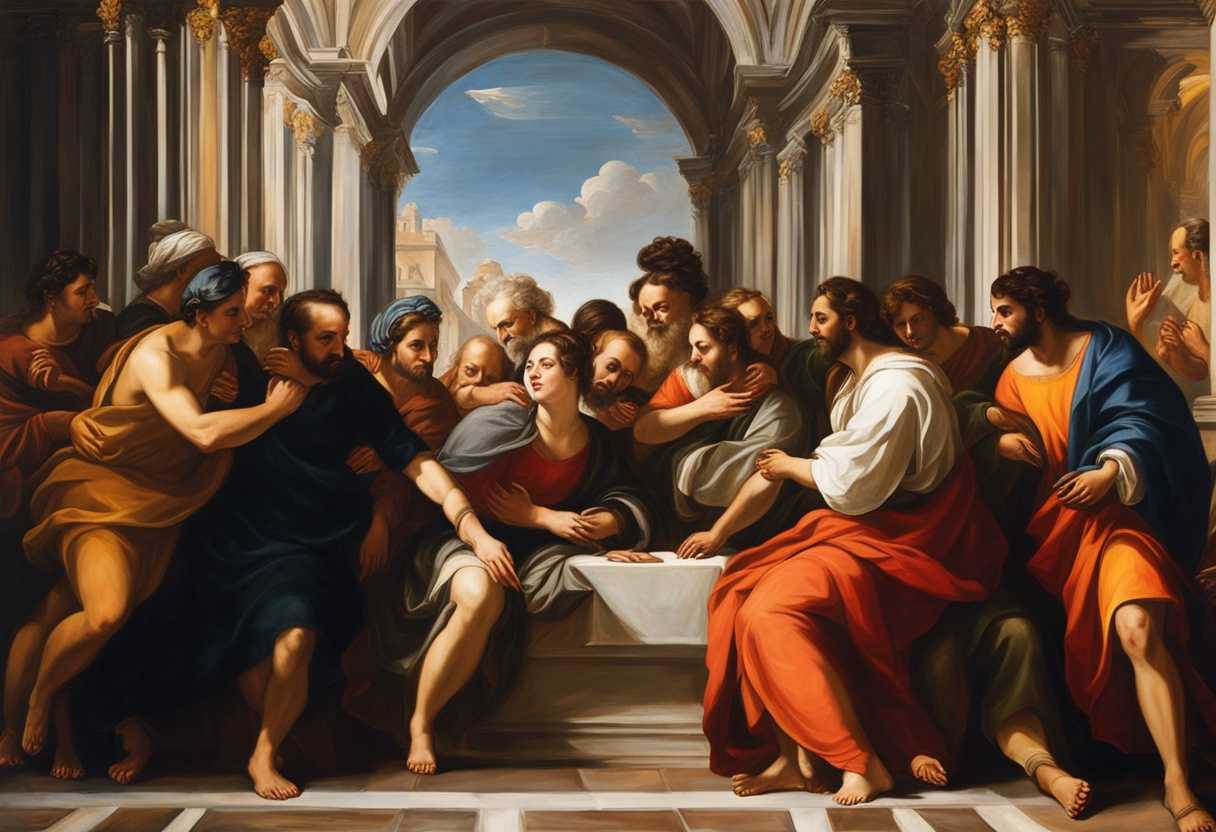
46 While he was still speaking to the people, behold, his mother and his brothers stood outside, asking to speak to him.
47 Someone told him, “Your mother and your brothers are standing outside, asking to speak to you.”
48 But he replied to the man who told him, “Who is my mother, and who are my brothers?”
49 And stretching out his hand toward his disciples, he said, “Here are my mother and my brothers!
50 For whoever does the will of my Father in heaven is my brother and sister and mother.”
Definition of the Family of God
The concept of the Family of God in the Bible encapsulates a profound spiritual relationship centered around faith in Jesus Christ, which transforms believers into children of God. This idea is poignantly expressed in John 1:12, where accepting Christ grants the right to become children of God, highlighting the intimate, familial ties established through faith. Furthermore, Romans 8:17 elaborates on this relationship by affirming that believers are co-heirs with Christ, underscoring not only individual identity but also shared inheritance and responsibility within the family unit. This theme reinforces the notion that faith in Christ brings believers into a new lineage, one that transcends earthly divisions and affiliations.
Moreover, the relational dimension of the Family of God is echoed in Ephesians 2:19, where the apostle Paul describes believers as fellow citizens with God’s people and members of His household. This imagery signifies a strong communal bond characterized by love, mutual support, and encouragement, as believers navigate their spiritual journeys together. The broader theological implications of this familial relationship extend to the call for unity among believers (Colossians 3:14), suggesting that love is the defining trait of this divine family. Ultimately, the Family of God invites Christians to reflect the love and grace of their Heavenly Father by extending this relational paradigm to one another, creating a vibrant and inclusive community that mirrors God’s character.
In addition to the passages previously mentioned, the entire narrative of Scripture reinforces the concept of the Family of God through various imagery and teachings. For instance, in Galatians 4:4-7, the apostle Paul articulates how God sent His Son to redeem those under the law so they might receive adoption as sons. This pivotal act of adoption is significant, demonstrating that God intentionally invites believers into His family, thereby establishing their identity not merely as servants but as beloved children with direct access to the Father. The implications of this status include the gift of the Holy Spirit, who confirms this familial identity and enables believers to cry out “Abba, Father,” accentuating the closeness they now share with God.
Additionally, the New Testament uses the metaphor of the Church as the Body of Christ to further illustrate the dynamics within the Family of God. In 1 Corinthians 12:12-27, the Apostle Paul elaborates on how every believer, akin to different parts of a human body, plays a crucial role in the collective functioning of the family. This imagery emphasizes the interdependence and unity among believers, affirming that while each may have distinct gifts and roles, all are integral members of one family that works together for the common good. Such relationships encourage believers to embrace vulnerability, accountability, and love, fostering a supportive environment that reflects the heart of God. This interconnectedness within the Family of God not only enriches individual faith journeys but also serves as a testament to God’s transformative power in a world that often promotes division.
Spiritual Kinship and Belonging
The Family of God signifies a profound spiritual kinship among believers, transcending biological ties. This concept emphasizes that all who accept faith in God are united as siblings in Christ, fostering a sense of belonging and community. This spiritual family is characterized by love, support, and mutual responsibility, reflecting the nature of God as a loving Father who desires His children to live in harmony and unity.
Inclusion and Diversity
The Family of God encompasses individuals from diverse backgrounds, cultures, and walks of life. This inclusivity highlights the universal call of the Gospel, breaking down barriers of ethnicity, social status, and gender. The family is not limited to a specific group but is open to all who seek a relationship with God, illustrating the expansive nature of divine love and the invitation to partake in a shared spiritual heritage.
Purpose and Mission
Being part of the Family of God carries a sense of purpose and mission. Members are called to reflect God’s character and to actively participate in His work on earth. This includes serving one another, spreading the message of love and redemption, and working towards justice and compassion in the world. The family dynamic encourages believers to use their gifts and talents for the greater good, contributing to the collective mission of advancing God’s kingdom.
How to Foster Community and Love in Faith
Fostering community and love in faith is truly at the heart of what it means to be a Christian. It begins with the simple act of opening your heart to others, just as Christ opened His heart to us. Start by engaging with your local church or faith group—attend services, participate in small groups, or volunteer for community outreach. These connections not only deepen your understanding of God’s love but also create a support system where you can share joys and burdens alike. Remember, love is an action; it’s about showing kindness, offering a listening ear, and being present for those around you. As you cultivate these relationships, you’ll find that your faith grows richer and more vibrant, reflecting the love of Christ in every interaction. So, take that first step—reach out, connect, and let the love of God flow through you to others.
Bible References to the Family of God:
John 1:12-13: 12 But to all who did receive him, who believed in his name, he gave the right to become children of God,
13 who were born, not of blood nor of the will of the flesh nor of the will of man, but of God.
Romans 8:14-17: 14 For all who are led by the Spirit of God are sons of God.
15 For you did not receive the spirit of slavery to fall back into fear, but you have received the Spirit of adoption as sons, by whom we cry, “Abba! Father!”
16 The Spirit himself bears witness with our spirit that we are children of God,
17 and if children, then heirs—heirs of God and fellow heirs with Christ, provided we suffer with him in order that we may also be glorified with him.
Ephesians 2:19-22: 19 So then you are no longer strangers and aliens, but you are fellow citizens with the saints and members of the household of God,
20 built on the foundation of the apostles and prophets, Christ Jesus himself being the cornerstone,
21 in whom the whole structure, being joined together, grows into a holy temple in the Lord.
22 In him you also are being built together into a dwelling place for God by the Spirit.
Galatians 3:26-29: 26 for in Christ Jesus you are all sons of God, through faith.
27 For as many of you as were baptized into Christ have put on Christ.
28 There is neither Jew nor Greek, there is neither slave nor free, there is no male and female, for you are all one in Christ Jesus.
29 And if you are Christ’s, then you are Abraham’s offspring, heirs according to promise.
1 John 3:1-2: 1 See what kind of love the Father has given to us, that we should be called children of God; and so we are. The reason why the world does not know us is that it did not know him.
2 Beloved, we are God’s children now, and what we will be has not yet appeared; but we know that when he appears we shall be like him, because we shall see him as he is.
Hebrews 2:10-13: 10 For it was fitting that he, for whom and by whom all things exist, in bringing many sons to glory, should make the founder of their salvation perfect through suffering.
11 For he who sanctifies and those who are sanctified all have one source. That is why he is not ashamed to call them brothers,
12 saying, “I will tell of your name to my brothers; in the midst of the congregation I will sing your praise.”
13 And again, “I will put my trust in him.” And again, “Behold, I and the children God has given me.”
1 Peter 2:9-10: 9 But you are a chosen race, a royal priesthood, a holy nation, a people for his own possession, that you may proclaim the excellencies of him who called you out of darkness into his marvelous light.
10 Once you were not a people, but now you are God’s people; once you had not received mercy, but now you have received mercy.
Romans 9:6-8: 6 But it is not as though the word of God has failed. For not all who are descended from Israel belong to Israel,
7 and not all are children of Abraham because they are his offspring, but “Through Isaac shall your offspring be named.”
8 This means that it is not the children of the flesh who are the children of God, but the children of the promise are counted as offspring.
Ephesians 3:14-15: 14 For this reason I bow my knees before the Father,
15 from whom every family in heaven and on earth is named,
1 Corinthians 12:12-14: 12 For just as the body is one and has many members, and all the members of the body, though many, are one body, so it is with Christ.
13 For in one Spirit we were all baptized into one body—Jews or Greeks, slaves or free—and all were made to drink of one Spirit.
14 For the body does not consist of one member but of many.
Galatians 4:4-7: 4 But when the fullness of time had come, God sent forth his Son, born of woman, born under the law,
5 to redeem those who were under the law, so that we might receive adoption as sons.
6 And because you are sons, God has sent the Spirit of his Son into our hearts, crying, “Abba! Father!”
7 So you are no longer a slave, but a son, and if a son, then an heir through God.
2 Corinthians 6:16-18: 16 What agreement has the temple of God with idols? For we are the temple of the living God; as God said, “I will make my dwelling among them and walk among them, and I will be their God, and they shall be my people.”
17 Therefore go out from their midst, and be separate from them, says the Lord, and touch no unclean thing; then I will welcome you,
18 and I will be a father to you, and you shall be sons and daughters to me, says the Lord Almighty.”
John 17:20-23: 20 “I do not ask for these only, but also for those who will believe in me through their word,
21 that they may all be one, just as you, Father, are in me, and I in you, that they also may be in us, so that the world may believe that you have sent me.
22 The glory that you have given me I have given to them, that they may be one even as we are one,
23 I in them and you in me, that they may become perfectly one, so that the world may know that you sent me and loved them even as you loved me.
Colossians 1:12-14: 12 giving thanks to the Father, who has qualified you to share in the inheritance of the saints in light.
13 He has delivered us from the domain of darkness and transferred us to the kingdom of his beloved Son,
14 in whom we have redemption, the forgiveness of sins.

Rev. François Dupont is a dedicated church minister with a wealth of experience in serving spiritual communities. With a calm and serene demeanor, he has been devoted to sharing the message of love, compassion, and tolerance for over two decades. Through his thoughtful sermons, compassionate counseling, and unwavering support, Rev. Dupont has touched the lives of countless individuals, allowing them to find solace and strength during difficult times. His serene presence and deep understanding of the human condition make him a trusted guide for those seeking spiritual nourishment and guidance.