
In the Bible, “howl” often signifies a cry of grief, lamentation, or distress, reflecting deep sorrow or warning of impending judgment (e.g., Isaiah 13:6). It can also be associated with the mourning of nations or cities facing destruction.
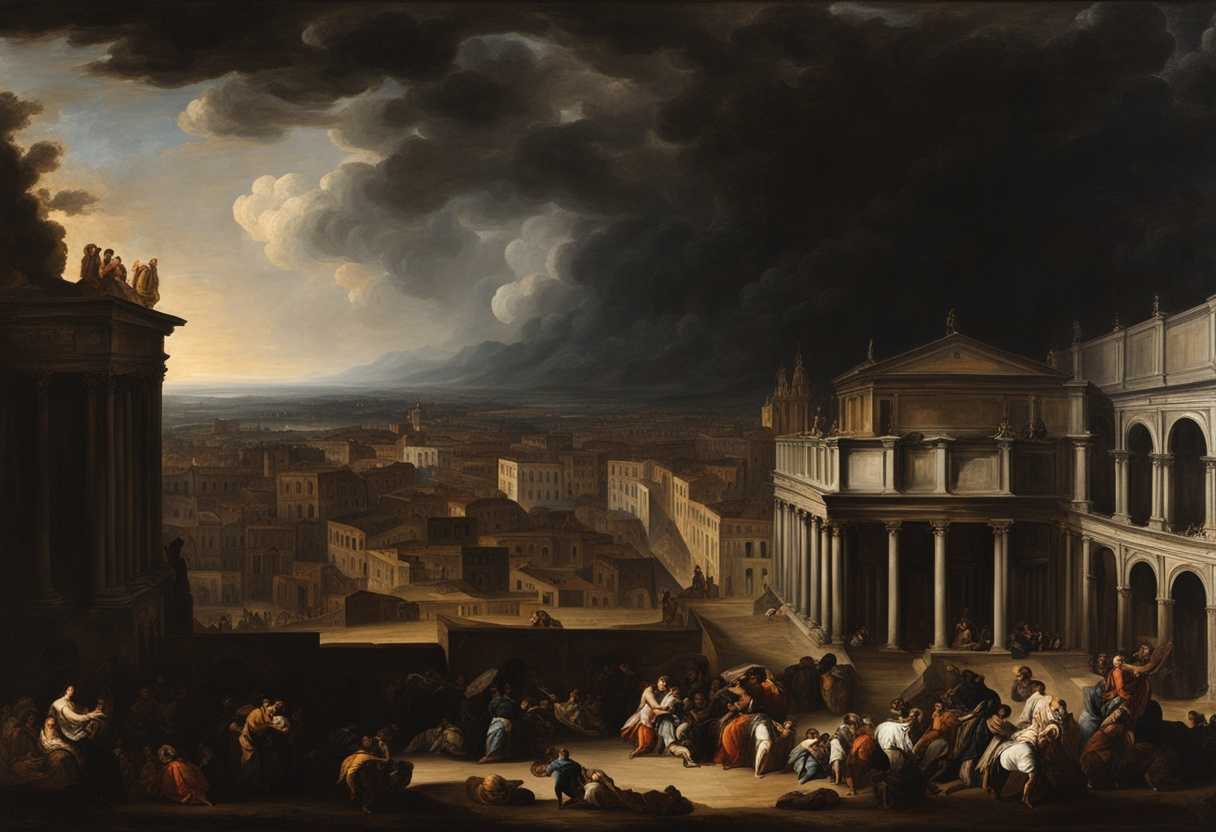
Scripture
6 Wail, for the day of the Lord is near; as destruction from the Almighty it will come!
7 Therefore all hands will be feeble,
and every human heart will melt.
13 I will punish the world for its evil,
and the wicked for their iniquity;
I will put an end to the pomp of the arrogant,
and lay low the pompous pride of the ruthless.
9 Behold, the day of the Lord comes, cruel, with wrath and fierce anger, to make the land a desolation and to destroy its sinners from it.
10 For the stars of the heavens and their constellations will not give their light; the sun will be dark at its rising, and the moon will not shed its light.
11 I will punish the world for its evil,
and the wicked for their iniquity;
I will put an end to the pomp of the arrogant,
and lay low the pompous pride of the ruthless.
12 I will make people more rare than fine gold,
and mankind than the gold of Ophir.
13 Therefore I will make the heavens tremble, and the earth will be shaken out of its place, at the wrath of the Lord of hosts in the day of his fierce anger.
Biblical Significance of Howl
The term “howl” in the Bible conveys profound emotional resonance, typically associated with expressions of mourning, lamentation, or distress. In passages such as Isaiah 13:6, “Howl, for the day of the Lord is near; it will come as destruction from the Almighty,” the word serves as an urgent call to recognize the severity of impending judgment. This sense of howling captures the essence of human despair in the face of divine retribution, urging both individuals and communities to reflect upon their actions and their consequences. The usage here not only denotes personal grief but acts as a communal lament, underscoring that the impending trials affect entire nations.
Moreover, this concept of howling extends beyond mere sorrow; it is often a wake-up call to repentance and restoration. For example, in Joel 1:5, “Awake, you drunkards, and weep; and wail, all you drinkers of wine, because of the new wine, for it has been cut off from your mouth,” the “howl” illustrates the gravity of the situation and the urgency with which the people should approach their fate. The theme of howling serves to remind readers that their choices carry weight and that times of trial can lead to both lamentation and opportunities for turning back to God. Thus, the biblical concept of howling encapsulates a dynamic interplay of sorrow, urgency, and the call to repentance, revealing the critical importance of aligning one’s life with divine will amidst trials and tribulations.
Continuing the theme of howling in the Bible, it can also be interpreted as a potent symbol of turmoil and loss in the broader context of community and civilization. The howl signifies not only individual grief but also collective suffering—an expression of the pain experienced by a society facing calamities or divine judgment. This communal aspect is visible in various texts where the outcry of the people echoes through the land, representing shared anguish over moral decay or loss. Such howling invites a deeper contemplation of the stakes involved when society strays from the path of righteousness, compelling members to unite in their cries for mercy and reflection.
Additionally, the phenomenon of howling can serve as a prophetic warning, underscoring the necessity for vigilance and spiritual awakening. It invites those who hear it to engage with their circumstances actively, acknowledging the signs of the times and the urgent need for a collective return to fidelity with God’s teachings. It implies an awareness of the cosmic order where human actions resonate within the divine narrative, urging societies to remember the futility of their pursuits in contrast to God’s eternal purposes. In this light, howling transcends mere lamentation; it becomes a powerful catalyst for transformation—an invitation to experience renewal that can emerge from the depths of sorrow. As such, the biblical concept of howling emerges as a multifaceted motif, encapsulating the intricate relationship between despair, community, and the potential for redemption.
Expression of Grief and Mourning
In the Bible, the act of howling often signifies deep sorrow and mourning. It is a visceral expression of pain, reflecting the emotional turmoil that accompanies loss or tragedy. This form of lamentation can be seen in various contexts, where individuals or communities express their anguish over death, destruction, or divine judgment. The howl serves as a powerful reminder of human vulnerability and the need for comfort in times of despair.
Warning of Impending Judgment
Howling can also symbolize a warning of impending judgment or calamity. In prophetic literature, the sound of howling may be associated with the announcement of disaster or the consequences of sin. It serves as a call to repentance, urging people to recognize the seriousness of their actions and the potential for divine retribution. This aspect of howling emphasizes the urgency of heeding spiritual warnings and the need for a return to righteousness.
Symbol of Desolation and Loss
Additionally, howling is often linked to themes of desolation and loss, particularly in relation to cities or nations that have fallen into ruin. The sound of howling can evoke images of abandoned places, where once-thriving communities now lie in waste. This imagery serves to illustrate the consequences of turning away from God and the resulting emptiness that follows. It highlights the stark reality of spiritual and physical desolation, urging reflection on the importance of faith and community.
How to Embrace Growth Through Sorrow and Lamentation
Embracing growth through sorrow and lamentation is a profound journey that can deepen your faith and understanding of God’s love. When we face trials and heartache, it’s easy to feel isolated or abandoned, but the Bible reminds us that lamentation is not a sign of weakness; rather, it’s a powerful expression of our humanity and our relationship with God. In Psalm 34:18, we are reassured that “The Lord is close to the brokenhearted and saves those who are crushed in spirit.” Allow yourself to grieve and express your pain honestly in prayer, knowing that God is listening and present in your suffering. As you navigate through these difficult emotions, seek to understand what God might be teaching you in this season. Reflect on how your sorrow can lead to empathy for others, a deeper reliance on God, and ultimately, a more profound joy when you emerge from the valley. Remember, growth often comes from the most challenging experiences, and through lamentation, we can find a pathway to healing and transformation.
Bible References to the Meaning of Howl:
Isaiah 15:2-4: 2 He has gone up to the temple, and to Dibon, to the high places to weep; over Nebo and over Medeba Moab wails. On every head is baldness; every beard is shorn;
3 in their streets they wear sackcloth;
on the housetops and in their squares
everyone wails and melts in tears.
4 And Heshbon and Elealeh cry out; their voice is heard as far as Jahaz; therefore the armed men of Moab cry aloud; his soul trembles.
Isaiah 16:7-11: 7 Therefore let Moab wail for Moab,
let everyone wail.
Mourn, utterly stricken,
for the raisin cakes of Kir-hareseth.
8 For the fields of Heshbon languish, and the vine of Sibmah; the lords of the nations have struck down its branches, which reached to Jazer and strayed to the desert; its shoots spread abroad and passed over the sea.
9 Therefore I weep with the weeping of Jazer for the vine of Sibmah; I drench you with my tears, O Heshbon and Elealeh; for over your summer fruit and your harvest the shout has ceased.
10 And joy and gladness are taken away from the fruitful field, and in the vineyards no songs are sung, no cheers are raised; no treader treads out wine in the presses; I have put an end to the shouting.
11 Therefore my inner parts moan like a lyre for Moab, and my inmost self for Kir-hareseth.
Isaiah 23:1-4: 1 The oracle concerning Tyre. Wail, O ships of Tarshish, for Tyre is laid waste, without house or harbor! From the land of Cyprus it is revealed to them.
2 Be still, O inhabitants of the coast; the merchants of Sidon, who cross the sea, have filled you.
3 And on many waters your revenue was the grain of Shihor, the harvest of the Nile was her revenue, and she became the marketplace of the nations.
4 Be ashamed, O Sidon, for the sea has spoken, the stronghold of the sea, saying: “I have neither labored nor given birth, I have neither reared young men nor brought up young women.”
Isaiah 52:5-7: 5 Now therefore what have I here,” declares the Lord, “seeing that my people are taken away for nothing? Their rulers wail,” declares the Lord, “and continually all the day my name is despised.
6 Therefore my people shall know my name. Therefore in that day they shall know that it is I who speak; here am I.
7 How beautiful upon the mountains are the feet of him who brings good news, who publishes peace, who brings good news of happiness, who publishes salvation, who says to Zion, “Your God reigns.”
Jeremiah 4:7-9: 7 A lion has gone up from his thicket, a destroyer of nations has set out; he has gone out from his place to make your land a waste; your cities will be ruins without inhabitant.
8 For this put on sackcloth, lament and wail, for the fierce anger of the Lord has not turned back from us.
9 “In that day, declares the Lord, courage shall fail both king and officials. The priests shall be appalled and the prophets astounded.”
Jeremiah 25:34-38: 34 “Wail, you shepherds, and cry out, and roll in ashes, you lords of the flock, for the days of your slaughter and dispersion have come, and you shall fall like a choice vessel.
35 “Flight shall perish from the shepherds,
and escape from the masters of the flock.”
36 A voice of the cry of the shepherds, and the wail of the lords of the flock! For the Lord is laying waste their pasture,
37 “And the peaceful folds are devastated because of the fierce anger of the Lord.
38 He has left his booth like the lion, for their land has become a waste because of the sword of the oppressor, and because of his fierce anger.”
Jeremiah 47:1-3: 1 The word of the Lord that came to Jeremiah the prophet concerning the Philistines, before Pharaoh struck down Gaza.
2 Thus says the Lord: Behold, waters are rising out of the north, and shall become an overflowing torrent; they shall overflow the land and all that fills it, the city and those who dwell in it. And the men shall cry out, and every inhabitant of the land shall wail.
3 At the noise of the stamping of the hoofs of his stallions, at the rushing of his chariots, at the rumbling of their wheels, the fathers look not back to their children, so feeble are their hands,
Ezekiel 21:6-7: 6 “As for you, son of man, groan; with breaking heart and bitter grief, groan before their eyes.
7 And when they say to you, ‘Why do you groan?’ you shall say, ‘Because of the news that it is coming. Every heart will melt, and all hands will be feeble; every spirit will faint, and all knees will be weak as water. Behold, it is coming, and it will be fulfilled,’” declares the Lord God.
Joel 1:5-13: 5 Awake, you drunkards, and weep,
and wail, all you drinkers of wine,
because of the sweet wine,
for it is cut off from your mouth.
6 For a nation has come up against my land, powerful and beyond number; its teeth are lions’ teeth, and it has the fangs of a lioness.
7 He has laid waste my vine and splintered my fig tree; he has stripped it bare and cast it away; its branches are made white.
8 Lament like a virgin wearing sackcloth for the bridegroom of her youth.
9 The grain offering and the drink offering are cut off from the house of the Lord. The priests mourn, the ministers of the Lord.
10 The fields are destroyed, the ground mourns, because the grain is destroyed, the wine dries up, the oil languishes.
11 Be ashamed, O tillers of the soil; wail, O vinedressers, for the wheat and the barley, because the harvest of the field has perished.
12 The vine dries up; the fig tree languishes. The pomegranate, palm, and apple, all the trees of the field are dried up, and gladness dries up from the children of man.
13 Put on sackcloth and lament, O priests; wail, O ministers of the altar. Go in, pass the night in sackcloth, O ministers of my God! Because grain offering and drink offering are withheld from the house of your God.
Micah 1:8-9: 8 For this I will lament and wail; I will go stripped and naked; I will make lamentation like the jackals, and mourning like the ostriches.
9 For her wound is incurable, and it has come to Judah; it has reached to the gate of my people, to Jerusalem.
Zephaniah 1:10-11: 10 “On that day,” declares the Lord,
“a cry will be heard from the Fish Gate,
a wail from the Second Quarter,
a loud crash from the hills.
11 Wail, O inhabitants of the Mortar! For all the traders are no more; all who weigh out silver are cut off.
James 5:1-6: 5 Come now, you rich, weep and howl for the miseries that are coming upon you.
2 Your riches have rotted and your garments are moth-eaten.
3 Your gold and silver have corroded, and their corrosion will be evidence against you and will eat your flesh like fire. You have laid up treasure in the last days.
4 Behold, the wages of the laborers who mowed your fields, which you kept back by fraud, are crying out against you, and the cries of the harvesters have reached the ears of the Lord of hosts.
5 You have lived on the earth in luxury and in self-indulgence. You have fattened your hearts in a day of slaughter.
6 You have condemned and murdered the righteous person. He does not resist you.

Reverend Ogunlade is a seasoned Church Minister with over three decades of experience in guiding and nurturing congregations. With profound wisdom and a serene approach, Reverend Ogunlade has carried out various pastoral duties, including delivering uplifting sermons, conducting religious ceremonies, and offering sage counsel to individuals seeking spiritual guidance. Their commitment to fostering harmony and righteousness within their community is exemplified through their compassionate nature, making them a beloved and trusted figure among the congregation.