
In the Bible, lice are often associated with plagues and divine judgment, as seen in Exodus 8:16-19 during the Egyptian plagues. Removal of lice signifies cleansing and deliverance from impurity, reflecting a deeper spiritual need for purification and sanctification.
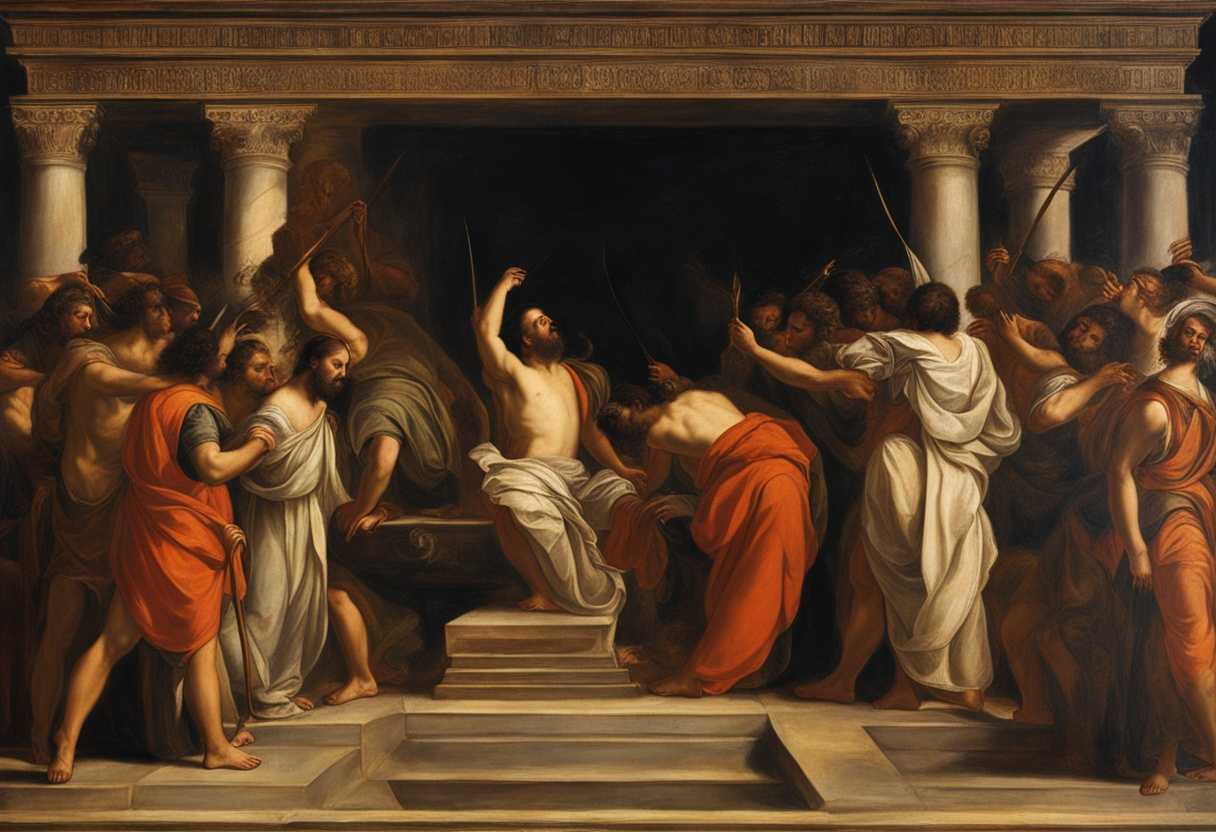
Scripture
16 Then the Lord said to Moses, “Say to Aaron, ‘Stretch out your staff and strike the dust of the earth, so that it may become gnats in all the land of Egypt.’”
17 They did so. Aaron stretched out his hand with his staff and struck the dust of the earth, and there were gnats on man and beast. All the dust of the earth became gnats in all the land of Egypt.
18 The magicians tried by their secret arts to produce gnats, but they could not. So there were gnats on man and beast.
19 Then the magicians said to Pharaoh, “This is the finger of God.” But Pharaoh’s heart was hardened, and he would not listen to them, as the Lord had said.
Biblical Significance of Lice and Removal
The presence of lice in the Bible, particularly highlighted in Exodus 8:16-19 during the plagues of Egypt, serves as a powerful symbol of divine judgment and the consequences of disobedience to God. In this instance, God sends lice as a manifestation of His power to challenge the Egyptian sorcerers and Pharaoh, showcasing the futility of relying on human wisdom or magic in the face of divine authority. This imagery of lice—small, bothersome, and persistent—can represent sin and its capacity to infiltrate and corrupt a person’s life, much like lice invade a person’s body. The unfolding of God’s plagues is not just a historical event but also a reminder to believers of the holiness of God and the seriousness of resisting His will.
Furthermore, the removal of lice can be interpreted as a metaphor for spiritual cleansing and purification. In biblical terms, lice being eliminated symbolizes a call to repentance and a return to holiness. Verses such as Psalm 51:10 (“Create in me a pure heart, O God”) illustrate this need for inner purity and transformation. The act of cleansing, whether through physical removal as seen with lice or spiritual cleansing from sin, points to the broader biblical narrative of sanctification. It invites believers to reflect on their lives, seek deliverance from impurities, and pursue a life aligned with divine principles. Thus, lice and their removal serve as reminders of the call to reject sin and embrace the sanctifying work of God in their lives, reinforcing the importance of spiritual vigilance and commitment to righteousness.
Beyond their mention in the plagues, lice can also be seen as a representation of spiritual distractions that plague individuals and communities, drawing them away from their purpose and relationship with God. Just as lice feed on a host and create discomfort, spiritual distractions can consume a believer’s focus, leading to a life less devoted to God’s service. The biblical narrative emphasizes the importance of maintaining spiritual health, as reflected in several passages that urge believers to avoid the ensnaring influences of the world. Through diligent prayer, study, and community support, a believer can rid themselves of these spiritual lice, thus restoring their focus on God’s calling.
Moreover, the concept of lice draws attention to the importance of community and accountability in the process of spiritual removal. Much like the act of treating an infestation, addressing spiritual impurities often requires communal support and encouragement. Scriptures that advocate for bearing one another’s burdens serve as a reminder of the necessity for mutual encouragement in the faith journey. This community aspect is crucial, emphasizing that one does not face the struggle against sin in isolation. Together, believers are called to foster an environment where confession, restoration, and support lead to collective sanctification, reinforcing the idea that the removal of spiritual lice—sin and distraction—can be a collaborative endeavor aimed at achieving a righteous and holy existence in God’s presence.
Spiritual Purification and Cleansing
In the Bible, lice can symbolize impurity and the need for spiritual cleansing. The presence of lice often indicates a state of defilement, both physically and spiritually. The act of removing lice can be seen as a metaphor for the process of repentance and purification, where individuals are called to rid themselves of sin and uncleanliness in order to restore their relationship with God. This theme emphasizes the importance of inner cleanliness and the transformative power of divine forgiveness.
Consequences of Disobedience
Lice can also represent the consequences of disobedience to God’s commandments. In biblical narratives, the appearance of lice and other plagues often serves as a divine response to the actions of individuals or nations that stray from God’s will. The removal of lice, therefore, can symbolize the need for repentance and a return to righteousness. This broader meaning highlights the idea that disobedience can lead to spiritual and physical afflictions, while obedience and faithfulness can lead to restoration and blessing.
The Struggle Against Sin
The process of dealing with lice can be viewed as a metaphor for the ongoing struggle against sin and temptation. Just as lice can invade and disrupt one’s life, sin can infiltrate the heart and mind, leading to spiritual turmoil. The removal of lice signifies the active effort required to combat sin and maintain spiritual health. This broader meaning encourages believers to be vigilant in their spiritual lives, recognizing the need for constant vigilance and the application of God’s grace to overcome the challenges posed by sin.
How to Embrace Faith Amidst Trials and Suffering
Embracing faith amidst trials and suffering can feel like an uphill battle, but it’s in these moments that our faith can truly deepen and flourish. When life throws challenges our way, it’s essential to remember that we are not alone; God walks with us through every storm. I’ve found that prayer becomes a lifeline during tough times—pouring out my heart to God not only brings comfort but also clarity. Surrounding ourselves with a supportive community of fellow believers can provide encouragement and remind us of God’s promises. Reflecting on scripture, especially passages like Romans 5:3-5, helps me to see that suffering can produce perseverance, character, and hope. So, when you face trials, lean into your faith, seek God’s presence, and trust that He is working all things for your good, even when it’s hard to see. Remember, it’s okay to wrestle with your doubts; God welcomes our honest struggles and uses them to draw us closer to Him.
Bible References to Lice and Removal:
Leviticus 14:33-57: 33 The Lord spoke to Moses and Aaron, saying,
34 “When you come into the land of Canaan, which I give you for a possession, and I put a case of leprous disease in a house in the land of your possession,”
35 Then he who owns the house shall come and tell the priest, ‘It seems to me there is some case of disease in my house.’
36 Then the priest shall command that they empty the house before the priest goes to examine the disease, lest all that is in the house be declared unclean. And afterward the priest shall go in to see the house.
37 And he shall examine the disease on the walls of the house with the stones with which the disease is found, and he shall scrape off the plaster and throw it into an unclean place outside the city.
38 then the priest shall go out of the house to the door of the house and shut up the house seven days.
39 And on the seventh day the priest shall go out of the house, to the door of the house, and shut up the house seven days.
40 then the priest shall command that they take out the stones in which is the disease and throw them into an unclean place outside the city.
41 And he shall have the inside of the house scraped all around, and the plaster that they scrape off they shall pour out in an unclean place outside the city.
42 And they shall take other stones and put them in the place of those stones, and he shall take other plaster and plaster the house.
43“If the disease breaks out again in the house, after he has taken out the stones and scraped the house and plastered it,”
44 then the priest shall go and look. And if the disease has spread in the house, it is a persistent leprous disease in the house; it is unclean.
45 And he shall break down the house, its stones and timber and all the plaster of the house, and he shall carry them out of the city to an unclean place.
46 And he shall let the live bird go out of the city into the open country. So he shall make atonement for the house, and it shall be clean.’”
47 And whoever lies in the house shall wash his clothes, and whoever eats in the house shall wash his clothes.
48 “But if the priest comes and looks, and if the disease has not spread in the house after the house was plastered, then the priest shall pronounce the house clean, for the disease is healed.”
49 And he shall take for the cleansing of the house two small birds, cedarwood, scarlet yarn, and hyssop.
50 and shall kill one of the birds in an earthenware vessel over fresh water.
51 And he shall take the cedarwood and the hyssop and the scarlet yarn, along with the live bird, and dip them in the blood of the bird that was killed and in the fresh water, and sprinkle the house seven times.
52 and he shall cleanse the house with the blood of the bird and with the fresh water and with the live bird and with the cedarwood and hyssop and scarlet yarn.
53 “But the priest shall examine the disease on the skin of the body, and if the hair in the diseased area has turned white and the disease appears to be deeper than the skin of the body, it is a case of leprous disease. When the priest has examined him, he shall pronounce him unclean.”
54 This is the law for any case of leprous disease: for clothing and for a house,
55 and for the living bird he shall take it together with the cedarwood and the scarlet yarn and the hyssop, and dip them and the living bird in the blood of the bird that was killed over the fresh water.
56 and for a swelling or an eruption or a spot,
57 to show when it is unclean and when it is clean. This is the law for leprous disease.
Isaiah 3:16-24: 16 The Lord said: Because the daughters of Zion are haughty and walk with outstretched necks, glancing wantonly with their eyes, mincing along as they go, tinkling with their feet,
17 therefore the Lord will strike with a scab the heads of the daughters of Zion, and the Lord will lay bare their secret parts.
18 In that day the Lord will take away the finery of the anklets, the headbands, and the crescents;
19 the festal robes, the mantles, the cloaks, and the handbags;
20 the headdresses, the armlets, the sashes, the perfume boxes, and the amulets;
21 the signet rings and the nose rings;
22 the festal robes, the mantles, the cloaks, and the handbags;
23 who make their anklets jingle, and disclose the amulets under their veils;
24 Instead of perfume there will be rottenness; and instead of a belt, a rope; and instead of well-set hair, baldness; and instead of a rich robe, a skirt of sackcloth; and branding instead of beauty.
Matthew 10:1-8: 1 And he called to him his twelve disciples and gave them authority over unclean spirits, to cast them out, and to heal every disease and every affliction.
2 The names of the twelve apostles are these: first, Simon, who is called Peter, and Andrew his brother; James the son of Zebedee, and John his brother;
3 Philip and Bartholomew; Thomas and Matthew the tax collector; James the son of Alphaeus, and Thaddaeus;
4 Simon the Zealot, and Judas Iscariot, who betrayed him.
5 These twelve Jesus sent out, instructing them, “Go nowhere among the Gentiles and enter no town of the Samaritans,
6 but go rather to the lost sheep of the house of Israel.
7 And proclaim as you go, saying, ‘The kingdom of heaven is at hand.’
8 Heal the sick, raise the dead, cleanse lepers, cast out demons. You received without paying; give without pay.
Mark 6:7-13: 7 And he called the twelve and began to send them out two by two, and gave them authority over the unclean spirits.
8 He charged them to take nothing for their journey except a staff—no bread, no bag, no money in their belts—
9 but to wear sandals and not put on two tunics.
10 And he said to them, “Wherever you enter a house, stay there until you depart from there.
11 And if any place will not receive you and they will not listen to you, when you leave, shake off the dust that is on your feet as a testimony against them.”
12 So they went out and proclaimed that people should repent.
13 And they cast out many demons and anointed with oil many who were sick and healed them.
Luke 9:1-6: 1 And he called the twelve together and gave them power and authority over all demons and to cure diseases,
2 and he sent them out to proclaim the kingdom of God and to heal.
3 And he said to them, “Take nothing for your journey, no staff, nor bag, nor bread, nor money; and do not have two tunics.
4 And whatever house you enter, stay there, and from there depart.
5 And wherever they do not receive you, when you leave that town shake off the dust from your feet as a testimony against them.”
6 And they departed and went through the villages, preaching the gospel and healing everywhere.
Acts 19:11-12: 11 And God was doing extraordinary miracles by the hands of Paul,
12 so that even handkerchiefs or aprons that had touched his skin were carried away to the sick, and their diseases left them and the evil spirits came out of them.

Rev. François Dupont is a dedicated church minister with a wealth of experience in serving spiritual communities. With a calm and serene demeanor, he has been devoted to sharing the message of love, compassion, and tolerance for over two decades. Through his thoughtful sermons, compassionate counseling, and unwavering support, Rev. Dupont has touched the lives of countless individuals, allowing them to find solace and strength during difficult times. His serene presence and deep understanding of the human condition make him a trusted guide for those seeking spiritual nourishment and guidance.