
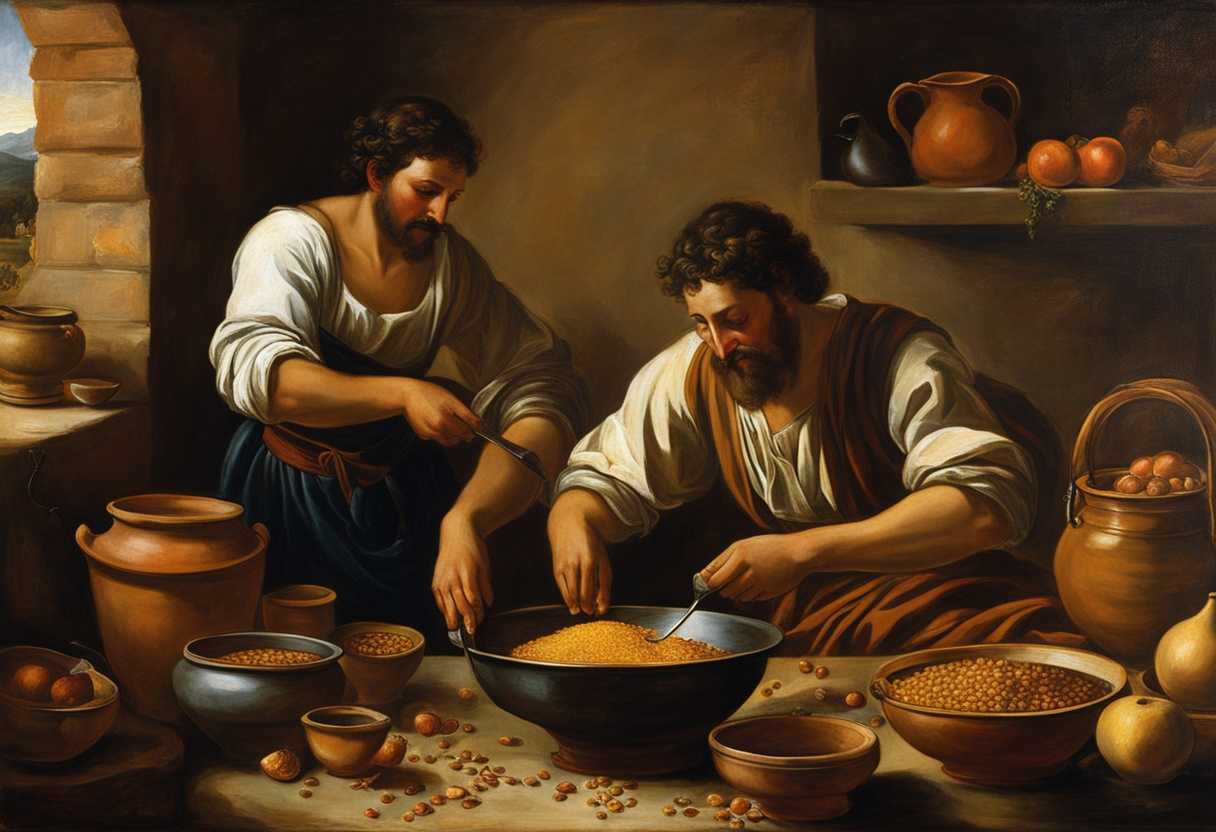
In the Bible, “pottage” refers to a thick soup or stew, typically made from grains or legumes. It is notably mentioned in Genesis 25:29-34, where Esau sells his birthright to Jacob in exchange for a bowl of lentil pottage.
Scripture
29 Once when Jacob was cooking stew, Esau came in from the field, and he was exhausted.
30 And Esau said to Jacob, “Let me eat some of that red stew, for I am exhausted!” (Therefore his name was called Edom.)
31 Jacob said, “Sell me your birthright now.”
32 Esau said, “Behold, I am about to die; of what use is a birthright to me?”
33 Then Jacob said, “Swear to me now.” So he swore to him and sold his birthright to Jacob.
34 Then Jacob gave Esau bread and lentil stew, and he ate and drank and rose and went his way. So Esau despised his birthright.
Biblical Significance of Pottage
In Genesis 25:29-34, the episode of Esau selling his birthright for a bowl of lentil pottage holds profound significance beyond its immediate narrative. This transaction highlights themes of immediate gratification versus long-term value. Esau, driven by hunger, prioritizes his immediate need over his position as the firstborn, which traditionally holds significant spiritual and familial blessings. When he declares, “I am about to die; of what use is a birthright to me?” (Genesis 25:32, ESV), it underscores the folly of sacrificing enduring spiritual inheritance for transient physical sustenance. This act serves as a cautionary tale about the impulsiveness and shortsightedness that can lead individuals to forfeit greater blessings in favor of momentary pleasures.
The broader meaning of “pottage” can also be seen in the biblical context of spiritual nourishment. Just as we might crave physical food in times of need, the Bible often emphasizes the importance of seeking deeper spiritual food, which is often represented through the Word of God. In John 6:35, Jesus proclaims, “I am the bread of life; whoever comes to me shall not hunger.” The lesson drawn from Esau’s sacrifice can serve as a reminder to prioritize spiritual well-being over temporary satisfactions. The choice between pottage and birthright symbolizes the constant struggle faced by individuals; to choose immediate satisfaction that satisfies earthly cravings or to hold firm to enduring promises and truths that provide lasting fulfillment and purpose in life. This narrative propels us to reflect on our priorities, urging us to seek that which enriches our spiritual lives rather than indulging in what merely satiates our physical appetite.
The concept of pottage also serves as a metaphor for the various choices individuals face throughout their lives, emphasizing the need for discernment in prioritizing what truly matters. In the biblical context, food is woven into the fabric of spiritual teachings, often being used to illustrate deeper truths about human nature and divine provision. The act of consuming pottage, therefore, can symbolize a reliance on earthly, temporary sustenance as opposed to the enduring spiritual nourishment that comes from a relationship with God. This dichotomy invites believers to reflect on the essence of their choices and the values they hold dear, prompting a consideration of how often they might choose the immediate over the eternal.
Furthermore, pottage can also evoke imagery of sacrifice and the need for transformation. Throughout the Scriptures, food represents changes within one’s heart and life; the decision to partake in something as simple as a bowl of lentil soup can prompt deeper reflections on what it means to live a life aligned with divine purpose. The act of eating, in many passages, reflects communion and a shared experience that extends beyond nourishment to a connection with the divine. For example, the notion of “manna” provided in the wilderness parallels the temporary nature of pottage, yet signifies God’s provision for His people, encouraging believers to look beyond physical hunger and seek fulfillment in spirituality, community, and obedience to God’s will. By embracing this understanding, the teachings surrounding pottage can lead to a profound transformation, encouraging individuals to actively pursue a life enriched by faith rather than settling for the fleeting comfort found in mere physical sustenance.
The Temptation of Immediate Gratification
Pottage, often associated with a simple, hearty meal, symbolizes the human tendency to seek immediate satisfaction over long-term fulfillment. In biblical narratives, the act of trading something of great value for a momentary pleasure reflects the struggle between spiritual priorities and earthly desires. This theme serves as a cautionary tale about the consequences of prioritizing short-term gains over enduring spiritual blessings.
The Value of Spiritual Heritage
In the biblical context, pottage can also represent the idea of undervaluing one’s spiritual heritage or birthright. The act of exchanging a birthright for a bowl of pottage illustrates the folly of dismissing one’s spiritual identity and the blessings that come with it. This serves as a reminder of the importance of recognizing and cherishing one’s spiritual inheritance, rather than trading it for transient, worldly pleasures.
The Nature of Human Needs
Pottage, as a basic sustenance, highlights the fundamental human need for nourishment—both physical and spiritual. It serves as a metaphor for the essential sustenance that God provides, emphasizing the importance of seeking spiritual nourishment through faith and relationship with the divine. This broader meaning encourages believers to reflect on their spiritual diets and the ways in which they seek fulfillment in their lives.
How to Embrace Abundance and Live Faithfully
Embracing abundance as a faithful Christian begins with a heart of gratitude and a mindset that recognizes God’s endless provision in our lives. It’s easy to get caught up in the hustle and bustle of daily life, focusing on what we lack rather than what we have. To shift this perspective, take time each day to reflect on your blessings—big and small—and thank God for them. This practice not only cultivates a spirit of thankfulness but also deepens your trust in His promises. Remember, abundance isn’t just about material wealth; it encompasses love, joy, peace, and the relationships we cherish. As you live out your faith, seek opportunities to share this abundance with others, whether through acts of kindness, service, or simply being present for someone in need. By doing so, you not only honor God but also create a ripple effect of love and generosity that reflects His heart for the world.
Bible References to the Meaning of Pottage:
2 Kings 4:38-41: 38 And Elisha came again to Gilgal when there was a famine in the land. And as the sons of the prophets were sitting before him, he said to his servant, “Set on the large pot, and boil stew for the sons of the prophets.”
39 Then one went out into the field to gather herbs and found a wild vine and gathered from it his lap full of wild gourds, and came and cut them up into the pot of stew, not knowing what they were.
40 So they poured out for the men to eat. And when they ate of the stew, they cried out, “O man of God, there is death in the pot!” And they could not eat it.
41 But he said, “Then bring flour.” And he threw it into the pot and said, “Pour some out for the men, that they may eat.” And there was no harm in the pot.
Hebrews 12:16-17: 16 that no one is sexually immoral or unholy like Esau, who sold his birthright for a single meal.
17 For you know that afterward, when he desired to inherit the blessing, he was rejected, for he found no chance to repent, though he sought it with tears.

Rev. François Dupont is a dedicated church minister with a wealth of experience in serving spiritual communities. With a calm and serene demeanor, he has been devoted to sharing the message of love, compassion, and tolerance for over two decades. Through his thoughtful sermons, compassionate counseling, and unwavering support, Rev. Dupont has touched the lives of countless individuals, allowing them to find solace and strength during difficult times. His serene presence and deep understanding of the human condition make him a trusted guide for those seeking spiritual nourishment and guidance.