
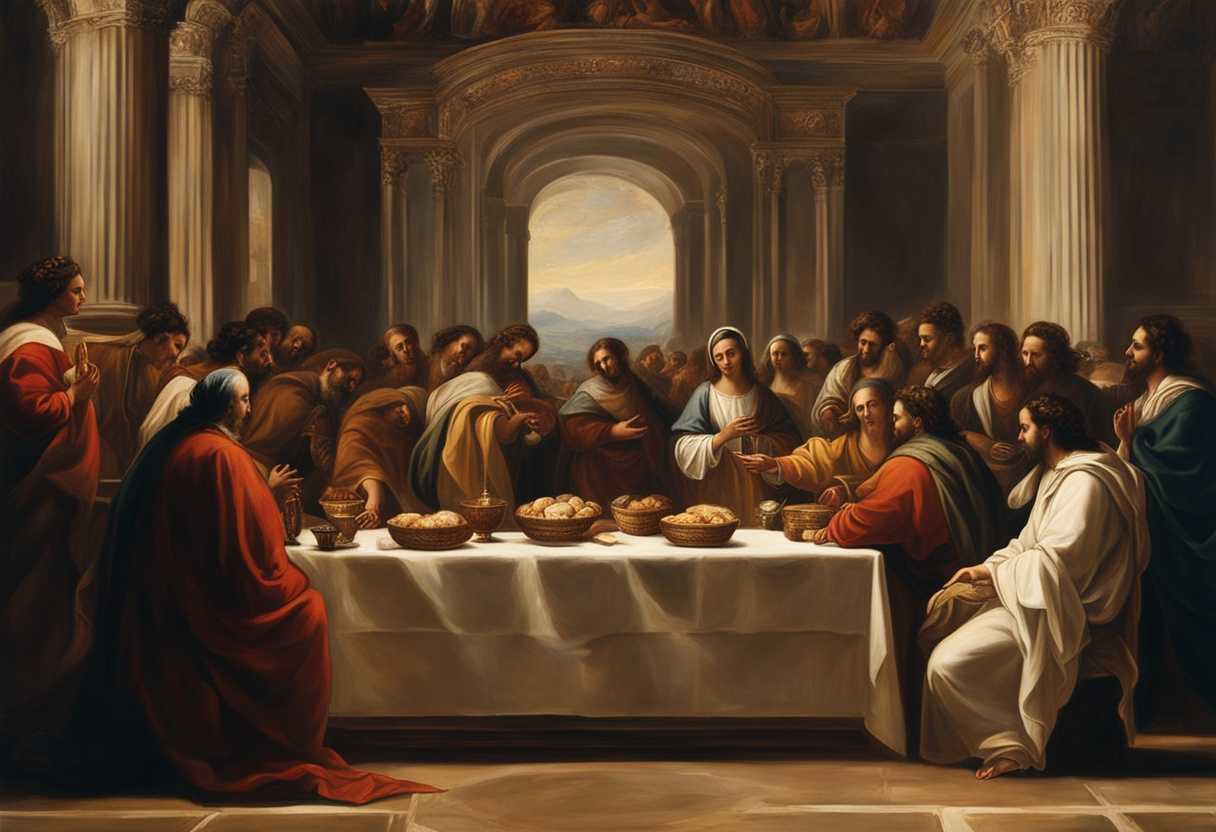
Communion, often referred to as the Lord’s Supper, symbolizes the grace of God as believers partake in the body and blood of Christ, representing His sacrifice for the forgiveness of sins (1 Corinthians 11:24-25). It serves as a means of grace, nurturing spiritual connection and unity among believers while remembering the transformative power of Christ’s atonement (Luke 22:19-20).
Scripture
26 Now as they were eating, Jesus took bread, and after blessing it broke it and gave it to the disciples, and said, “Take, eat; this is my body.”
27 And he took a cup, and when he had given thanks he gave it to them, saying, “Drink of it, all of you,
28 for this is my blood of the covenant, which is poured out for many for the forgiveness of sins.
29 I tell you I will not drink again of this fruit of the vine until that day when I drink it new with you in my Father’s kingdom.”
Bible Verses on Communion and Grace
The sacrament of communion embodies a profound understanding of grace as it invites believers into a tangible encounter with Christ’s sacrifice. In 1 Corinthians 11:24-25, Paul emphasizes that the breaking of bread and sharing of the cup are not mere rituals but sacred acts that commemorate Jesus’ death, reminding the community of their identity as partakers in His grace. This grace is unmerited and transformative, indicative of God’s willingness to reconcile humanity through Christ. Furthermore, in Luke 22:19-20, Jesus’ command to “do this in remembrance of me” not only reinforces the significance of the meal but also establishes it as an ongoing reminder of the covenant of grace.
Communion, therefore, becomes a communal expression of faith and a means of grace, fostering unity among believers as they collectively acknowledge their continual need for Christ’s redemptive work. As stated in Romans 5:8, “But God shows his love for us in that while we were still sinners, Christ died for us,” the act of communion reminds us that, through grace, we are invited into a new covenant that transcends our shortcomings. This sacred meal not only calls for remembrance but also for reflection on the inherent grace that empowers believers to live out their faith. Ultimately, communion serves as a powerful reminder of the hope and restoration available through Jesus, offering a profound connection to both the past sacrifice and the future promise of eternal life with Him.
In addition to the aforementioned passages, various texts throughout the New Testament illuminate the theme of communion as an expression of divine grace. For instance, Hebrews 10:19-22 articulates the transformative nature of grace by emphasizing that believers can now approach God with confidence, made possible through the sacrificial death of Christ. The author of Hebrews connects this confidence to the act of gathering together, suggesting that the Eucharist plays a vital role in strengthening the community of faith as they collectively acknowledge and experience their shared access to God’s grace. This access is not earned but freely given, reinforcing the transformative and communal aspects of grace inherent in the practice of communion.
Furthermore, the book of Acts illustrates the early Church’s practice of breaking bread together, which served as a tangible expression of fellowship and grace among believers (Acts 2:42-47). This communal sharing of meals symbolizes not only physical nourishment but also spiritual sustenance that stems from the grace they received through faith in Christ. This act of unity in the breaking of bread signifies a collective acknowledgment of their new identity in Christ, emphasizing that grace binds them together as one body. Additionally, this gathering fosters an environment where believers are reminded of their mutual dependence on God’s grace, encouraging them to extend that same grace to one another in acts of love and service. Thus, communion becomes a powerful declaration of the grace that flows from Christ, shaping the community’s identity and mission.
The Unmerited Gift of Salvation
Communion serves as a profound reminder of the unmerited grace bestowed upon humanity through Christ’s sacrifice. It symbolizes the covenant between God and His people, emphasizing that salvation is not earned through human effort but is a divine gift. This act of remembrance invites believers to reflect on the depth of God’s love and mercy, reinforcing the idea that grace is freely given, regardless of one’s past or present circumstances.
Unity in the Body of Christ
Another significant aspect of communion is its role in fostering unity among believers. As participants share in the bread and wine, they are reminded of their collective identity as members of the Body of Christ. This communal aspect highlights the grace that binds individuals together, transcending differences and divisions. It encourages a spirit of love, acceptance, and mutual support, illustrating that grace is not only a personal experience but also a communal reality that strengthens the church as a whole.
A Call to Transformation
Communion also serves as a call to transformation, inviting believers to examine their lives in light of God’s grace. As they partake in this sacred meal, they are encouraged to reflect on their relationship with God and others, prompting a desire for spiritual growth and renewal. This transformative aspect of communion underscores the idea that grace is not static; it actively works within individuals to inspire change, leading them to live out their faith in tangible ways that reflect Christ’s love and sacrifice.
How to Embrace Grace and Live Like Christ
Embracing grace and living like Christ is a transformative journey that begins with understanding that grace is a gift we don’t earn but receive through faith. It’s essential to recognize that we are all imperfect, yet God’s love and forgiveness are boundless. To truly embody this grace, we must practice humility, acknowledging our shortcomings while extending compassion to others. This means actively seeking to love our neighbors, forgiving those who wrong us, and serving those in need, just as Jesus did. Daily prayer and reflection on Scripture can help us align our hearts with His teachings, reminding us that grace is not just for us but is meant to flow through us to the world around us. As we cultivate a spirit of gratitude and kindness, we begin to reflect Christ’s love in our actions, becoming beacons of hope and grace in a world that desperately needs it.
Bible References to Communion as Grace:
Mark 14:22-25: 22 And as they were eating, he took bread, and after blessing it broke it and gave it to them, and said, “Take; this is my body.”
23 And he took a cup, and when he had given thanks he gave it to them, and they all drank of it.
24 And he said to them, “This is my blood of the covenant, which is poured out for many.
25 Truly, I say to you, I will not drink again of the fruit of the vine until that day when I drink it new in the kingdom of God.”
Luke 22:14-20: 14 And when the hour came, he reclined at table, and the apostles with him.
15 And he said to them, “I have earnestly desired to eat this Passover with you before I suffer.
16 for I tell you I will not eat it until it is fulfilled in the kingdom of God.”
17 And he took a cup, and when he had given thanks he said, “Take this, and divide it among yourselves.
18 for I tell you that from now on I will not drink of the fruit of the vine until the kingdom of God comes.”
19 And he took bread, and when he had given thanks, he broke it and gave it to them, saying, “This is my body, which is given for you. Do this in remembrance of me.”
20 And likewise the cup after they had eaten, saying, “This cup that is poured out for you is the new covenant in my blood.
John 6:53-58: 53 So Jesus said to them, “Truly, truly, I say to you, unless you eat the flesh of the Son of Man and drink his blood, you have no life in you.
54 Whoever feeds on my flesh and drinks my blood has eternal life, and I will raise him up on the last day.
55 For my flesh is true food, and my blood is true drink.
56 Whoever feeds on my flesh and drinks my blood abides in me, and I in him.
57 As the living Father sent me, and I live because of the Father, so whoever feeds on me, he also will live because of me.
58 This is the bread that came down from heaven, not like the bread the fathers ate, and died. Whoever feeds on this bread will live forever.”
1 Corinthians 10:16-17: 16 The cup of blessing that we bless, is it not a participation in the blood of Christ? The bread that we break, is it not a participation in the body of Christ?
17 Because there is one bread, we who are many are one body, for we all partake of the one bread.
1 Corinthians 11:23-26: 23 For I received from the Lord what I also delivered to you, that the Lord Jesus on the night when he was betrayed took bread,
24 and when he had given thanks, he broke it, and said, “This is my body, which is for you. Do this in remembrance of me.”
25 In the same way also he took the cup, after supper, saying, “This cup is the new covenant in my blood. Do this, as often as you drink it, in remembrance of me.”
26 For as often as you eat this bread and drink the cup, you proclaim the Lord’s death until he comes.
Acts 2:42-47: 42 And they devoted themselves to the apostles’ teaching and the fellowship, to the breaking of bread and the prayers.
43 And awe came upon every soul, and many wonders and signs were being done through the apostles.
44 And all who believed were together and had all things in common.
45 And they were selling their possessions and belongings and distributing the proceeds to all, as any had need.
46 And day by day, attending the temple together and breaking bread in their homes, they received their food with glad and generous hearts,
47 praising God and having favor with all the people. And the Lord added to their number day by day those who were being saved.
Acts 20:7-12: 7 On the first day of the week, when we were gathered together to break bread, Paul talked with them, intending to depart on the next day, and he prolonged his speech until midnight.
8 There were many lamps in the upper room where we were gathered.
9 And a young man named Eutychus, sitting at the window, sank into a deep sleep as Paul talked still longer. And being overcome by sleep, he fell down from the third story and was taken up dead.
10 But Paul went down and bent over him, and taking him in his arms, said, “Do not be alarmed, for his life is in him.”
11 And when Paul had gone up and had broken bread and eaten, he conversed with them a long while, until daybreak, and so departed.
12 And they took the youth away alive, and were not a little comforted.
Hebrews 10:19-25: 19 Therefore, brothers, since we have confidence to enter the holy places by the blood of Jesus,
20 by the new and living way that he opened for us through the curtain, that is, through his flesh,
21 and since we have a great priest over the house of God,
22 let us draw near with a true heart in full assurance of faith, with our hearts sprinkled clean from an evil conscience and our bodies washed with pure water.
Let us hold fast the confession of our hope without wavering, for he who promised is faithful.
24 And let us consider how to stir up one another to love and good works,
25 not neglecting to meet together, as is the habit of some, but encouraging one another, and all the more as you see the Day drawing near.

Rev. François Dupont is a dedicated church minister with a wealth of experience in serving spiritual communities. With a calm and serene demeanor, he has been devoted to sharing the message of love, compassion, and tolerance for over two decades. Through his thoughtful sermons, compassionate counseling, and unwavering support, Rev. Dupont has touched the lives of countless individuals, allowing them to find solace and strength during difficult times. His serene presence and deep understanding of the human condition make him a trusted guide for those seeking spiritual nourishment and guidance.