
Biblical girl names often carry deep meanings rooted in Hebrew and other ancient languages. For example, the name “Hannah” means “grace,” while “Miriam” is often interpreted as “rebellious” or “wished-for.” Each name typically reflects the characteristics or experiences of the biblical figures associated with them.
Scripture
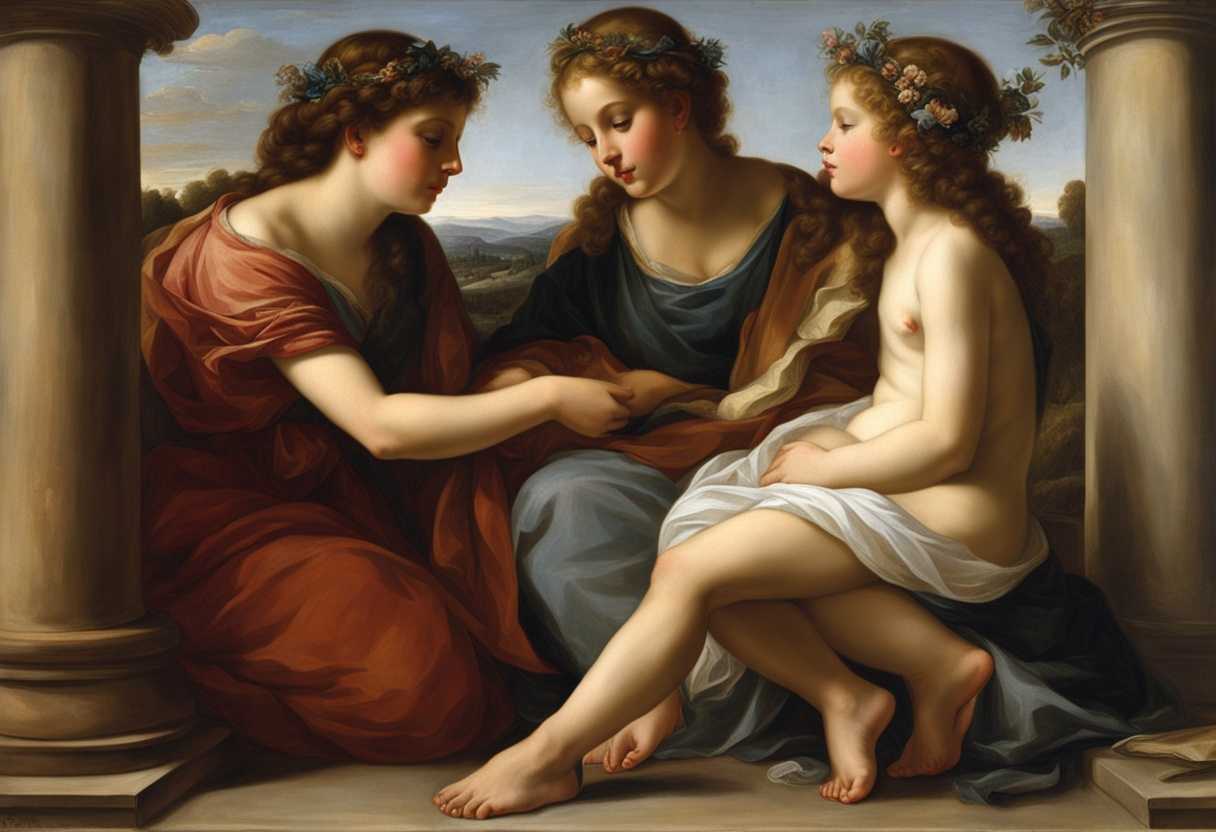
16 Now Laban had two daughters. The name of the older was Leah, and the name of the younger was Rachel.
17 Leah’s eyes were weak, but Rachel was beautiful in form and appearance.
18 Jacob loved Rachel.
19 Laban said, “It is better that I give her to you than that I should give her to any other man; stay with me.”
20 So Jacob served seven years for Rachel, and they seemed to him but a few days because of the love he had for her.
21 Then Jacob said to Laban, “Give me my wife that I may go in to her, for my time is completed.”
22 So Laban gathered together all the people of the place and made a feast.
23 But in the evening he took his daughter Leah and brought her to Jacob, and he went in to her.
24 Laban gave his female servant Bilhah to his daughter Rachel to be her servant.
25 And in the morning, behold, it was Leah! And Jacob said to Laban, “What is this you have done to me? Did I not serve with you for Rachel? Why then have you deceived me?”
26 Laban said, “It is not so done in our country, to give the younger before the firstborn.
27 Complete the week of this one, and we will give you the other also in return for the service which you shall serve with me for another seven years.”
28 Jacob did so, and completed her week. Then Laban gave him his daughter Rachel to be his wife.
29 Laban gave his female servant Bilhah to his daughter Rachel to be her servant.
30 So Jacob went in to Rachel also, and he loved Rachel more than Leah, and served Laban for another seven years.
31 When the Lord saw that Leah was hated, he opened her womb, but Rachel was barren.
32 And Leah conceived and bore a son, and she called his name Reuben, for she said, “Because the Lord has looked upon my affliction; for now my husband will love me.”
33 She conceived again and bore a son, and said, “Because the Lord has heard that I am hated, he has given me this son also.” And she called his name Simeon.
34 Again she conceived and bore a son, and said, “Now this time my husband will be attached to me, because I have borne him three sons.” Therefore his name was called Levi.
35 And she conceived again and bore a son, and said, “This time I will praise the Lord.” Therefore she called his name Judah. Then she ceased bearing.
Biblical Girl Names and Their Meanings
Biblical girl names are rich in significance and often encapsulate the narratives and virtues exhibited by the figures they represent. For instance, the name “Hannah,” meaning “grace,” reflects the grace and favor God bestowed upon her in her prayer for a child, as seen in 1 Samuel 1:10-20. Her story exemplifies the themes of humility, persistence, and the joy that follows divine intervention. Similarly, “Miriam” has connotations of both “rebellious” and “wished-for,” emphasizing her dynamic role as the sister of Moses and Aaron, famously leading the Israelite women in song and dance after the crossing of the Red Sea (Exodus 15:20-21). The depth of these names captures both the personal and communal narratives, illustrating how they function as conduits of identity and purpose within the history of God’s people.
Moreover, many biblical girl names connect to broader themes of women’s roles in biblical narratives, signifying strength, resilience, and faith. Names like “Deborah,” which means “bee,” represent industriousness and leadership, as seen in Judges 4, where Deborah serves as a judge and prophetess, leading Israel to victory. “Esther,” which signifies “star,” resonates with her courageous actions in the face of adversity to save her people (Esther 4:14). These names serve not only as identifiers but also as reflections of divine inspiration and encouragement for future generations. Therefore, as parents choose biblical girl names, they engage in a tradition of storytelling and meaning-making, imbuing their children’s identities with rich heritage steeped in faith and virtue, echoing the timeless influence of these biblical women.
Continuing the exploration of biblical girl names reveals an intricate tapestry of meanings that encompass virtues and challenges reflected in their stories. The name “Sarah,” which means “princess” or “noblewoman,” symbolizes a significant transition from barrenness to becoming the matriarch of nations, as seen in her journey of faith and laughter throughout the narrative of Genesis 18. As the wife of Abraham, Sarah embodies the strength and promise of motherhood, showcasing how divine promises can manifest in transformative ways. This name serves to inspire hope and perseverance, reminding believers of God’s faithfulness in even the most seemingly impossible circumstances.
Another compelling name is “Ruth,” meaning “friend” or “companion,” which speaks to her loyalty and devotion depicted in the Book of Ruth. Her journey from Moab to Bethlehem illustrates unwavering love and commitment, not only to her mother-in-law Naomi but also to her new faith in the God of Israel. Ruth’s story showcases the themes of redemption and inclusion, culminating in her marriage to Boaz, which connects to the lineage of King David and ultimately Jesus. These biblical names not only recount personal stories but also reflect broader themes of community, love, and redemption, enabling parents choosing such names to convey messages of resilience and faithfulness to their children. This cherished tradition encourages future generations to embrace the values embodied in these biblical figures, creating a sense of continuity and legacy tied to their spiritual roots.
The Significance of Names in the Bible
In biblical times, names were often chosen for their meanings and the qualities they represented. Many girl names in the Bible reflect virtues, roles, or significant events in the lives of the individuals. For instance, the name “Miriam” means “bitterness” or “rebellion,” which can be seen as a reflection of the struggles faced by the Israelites during their exodus. Names like “Hannah,” meaning “grace,” highlight the importance of divine favor and mercy in one’s life.
Names as Symbols of Identity and Purpose
Biblical girl names often carry deep symbolic meanings that relate to identity and purpose. For example, “Deborah,” meaning “bee,” symbolizes industriousness and leadership, as she was a prophetess and a judge who led Israel during a time of crisis. Similarly, “Abigail,” which means “my father is joy,” represents the joy and wisdom that can come from familial relationships and the importance of being a peacemaker, as she intervened to prevent conflict. These names not only identify individuals but also encapsulate their roles and the qualities they embody within the biblical narrative.
How to Embrace Your Identity in Christ
Embracing your identity in Christ is a transformative journey that begins with understanding that you are deeply loved and accepted just as you are. It’s essential to immerse yourself in Scripture, where you’ll find affirmations of your worth—like being called a child of God (1 John 3:1) and a new creation (2 Corinthians 5:17). Reflect on these truths daily, allowing them to reshape how you see yourself and your purpose. Surround yourself with a community of believers who encourage you and hold you accountable, as fellowship can strengthen your faith and help you grow. Remember, embracing your identity in Christ isn’t about striving for perfection but about resting in His grace and allowing His love to flow through you, transforming your heart and actions. As you walk this path, let your identity in Him guide your decisions, relationships, and service to others, shining His light in a world that desperately needs it.
Bible References to Girl Names and Meanings:
Genesis 30:1-24: 1 When Rachel saw that she bore Jacob no children, she envied her sister.
2 Jacob’s anger was kindled against Rachel, and he said, “Am I in the place of God, who has withheld from you the fruit of the womb?”
3 Then she said, “Here is my servant Bilhah; go in to her, so that she may give birth on my behalf, that even I may have children through her.”
4 So she gave him her servant Bilhah as a wife, and Jacob went in to her.
5 And Bilhah conceived and bore Jacob a son.
6 Then Rachel said, “God has judged me, and has also heard my voice and given me a son.” Therefore she called his name Dan.
7 And Rachel’s servant Bilhah conceived again and bore Jacob a second son.
8 Then Rachel said, “With mighty wrestlings I have wrestled with my sister and have prevailed.” So she called his name Naphtali.
9 When Leah saw that she had ceased bearing children, she took her servant Zilpah and gave her to Jacob as a wife.
10 Leah’s servant Zilpah bore Jacob a son.
11 Then Leah said, “Good fortune has come!” So she called his name Gad.
12 Leah’s servant Zilpah bore Jacob a second son.
13 And Leah said, “Happy am I! For women have called me happy.” So she called his name Asher.
14 In the days of wheat harvest Reuben went and found mandrakes in the field and brought them to his mother Leah. Then Rachel said to Leah, “Please give me some of your son’s mandrakes.”
15 But she said to her, “Is it a small matter that you have taken away my husband? Would you take away my son’s mandrakes also?” So Rachel said, “Then he may lie with you tonight in exchange for your son’s mandrakes.”
16 When Jacob came from the field in the evening, Leah went out to meet him and said, “You must come in to me, for I have hired you with my son’s mandrakes.” So he lay with her that night.
17 And God listened to Leah, and she conceived and bore Jacob a fifth son.
18 So Leah said, “God has given me my wages because I gave my servant to my husband.” So she called his name Issachar.
19 Leah conceived again, and she bore Jacob a sixth son.
20 Then Leah said, “God has endowed me with a good endowment; now my husband will honor me, because I have borne him six sons.” So she called his name Zebulun.
21 Afterward she bore a daughter and called her name Dinah.
22 Then God remembered Rachel, and God listened to her and opened her womb.
23 She conceived and bore a son and said, “God has taken away my reproach.”
24 And she called his name Joseph, saying, “May the Lord add to me another son!”
Exodus 2:1-10: 1 Now a man from the house of Levi went and took as his wife a Levite woman.
2 The woman conceived and bore a son, and when she saw that he was a fine child, she hid him three months.
3 When she could hide him no longer, she took for him a basket made of bulrushes and daubed it with bitumen and pitch. She put the child in it and placed it among the reeds by the river bank.
4 And his sister stood at a distance to know what would be done to him.
5 Now the daughter of Pharaoh came down to bathe at the river, while her young women walked beside the river. She saw the basket among the reeds and sent her servant woman, and she took it.
6 When she opened it, she saw the child, and behold, the baby was crying. She took pity on him and said, “This is one of the Hebrews’ children.”
7 Then his sister said to Pharaoh’s daughter, “Shall I go and call you a nurse from the Hebrew women to nurse the child for you?”
8 Then Pharaoh’s daughter said to her, “Take this child away and nurse him for me, and I will give you your wages.” So the woman took the child and nursed him.
9 She said to Pharaoh’s daughter, “Shall I go and call you a nurse from the Hebrew women to nurse the child for you?”
10 When the child grew older, she brought him to Pharaoh’s daughter, and he became her son. She named him Moses, “Because,” she said, “I drew him out of the water.”
Ruth 1:1-22: 1 In the days when the judges ruled there was a famine in the land, and a man of Bethlehem in Judah went to sojourn in the country of Moab, he and his wife and his two sons.
2 The name of the man was Elimelech and the name of his wife Naomi, and the names of his two sons were Mahlon and Chilion. They were Ephrathites from Bethlehem in Judah. They went into the country of Moab and remained there.
3 But Elimelech, the husband of Naomi, died, and she was left with her two sons.
4 They took Moabite wives, the name of the one was Orpah and the name of the other Ruth. They lived there about ten years.
5 Then both Mahlon and Chilion also died, and the woman was left without her two sons and her husband.
6 Then she arose with her daughters-in-law to return from the country of Moab, for she had heard in the fields of Moab that the Lord had visited his people and given them food.
7 So she set out from the place where she was with her two daughters-in-law, and they went on the way to return to the land of Judah.
8 But Naomi said to her two daughters-in-law, “Go, return each of you to her mother’s house. May the Lord deal kindly with you, as you have dealt with the dead and with me.
9 The Lord grant that you may find rest, each of you in the house of her husband!”
10 And they said to her, “No, we will return with you to your people.”
11 But Naomi said, “Turn back, my daughters; why will you go with me? Have I yet sons in my womb that they may become your husbands?
12 Turn back, my daughters; go your way, for I am too old to have a husband. If I should say I have hope, even if I should have a husband this night and should bear sons,
13 would you therefore wait till they were grown? Would you therefore refrain from marrying? No, my daughters, for it is exceedingly bitter to me for your sake that the hand of the Lord has gone out against me.”
14 Then they lifted up their voices and wept again. And Orpah kissed her mother-in-law, but Ruth clung to her.
15 And she said, “See, your sister-in-law has gone back to her people and to her gods; return after your sister-in-law.”
16 But Ruth said, “Do not urge me to leave you or to return from following you. For where you go I will go, and where you lodge I will lodge. Your people shall be my people, and your God my God.
17 Where you die I will die, and there will I be buried. May the Lord do so to me and more also if anything but death parts me from you.”
18 And when Naomi saw that she was determined to go with her, she said no more.
19 So the two of them went on until they came to Bethlehem. And when they came to Bethlehem, the whole town was stirred because of them. And the women said, “Is this Naomi?”
20 She said to them, “Do not call me Naomi; call me Mara, for the Almighty has dealt very bitterly with me.
21 I went away full, and the Lord has brought me back empty. Why call me Naomi, when the Lord has testified against me and the Almighty has brought calamity upon me?
22 So Naomi returned, and Ruth the Moabite her daughter-in-law with her, who returned from the country of Moab. And they came to Bethlehem at the beginning of barley harvest.
1 Samuel 1:1-28: 1 There was a certain man of Ramathaim-zophim of the hill country of Ephraim whose name was Elkanah the son of Jeroham, son of Elihu, son of Tohu, son of Zuph, an Ephrathite.
2 He had two wives. The name of the one was Hannah, and the name of the other, Peninnah. And Peninnah had children, but Hannah had no children.
3 Now this man used to go up year by year from his city to worship and to sacrifice to the Lord of hosts at Shiloh, where the two sons of Eli, Hophni and Phinehas, were priests of the Lord.
4 On the day when Elkanah sacrificed, he would give portions to Peninnah his wife and to all her sons and daughters.
5 But to Hannah he gave a double portion, because he loved her, though the Lord had closed her womb.
6 And her rival used to provoke her grievously to irritate her, because the Lord had closed her womb.
7 So it went on year by year. As often as she went up to the house of the Lord, she used to provoke her. Therefore Hannah wept and would not eat.
8 And Elkanah, her husband, said to her, “Hannah, why do you weep? And why do you not eat? And why is your heart sad? Am I not more to you than ten sons?”
9 After they had eaten and drunk in Shiloh, Hannah rose. Now Eli the priest was sitting on the seat beside the doorpost of the temple of the Lord.
10 She was deeply distressed and prayed to the Lord and wept bitterly.
11 And she vowed a vow and said, “O Lord of hosts, if you will indeed look on the affliction of your servant and remember me and not forget your servant, but will give to your servant a son, then I will give him to the Lord all the days of his life, and no razor shall touch his head.”
12 As she continued praying before the Lord, Eli observed her mouth.
13 Hannah was speaking in her heart; only her lips moved, and her voice was not heard. Therefore Eli took her to be a drunken woman.
14 And Eli said to her, “How long will you go on being drunk? Put your wine away from you.”
15 But Hannah answered, “No, my lord, I am a woman troubled in spirit. I have drunk neither wine nor strong drink, but I have been pouring out my soul before the Lord.
16 Do not regard your servant as a worthless woman, for all along I have been speaking out of my great anxiety and vexation.”
17 Then Eli answered, “Go in peace, and the God of Israel grant your petition that you have made to him.”
18 And she said, “Let your servant find favor in your eyes.” Then the woman went her way and ate, and her face was no longer sad.
19 They rose early in the morning and worshiped before the Lord; then they went back to their house at Ramah. And Elkanah knew Hannah his wife, and the Lord remembered her.
20 And in due time Hannah conceived and bore a son, and she called his name Samuel, for she said, “I have asked for him from the Lord.”
21 The man Elkanah and all his house went up to offer to the Lord the yearly sacrifice and to pay his vow.
22 But Hannah did not go up, for she said to her husband, “As soon as the child is weaned, I will bring him, so that he may appear in the presence of the Lord and dwell there forever.”
23 And Elkanah her husband said to her, “Do what seems best to you; wait until you have weaned him; only, may the Lord establish his word.” So the woman remained and nursed her son until she weaned him.
24 And when she had weaned him, she took him up with her, along with a three-year-old bull, an ephah of flour, and a skin of wine, and she brought him to the house of the Lord at Shiloh.
25 Then they slaughtered the bull, and they brought the child to Eli.
26 And she said, “Oh, my lord! As you live, my lord, I am the woman who was standing here in your presence, praying to the Lord.
27 For this child I prayed, and the Lord has granted me my petition that I made to him.
28 Therefore I have lent him to the Lord. As long as he lives, he is lent to the Lord.” And he worshiped the Lord there.
2 Samuel 11:1-27: 1 In the spring of the year, the time when kings go out to battle, David sent Joab, and his servants with him, and all Israel. And they ravaged the Ammonites and besieged Rabbah. But David remained at Jerusalem.
2 It happened, late one afternoon, when David arose from his couch and was walking on the roof of the king’s house, that he saw from the roof a woman bathing; and the woman was very beautiful.
3 And David sent and inquired about the woman. And one said, “Is not this Bathsheba, the daughter of Eliam, the wife of Uriah the Hittite?”
4 So David sent messengers and took her, and she came to him, and he lay with her. (Now she had been purifying herself from her uncleanness.) Then she returned to her house.
5 And the woman conceived, and she sent and told David, “I am pregnant.”
6 So David sent word to Joab, “Send me Uriah the Hittite.” And Joab sent Uriah to David.
7 When Uriah came to him, David asked how Joab was doing and how the people were doing and how the war was going.
8 Then David said to Uriah, “Go down to your house and wash your feet.” And Uriah went out of the king’s house, and there followed him a present from the king.
9 But Uriah slept at the door of the king’s house with all the servants of his lord, and did not go down to his house.
10 When they told David, “Uriah did not go down to his house,” David said to Uriah, “Have you not come from a journey? Why did you not go down to your house?”
11 Uriah said to David, “The ark and Israel and Judah dwell in booths, and my lord Joab and the servants of my lord are camping in the open field. Shall I then go to my house, to eat and to drink and to lie with my wife? As you live, and as your soul lives, I will not do this thing.”
12 Then David said to Uriah, “Remain here today also, and tomorrow I will send you back.” So Uriah remained in Jerusalem that day and the next.
13 And David invited him, and he ate in his presence and drank, so that he made him drunk. And in the evening he went out to lie on his couch with the servants of his lord, but he did not go down to his house.
14 In the morning David wrote a letter to Joab and sent it by the hand of Uriah.
15 In the letter he wrote, “Set Uriah in the forefront of the hardest fighting, and then draw back from him, that he may be struck down, and die.”
16 And as Joab was besieging the city, he assigned Uriah to the place where he knew there were valiant men.
17 And the men of the city went out and fought with Joab, and some of the servants of David among the people fell. Uriah the Hittite also died.
18 Then Joab sent and told David all the news about the fighting.
19 and charged the messenger, “As soon as you see David, tell him, ‘All is well with me from the battle.’ Then, in the morning, send him away.”
20 and if the king’s anger rises and he says to you, ‘Why did you go so near the city to fight? Did you not know that they would shoot from the wall?
21 Who struck down Abimelech the son of Jerubbesheth? Did not a woman cast an upper millstone on him from the wall, so that he died at Thebez? Why did you go so near the wall?’ then you shall say, ‘Your servant Uriah the Hittite is dead also.’”
22 So the messenger went and came and told David all that Joab had sent him to tell.
23 The messenger said to David, “The men gained an advantage over us and came out against us in the field, but we drove them back to the entrance of the gate.
24 Then the archers shot at your servants from the wall. Some of the king’s servants are dead, and your servant Uriah the Hittite is dead also.”
25 Then David said to the messenger, “Thus shall you say to Joab, ‘Do not let this matter displease you, for the sword devours now one and now another. Strengthen your attack against the city and overthrow it.’ And encourage him.”
26 When the wife of Uriah heard that Uriah her husband was dead, she lamented over her husband.
27 And when the mourning was over, David sent and brought her to his house, and she became his wife and bore him a son. But the thing that David had done displeased the Lord.
Esther 2:1-18: 1 After these things, when the anger of King Ahasuerus had abated, he remembered Vashti and what she had done and what had been decreed against her.
2 Then the king’s young men who attended him said, “Let beautiful young virgins be sought out for the king.
3 And let the king appoint officers in all the provinces of his kingdom to gather all the beautiful young virgins to the harem in Susa the citadel, under custody of Hegai, the king’s eunuch, who is in charge of the women.
4 And let the young woman who pleases the king be queen instead of Vashti.” This pleased the king, and he did so.
5 Now there was a Jew in Susa the citadel whose name was Mordecai, the son of Jair, son of Shimei, son of Kish, a Benjaminite,
6 who had been carried away from Jerusalem among the captives carried away with Jeconiah king of Judah, whom Nebuchadnezzar king of Babylon had carried away.
7 He was bringing up Hadassah, that is Esther, the daughter of his uncle, for she had neither father nor mother. The young woman had a beautiful figure and was lovely to look at, and when her father and her mother died, Mordecai took her as his own daughter.
8 So when the king’s order and his edict were proclaimed, and when many young women were gathered in Susa the citadel in custody of Hegai, Esther also was taken into the king’s palace and put in custody of Hegai, who had charge of the women.
9 And the young woman pleased him and won his favor. And he quickly provided her with her cosmetics and her portion of food, and with seven chosen young women from the king’s palace, and advanced her and her young women to the best place in the harem.
10 Esther had not made known her people or kindred, for Mordecai had commanded her not to make it known.
11 And every day Mordecai walked in front of the court of the harem to learn how Esther was and what was happening to her.
12 Now when the turn came for each young woman to go in to King Ahasuerus, after being twelve months under the regulations for the women, since this was the regular period of their beautifying, six months with oil of myrrh and six months with spices and ointments for women.
13 Then in this way the girl came to the king: whatever she desired was given her to go with her from the harem to the king’s palace.
14 In the evening she would go in, and in the morning she would return to the second harem, to the custody of Shaashgaz, the king’s eunuch, who was in charge of the concubines. She would not go in to the king again, unless the king delighted in her and she was summoned by name.
15 When the turn came for Esther the daughter of Abihail the uncle of Mordecai, who had taken her as his own daughter, to go in to the king, she asked for nothing except what Hegai the king’s eunuch, who had charge of the women, advised. And Esther won favor in the sight of all who saw her.
16 And when Esther was taken to King Ahasuerus, into his royal palace, in the tenth month, which is the month of Tebeth, in the seventh year of his reign,
17 the king loved Esther more than all the women, and she won grace and favor in his sight more than all the virgins, so that he set the royal crown on her head and made her queen instead of Vashti.
18 Then the king gave a great feast for all his officials and servants; it was Esther’s feast. He also granted a remission of taxes to the provinces and gave gifts with royal generosity.
Luke 1:26-56: 26 In the sixth month the angel Gabriel was sent from God to a city of Galilee named Nazareth,
27 to a virgin betrothed to a man whose name was Joseph, of the house of David. And the virgin’s name was Mary.
28 And he came to her and said, “Greetings, O favored one, the Lord is with you!”
29 But she was greatly troubled at the saying, and tried to discern what sort of greeting this might be.
30 And the angel said to her, “Do not be afraid, Mary, for you have found favor with God.
31 And behold, you will conceive in your womb and bear a son, and you shall call his name Jesus.
32 He will be great and will be called the Son of the Most High. And the Lord God will give to him the throne of his father David,
33 and he will reign over the house of Jacob forever, and of his kingdom there will be no end.”
34 And Mary said to the angel, “How will this be, since I am a virgin?”
35 And the angel answered her, “The Holy Spirit will come upon you, and the power of the Most High will overshadow you; therefore the child to be born will be called holy—the Son of God.
36 And behold, your relative Elizabeth in her old age has also conceived a son, and this is the sixth month with her who was called barren.
37 For nothing will be impossible with God.
38 And Mary said, “Behold, I am the servant of the Lord; let it be to me according to your word.” And the angel departed from her.
39 In those days Mary arose and went with haste into the hill country, to a town in Judah,
40 and entered the house of Zechariah and greeted Elizabeth.
41 And when Elizabeth heard the greeting of Mary, the baby leaped in her womb. And Elizabeth was filled with the Holy Spirit,
42 and she exclaimed with a loud cry, “Blessed are you among women, and blessed is the fruit of your womb!
43 And why is this granted to me that the mother of my Lord should come to me?
44 For behold, when the sound of your greeting came to my ears, the baby in my womb leaped for joy.
45 And blessed is she who believed that there would be a fulfillment of what was spoken to her from the Lord.”
46 And Mary said, “My soul magnifies the Lord,
47 and my spirit rejoices in God my Savior,
48 for he has looked on the humble estate of his servant.
49 for he who is mighty has done great things for me,
and holy is his name.
50 And his mercy is for those who fear him from generation to generation.
51 He has shown strength with his arm; he has scattered the proud in the thoughts of their hearts.
52 he has brought down the mighty from their thrones
and exalted those of humble estate;
53 he has filled the hungry with good things, and the rich he has sent away empty.
54 He has helped his servant Israel, in remembrance of his mercy,
55 as he spoke to our fathers, to Abraham and to his offspring forever.
56 And Mary remained with her about three months and returned to her home.
Luke 2:36-38: 36 And there was a prophetess, Anna, the daughter of Phanuel, of the tribe of Asher. She was advanced in years, having lived with her husband seven years from when she was a virgin,
37 and then as a widow until she was eighty-four. She did not depart from the temple, worshiping with fasting and prayer night and day.
38 And coming up at that very hour she began to give thanks to God and to speak of him to all who were waiting for the redemption of Jerusalem.
Acts 16:11-15: 11 So, setting sail from Troas, we made a direct voyage to Samothrace, and the following day to Neapolis,
12 and from there to Philippi, which is a leading city of the district of Macedonia and a Roman colony. We remained in this city some days.
13 And on the Sabbath day we went outside the gate to the riverside, where we supposed there was a place of prayer, and we sat down and spoke to the women who had come together.
14 One who heard us was a woman named Lydia, from the city of Thyatira, a seller of purple goods, who was a worshiper of God. The Lord opened her heart to pay attention to what was said by Paul.
15 And after she was baptized, and her household as well, she urged us, saying, “If you have judged me to be faithful to the Lord, come to my house and stay.” And she prevailed upon us.
Acts 18:1-3: 1 After this Paul left Athens and went to Corinth.
2 And he found a Jew named Aquila, a native of Pontus, recently come from Italy with his wife Priscilla, because Claudius had commanded all the Jews to leave Rome. And he went to see them,
3 and because he was of the same trade he stayed with them and worked, for they were tentmakers by trade.

Reverend Ogunlade is a seasoned Church Minister with over three decades of experience in guiding and nurturing congregations. With profound wisdom and a serene approach, Reverend Ogunlade has carried out various pastoral duties, including delivering uplifting sermons, conducting religious ceremonies, and offering sage counsel to individuals seeking spiritual guidance. Their commitment to fostering harmony and righteousness within their community is exemplified through their compassionate nature, making them a beloved and trusted figure among the congregation.