
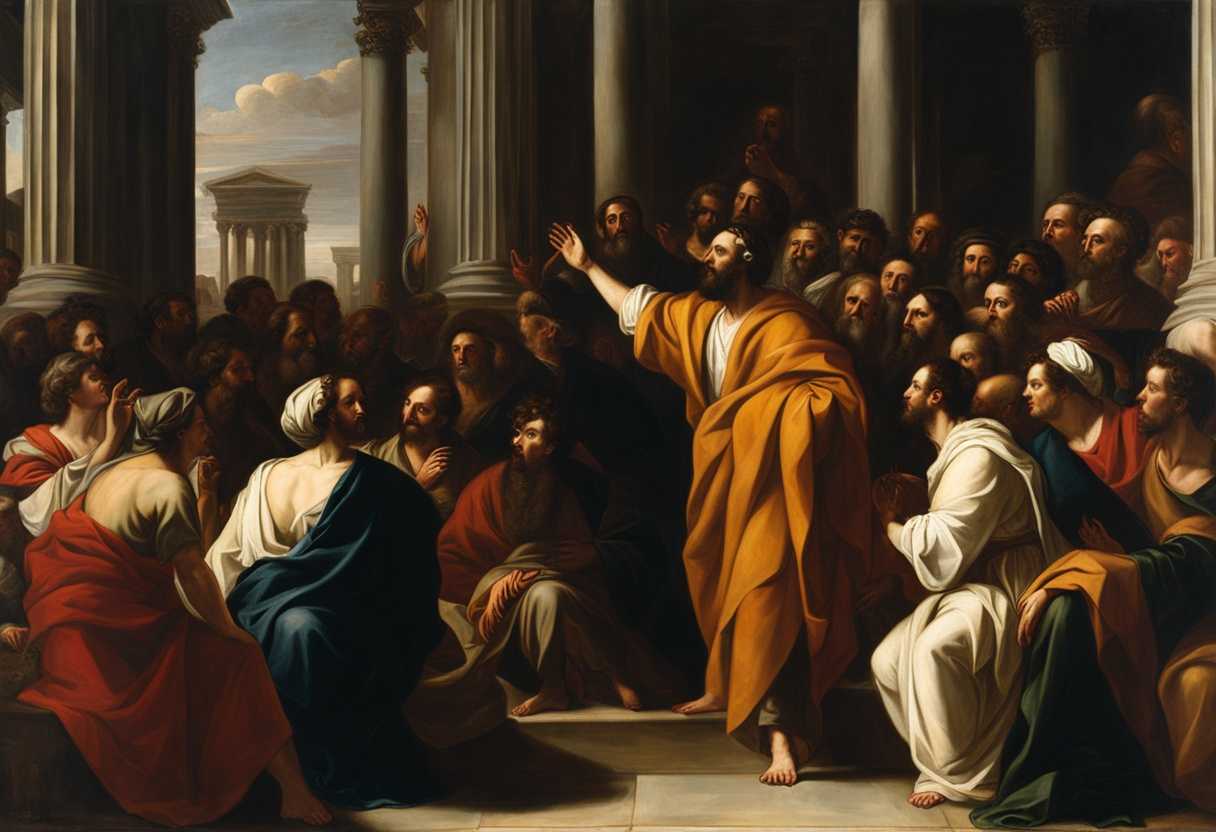
Iconium is a city mentioned in the New Testament, notably in Acts 14, where the Apostle Paul and Barnabas preached and faced opposition. It symbolizes a place of both missionary challenge and the spread of early Christian teachings.
Scripture
But the Jews incited the devout women of high standing and the leading men of the city, stirred up persecution against Paul and Barnabas, and drove them out of their district.
13 And they shook off the dust from their feet against them and went to Iconium.
52 And the disciples were filled with joy and with the Holy Spirit.
Meaning of Iconium in the Bible
Iconium, a city located in the region of Lycaonia, serves as a significant backdrop in the missionary journeys of the Apostle Paul, particularly detailed in Acts 14:1-7. In this passage, Paul and Barnabas enter the synagogue of the Jews, where they boldly proclaim the Gospel, resulting in many conversions among both Jews and Gentiles. However, they also encounter fierce opposition, leading to a portrayal of Iconium as a site of spiritual contention—a microcosm of the larger battle between the burgeoning Christian faith and established religious norms. This dual role emphasizes the idea that the spread of Christianity often necessitates confronting resistance, a theme echoed in John 15:20, where Jesus warns, “If they persecuted me, they will also persecute you.”
The broader meaning of Iconium, therefore, extends beyond its geographical significance; it embodies the complexities of evangelism—joyful acceptance intertwined with persecution. Paul and Barnabas’ experience illustrates that the path of faith is often met with challenges, yet it also serves as a testament to the transformative power of the Gospel. As believers today reflect on the events at Iconium, they are reminded of the resilience required in the face of adversity and the call to be steadfast in their witness, even when met with opposition, resonating with the instruction in 2 Timothy 1:7, which emphasizes God’s gift of power, love, and self-discipline to persevere through trials.
In addition to its role in the missionary journeys of Paul, Iconium can be perceived as a symbol of both spiritual awakening and conflict. The city’s name itself is thought to derive from a word meaning “city of the people,” indicating its significance as a hub for diverse communities. This diversity parallels the growth of early Christianity, where people from various backgrounds united under a common faith, reflecting the inclusivity and transformative nature of the Gospel. Iconium’s populace could symbolize the broader challenge faced by the early Church: transcending cultural and religious divides and meeting individuals at their points of need. As such, the lessons from Iconium extend to contemporary contexts where the Church must navigate pluralistic environments and engage respectfully with differing beliefs.
Furthermore, the experiences of Paul and Barnabas in Iconium highlight the enduring theme of duality in spiritual journeys. The flourishing of Christian communities often coexists with the risk of opposition and strife, suggesting that growth in faith is frequently accompanied by trials. Iconium represents the necessity of perseverance through adversity, and from the early Church’s struggle there emerges a legacy of resilience and unwavering faith. Modern believers are thus reminded that challenges are an integral part of the faith experience, encouraging a proactive response to spiritual conflict, and reinforcing a commitment to sharing the Gospel message despite the circumstances faced. This framework of faith amidst trial can empower individuals and congregations to engage boldly in their spiritual missions today, echoing the historical significance of Iconium as a battleground of faith.
A Place of Missionary Activity
Iconium serves as a significant backdrop for the early Christian missionary efforts. It was a city where the apostles, particularly Paul and Barnabas, preached the gospel and established a community of believers. This highlights the importance of urban centers in the spread of Christianity, illustrating how the faith took root in diverse cultural contexts and how early Christians faced both acceptance and opposition in their mission.
Symbol of Perseverance in Faith
The experiences of the apostles in Iconium reflect the broader theme of perseverance in the face of adversity. The challenges they encountered, including opposition from local authorities and mixed reactions from the populace, serve as a reminder of the trials that believers may face when sharing their faith. Iconium thus symbolizes the resilience required to uphold one’s beliefs amidst challenges, encouraging believers to remain steadfast in their convictions.
Intersection of Cultures
Iconium was a city that represented a blend of various cultures and influences, including Greek, Roman, and local traditions. This cultural intersection is significant as it illustrates the early church’s engagement with diverse populations. The interactions in Iconium highlight the universal nature of the Christian message, emphasizing that the gospel transcends cultural boundaries and speaks to the hearts of people from all walks of life.
How to Cultivate Peace and Faith in Troubling Times
In these troubling times, cultivating peace and faith can feel like an uphill battle, but it’s essential for our spiritual growth and well-being. Start by immersing yourself in Scripture; verses like Philippians 4:6-7 remind us to bring our worries to God in prayer, allowing His peace to guard our hearts and minds. Make it a daily practice to carve out quiet moments for reflection and prayer, where you can surrender your anxieties and listen for His guidance. Surround yourself with a supportive community—whether through a church group or friends who share your faith—so you can uplift one another and share in both struggles and joys. Remember, faith is not the absence of doubt but the choice to trust in God’s promises, even when the world feels chaotic. Embrace gratitude, focusing on the blessings in your life, and let that gratitude transform your perspective. By nurturing these practices, you’ll find that peace and faith can flourish, even amidst the storms.
Bible References to Iconium in Scripture:
Acts 14:1-7: 1 Now at Iconium they entered together into the Jewish synagogue and spoke in such a way that a great number of both Jews and Greeks believed.
2 But the unbelieving Jews stirred up the Gentiles and poisoned their minds against the brothers.
3 So they remained for a long time, speaking boldly for the Lord, who bore witness to the word of his grace, granting signs and wonders to be done by their hands.
4 But the people of the city were divided; some sided with the Jews and some with the apostles.
5 When an attempt was made by both Gentiles and Jews, with their rulers, to mistreat them and to stone them,
6 they learned of it and fled to Lystra and Derbe, cities of Lycaonia, and to the surrounding country,
7 and there they continued to preach the gospel.
Acts 14:19-21: 19 But Jews came from Antioch and Iconium, and having persuaded the crowds, they stoned Paul and dragged him out of the city, supposing that he was dead.
20 But when the disciples gathered about him, he rose up and entered the city, and on the next day he went on with Barnabas to Derbe.
21 When they had preached the gospel to that city and had made many disciples, they returned to Lystra and to Iconium and to Antioch,
Acts 14:24-28: 24 Then they passed through Pisidia and came to Pamphylia.
25 And when they had spoken the word in Perga, they went down to Attalia,
26 and from there they sailed to Antioch, where they had been commended to the grace of God for the work that they had fulfilled.
27 And when they arrived and gathered the church together, they declared all that God had done with them, and how he had opened a door of faith to the Gentiles.
28 And they remained no little time with the disciples.
2 Timothy 3:10-11: 10 You, however, have followed my teaching, my conduct, my aim in life, my faith, my patience, my love, my steadfastness,
11 my persecutions and sufferings that happened to me at Antioch, at Iconium, and at Lystra—which persecutions I endured; yet from them all the Lord rescued me.

Rev. François Dupont is a dedicated church minister with a wealth of experience in serving spiritual communities. With a calm and serene demeanor, he has been devoted to sharing the message of love, compassion, and tolerance for over two decades. Through his thoughtful sermons, compassionate counseling, and unwavering support, Rev. Dupont has touched the lives of countless individuals, allowing them to find solace and strength during difficult times. His serene presence and deep understanding of the human condition make him a trusted guide for those seeking spiritual nourishment and guidance.