
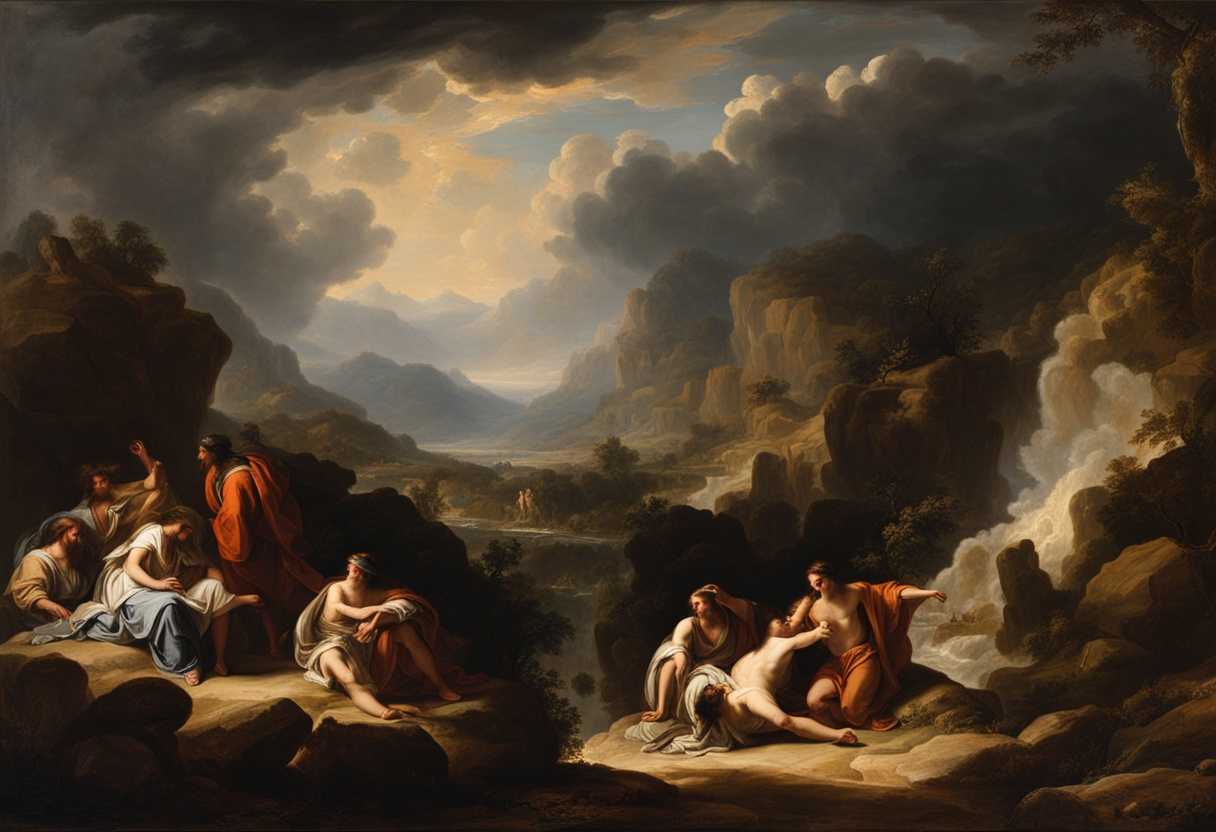
Meribah, meaning “strife” or “quarreling,” refers to the location where the Israelites contested with Moses and God over water and expressed their discontent (Exodus 17:1-7; Numbers 20:1-13). It is significant for representing a moment of rebellion and lack of faith among the Israelites during their journey in the wilderness.
Scripture
1 All the congregation of the people of Israel moved on from the wilderness of Sin by stages, according to the commandment of the Lord, and camped at Rephidim, but there was no water for the people to drink.
2 Therefore the people quarreled with Moses and said, “Give us water to drink.” And Moses said to them, “Why do you quarrel with me? Why do you test the Lord?”
3 But the people thirsted there for water, and the people grumbled against Moses and said, “Why did you bring us up out of Egypt, to kill us and our children and our livestock with thirst?”
4 So Moses cried to the Lord, “What shall I do with this people? They are almost ready to stone me.”
5 And the Lord said to Moses, “Pass on before the people, taking with you some of the elders of Israel, and take in your hand the staff with which you struck the Nile, and go.
6 Behold, I will stand before you there on the rock at Horeb, and you shall strike the rock, and water shall come out of it, and the people will drink.” And Moses did so, in the sight of the elders of Israel.
7 And he called the name of the place Massah and Meribah, because of the quarreling of the people of Israel, and because they tested the Lord by saying, “Is the Lord among us or not?”
Meaning of Meribah in the Bible
Meribah, which translates to “strife” or “quarreling,” serves as a poignant symbol of human frustration and the perennial struggle with faith, particularly during trials. In Exodus 17:1-7, the Israelites, weary and parched in the wilderness, direct their grievances toward Moses, questioning his leadership and, by extension, God’s provision. This moment of conflict reflects not only their immediate physical thirst but also a deeper spiritual thirst, revealing their frailty and lack of trust in divine providence. Moses’ striking of the rock, followed by God’s provision of water, serves as an act of grace amidst rebellion; it is a demonstration of God’s willingness to meet human needs even in the face of doubt.
Moreover, Meribah is revisited later in Numbers 20:1-13, where another incident of discontent occurred, culminating in Moses’ disobedience as he struck the rock instead of speaking to it as commanded by God. This act of frustration led to consequences for Moses, emphasizing that divine leadership requires faithfulness and adherence to God’s commands. Thus, the broader meaning of Meribah extends beyond the mere historical context; it becomes a cautionary tale about the dangers of disobedience and the necessity of trusting in God during challenging times. This recurring theme of strife echoes throughout scripture, reminding believers of the need for perseverance in faith despite their struggles and the importance of responding to hardship with trust rather than rebellion.
The significance of Meribah continues to resonate through various biblical narratives, emphasizing the tension between human discontentment and divine faithfulness. In Deuteronomy 33:8-11, the references to Meribah underscore the seriousness of the rebellion against God and highlight the importance of remembering past lessons. As Moses recounts the history of Israel’s relationship with God, he reminds the people of the consequences that arose from their strife and doubt. This serves to reinforce the accountability that comes with divine patience and the expectation of obedience from those who have witnessed firsthand God’s miraculous acts.
In the Psalms, particularly Psalm 95:8-11, Meribah is invoked as a stark reminder of the people’s hardened hearts. The psalmist urges the worshippers to avoid the mistakes of their ancestors who tested God’s patience by refusing to trust in His goodness. This connection reflects a broader biblical theme where Meribah symbolizes the critical moments in faith where obedience can either strengthen or fracture one’s relationship with God. Ultimately, Meribah is not just a location or a historical event; it stands as a testament to the ongoing struggle between faith and doubt, urging believers to remain steadfast in their trust in God’s provision even amidst life’s difficulties. It highlights the call for each generation to learn from the lessons of the past, fostering a faith that is responsive rather than resistant to divine guidance.
Conflict and Struggle
The name “Meribah” is often associated with conflict and struggle, reflecting the challenges faced by the Israelites during their journey in the wilderness. It serves as a reminder of the human tendency to question and doubt in times of hardship. The events that took place at Meribah highlight the struggles between faith and frustration, illustrating how adversity can lead to conflict not only with external circumstances but also within the community and one’s relationship with God.
Divine Provision and Testing
Meribah also symbolizes the theme of divine provision amidst testing. The incidents that occurred there demonstrate how God provided for the needs of His people, even when they were at their most desperate. This duality of testing and provision emphasizes the importance of trust in God during difficult times, suggesting that challenges can serve as opportunities for spiritual growth and deeper reliance on divine support.
Consequences of Disobedience
Another broader meaning of Meribah relates to the consequences of disobedience and the importance of obedience to God’s commands. The events at Meribah illustrate how actions taken in frustration or anger can lead to significant repercussions. This serves as a cautionary tale about the importance of maintaining faith and obedience, even when faced with trials, and the potential consequences of failing to uphold these values.
How to Grow Stronger in Faith Through Life’s Challenges
Life’s challenges can often feel overwhelming, but they also present us with unique opportunities to deepen our faith. When faced with trials, remember that these moments are not just obstacles but also invitations to lean into God’s promises. Reflect on James 1:2-4, which encourages us to consider it pure joy when we encounter difficulties, as they produce perseverance and maturity in our faith. Embrace prayer as your lifeline during tough times; it’s in those quiet moments of communion with God that we often find clarity and strength. Surround yourself with a supportive community—fellow believers who can uplift you and share their own stories of faith in adversity. Lastly, immerse yourself in Scripture, allowing the Word to guide and comfort you. Each challenge can become a stepping stone, leading you closer to a resilient faith that not only sustains you but also inspires others. Remember, you are not alone; God walks with you through every storm, shaping you into the person He created you to be.
Bible References to the Meaning of Meribah:
Numbers 20:1-13: 1 And the people of Israel, the whole congregation, came into the wilderness of Zin in the first month, and the people stayed in Kadesh. And Miriam died there and was buried there.
2 Now there was no water for the congregation. And they assembled themselves together against Moses and against Aaron.
3 And the people quarreled with Moses and said, “Would that we had perished when our brothers perished before the Lord!
4 And why have you made us come up out of Egypt to bring us to this evil place? It is no place for grain or figs or vines or pomegranates, and there is no water to drink.”
5 And why have you made us come up out of Egypt to bring us to this evil place? It is no place for grain or figs or vines or pomegranates, and there is no water to drink.”
6 Then Moses and Aaron went from the presence of the assembly to the entrance of the tent of meeting and fell on their faces. And the glory of the Lord appeared to them,
7 And the Lord spoke to Moses, saying,
8 “Take the staff, and assemble the congregation, you and Aaron your brother, and tell the rock before their eyes to yield its water. So you shall bring water out of the rock for them and give drink to the congregation and their cattle.”
9 And Moses took the staff from before the Lord, as he commanded him.
10 Then Moses and Aaron gathered the assembly together before the rock, and he said to them, “Hear now, you rebels: shall we bring water for you out of this rock?”
11 And Moses lifted up his hand and struck the rock with his staff twice, and water came out abundantly, and the congregation drank, and their livestock.
12 But the Lord said to Moses and Aaron, “Because you did not believe in me, to uphold me as holy in the eyes of the people of Israel, therefore you shall not bring this assembly into the land that I have given them.”
13 These are the waters of Meribah, where the people of Israel quarreled with the Lord, and through them he showed himself holy.
Deuteronomy 33:8-11: 8 And of Levi he said, “Give to Levi your Thummim, and your Urim to your godly one, whom you tested at Massah, with whom you quarreled at the waters of Meribah,
9 who said of his father and mother, ‘I regard them not’; he disowned his brothers and ignored his children. For they observed your word and kept your covenant.
10 They shall teach Jacob your rules and Israel your law; they shall put incense before you and whole burnt offerings on your altar.
11 Bless, O Lord, his substance,
and accept the work of his hands;
crush the loins of his adversaries,
of those who hate him, that they rise not again.”
Psalm 81:7: 7 In distress you called, and I delivered you; I answered you in the secret place of thunder; I tested you at the waters of Meribah. Selah
Psalm 95:8-11: 8 Do not harden your hearts, as at Meribah, as on the day at Massah in the wilderness.
9 when your fathers put me to the test and put me to the proof, though they had seen my work.
10 For forty years I loathed that generation and said, “They are a people who go astray in their heart, and they have not known my ways.”
11 Therefore I swore in my wrath, “They shall not enter my rest.”
Isaiah 48:21: 21 And they did not thirst when he led them through the deserts; he made water flow for them from the rock; he split the rock and the water gushed out.
1 Corinthians 10:1-4: 1 For I do not want you to be unaware, brothers, that our fathers were all under the cloud, and all passed through the sea,
2 and all were baptized into Moses in the cloud and in the sea,
3 and all ate the same spiritual food,
4 and all drank the same spiritual drink. For they drank from the spiritual Rock that followed them, and the Rock was Christ.

Reverend Michael Johnson is an experienced Church Minister with a profound expertise in spirituality and guidance. With a serene presence and a compassionate heart, he has faithfully served his congregation for over 20 years, leading them on a spiritual journey towards inner peace and enlightenment. Reverend Johnson’s extensive knowledge of religious philosophies and profound understanding of human nature have made him a trusted confidant and mentor to many, as he seamlessly weaves his profound wisdom into life teachings. Reverend Johnson’s calming demeanor and empathetic nature continue to uplift and heal souls, nurturing a sense of unity and tranquility within his community.