
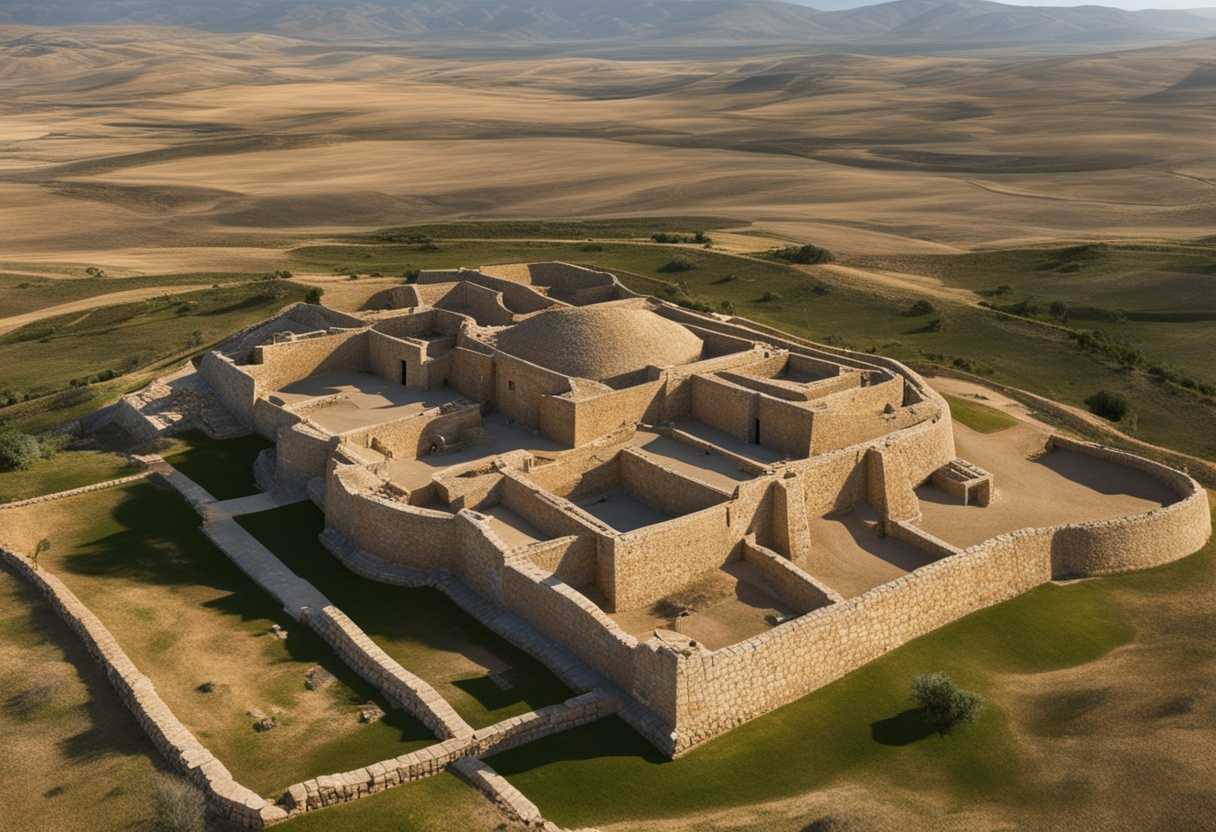
Lachish is a biblical city mentioned in the Old Testament, known for its significant role as a fortified city in the kingdom of Judah. It is often associated with events such as the conquest by Joshua and the Assyrian siege during King Hezekiah’s reign (2 Kings 18:14-17).
Scripture
3 So Adoni-zedek king of Jerusalem sent to Hoham king of Hebron, to Piram king of Jarmuth, to Japhia king of Lachish, and to Debir king of Eglon, saying,
4 “Come up to me and help me, and let us strike Gibeon, for it has made peace with Joshua and with the people of Israel.”
5 So the five kings of the Amorites, the king of Jerusalem, the king of Hebron, the king of Jarmuth, the king of Lachish, and the king of Eglon, gathered their forces and went up with all their armies and encamped against Gibeon and made war against it.
Meaning of Lachish in the Bible
Lachish, a prominent city in the Old Testament, epitomizes the military, political, and spiritual struggles faced by the Israelites, reflecting the broader themes of conflict and divine judgment in biblical narrative. Situated strategically in the Shephelah region, Lachish served not only as a fortified city but as a crucial stronghold for defense against invading armies, notably during the conquest led by Joshua (Joshua 10:31-32). Its fall to the Assyrians during King Hezekiah’s reign (2 Kings 18:14-17) represents a pivotal moment in the narrative arc of Judah—highlighting the tension between divine providence and human governance, as the Lord’s protection is explicitly called into question amidst siege and devastation.
Beyond its historical significance, Lachish embodies critical theological lessons about faith, resilience, and the repercussions of idolatry and sin. The destruction of Lachish, recorded in 2 Kings 18:14-17, serves as a symbol of the consequences faced by nations straying from their covenant with God. The archaeological evidence, including the Lachish letters, provides a unique insight into the fears and realities of its residents during the Assyrian threat, illustrating the broader human experience of anxiety against the backdrops of divine sovereignty. Ultimately, Lachish’s narrative invites believers to consider the importance of faithfulness to God amidst trials and tribulations, urging a reflection on the lessons of history as they relate to contemporary faith and moral choices (2 Chronicles 32:1-8).
Lachish also appears in the context of prophetic literature, particularly through the oracle texts where it serves as a focal point for the warnings issued against Israel and Judah for their transgressions. The prophets frequently invoke the city as a symbol of impending judgment and calamity, illustrating the dire consequences of turning away from worshipping the Lord. This prophetic usage underscores Lachish’s role, not merely as a military outpost, but as a representation of the broader spiritual failings of the people, emphasizing that their fates are intrinsically linked to their faithfulness to God.
Moreover, the archaeological site of Lachish has provided invaluable insights into the cultural and religious practices of its inhabitants during the time of the divided monarchy. The discovery of altars and artifacts points to the syncretism that often characterized Israel’s worship, where the influence of surrounding cultures melded with religious traditions. This intermingling of faith and idolatry is critical in understanding the lessons from Lachish’s fate—serving as a cautionary tale against compromising one’s spiritual integrity. The narrative of Lachish, through its various mentions in biblical texts, reinforces themes of accountability, the significance of obedience to God, and the enduring impact of choices made by leaders and communities alike, as their decisions resonate through generations.
Historical Significance of Lachish
Lachish was an important city in ancient Judah, serving as a strategic military stronghold. Its location made it a key site for defense against invading forces, particularly during the Assyrian conquest. The city’s fortifications and its role in various battles highlight the broader theme of struggle and resilience in the face of adversity, reflecting the historical context of the Israelites during tumultuous times.
Symbol of Divine Judgment
In biblical narratives, Lachish often represents the consequences of disobedience to God. The city’s destruction and the fate of its inhabitants serve as a cautionary tale about the repercussions of turning away from divine commandments. This theme underscores the broader biblical message regarding the importance of faithfulness and the moral order established by God.
Cultural and Religious Identity
Lachish also holds significance in the context of Israelite identity and culture. As a center of worship and community life, it reflects the religious practices and societal values of the time. The city’s role in the broader narrative of Israel’s history emphasizes the importance of communal identity and the relationship between the people and their God, illustrating how geography and culture intertwine in the biblical story.
How to Build a Stronger Faith in Christ
Building a stronger faith in Christ is a deeply personal journey that requires intentionality and openness to His presence in your life. Start by immersing yourself in Scripture; the Bible is not just a book, but a living testament of God’s love and promises. Set aside time each day for prayer, inviting God into your thoughts and decisions, and listen for His guidance in the stillness. Surround yourself with a community of believers who can encourage and challenge you, as fellowship is vital for growth. Remember, faith is not about perfection but about progress; embrace the struggles and doubts as opportunities to deepen your trust in Him. Finally, serve others in love, for in giving of yourself, you’ll find your faith blossoming in ways you never imagined. Each step you take, no matter how small, brings you closer to the heart of Christ.
Bible References to the Meaning of Lachish:
Joshua 10:31-32: 31 And Joshua and all Israel passed on from Libnah to Lachish and laid siege to it and fought against it.
32 And the Lord gave Lachish into the hand of Israel, and he captured it on the second day and struck it with the edge of the sword, and every person in it, as he had done to Libnah.
Joshua 12:11: 11 the king of Jarmuth, one; the king of Lachish, one;
Joshua 15:39: 12 Ain, Rimmon, Ether, and Ashan—four cities and their villages.
2 Kings 18:13-14: 13 In the fourteenth year of King Hezekiah, Sennacherib king of Assyria came up against all the fortified cities of Judah and took them.
14 And Hezekiah king of Judah sent to the king of Assyria at Lachish, saying, “I have done wrong; withdraw from me. Whatever you impose on me I will bear.” And the king of Assyria required of Hezekiah king of Judah three hundred talents of silver and thirty talents of gold.
2 Kings 19:8: 8 Then the Rabshakeh returned, and found the king of Assyria fighting against Libnah, for he had heard that the king had left Lachish.
2 Chronicles 11:5-9: 5 Rehoboam lived in Jerusalem, and he built cities for defense in Judah.
6 He built Bethlehem, Etam, Tekoa,
7 Bethel and its villages, and Jahaz and its villages, and Meon and its villages,
8 Gibeon, and Jeiel the son of Hotham the Gibeonite, were the overseers of the workmen and the Levites who were skilled in all the work of the service of the house of God.
9 And Adoraim, Lachish, Azekah,
2 Chronicles 32:9: 9 After this, Sennacherib king of Assyria, who was besieging Lachish with all his forces, sent his servants to Jerusalem to Hezekiah king of Judah and to all the people of Judah who were in Jerusalem, saying,
Isaiah 36:1-2: 1 In the fourteenth year of King Hezekiah, Sennacherib king of Assyria came up against all the fortified cities of Judah and took them.
2 And the king of Assyria sent the Rabshakeh from Lachish to King Hezekiah at Jerusalem, with a great army. And he stood by the conduit of the upper pool on the highway to the Washer’s Field.
Jeremiah 34:6-7: 6 Then Jeremiah the prophet spoke all these words to Zedekiah king of Judah, in Jerusalem, – Jeremiah 34:6 (ESV)
7 When the army of the king of Babylon was fighting against Jerusalem and against all the cities of Judah that were left, Lachish and Azekah, for these were the only fortified cities of Judah that remained.
Micah 1:13: 13 Harness the steeds to the chariots, inhabitants of Lachish; it was the beginning of sin to the daughter of Zion, for in you were found the transgressions of Israel.

Reverend Ogunlade is a seasoned Church Minister with over three decades of experience in guiding and nurturing congregations. With profound wisdom and a serene approach, Reverend Ogunlade has carried out various pastoral duties, including delivering uplifting sermons, conducting religious ceremonies, and offering sage counsel to individuals seeking spiritual guidance. Their commitment to fostering harmony and righteousness within their community is exemplified through their compassionate nature, making them a beloved and trusted figure among the congregation.