
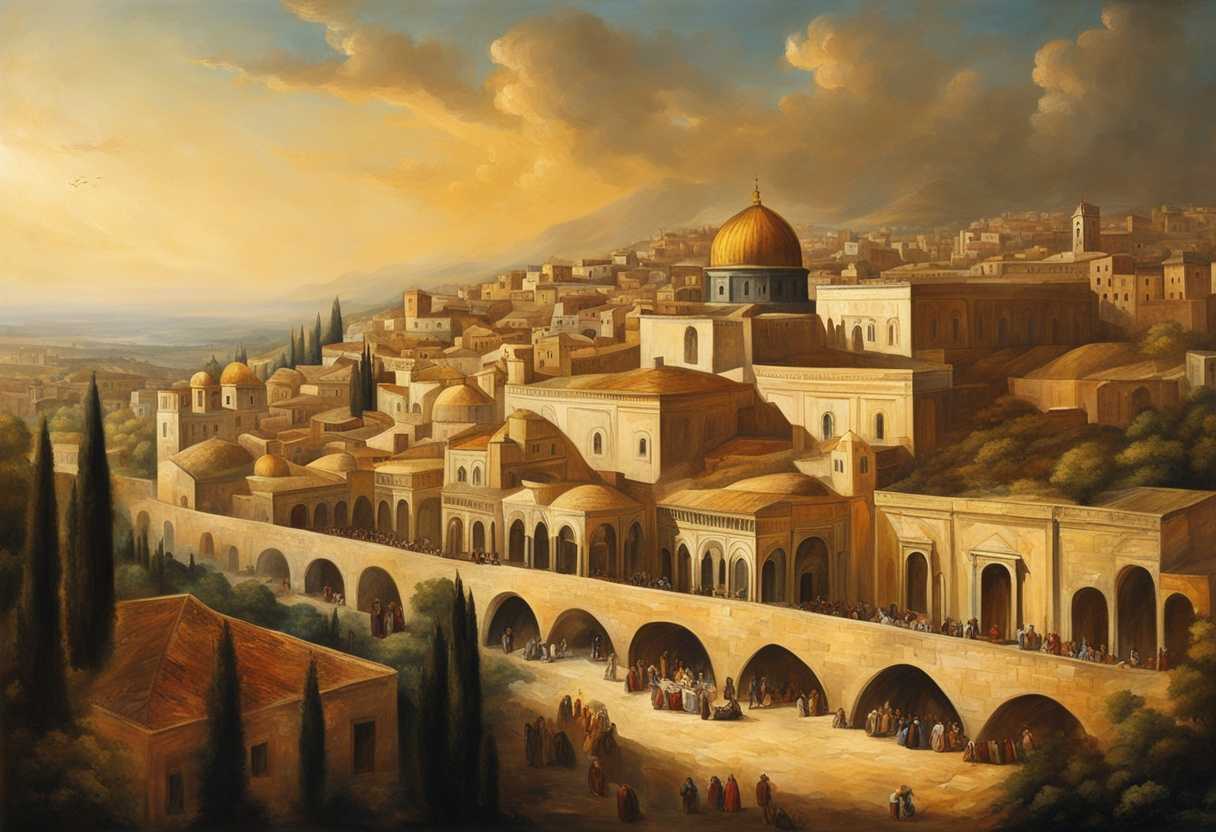
In the Bible, Judea refers to a region in ancient Israel that was the southern part of the kingdom, which included Jerusalem and was significant for its cultural and religious importance. It represents the heart of Jewish life and the location of key events in the New Testament, particularly those involving Jesus and his disciples.
Scripture
Now after Jesus was born in Bethlehem of Judea in the days of Herod the king, behold, wise men from the east came to Jerusalem,
2 saying, “Where is he who has been born king of the Jews? For we saw his star when it rose and have come to worship him.”
3 When Herod the king heard this, he was troubled, and all Jerusalem with him;
4 and assembling all the chief priests and scribes of the people, he inquired of them where the Christ was to be born.
5 They told him, “In Bethlehem of Judea, for so it is written by the prophet:
6 “‘And you, O Bethlehem, in the land of Judah,
are by no means least among the rulers of Judah;
for from you shall come a ruler
who will shepherd my people Israel.’”
Meaning of Judea in the Bible
Judea, as depicted in the Bible, carries profound cultural and spiritual significance, particularly within the context of Jewish history and Christian teachings. Geographically, it was the southern region of ancient Israel, with Jerusalem as its capital, serving as a center of worship, governance, and social life. The Scripture portrays Judea not only as a physical territory but as a symbolic landscape where pivotal theological narratives unfolded. For instance, in Matthew 2:1, the magi visit “Jerusalem,” a city within Judea, seeking the newborn King of the Jews, underscoring the region’s role in divine revelation and the fulfillment of prophecy.
Beyond its geographic implications, Judea represents a space of both hope and turmoil, encapsulating the Jewish people’s struggles, their longing for the Messiah, and the eventual advent of Jesus Christ. The Gospel of Luke (2:4-5) notes that Joseph traveled to Judea to register for a census, highlighting the region’s continued significance in daily life and governance. Notably, Jesus’ ministry traversed Judea, reaching out to the marginalized and confronting established religious authorities, as seen in his parable of the Good Samaritan (Luke 10:25-37), which illustrates the universal call to love and compassion that transcends ethnic and social boundaries. Thus, Judea serves as a microcosm of the broader themes of redemption, prophecy fulfillment, and the transformative power of love and faith, inviting all believers into a deeper relationship with God.
Throughout the New Testament, Judea is frequently referenced as a focal point for early Christian activity and theological discourse. The region’s historical roots trace back to the lineage of David, making it integral to Jewish messianic expectations. The prophets often spoke of a future restoration of Israel that centered around this territory, highlighting its significance in divine plans. In Acts of the Apostles, the apostles are described as beginning their mission in Jerusalem, which is located in Judea, underscoring the region’s importance as the birthplace of the church and a ground zero for religious awakening.
Additionally, Judea serves as a backdrop for many critical moments in Jesus’ life and ministry. His numerous teachings, miracles, and confrontations with religious leaders occurred within Judea, highlighting its rich spiritual atmosphere yet tumultuous socio-political landscape. The parables Jesus shared, though often rooted in everyday experiences, carried deeper implications for the people of Judea, reflecting their hopes and challenges. Furthermore, the themes of sin, repentance, and the promise of new life resonate powerfully within this context, marking Judea not just as a setting but as a character in the unfolding narrative of salvation history, which ultimately calls for a renewal of faith and a restoration of the covenant community.
Historical Significance
Judea, as a region, holds a crucial place in biblical history. It was the heartland of the Jewish people and the site of significant events in both the Old and New Testaments. The region was home to Jerusalem, the center of Jewish worship and the location of the Temple, which was central to Jewish identity and religious practice. The historical context of Judea provides insight into the socio-political dynamics of the time, including the interactions between various groups such as the Romans, Jews, and early Christians.
Symbol of Spiritual Journey
In a broader spiritual context, Judea represents a journey of faith and redemption. It is often associated with the idea of returning to one’s roots and seeking a deeper relationship with God. The travels of biblical figures through Judea symbolize the quest for spiritual enlightenment and the challenges faced along the way. This journey reflects the broader theme of seeking divine truth and understanding, which resonates with many believers today.
Cultural Identity
Judea also embodies the cultural identity of the Jewish people. It is a symbol of their heritage, traditions, and the covenant relationship with God. The region’s significance extends beyond geography; it represents the collective memory and aspirations of the Jewish community. This cultural identity is woven throughout the biblical narrative, influencing the teachings, laws, and prophecies that shape Jewish thought and practice.
How to Embrace Diversity in Faith for a Better Christian Life
Embracing diversity in faith is a beautiful way to enrich your Christian life and deepen your relationship with God. As you interact with fellow believers from different backgrounds, cultures, and traditions, you open yourself up to a broader understanding of God’s love and grace. Remember that the body of Christ is made up of many parts, each contributing unique perspectives and gifts (1 Corinthians 12:12-27). Take the time to listen to others’ stories, engage in meaningful conversations, and participate in community events that celebrate this diversity. By doing so, you not only grow in empathy and compassion but also reflect the inclusive nature of Christ’s message. Let your heart be a welcoming space, where differences are not just tolerated but celebrated, as you strive to embody the love of Jesus in a world that desperately needs it.
Bible References to the Meaning of Judea:
Matthew 3:1-6: 1 In those days John the Baptist came preaching in the wilderness of Judea,
2 “Repent, for the kingdom of heaven is at hand.”
3 For this is he who was spoken of by the prophet Isaiah when he said, “The voice of one crying in the wilderness: ‘Prepare the way of the Lord; make his paths straight.’”
4 Now John wore a garment of camel’s hair and a leather belt around his waist, and his food was locusts and wild honey.
5 Then Jerusalem and all Judea and all the region about the Jordan were going out to him,
6 and they were baptized by him in the river Jordan, confessing their sins.
Matthew 4:12-17: 23 And he went throughout all Galilee, teaching in their synagogues and proclaiming the gospel of the kingdom and healing every disease and every affliction among the people.
13 And leaving Nazareth he went and lived in Capernaum by the sea, in the territory of Zebulun and Naphtali,
14 so that what was spoken by the prophet Isaiah might be fulfilled:
15 “The land of Zebulun and the land of Naphtali, the way of the sea, beyond the Jordan, Galilee of the Gentiles—”
16 the people dwelling in darkness have seen a great light, and for those dwelling in the region and shadow of death, on them a light has dawned.”
17 From that time Jesus began to preach, saying, “Repent, for the kingdom of heaven is at hand.”
Matthew 19:1-2: 1 Now when Jesus had finished these sayings, he went away from Galilee and entered the region of Judea beyond the Jordan.
2 And great crowds followed him, and he healed them there.
Matthew 24:15-16: 15 “So when you see the abomination of desolation spoken of by the prophet Daniel, standing in the holy place (let the reader understand),
16 then let those who are in Judea flee to the mountains.
Mark 1:4-5: 4 John appeared, baptizing in the wilderness and proclaiming a baptism of repentance for the forgiveness of sins.
5 And all the country of Judea and all Jerusalem were going out to him and were being baptized by him in the river Jordan, confessing their sins.
Mark 10:1: 1 And he left there and went to the region of Judea and beyond the Jordan, and crowds gathered to him again. And again, as was his custom, he taught them.
Luke 1:5-7: 5 In the days of Herod, king of Judea, there was a priest named Zechariah, of the division of Abijah. And he had a wife from the daughters of Aaron, and her name was Elizabeth.
6 And they were both righteous before God, walking blamelessly in all the commandments and statutes of the Lord.
7 But they had no child, because Elizabeth was barren, and both were advanced in years.
Luke 2:1-4: 2 In those days a decree went out from Caesar Augustus that all the world should be registered.
2 This was the first registration when Quirinius was governor of Syria.
3 And all went to be registered, each to his own town.
4 And Joseph also went up from Galilee, from the town of Nazareth, to Judea, to the city of David, which is called Bethlehem, because he was of the house and lineage of David,
Luke 3:1-3: 1 In the fifteenth year of the reign of Tiberius Caesar, Pontius Pilate being governor of Judea, and Herod being tetrarch of Galilee, and his brother Philip tetrarch of the region of Ituraea and Trachonitis, and Lysanias tetrarch of Abilene,
3 In the high priesthood of Annas and Caiaphas, the word of God came to John the son of Zechariah in the wilderness.
3 And he went into all the region around the Jordan, proclaiming a baptism of repentance for the forgiveness of sins.
Luke 4:14-15: 14 And Jesus returned in the power of the Spirit to Galilee, and a report about him went out through all the surrounding country.
15 And he taught in their synagogues, being glorified by all.
Luke 5:17-20: 17 On one of those days, as he was teaching, Pharisees and teachers of the law were sitting there, who had come from every village of Galilee and Judea and from Jerusalem. And the power of the Lord was with him to heal.
18 And behold, some men were bringing on a bed a man who was paralyzed, and they were seeking to bring him in and lay him before Jesus,
19 But finding no way to bring him in, because of the crowd, they went up on the roof and let him down with his bed through the tiles into the midst before Jesus.
20 And when he saw their faith, he said, “Man, your sins are forgiven you.”
John 3:22-24: 22 After this Jesus and his disciples went into the Judean countryside, and he remained there with them and was baptizing.
23 John also was baptizing at Aenon near Salim, because water was plentiful there, and people were coming and being baptized.
24 for John had not yet been put in prison.
John 4:1-3: 4 Now when Jesus learned that the Pharisees had heard that Jesus was making and baptizing more disciples than John
2 (though Jesus himself did not baptize, but only his disciples),
3 he left Judea and departed again for Galilee.
John 7:1-3: 1 After this Jesus went about in Galilee. He would not go about in Judea, because the Jews were seeking to kill him.
2 Now the Jews’ Feast of Booths was at hand.
3 So his brothers said to him, “Leave here and go to Judea, that your disciples also may see the works you are doing.
Acts 1:6-8: 6 So when they had come together, they asked him, “Lord, will you at this time restore the kingdom to Israel?”
7 He said to them, “It is not for you to know times or seasons that the Father has fixed by his own authority.
8 But you will receive power when the Holy Spirit has come upon you, and you will be my witnesses in Jerusalem and in all Judea and Samaria, and to the end of the earth.”
Acts 8:1-4: 1 And Saul approved of his execution. And there arose on that day a great persecution against the church in Jerusalem, and they were all scattered throughout the regions of Judea and Samaria, except the apostles.
2 Devout men buried Stephen and made great lamentation over him.
3 But Saul was ravaging the church, and entering house after house, he dragged off men and women and committed them to prison.
4 Now those who were scattered went about preaching the word.
Acts 9:31-32: 31 So the church throughout all Judea and Galilee and Samaria had peace and was being built up. And walking in the fear of the Lord and in the comfort of the Holy Spirit, it multiplied.
32 Now as Peter went here and there among them all, he came down also to the saints who lived at Lydda.
Acts 11:1-2: 1 Now the apostles and the brothers who were throughout Judea heard that the Gentiles also had received the word of God.
2 So when Peter went up to Jerusalem, the circumcision party criticized him, saying,
Acts 15:1-3: 1 But some men came down from Judea and were teaching the brothers, “Unless you are circumcised according to the custom of Moses, you cannot be saved.”
2 And after Paul and Barnabas had no small dissension and debate with them, Paul and Barnabas and some of the others were appointed to go up to Jerusalem to the apostles and the elders about this question.
3 So, being sent on their way by the church, they passed through both Phoenicia and Samaria, describing in detail the conversion of the Gentiles, and brought great joy to all the brothers.
Acts 26:19-20: 19 “Therefore, O King Agrippa, I was not disobedient to the heavenly vision,
20 but declared first to those in Damascus, then in Jerusalem and throughout all the region of Judea, and also to the Gentiles, that they should repent and turn to God, performing deeds in keeping with their repentance.

Rev. François Dupont is a dedicated church minister with a wealth of experience in serving spiritual communities. With a calm and serene demeanor, he has been devoted to sharing the message of love, compassion, and tolerance for over two decades. Through his thoughtful sermons, compassionate counseling, and unwavering support, Rev. Dupont has touched the lives of countless individuals, allowing them to find solace and strength during difficult times. His serene presence and deep understanding of the human condition make him a trusted guide for those seeking spiritual nourishment and guidance.