
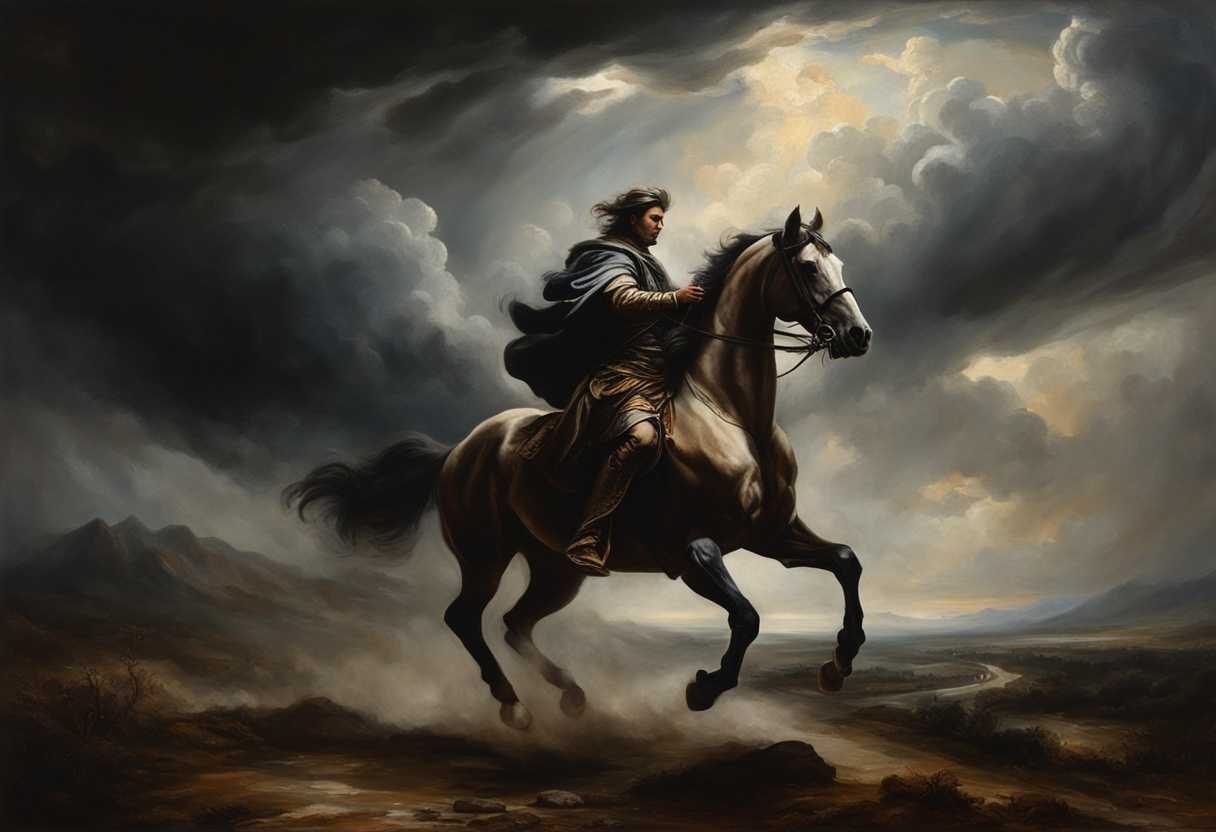
In the Bible, the pale horse is mentioned in Revelation 6:8 as one of the four horsemen of the Apocalypse. Its rider is identified as Death, symbolizing widespread mortality and calamity during the end times.
Scripture
7 When he opened the fourth seal, I heard the voice of the fourth living creature say, “Come!”
8 And I looked, and behold, a pale horse! And its rider’s name was Death, and Hades followed him. And they were given authority over a fourth of the earth, to kill with sword and with famine and with pestilence and by wild beasts of the earth.
Meaning of the Pale Horse in Revelation
The pale horse, introduced in Revelation 6:8, carries a profound significance as it embodies the inevitability of death and the chaos that accompanies the end times. The rider, named Death, is often interpreted as a representation of various forms of mortality, including war, famine, disease, and natural disasters, all of which contribute to a haunting panorama of humanity’s fragility. This imagery aligns with the broader themes found in Scripture concerning divine judgment and the consequences of humanity’s sinfulness. In this context, the pale horse serves as a somber reminder that the fulfillment of God’s prophecy includes both the judgment on the world and the finality of human existence, as illustrated in Hebrews 9:27, which states, “And as it is appointed unto men once to die, but after this the judgment.”
Moreover, the symbolism of the pale horse extends beyond simply the act of dying; it represents the pervasive nature of despair and the stripping away of life and hope amidst tribulation. The fact that the horse is described as “pale” (or “ashen” in many translations) suggests a ghastly pallor, evoking the imagery of decay and a lifeless existence. This aligns with the prophetic messages found throughout the Old Testament, such as in Ezekiel 18:32, where God expresses His desire for His people to turn from death and choose life. The pale horse, then, is not just a harbinger of physical death but also symbolizes spiritual death and separation from God, urging believers to remain vigilant and faithful amidst chaos, as articulated in Matthew 24:42, where Jesus instructs, “Watch therefore: for ye know not what hour your Lord doth come.” Ultimately, the pale horse and its rider evoke a complex mixture of fear, warning, and hope, reinforcing the call for repentance and the need for divine salvation in a world marked by impending judgment.
In addition to the themes already discussed, the pale horse can be viewed as emblematic of the pervasive despair that arises during catastrophic times. This conception resonates with other biblical teachings that address the consequences of straying from divine guidance. For instance, throughout the prophetic literature, there are frequent admonitions against rebellion and the forsaking of God, suggesting that such actions lead not only to moral decay but also to collective suffering. The pale horse thus serves as a powerful illustration of the broader spiritual decline that accompanies societal chaos, showcasing the divine warning that neglecting the calling to righteousness may culminate in dire circumstances.
Furthermore, the concept of the pale horse can be intricately tied to the eschatological narratives found in both the Old and New Testaments. Such narratives often highlight the period of tribulation preceding ultimate restoration and peace. In this light, the pale horse’s rider evokes imagery of the trials that believers might face as they navigate the tumultuous landscape of life’s challenges. The experience of suffering, far from being devoid of purpose, can indeed refine faith and serve as a catalyst for spiritual growth. In this regard, the pale horse reminds the faithful of the importance of perseverance under pressure, as Paul articulates in his epistles—emphasizing that tribulation produces endurance, leading ultimately to hope (a theme resonated throughout various letters in the New Testament). Thus, while the pale horse signifies death and devastation, it simultaneously calls the faithful to endure and find strength in their belief amidst the chaos of existence.
Symbol of Death and Judgment
The pale horse is often interpreted as a representation of death and the inevitable judgment that follows. In biblical literature, horses frequently symbolize power and conquest, and the pale horse, in particular, signifies the end of life and the finality of death. This imagery serves as a reminder of the transient nature of human existence and the certainty of mortality, urging believers to reflect on their lives and the choices they make in light of eternal consequences.
Reflection of Human Suffering
The pale horse also embodies the broader theme of human suffering and the trials that accompany life. It can be seen as a metaphor for the various forms of anguish, despair, and tribulation that individuals face throughout their existence. This interpretation encourages a deeper understanding of the struggles inherent in the human condition, prompting believers to seek solace and hope in their faith amidst adversity.
Call to Spiritual Vigilance
Furthermore, the pale horse serves as a call to spiritual vigilance and preparedness. Its appearance in prophetic literature often coincides with warnings about the end times and the need for believers to remain alert and steadfast in their faith. This symbolism emphasizes the importance of being spiritually equipped to face challenges and uncertainties, reinforcing the idea that one’s relationship with God is crucial in navigating the complexities of life and the eventuality of death.
How to Live a Life of Faith and Service
Living a life of faith and service is a beautiful journey that intertwines our relationship with God and our commitment to others. It begins with nurturing a personal connection with Christ through prayer, scripture reading, and reflection, allowing His teachings to shape our hearts and minds. As we grow in faith, we naturally become more attuned to the needs around us—whether it’s lending a helping hand to a neighbor, volunteering at a local charity, or simply offering a listening ear to a friend in distress. Remember, service doesn’t always have to be grand; even small acts of kindness can reflect God’s love in profound ways. Embrace opportunities to serve, and let your faith be the driving force behind your actions. In doing so, you’ll not only enrich the lives of others but also deepen your own spiritual journey, finding joy and purpose in the beautiful tapestry of community and compassion that God calls us to weave.
Bible References to the Pale Horse:

Rev. François Dupont is a dedicated church minister with a wealth of experience in serving spiritual communities. With a calm and serene demeanor, he has been devoted to sharing the message of love, compassion, and tolerance for over two decades. Through his thoughtful sermons, compassionate counseling, and unwavering support, Rev. Dupont has touched the lives of countless individuals, allowing them to find solace and strength during difficult times. His serene presence and deep understanding of the human condition make him a trusted guide for those seeking spiritual nourishment and guidance.