
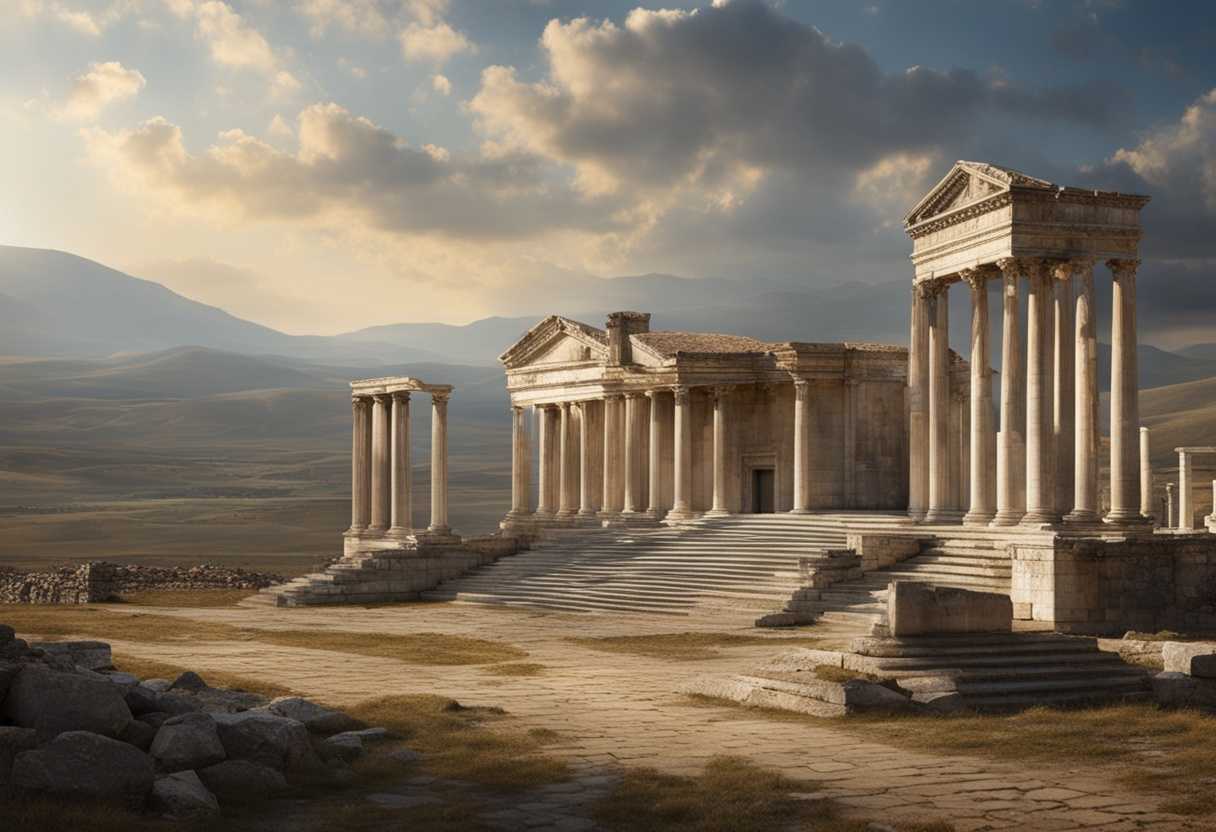
In the Bible, Laodicea refers to a prominent ancient city in Asia Minor, mentioned in the Book of Revelation as one of the seven churches. It is often associated with a lukewarm faith due to its criticism in Revelation 3:15-17, where it is described as being neither hot nor cold in its spiritual condition.
Scripture
14 “And to the angel of the church in Laodicea write: ‘The words of the Amen, the faithful and true witness, the beginning of God’s creation.
15 “‘I know your works: you are neither cold nor hot. Would that you were either cold or hot!
16 So, because you are lukewarm, and neither hot nor cold, I will spit you out of my mouth.
17 For you say, I am rich, I have prospered, and I need nothing, not realizing that you are wretched, pitiable, poor, blind, and naked.
18 I counsel you to buy from me gold refined by fire, so that you may be rich, and white garments so that you may clothe yourself and the shame of your nakedness may not be seen, and salve to anoint your eyes, so that you may see.
19 Those whom I love, I reprove and discipline, so be zealous and repent.
20 Behold, I stand at the door and knock. If anyone hears my voice and opens the door, I will come in to him and eat with him, and he with me.
21 The one who conquers, I will grant him to sit with me on my throne, as I also conquered and sat down with my Father on his throne.
22 He who has an ear, let him hear what the Spirit says to the churches.
Meaning of Laodicea in the Bible
The city of Laodicea, located in present-day Turkey, is emblematic of spiritual complacency and materialism, as articulated in Revelation 3:15-17. In this passage, Jesus expresses His disapproval of the Laodicean church, stating, “I know your deeds, that you are neither cold nor hot. I wish you were either one or the other!” This admonition reveals a deeper truth about the dangers of mediocrity in faith; the church, comfortable in its wealth and societal status, had become self-reliant and indifferent to its spiritual needs. Their self-assessment—“I am rich; I have acquired wealth and do not need a thing”—illustrates a crucial disconnect between their material wealth and spiritual destitution, as noted in verse 17: “But you do not realize that you are wretched, pitiful, poor, blind and naked.”
The broader significance of Laodicea extends beyond the historical context, serving as a cautionary tale for contemporary believers. The lukewarm state symbolizes a faith that lacks fervor and a genuine connection with God, raising questions about authenticity in one’s spiritual journey. Revelation 3:19 invites the Laodiceans, and by extension, all believers, to repentance and re-orientation toward a deeper relationship with Christ: “Those whom I love I rebuke and discipline. So be earnest and repent.” This call to action underscores the necessity of self-examination, urging individuals to cultivate a vibrant faith rather than succumb to the distractions and comforts of the world. Thus, the message of Laodicea resonates through the ages, prompting ongoing reflection on the vitality of one’s faith in the face of spiritual complacency.
Laodicea is often referenced in theological discussions as an archetype of churches and believers who prioritize worldly success over spiritual authenticity. Historically, the city was known for its economic prosperity, bolstered by its banking industry, and for its luxurious lifestyle, which undoubtedly contributed to the church’s spiritual apathy. The city’s wealth fostered a sense of self-sufficiency that made its inhabitants complacent about their spiritual conditions. As such, Laodicea serves as a poignant reminder for believers to remain vigilant against the allure of materialism, which can silently erode one’s commitment to faith and service.
Additionally, Laodicea’s situation is frequently examined in terms of its geographical and cultural context. The city was strategically located at the crossroads of important trade routes, which not only brought wealth but also a blend of cultural influences that could dilute pure Christian teachings. This cultural syncretism paralleled the church’s struggle, as it faced the temptation to conform to societal norms and practices at the expense of its foundational beliefs. Biblical interpreters often draw parallels between Laodicea’s challenges and those faced by modern-day churches grappling with secularism and cultural pressures. Hence, the reflections on Laodicea prompt believers to evaluate their own communities and the influences that threaten their spiritual vitality, encouraging a proactive stance in seeking a fervent relationship with Christ amidst contemporary distractions.
Spiritual Indifference and Complacency
Laodicea serves as a powerful symbol of spiritual indifference and complacency. The city was known for its wealth and self-sufficiency, which led to a sense of pride and a lack of urgency in spiritual matters. This reflects a broader warning against becoming too comfortable in one’s faith, highlighting the dangers of a lukewarm attitude towards spiritual growth and commitment.
The Call for Repentance and Renewal
The message to Laodicea emphasizes the need for repentance and renewal. The church in Laodicea was admonished to recognize its shortcomings and seek a deeper relationship with God. This broader meaning encourages believers to reflect on their spiritual state, urging them to turn away from complacency and pursue a more vibrant and active faith.
The Importance of True Wealth
Laodicea’s material wealth contrasted sharply with its spiritual poverty, illustrating the biblical principle that true wealth is found in spiritual richness rather than material possessions. This serves as a reminder that reliance on earthly riches can lead to a disconnect from God, prompting believers to seek treasures that are eternal and to prioritize their spiritual well-being over worldly success.
How to Overcome Spiritual Apathy and Cultivate Faith
Overcoming spiritual apathy and cultivating a vibrant faith is a journey that requires intentionality and grace. Start by setting aside time each day for prayer and reflection, inviting God into your routine and allowing His presence to reignite your passion. Engage with Scripture not just as a text, but as a living conversation with God—ask questions, seek understanding, and let His words challenge and inspire you. Surround yourself with a community of believers who can encourage you and hold you accountable; sometimes, the spark of faith can be reignited through the shared experiences and testimonies of others. Finally, serve others in your community; acts of kindness and love can transform your heart and remind you of the purpose and joy found in living out your faith. Remember, it’s okay to feel distant at times; what matters is your willingness to seek God and take small steps toward a deeper relationship with Him.
Bible References to Laodicea’s Meaning:

Reverend Ogunlade is a seasoned Church Minister with over three decades of experience in guiding and nurturing congregations. With profound wisdom and a serene approach, Reverend Ogunlade has carried out various pastoral duties, including delivering uplifting sermons, conducting religious ceremonies, and offering sage counsel to individuals seeking spiritual guidance. Their commitment to fostering harmony and righteousness within their community is exemplified through their compassionate nature, making them a beloved and trusted figure among the congregation.