
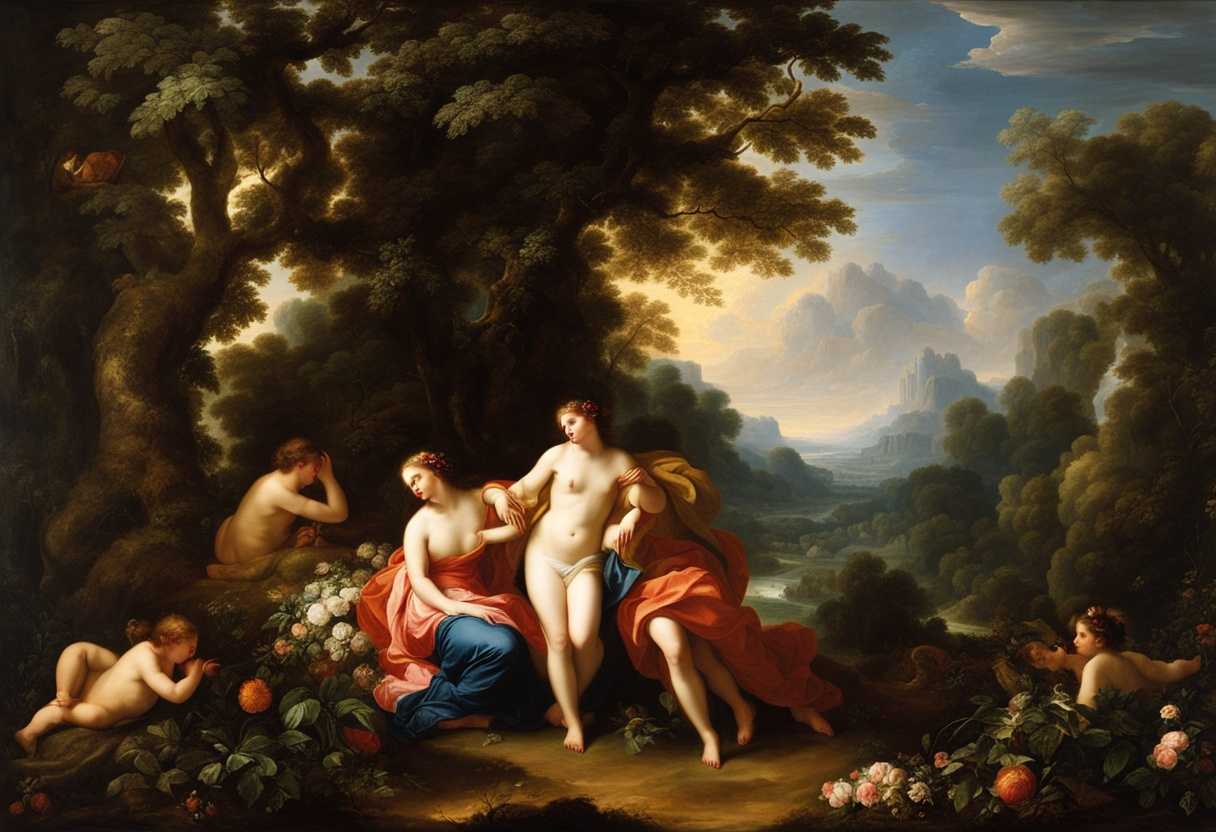
In the Bible, Eden refers to the paradise described in the Book of Genesis, where God placed the first humans, Adam and Eve. It symbolizes a state of innocence, harmony, and a close relationship with God before the fall into sin.
Scripture
8 And the Lord God planted a garden in Eden, in the east, and there he put the man whom he had formed.
9 And out of the ground the Lord God made to spring up every tree that is pleasant to the sight and good for food. The tree of life was in the midst of the garden, and the tree of the knowledge of good and evil.
10 A river flowed out of Eden to water the garden, and there it divided and became four rivers.
11 The name of the first is the Pishon. It is the one that flowed around the whole land of Havilah, where there is gold.
12 The gold of that land is good; bdellium and onyx stone are there.
13 The name of the second river is the Gihon. It is the one that flowed around the whole land of Cush.
14 The name of the third river is the Tigris, which flows east of Assyria. And the fourth river is the Euphrates.
15 The Lord God took the man and put him in the garden of Eden to work it and keep it.
16 And the Lord God commanded the man, saying, “You may surely eat of every tree of the garden,
17 but of the tree of the knowledge of good and evil you shall not eat, for in the day that you eat of it you shall surely die.”
Meaning of Eden in the Bible
The Garden of Eden represents the ideal state of creation, a physical and spiritual paradise where humanity lived in unbroken communion with God. As depicted in Genesis 2:8-10, Eden is described as a lush garden filled with trees that were pleasant to the sight and good for food, alongside the presence of the Tree of Life and the Tree of Knowledge of Good and Evil. This setting reflects a profound sense of harmony not only between humanity and God but also within creation itself. Eden symbolizes a place of innocence, where the first humans experienced direct fellowship with their Creator, illustrating the perfect relationship intended by God for humanity. The idyllic life in Eden underscores themes of stewardship and the importance of obedience to God’s commands as seen in Genesis 2:15-17, where Adam is tasked with tending the garden while being cautioned against eating from the forbidden tree.
The broader theological significance of Eden extends beyond its physical description; it also prefigures the ultimate restoration of creation. After humanity’s fall into sin in Genesis 3, much of the narrative of the Bible focuses on the journey back to a state akin to Eden. The promise of redemption through Christ, as articulated in passages such as Revelation 21:1-4, emphasizes God’s plan to restore a new heaven and a new earth, free from pain and suffering, reminiscent of the original paradise. This hope invites believers to envision a future where full communion with God is restored, elaborating on the significance of Eden not just as a lost paradise but as a template of divine intention for humanity’s relationship with Him—an invitation to pursue reconciliation and restoration.
Eden’s meaning in the Bible also embodies themes of choice and free will, illustrating the moral and spiritual dimensions of human existence. The pivotal choice made by Adam and Eve marks a transition from innocence to awareness, introducing the complexities of moral decision-making and the consequences that follow. This dynamic can be seen in the complexity surrounding human freedom, which while allowing for authentic relationships with the divine, also opens the pathway to rebellion. The narrative poignantly reflects the tension between divine intention and human agency, inviting readers to reflect on their own choices and the impact these have on their relationship with God.
Additionally, the imagery of Eden resonates throughout biblical literature as a metaphor for spiritual longing and fulfillment. Throughout the Psalms and the Prophets, Eden serves as a symbol of hope, evoking desires for restoration and divine presence in a world often characterized by turmoil and separation from God. These references underscore a universal yearning for a return to that state of divine fellowship. In the New Testament, such themes are echoed in the discussions surrounding the Kingdom of God and the transformative power of grace, linking the biblical narrative from the idyllic beginnings in Eden to the anticipated future communion with God. Thus, Eden emerges not simply as a geographical location but as a profound representation of humanity’s quest for meaning, belonging, and ultimate reconciliation with the Creator.
The Ideal State of Creation
Eden represents the original state of creation, characterized by harmony, abundance, and divine presence. It serves as a symbol of the perfect relationship between God and humanity, where humans lived in direct communion with their Creator. This ideal state reflects the intended purpose of creation, emphasizing the goodness of the world and the joy of living in accordance with divine will.
A Symbol of Innocence and Purity
Eden is often viewed as a representation of innocence and purity, where humanity existed without sin or shame. This aspect of Eden highlights the potential for a life free from moral corruption and the consequences of disobedience. The narrative of Eden serves as a poignant reminder of the loss of innocence and the longing for a return to a state of purity, which resonates throughout biblical themes of redemption and restoration.
A Foreshadowing of Restoration
Eden also serves as a foreshadowing of the ultimate restoration of creation. The imagery of a paradise lost is contrasted with the promise of a new heaven and new earth, where the brokenness of the world will be healed. This theme of restoration emphasizes hope and the belief that God’s plan includes a return to a state of perfect communion, reminiscent of the original Eden, where humanity can once again dwell in the presence of God.
How to Embrace Restoration and Live as a Better Christian
Embracing restoration is a beautiful journey that invites us to reflect on our past while looking forward to the grace that God offers us each day. As you seek to live as a better Christian, remember that restoration begins with acknowledging our shortcomings and bringing them before God in prayer. It’s about allowing His love to heal our wounds and transform our hearts. Dive into Scripture, where you’ll find countless stories of redemption—like the Prodigal Son—reminding us that no one is beyond the reach of God’s grace. Surround yourself with a community of believers who can support and encourage you, and don’t shy away from serving others, as acts of kindness can be powerful catalysts for personal growth. Ultimately, restoration is not a one-time event but a continuous process of becoming more like Christ, so embrace each moment as an opportunity to reflect His love and light in the world.
Bible References to the Meaning of Eden:
Genesis 3:1-24: 1 Now the serpent was more crafty than any other beast of the field that the Lord God had made.
2 And the woman said to the serpent, “We may eat the fruit of the trees of the garden,
3 but God said, ‘You shall not eat of the fruit of the tree that is in the midst of the garden, neither shall you touch it, lest you die.’”
4 But the serpent said to the woman, “You will not surely die.
5 For God knows that when you eat of it your eyes will be opened, and you will be like God, knowing good and evil.
6 So when the woman saw that the tree was good for food, and that it was a delight to the eyes, and that the tree was to be desired to make one wise, she took of its fruit and ate, and she also gave some to her husband who was with her, and he ate.
7 Then the eyes of both were opened, and they knew that they were naked. And they sewed fig leaves together and made themselves loincloths.
8 And they heard the sound of the Lord God walking in the garden in the cool of the day, and the man and his wife hid themselves from the presence of the Lord God among the trees of the garden.
9 But the Lord God called to the man and said to him, “Where are you?”
10 And he said, “I heard the sound of you in the garden, and I was afraid, because I was naked, and I hid myself.”
11 He said, “Who told you that you were naked? Have you eaten of the tree of which I commanded you not to eat?”
12 The man said, “The woman whom you gave to be with me, she gave me fruit of the tree, and I ate.”
13 Then the Lord God said to the woman, “What is this that you have done?” The woman said, “The serpent deceived me, and I ate.”
14 The Lord God said to the serpent, “Because you have done this, cursed are you above all livestock and above all beasts of the field; on your belly you shall go, and dust you shall eat all the days of your life.
15 I will put enmity between you and the woman,
and between your offspring and her offspring;
he shall bruise your head,
and you shall bruise his heel.”
16 To the woman he said, “I will surely multiply your pain in childbearing; in pain you shall bring forth children. Your desire shall be contrary to your husband, but he shall rule over you.”
17 And to Adam he said, “Because you have listened to the voice of your wife and have eaten of the tree of which I commanded you, ‘You shall not eat of it,’ cursed is the ground because of you; in pain you shall eat of it all the days of your life;
18 thorns and thistles it shall bring forth for you; and you shall eat the plants of the field.
19 By the sweat of your face you shall eat bread, till you return to the ground, for out of it you were taken; for you are dust, and to dust you shall return.
20 The man called his wife’s name Eve, because she was the mother of all living.
21 And the Lord God made for Adam and for his wife garments of skins and clothed them.
22 Then the Lord God said, “Behold, the man has become like one of us in knowing good and evil. Now, lest he reach out his hand and take also of the tree of life and eat, and live forever—”
23 therefore the Lord God sent him out from the garden of Eden to work the ground from which he was taken.
24 He drove out the man, and at the east of the garden of Eden he placed the cherubim and a flaming sword that turned every way to guard the way to the tree of life.
Ezekiel 28:12-19: 12 “Son of man, raise a lamentation over the king of Tyre, and say to him, Thus says the Lord God: “You were the signet of perfection, full of wisdom and perfect in beauty.
13 You were in Eden, the garden of God; every precious stone was your covering, sardius, topaz, and diamond, beryl, onyx, and jasper, sapphire, emerald, and carbuncle; and crafted in gold were your settings and your engravings. On the day that you were created they were prepared.
14 You were an anointed guardian cherub.
15 You were blameless in your ways from the day you were created, till unrighteousness was found in you.
16 In the abundance of your trade you were filled with violence in your midst, and you sinned; so I cast you as a profane thing from the mountain of God, and I destroyed you, O guardian cherub, from the midst of the stones of fire.
17 Your heart was proud because of your beauty;
you corrupted your wisdom for the sake of your splendor.
18 By the multitude of your iniquities, in the unrighteousness of your trade you profaned your sanctuaries; so I brought fire out from your midst; it consumed you, and I turned you to ashes on the earth in the sight of all who saw you.
19 All who know you among the peoples are appalled at you; you have come to a dreadful end and shall be no more forever.”
Isaiah 51:1-3: 1 “Listen to me, you who pursue righteousness,
you who seek the Lord:
look to the rock from which you were hewn,
and to the quarry from which you were dug.”
2 Look to Abraham your father
and to Sarah who bore you;
for he was but one when I called him,
that I might bless him and multiply him.
3 For the Lord comforts Zion; he comforts all her waste places and makes her wilderness like Eden, her desert like the garden of the Lord; joy and gladness will be found in her, thanksgiving and the voice of song.
Ezekiel 31:8-9: 8 The cedars in the garden of God could not rival it, nor the fir trees equal its boughs; neither were the plane trees like its branches; no tree in the garden of God was its equal in beauty.
9 I made it beautiful in the mass of its branches, and all the trees of Eden envied it, that were in the garden of God.
Joel 2:1-3: 1 Blow a trumpet in Zion;
sound an alarm on my holy mountain!
Let all the inhabitants of the land tremble,
for the day of the Lord is coming;
2 a day of darkness and gloom,
a day of clouds and thick darkness!
Like blackness there is spread upon the mountains
a great and powerful people;
their like has never been before,
nor will be again after them
through the years of all generations.
3 Fire devours before them, and behind them a flame burns. The land is like the garden of Eden before them, but behind them a desolate wilderness, and nothing escapes them.
Revelation 2:7: 7 He who has an ear, let him hear what the Spirit says to the churches. To the one who conquers I will grant to eat of the tree of life, which is in the paradise of God.
Revelation 22:1-5: 1 Then the angel showed me the river of the water of life, bright as crystal, flowing from the throne of God and of the Lamb,
2 through the middle of the street of the city; also, on either side of the river, the tree of life with its twelve kinds of fruit, yielding its fruit each month. The leaves of the tree were for the healing of the nations.
3 No longer will there be anything accursed, but the throne of God and of the Lamb will be in it, and his servants will worship him.
4 They will see his face, and his name will be on their foreheads.
5 And night will be no more. They will need no light of lamp or sun, for the Lord God will be their light, and they will reign forever and ever.

Reverend Michael Johnson is an experienced Church Minister with a profound expertise in spirituality and guidance. With a serene presence and a compassionate heart, he has faithfully served his congregation for over 20 years, leading them on a spiritual journey towards inner peace and enlightenment. Reverend Johnson’s extensive knowledge of religious philosophies and profound understanding of human nature have made him a trusted confidant and mentor to many, as he seamlessly weaves his profound wisdom into life teachings. Reverend Johnson’s calming demeanor and empathetic nature continue to uplift and heal souls, nurturing a sense of unity and tranquility within his community.