
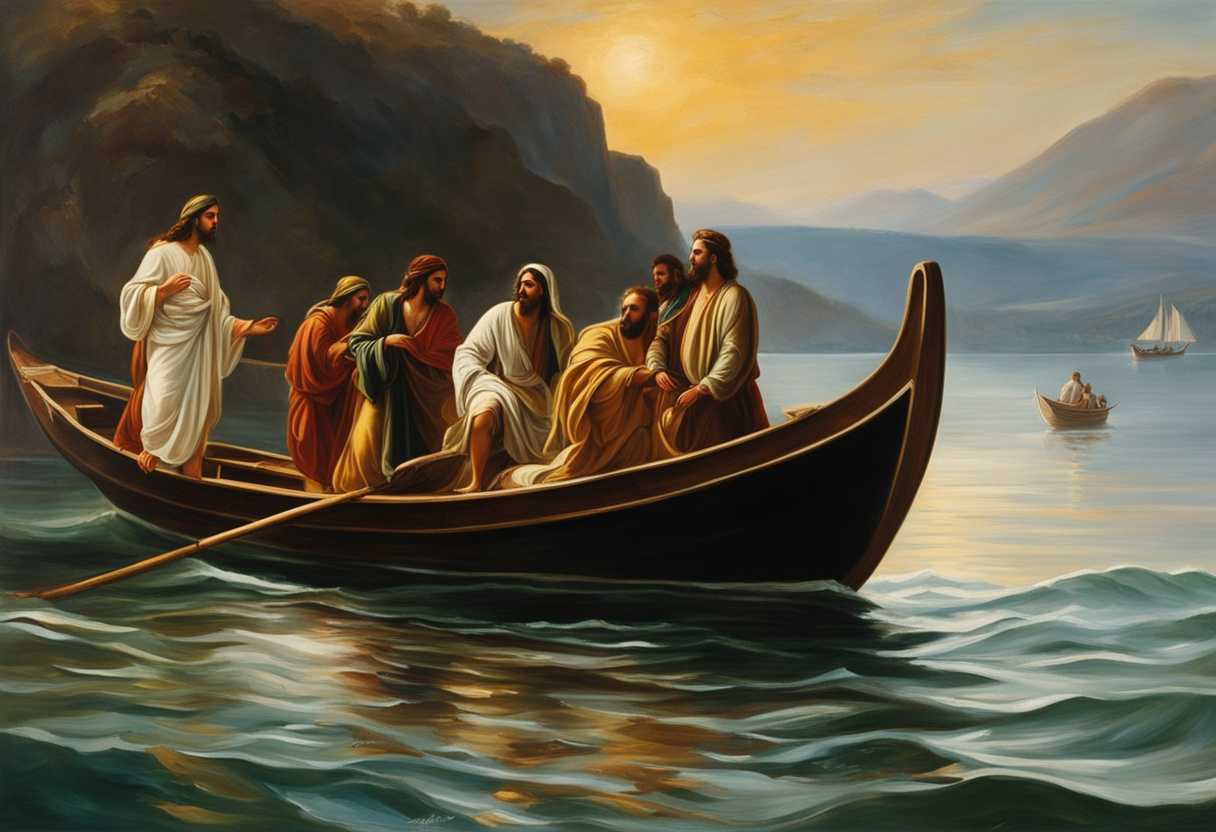
Dalmanutha is mentioned in the Gospel of Mark (Mark 8:10) as a location where Jesus and his disciples arrived by boat after feeding the 4,000. The exact geographical significance of Dalmanutha is unclear, but it is traditionally associated with a place near the Sea of Galilee.
Scripture
10 And immediately he got into the boat with his disciples and went to the district of Dalmanutha.
11 The Pharisees came and began to argue with him, seeking from him a sign from heaven to test him.
12 And he sighed deeply in his spirit and said, “Why does this generation seek a sign? Truly, I say to you, no sign will be given to this generation.”
13 And he left them, got into the boat again, and went to the other side.
Meaning of Dalmanutha in the Bible
In the Gospel of Mark, the mention of Dalmanutha (Mark 8:10) serves as a transitional geographical point, marking a continuation of Jesus’ ministry following the miraculous feeding of the 4,000. Although exact details about Dalmanutha’s location are ambiguous, it represents the recurring theme in Mark’s narrative of movement and mission. The Sea of Galilee is significant in the ministry of Jesus, serving as a backdrop to many of His teachings and miracles. The journey to Dalmanutha reflects both a physical movement from one place to another, symbolizing Jesus’ outreach to different communities, and a thematic movement toward deeper spiritual understanding and revelation.
Furthermore, Dalmanutha carries a broader theological meaning concerning the accessibility of Jesus’ message and the inclusivity of His ministry. The feeding of the 4,000 (Mark 8:1-9) emphasizes Jesus’ compassion not just for the Jews but also for the Gentiles, as this miracle occurs outside a primarily Jewish audience. The notion of various locations in Mark’s Gospel symbolizes the breaking of social and cultural barriers, representing the universal nature of Jesus’ message. As His disciples travel with Him, they are also invited to partake in this mission, emphasizing the call to witness and spread the Gospel beyond familiar contexts. In this way, Dalmanutha, while a minor detail in the Gospel’s narrative, encapsulates significant themes of inclusion, mission, and the continuity of Jesus’ miraculous work among all people.
Dalmanutha, while briefly mentioned in the Gospel of Mark, serves as an important reminder of the broader themes of transition and revelation that permeate Jesus’ ministry. The frequent geographical shifts within Mark’s Gospel not only highlight the physical journey of Jesus and His disciples but also elucidate the evolving understanding of who Jesus is, especially in relation to different audiences. Each location visited—such as Bethsaida, Capernaum, or indeed Dalmanutha—symbolizes a stage in the unfolding of Jesus’ identity as the Messiah. In this context, Dalmanutha can be seen as a bridge between the miraculous acts performed for specific groups and the ultimate realization of Jesus’ purpose to reach all nations.
Moreover, the mention of Dalmanutha can invite reflection on the theme of recognition and response to Jesus’ works. Throughout Mark, individuals and communities react differently to Jesus’ miracles and teachings, ranging from awe and faith to skepticism and misunderstanding. This plurality of responses hints at the wider implications of Jesus’ mission. As the disciples travel to Dalmanutha, they embody the challenge of discerning and appreciating the significance of Jesus’ actions and words in the ever-increasing complexity of their cultural and spiritual contexts. Thus, rather than serving merely as a geographical marker, Dalmanutha emerges as a space for contemplation on faith, the nature of revelation, and the accessibility of spiritual truths to diverse audiences, reinforcing the inclusive essence of the Gospel message.
A Place of Refuge and Restoration
Dalmanutha can be interpreted as a symbol of refuge and restoration. In the context of Jesus’ ministry, locations like Dalmanutha often served as places where He could retreat from the crowds and recharge. This notion of a sanctuary reflects the broader biblical theme of seeking solace in God, emphasizing the importance of rest and spiritual rejuvenation in the life of believers.
The Intersection of Faith and Doubt
Dalmanutha also represents the intersection of faith and doubt. The encounters that took place in this region highlight the struggles of the disciples and the people who sought Jesus. Their experiences serve as a reminder that faith is often accompanied by questions and uncertainties, illustrating the human condition and the journey toward deeper understanding and belief in God.
The Call to Evangelism
Furthermore, Dalmanutha signifies the call to evangelism and outreach. As a location where Jesus performed miracles and taught, it underscores the importance of spreading the message of the Gospel. This reflects the broader biblical mandate for believers to share their faith and the transformative power of Christ with others, emphasizing the role of every believer in the mission of the Church.
How to Understand Biblical Geography for Spiritual Growth
Understanding biblical geography can profoundly enhance your spiritual growth and deepen your connection to the Scriptures. As you explore the landscapes where pivotal events unfolded—like the rolling hills of Judea, the shores of the Sea of Galilee, or the bustling streets of Jerusalem—you begin to visualize the stories and teachings of the Bible in a more tangible way. This geographical context not only enriches your comprehension of the narratives but also invites you to reflect on the significance of place in your own faith journey. For instance, walking in the footsteps of Jesus can inspire you to consider how He interacted with the world around Him, prompting you to engage more meaningfully with your own community. So, take the time to study maps, visit biblical sites if possible, or even use resources like atlases and documentaries; each step you take in understanding the geography of the Bible can lead to a more profound appreciation of God’s Word and its relevance in your life today.
Bible References to Dalmanutha’s Meaning:

Rev. François Dupont is a dedicated church minister with a wealth of experience in serving spiritual communities. With a calm and serene demeanor, he has been devoted to sharing the message of love, compassion, and tolerance for over two decades. Through his thoughtful sermons, compassionate counseling, and unwavering support, Rev. Dupont has touched the lives of countless individuals, allowing them to find solace and strength during difficult times. His serene presence and deep understanding of the human condition make him a trusted guide for those seeking spiritual nourishment and guidance.