
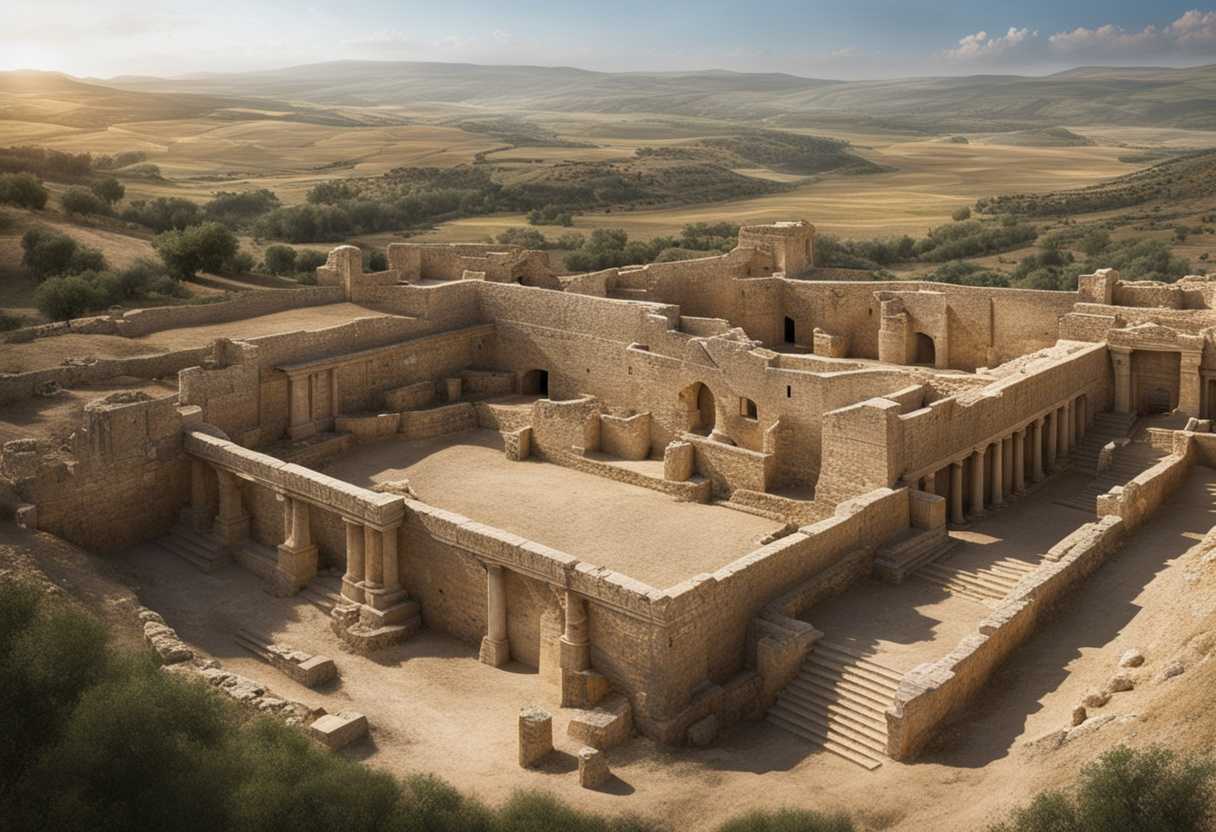
In the Bible, Gezer refers to a Canaanite city that was conquered by the Israelites and allotted to the tribe of Ephraim (Joshua 16:3, 10). It is also noted for its strategic location and historical significance, serving as a site of various battles and events throughout biblical history.
Scripture
10 However, they did not drive out the Canaanites who lived in Gezer, so the Canaanites have lived in the midst of Ephraim to this day but have been made to do forced labor.
Meaning of Gezer in the Bible
The meaning of Gezer in the Bible extends beyond its identity as a Canaanite city; it embodies themes of divine promise, fulfillment, and the struggles of nation-building among the Israelites. Mentioned notably in Joshua 16:3, 10, Gezer stands as part of the inheritance allotted to the tribe of Ephraim, symbolizing the tangible fulfillment of God’s promise to give land to His people. The city’s strategic location, lying at the crossroads between the coastal plains and the hill country, underscores its importance as a site for commerce and military maneuvers, demonstrating how God used geography to influence Israel’s history and destiny.
Gezer also represents the broader narrative of conflict and redemption within the biblical text. Its capture and subsequent allotment to the Israelites reflects the ongoing struggle against Canaanite forces and the establishment of Israelite identity. Notably, 1 Kings 9:16 highlights the significance of Gezer as a gift from Pharaoh to Solomon, further entwining it with imagery of power, wealth, and the political landscape of the time. This intricate web of historical events, coupled with the theological implications of land, promise, and protection, invites readers to contemplate the broader arc of God’s covenant with Israel and the continual need for faith and reliance on divine guidance in the face of trials and tribulations.
In addition to its geographical and political significance, Gezer is often associated with themes of divine intervention and the overarching narrative of Israel’s covenantal history. The city’s mention in biblical texts serves to highlight the contrast between Israel’s faithfulness and unfaithfulness throughout their history. As a prominent Canaanite stronghold before Israelite conquest, Gezer symbolizes the challenges the Israelites faced in their quest for a promised future and the complexities of inter-cultural relations. The challenges encountered during its occupation echo the larger story of Israel’s struggle to maintain fidelity to God amid the surrounding influences and temptations of neighboring nations.
Furthermore, Gezer’s legacy extends into the prophetic literature as well, where it is sometimes referenced in discussions of God’s judgment and restoration. This notion suggests that the city, beyond being a mere historical backdrop, serves to articulate the themes of sin, exile, and eventual return to grace. The acknowledgment of Gezer in various contexts reaffirms the theological assertion that divine plans continuously unfold, shaping the fate of nations and individuals alike. Thus, Gezer encapsulates the indispensable role of place in biblical narrative, being a poignant reminder of God’s active presence in the lives of His chosen people, and their continuous journey towards achieving the divine promises made to them.
Historical Significance of Gezer
Gezer serves as a significant archaeological site that reflects the ancient history of the Israelites and their interactions with neighboring cultures. Its strategic location made it a vital city for trade and military purposes, symbolizing the broader themes of conquest and settlement in the Promised Land. The city’s history illustrates the challenges faced by the Israelites in establishing their identity and presence in a land filled with established nations.
Symbol of Divine Promise
Gezer represents the fulfillment of God’s promises to the Israelites regarding the land they would inherit. The city’s mention in biblical narratives underscores the idea of divine providence and guidance in the Israelites’ journey. It serves as a reminder of the covenant between God and His people, emphasizing themes of faith, obedience, and the consequences of straying from divine commandments.
Cultural Interactions and Conflicts
The history of Gezer also highlights the cultural interactions and conflicts between the Israelites and other groups, such as the Canaanites. This aspect of Gezer’s meaning reflects the broader biblical themes of struggle, identity, and the importance of maintaining faith amidst external influences. The city’s role in these dynamics illustrates the complexities of living out one’s faith in a diverse and often hostile environment.
How to Strengthen Your Faith and Understanding as a Christian
Strengthening your faith and understanding as a Christian is a deeply personal journey that requires both intention and openness. Start by immersing yourself in Scripture; the Bible is not just a book, but a living testament that speaks to our hearts and guides our lives. Set aside time each day for prayer and reflection, inviting God into your thoughts and decisions. Surround yourself with a community of believers who can encourage and challenge you—whether through a small group, church service, or fellowship activities. Don’t shy away from asking questions or exploring doubts; these moments can lead to profound growth and deeper understanding. Finally, put your faith into action by serving others, as love in action is a powerful testament to your beliefs. Remember, faith is a journey, not a destination, and every step you take brings you closer to a richer relationship with God.
Bible References to the Meaning of Gezer:
Joshua 21:21-21: 21 Then they gave Hebron to the descendants of Aaron the priest as a city of refuge for the manslayer, Libnah with its pasturelands,
1 Kings 9:15-17: 15 And this is the account of the forced labor that King Solomon drafted to build the house of the Lord and his own house and the Millo and the wall of Jerusalem and Hazor and Megiddo and Gezer.
16 (Pharaoh king of Egypt had gone up and captured Gezer and burned it with fire, and had killed the Canaanites who lived in the city, and had given it as dowry to his daughter, Solomon’s wife.)
17 And Solomon rebuilt Gezer and Lower Beth-horon,
1 Chronicles 6:67-67: 67 They were given by lot to the sons of Aaron, of the Kohathite clans of the Levites, who were descendants of Aaron, for the first lot.
1 Chronicles 7:28-28: 28 Their possessions and settlements were Bethel and its towns, and to the east Naaran, and to the west Gezer and its towns, Shechem and its towns, and Ayyah and its towns;
Judges 1:29-29: 29 And Ephraim did not drive out the Canaanites who lived in Gezer, so the Canaanites lived in Gezer among them.
2 Samuel 5:25-25: 25 And David did as the Lord commanded him, and struck down the Philistines from Geba to Gezer.
1 Kings 4:12-12: 12 Baana the son of Ahilud, in Taanach, Megiddo, and all Beth-shean that is beside Zarethan below Jezreel, and from Beth-shean to Abel-meholah, as far as the other side of Jokmeam,
1 Kings 9:16-16: 16 (Pharaoh king of Egypt had gone up and captured Gezer and burned it with fire, and had killed the Canaanites who lived in the city, and had given it as dowry to his daughter, Solomon’s wife.)

Reverend Ogunlade is a seasoned Church Minister with over three decades of experience in guiding and nurturing congregations. With profound wisdom and a serene approach, Reverend Ogunlade has carried out various pastoral duties, including delivering uplifting sermons, conducting religious ceremonies, and offering sage counsel to individuals seeking spiritual guidance. Their commitment to fostering harmony and righteousness within their community is exemplified through their compassionate nature, making them a beloved and trusted figure among the congregation.